Oestrogen-rich plants and natural dietary supplements

Oestrogen-rich plants and natural dietary supplements


By Stéphanie Catrysse

Published on: Tuesday, January 20, 2026, Updated on: Wednesday, October 28, 2026

Do you feel as though your hormones are all over the place? Would you like to understand more about what’s happening in your body? Oestrogens aren’t just about the ovaries: they influence your energy levels, mood, skin, bones and even your heart. Understanding their role and knowing how to support it can make a real difference to your daily life. In this article, discover what oestrogen is, how it works in the body, which plants and natural supplements can support it, and what habits can encourage more balanced and sustainable hormonal levels.

Contents

Related products

Oestrogens: what are they?

These hormones play a central role in hormonal balance and influence many of the body’s systems, considerably more than just those concerned with reproduction.

A family of essential hormones

Oestrogens are not a single hormone, but a family of steroid hormones that play a central role in female hormonal balance. They are involved at every stage of the reproductive life cycle and also influence many other systems in the body. These hormones are also present in men, albeit in smaller quantities, where they contribute in particular to bone health and certain reproductive functions.

From a physiological perspective, three main forms of natural oestrogens are distinguished:

  • Oestradiol (E2) is the most biologically active form and is the reference oestrogen in women of childbearing age.

  • Estrone (E1), which is less potent, becomes predominant after the menopause.

  • Estriol (E3) levels rise sharply during pregnancy, which explains its association with this stage of life.

In the body, oestrogens are synthesised from cholesterol, an essential precursor for the production of steroid hormones. This conversion takes place within cells, particularly in the mitochondria, which can be thought of as the ‘powerhouses’ responsible for producing the energy required for proper cellular function. It involves a series of enzymatic reactions – that is, precise chemical steps – which are closely controlled by the body. Through a mechanism known as ‘aromatisation’, certain hormones known as androgens, such as testosterone, are gradually converted into oestrogens through the action of specific enzymes. This entire process is regulated by the hypothalamic-pituitary axis, a hormonal communication system located in the brain, which adjusts the production of sex hormones according to the body’s needs and the different stages of life.

Oestrogens act as chemical messengers. They circulate in the blood and exert their effects by binding to specific receptors, known as oestrogen receptors, found in many of the body's tissues, such as the uterus, breasts, bones, brain, cardiovascular system and skin. This interaction, often likened to a lock-and-key mechanism, triggers a cascade of cellular responses that modulate the expression of certain genes and influence how cells function.

Where and how are oestrogens produced in the body?

It is common to associate oestrogen production solely with the ovaries. In reality, these hormones are produced by several tissues in the body, the relative importance of which varies depending on age and physiological context.

In pre-menopausal women

In women of childbearing age, the ovaries are the main source of oestrogens, particularly oestradiol, the most biologically active form.

This production takes place in the ovarian follicles during the first half of the menstrual cycle, with a gradual increase in oestradiol leading up to ovulation. After ovulation, the follicle transforms into the corpus luteum, which primarily secretes progesterone, whilst continuing to produce oestrogens in more moderate quantities during the second half of the cycle.

These variations account for the natural fluctuations in oestrogen levels throughout the month, with a characteristic peak just before ovulation.

At the same time, from this stage of life onwards, some oestrogen is also produced outside the ovaries, particularly in adipose tissue, via a hormonal conversion mechanism.

During pregnancy

During pregnancy, the placenta becomes a major endocrine organ. It ensures significant oestrogen production by converting androgens from the foetal adrenal glands into hormones essential for the healthy progression of pregnancy.

After the menopause

After the menopause, oestrogen production by the ovaries decreases sharply. However, the body continues to produce small amounts of oestrogen through what is known as peripheral conversion, i.e. production taking place outside the ovaries.

This process takes place mainly in adipose tissue. Fat cells contain an enzyme called aromatase, which converts precursor hormones – notably androstenedione from the adrenal glands – into oestrone, the predominant form of oestrogen after the menopause. This is why the amount of adipose tissue directly influences oestrogen balance at this stage of life.

Other tissues involved

The adrenal glands, situated above the kidneys, also play a role in hormone production at all ages. They do not produce oestrogens directly, but produce androgens which can then be converted into oestrogens in peripheral tissues.

The liver also plays an important role in metabolising, converting and eliminating hormones circulating in the bloodstream.

And in men?

In men, oestrogens are produced in small quantities. They originate mainly from the conversion of androgens in peripheral tissues, as well as from limited production by the testicles. Despite their low concentration, they are essential, particularly for bone health, metabolic balance and sperm maturation.
What are the effects of oestrogens?

Oestrogens are true hormonal conductors: they play a part in almost every system in the body and tailor their action to a specific tissue, cycle and age.

Female development and secondary sexual characteristics

From puberty onwards, oestrogens regulate the development of female secondary sexual characteristics. They stimulate breast development, shift the distribution of body fat towards the hips and thighs, and contribute to the widening of the pelvis. These physical changes reflect a profound physiological adaptation designed to support reproductive and metabolic functions.

Regulation of the menstrual cycle and fertility

Oestrogens play a central role at the heart of every menstrual cycle. In the first part of the cycle, their concentration gradually increases, which promotes the growth of ovarian follicles and the maturation of the egg. This rise in oestrogen triggers a surge in luteinising hormone (LH), which causes ovulation.

After ovulation, oestrogen works in synergy with progesterone to prepare the endometrium – the inner lining of the uterus – for potential embryo implantation. It also contributes to the thickening of the uterine lining and the fine-tuning of the menstrual cycle.

Genital and vaginal health

Oestrogens play a key role in maintaining the health of genital tissues. They ensure the hydration, elasticity and healthy blood supply to the vagina and vulva, which helps maintain intimate comfort and reduces dryness. They also help balance the vaginal microbiota by promoting the presence of lactobacilli – protective bacteria that are essential for maintaining pH levels and defending against infections.

Bone health and protection

Oestrogens also play an important role in maintaining bone density. They inhibit the activity of the cells responsible for bone breakdown (osteoclasts) and help maintain the balance between bone resorption and formation. When oestrogen levels fall, particularly after the menopause, bone loss accelerates, which explains the increased risk of skeletal fragility and osteoporosis.

Metabolic and cardiovascular regulation

Oestrogens influence the metabolism of fats and carbohydrates. They help to increase HDL cholesterol (the ‘good' cholesterol), whilst limiting the rise in LDL, which is associated with cardiovascular risk. They also improve insulin sensitivity and influence the distribution of body fat, directing its storage towards the hips and thighs during the fertile years.

As regards blood vessels, oestrogens help to maintain their flexibility and proper functioning. They modulate certain inflammatory responses and help to protect the vascular endothelium (the inner lining of the arteries). The decline in oestrogen levels with age alters these balances, which partly explains the change in cardiovascular risk following the menopause.

The brain, mood and cognitive functions

Oestrogens interact with several major neurotransmitters, notably serotonin and dopamine. This is how they influence mood regulation, sleep quality, motivation and certain cognitive functions. Hormonal fluctuations may be accompanied by emotional fluctuations, increased sensitivity to stress or difficulties in concentrating.

Skin, hair and mucous membranes

Finally, oestrogens have a significant influence on surface tissues. They support skin hydration, stimulate collagen production, promote elasticity and contribute to cell renewal. When oestrogen levels fall, the skin often becomes thinner, drier and less firm, whilst the mucous membranes lose their suppleness and comfort.

How can you recognise an oestrogen imbalance?

The signs of an oestrogen imbalance vary and are non-specific. They may include hot flushes or night sweats, vaginal dryness or intimate discomfort, changes to the skin and hair, as well as urinary or eye problems. These symptoms differ from woman to woman and are influenced by age, the menstrual cycle, lifestyle and general health.

Symptoms alone are not sufficient to diagnose an oestrogen deficiency. Only a healthcare professional can confirm an imbalance, by combining a detailed consultation with targeted hormone tests and, where necessary, a pelvic ultrasound scan, to guide a personalised treatment plan.

Herbs, dietary supplements and oestrogens: what’s the link?

It is important to clarify what is meant by ‘plants or supplements rich in oestrogens’. Plants do not contain human oestrogens. However, certain plants contain compounds known as phytoestrogens, whose chemical structure is partially similar to that of endogenous oestrogens. This similarity enables them to bind to oestrogen receptors in the body (in the bones, skin, blood vessels and genital tissues) and to exert moderate biological effects, which are generally less potent than those of natural hormones.

There are two main families of phytoestrogens. Isoflavones, found in particular in soya and red clover, and lignans, which are mainly found in linseeds. Other plant compounds also exhibit a more subtle oestrogenic activity, which contributes to the diversity of effects observed depending on the plant.

Unlike synthetic hormones, phytoestrogens bind to receptors only partially and with lower affinity. This characteristic explains their role as hormone modulators. Depending on the situation, they can either slightly stimulate receptor activity when oestrogen levels are low, or dampen its action when oestrogen levels are higher. This mechanism promotes a gradual rebalancing, without causing excessive stimulation.

Dietary supplements based on plants or nutrients do not replace insufficient hormone production. Their role is to support existing physiological mechanisms and promote a more even hormonal balance. Their effect depends on the dose, duration of use and individual profile, which makes personalised monitoring preferable.

How can you support oestrogen balance?

As we’ve seen previously, oestrogen balance relies on a complex interaction between the ovaries, the brain, the liver, adipose tissue, the gut microbiota and the nervous system. No supplement or herb can ‘provide’ human oestrogens. However, certain nutrients and plant extracts can support the mechanisms involved in their production, metabolism and action within tissues.

Dietary supplements to support oestrogen

Dietary supplements are not intended to replace hormones. They work at an earlier stage by supporting the systems that regulate hormonal balance.

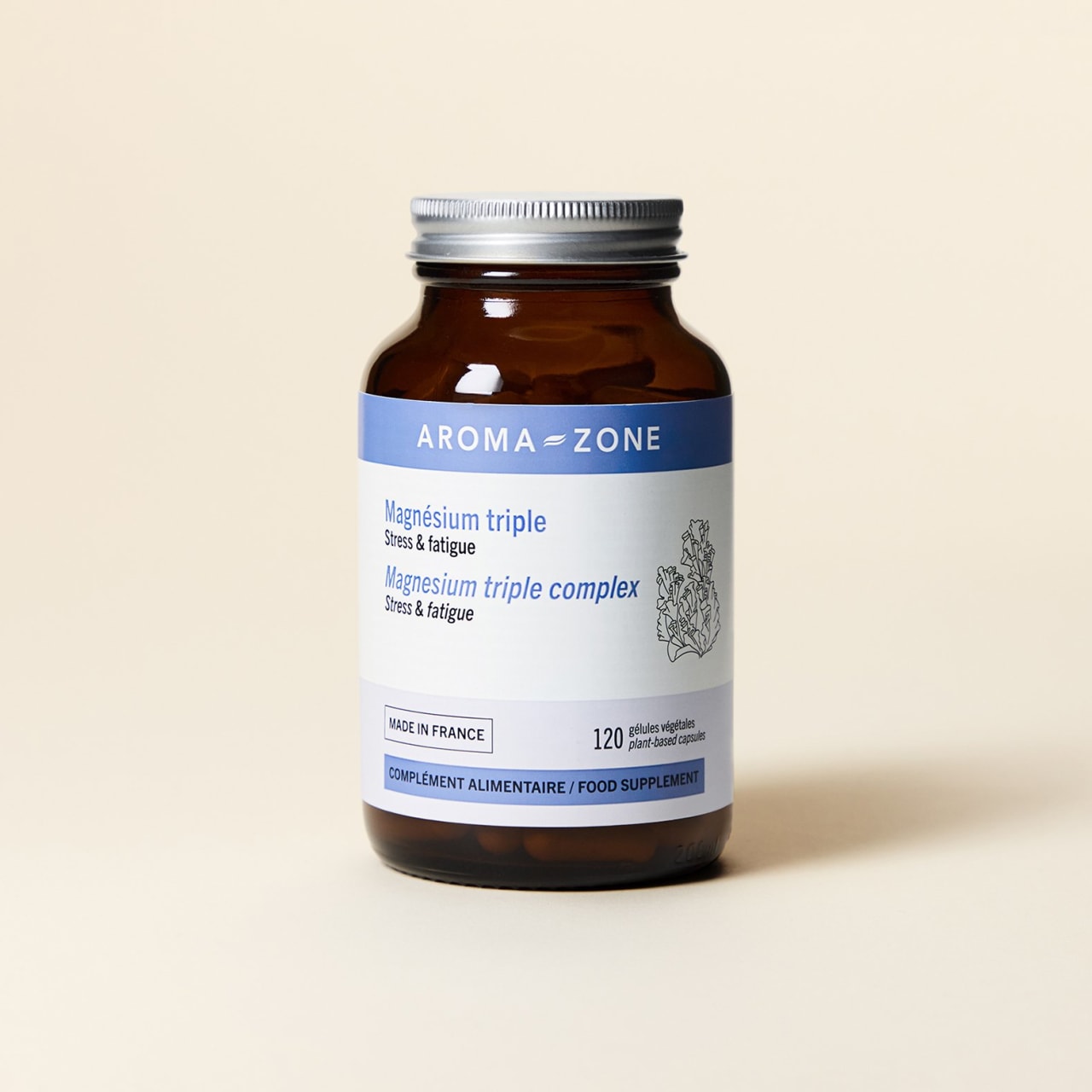
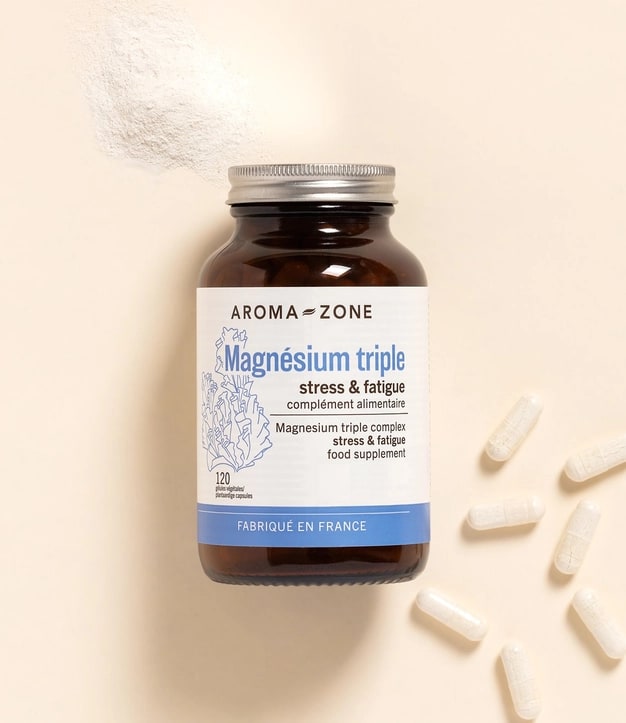
Triple magnesium

Magnesium

Magnesium plays a role in over 300 enzymatic reactions, including those linked to the regulation of the nervous system and stress management – two factors that can influence hormonal balance. An adequate intake helps to reduce fatigue and tension associated with hormonal fluctuations.

Take 1 to 3 capsules a day, to be swallowed with a glass of water.

Precautions: Keep out of reach of children. Not a substitute for a varied and balanced diet and a healthy lifestyle. Do not exceed the recommended daily dose. For adults only. Pregnant or breastfeeding women should seek advice from a healthcare professional before taking any supplements. Magnesium may have a laxative effect in some people. Organic sea lettuce extract (seaweed) provides a small amount of iodine (< 10 µg per daily dose of 3 capsules, i.e. less than 6.7% of the reference nutritional value of 150 µg/day for iodine). If you have thyroid problems, seek advice from your doctor.

Discover Triple Magnesium - Aroma-Zone
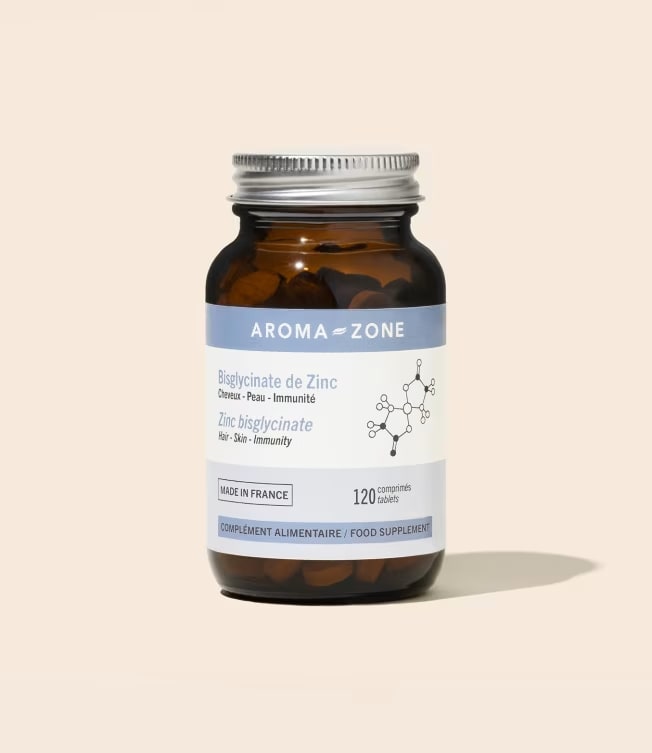
Zinc Bisglycinate - 120 tablets - Dietary supplement

Zinc (Zinc Bisglycinate)

Zinc is an essential trace element that supports several functions linked to hormonal balance: it contributes to normal fertility and reproduction, whilst supporting the protein synthesis necessary for the reception of hormonal signals, as well as protecting cells against oxidative stress. In the context of oestrogen fluctuations, an adequate intake promotes the proper functioning of the hormonal axes and hormone-sensitive tissues, such as the ovaries, the uterus and the endocrine system. It also plays a role in maintaining normal testosterone levels, which can indirectly support the overall balance of sex hormones.

Take one tablet a day, with a glass of water.

Precautions: Not a substitute for a varied and balanced diet and a healthy lifestyle. Do not exceed the recommended daily dose. For adults only. Use should be limited to a few weeks or months. Pregnant or breastfeeding women are advised to consult a healthcare professional before taking any supplements. Keep out of reach of young children.

Discover Zinc Bisglycinate - Aroma-Zone

Good to know: Dietary supplements act as metabolic supports. Their effect depends on the dose, duration of use, diet and individual hormonal profile. Professional guidance is essential.

Plants naturally rich in phytoestrogens

Certain plants contain phytoestrogens, plant compounds capable of gently interacting with oestrogen receptors. Their effect depends on hormonal balance and individual sensitivity. They are all the more effective when combined with a healthy lifestyle and appropriate medical supervision.

Red clover (Trifolium pratense)

Red clover is rich in isoflavones (biochanin A, formononetin, daidzein and genistein), and may help to reduce hot flushes, support bone health and alleviate vaginal dryness associated with falling oestrogen levels.

Precautions: Avoid if you have a history of hormone-dependent conditions, or if you are pregnant or breastfeeding, unless advised by a doctor.


Soya (Glycine max)

As a major dietary source of isoflavones, soya gently supports hormonal balance. Its effectiveness depends on the gut microbiota, which converts certain molecules into active forms.

Precautions: prioritise dietary sources (tofu, soya milk, edamame) and exercise caution with concentrated extracts, particularly if you have a history of hormonal issues.


Hops (Humulus lupulus)

Hops contain 8-prenylnaringenin, a phytoestrogen capable of modulating oestrogen receptors. It may help to reduce hot flushes and night sweats, whilst providing a relaxing effect.

Precautions: Avoid if you have a hormone-sensitive constitution, are pregnant, breastfeeding or have oestrogen-related conditions.

Linseed (Linum usitatissimum)

Rich in lignans, linseeds are converted by the gut microbiota into active oestrogenic compounds and help to support hormonal balance and bone health.

Precautions: Use with caution during pregnancy and whilst breastfeeding.

Black cohosh (Actaea racemosa)

It does not directly contain phytoestrogens but may relieve certain menopausal symptoms, such as hot flushes, night sweats and irritability, by acting on the nervous system and hormonal pathways.

Precautions: Use as recommended; avoid if you have a known allergy to the Ranunculaceae family.

Key points: Dietary supplements support the biological mechanisms that regulate hormonal balance. Phytoestrogens are plant compounds that can interact with oestrogen receptors in the body. Neither of these approaches is ever a substitute for medical advice, particularly if you have pronounced symptoms, a complex hormonal history or a sensitive medical history. 

What habits can support hormonal balance?

To support your hormones on a daily basis, you can adopt small, simple habits that look after your body, your mind and your environment. 

  1. Eat a varied, balanced and nutrient-rich diet: opt for whole, minimally processed foods that are rich in fibre, high-quality protein and essential fatty acids. Regularly include natural sources of phytoestrogens such as pulses (chickpeas, red lentils, beans, etc.), seeds, cruciferous vegetables (broccoli, kale, Brussels sprouts, etc.) and colourful fruit and vegetables rich in antioxidants. Eating regular meals helps to stabilise blood sugar levels, a key factor in hormonal regulation. Limit ultra-processed foods, refined sugar and excessive caffeine as much as possible, as these can exacerbate endocrine imbalances.

  2. Ensure you get sufficient, restorative sleep: Allow your body 7 to 8 hours of sleep per night, at as regular a schedule as possible. Sleep regulates the secretion of many hormones, including melatonin and cortisol, which influence the overall balance of the hormonal system and oestrogen levels.

  3. Take part in regular, appropriate physical activity: Include at least 150 minutes of moderate-intensity activity per week, choosing activities suited to your energy levels, such as brisk walking, cycling, swimming, yoga or Pilates. Physical activity helps to reduce stress, improve insulin sensitivity and support bone density – factors closely linked to hormonal balance. Always listen to your body to work at the right intensity for you.

  4. Incorporate stress management techniques: Chronic stress can disrupt the oestrogen/progesterone balance by increasing cortisol levels. Make time for yourself: meditation, deep breathing, yoga, creative hobbies or simply spending time in nature or with your loved ones all help to soothe the nervous system and support more stable hormone regulation. 

  5. Minimise exposure to endocrine disruptors: Avoid, as far as possible, contact with BPA-containing plastics, pesticides, certain unregulated cosmetic products and environmental pollutants known to disrupt the hormonal system. Taking these precautions helps to preserve your tissues’ sensitivity to oestrogen and maintain the balance of your endocrine system.

Precautions

Hormone-active plants and supplements, including phytoestrogens, must be used with caution and are not suitable for all situations. Their use is not recommended without medical advice in the event of pregnancy, breastfeeding, a history of hormone-dependent conditions or ongoing hormone treatment.

During pregnancy, supplements containing high concentrations of phytoestrogens should be avoided. During breastfeeding, great caution is advised.

If you have a personal or family history of breast, ovarian or endometrial cancer, the use of phytoestrogens in supplement form must be discussed with a healthcare professional. Certain plants, such as chasteberry, may also interact with medicines, particularly hormonal contraceptives and certain antidepressants.

In cases of persistent breast tenderness or fibrocystic breast changes, clary sage and concentrated phytoestrogens are not recommended.

Finally, prolonged self-medication, combining several products, or failing to adhere to the recommended doses may contribute to hormonal imbalances. A gradual, cautious and supervised approach remains essential.

Expert advice

The gut microbiota plays a key role in oestrogen balance. It helps to recycle and eliminate oestrogens, which directly influences their balance in the body. Remember to support your gut flora with a diet rich in fibre, plant-based foods and fermented foods, to promote more stable and balanced hormone regulation.

Focus on our Naturopathic editor, Stéphanie Catrysse

Stéphanie Catrysse - Naturopath (FENA-certified), well-being massage and lymphatic drainage practitioner and personal development consultant.

She takes a holistic approach to health and is passionate about alternative medicine.

Bibliography

  1. Sophie Perrin. “The Comprehensive Guide to Medicinal Plants”. (2025)

  2. Dr Gérard Debuigne. *Dictionary of Healing Plants*. Larousse. (1972).

  3. Vidal. “Female hormones and the menstrual cycle”. (2023).

    https://www.vidal.fr/maladies/sexualite-contraception/contraception-feminine/hormones-feminines-cycle-menstruel.html

  4. AFSSA. ANSES. “Safety and benefits of phytoestrogens in the diet – Recommendation”. (2005).

    https://www.anses.fr/system/files/NUT-Ra-Phytoestrogenes.pdf?download=1

  5. INRAE. “Soya and breast cancer: ambiguous links”. (2019).

    https://www.inrae.fr/actualites/soja-cancer-du-sein-relations-ambiguesinrae​

  6. IEPP-EU. “Oestrogen Regulation and Modulation”. (2016).

    https://iepp-eu.com/wp-content/uploads/2013/04/Lettre-IEPP-n26-2016.pdfiepp-eu​

  7. Merck Manuals. "Menopause – Merck Manual Professional Edition". (2024).

    https://www.merckmanuals.com/fr-ca/professional/gyn%C3%A9cologie-et-obst%C3%A9trique/m%C3%A9nopause/m%C3%A9nopausemerckmanuals​

  8. Vidal. “Phytotherapy in the treatment of the menopause”. (2023).

    https://www.vidal.fr/maladies/sexualite-contraception/menopause/phytotherapie-plantes.htmlvidal​

  9. Vidal. “Phytotherapy: Common Sage”. (2012).

    https://www.vidal.fr/parapharmacie/phytotherapie-plantes/sauge-officinale-salvia-officinalis.htmlvidal​

  10. Vidal. “Phytotherapy: Black Cohosh”. (2012).

    https://www.vidal.fr/parapharmacie/phytotherapie-plantes/actee-grappes-noires-actea-racemosa.html

  11. Vidal. “Dietary supplement: Isoflavones”. (2014).

    https://www.vidal.fr/parapharmacie/complements-alimentaires/isoflavones-phytoestrogenes.html

  12. Ministry of Sport and the Olympic and Paralympic Games. “Adults – Physical activity recommendations for 18–64-year-olds”.

    https://www.sports.gouv.fr/adultes-475#:~:text=Adults%20aged%2018,of%20moderate%20intensity%20and%20sustained%20duration.

Frequently Asked Questions

Frequently Asked Questions