
Pineapple Sage (Salvia elegans): What It Is, Properties and Benefits

Pineapple Sage (Salvia elegans): What It Is, Properties and Benefits


By Catherine Gilette

Published on: Friday, January 31, 2025, Updated on: Wednesday, September 30, 2026

There are around 900 species of sage, more than a hundred of which are used in traditional medicine or cooking. Among them is pineapple sage, prized for its fruity aroma, distinctive flavour and striking flowers. Traditionally used to support digestion, it also features in beauty routines. Discover this wonderfully fragrant member of the sage family.

Contents

Related products

Definition

Pineapple sage (Salvia elegans) is a perennial plant belonging to the Lamiaceae family, which also includes rosemary. The name Salvia comes from the Latin salvare, meaning ‘to save’, while elegans means ‘elegant’ or ‘distinguished’, possibly referring to its striking flowers.

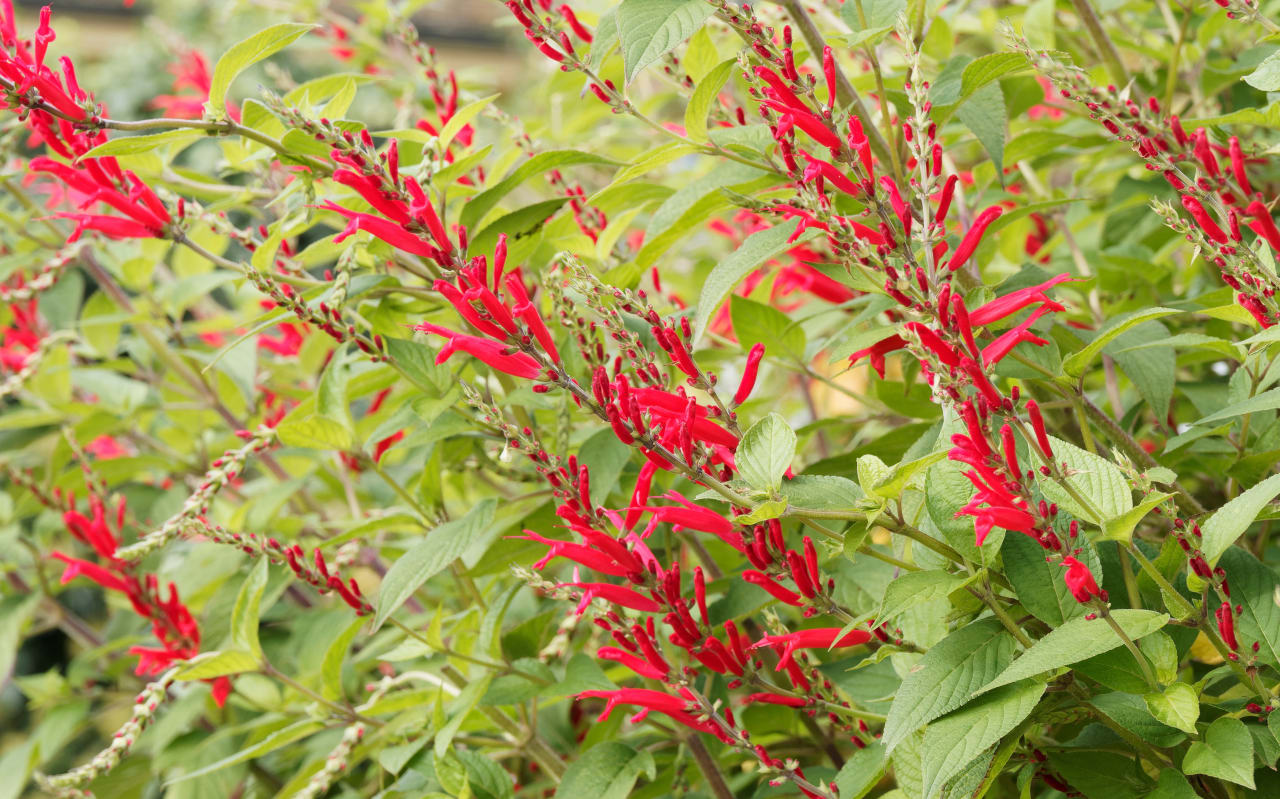
Native to Mexico, this bushy subshrub can reach around 1 metre in height, sometimes growing taller in favourable conditions. Its slightly hairy, square stems are often tinged with purple. The pale green leaves grow in opposite pairs and range from oval to lance-shaped, with finely serrated edges. Slightly rough and velvety to the touch, they release a strong pineapple scent when crushed. Depending on the climate, the foliage may be semi-evergreen or evergreen.

Pineapple sage typically flowers in autumn as the days shorten, producing upright, branched clusters of bright red, tubular blooms that attract pollinators.

It prefers moist, well-drained soil and is sensitive to frost. In colder climates, it can be grown in a pot and moved to a sheltered, frost-free location over winter.

Good to know: Several cultivars exist, offering different shades of colour and levels of aromatic intensity.

The main properties of pineapple sage

Digestive properties

Pineapple sage is known to stimulate the functions of the stomach and liver functions, and to relieve nausea and digestive pain, thanks in particular to its antispasmodic properties. Its active compounds (flavonoids and rosmarinic acid) help to stimulate bile production, thereby promoting better digestion of fats.

Anxiolytic and sedative properties

Traditional Mexican medicine uses it as a mild sedative to relieve stress and anxiety, and to lower blood pressure. Pineapple sage thus helps to balance the nervous system.

Anti-inflammatory and antioxidant properties

Rich in flavonoids, it possesses anti-inflammatory and antioxidant properties that help protect cells from oxidative stress and its consequences, particularly premature ageing

Cosmetic properties

Thanks to its antioxidant properties, it helps protect the skin from external aggressors, such as pollution and UV rays, thereby helping to slow down skin ageing. Its astringent action tightens pores, purifies the skin and regulates sebum production, making it an ideal ally for oily and acne-prone skin. With its toning properties, it stimulates microcirculation and gives the complexion a real radiance boost.

What Are Its Benefits?

In a nutshell, pineapple sage helps to:

  • Stimulate digestive functions by promoting bile production and aiding the digestion of fats

  • Relieve nausea and digestive pain thanks to its antispasmodic properties

  • Help soothe muscle and joint pain thanks to its anti-inflammatory effects

  • Protects cells from oxidative stress and helps to slow down skin ageing

  • Purifies the skin, tightens pores and regulates sebum production, making it ideal for oily and blemish-prone skin

  • Tones the skin and stimulates microcirculation, giving the complexion a healthy glow

  • Emits a pleasant, fruity fragrance, which can be used in herbal tea or in aromatherapy for its relaxing effects.

How Should it Be Used?

  1. As a herbal tea: To benefit from its digestive and soothing properties, steep 1 to 2 teaspoons of dried leaves – approximately 1 to 2 grams – in a cup of hot water. Drink 2 to 3 cups a day. If using fresh leaves, double the quantity.

  2. In cooking: The leaves and flowers are edible and have an intense pineapple flavour. They can flavour sweet, savoury, or sweet-and-savoury dishes, as well as marinades, fruit salads, drinks, and ice cream. However, cooking significantly alters their aroma.

  3. In cosmetics: In the form of an extract, infusion or hydrosol, it tones, refreshes and purifies the skin, and is suitable for all skin types.

Caution: Cooking causes it to lose much of its aroma.

Precautions for Use

Pineapple sage is not recommended for pregnant or breastfeeding women, people with epilepsy, or those with a history of hormonal disorders. Before using it in cosmetics, do a patch test on a small area of skin to check for reactions.

Expert Advice

Pineapple sage stands out for its autumnal flowering, bringing colour to the garden or balcony at a time when most plants are finishing their cycle. Like many sage varieties, it has oestrogenic activity, though its effects remain poorly documented. For targeted use to promote hormonal balance, it is better to choose clary sage, whose active ingredient content is better understood and controlled.

Spotlight on Our Specialist Writer, Catherine Gilette

ada2d2_d8651e3eb63b4f06b1e322964cd90ca6-mv2.webp

Catherine is passionate about plants and their properties. She studied natural cosmetics at the École Lyonnaise des Plantes Médicinales in the early 2000s. Driven by curiosity, she has continued to explore the richness and potential of plants. This led her to train in aromatherapy at the École Française d’Aromathérapie Intégrative. She discovered an almost unexplored world in olfactotherapy, and valuable tools for getting to know herself better and practising what she calls inner ecology.

Bibliography

  1. Antidepressant and anxiolytic compounds isolated from Salvia elegans interact with serotonergic drugs Gabriela Belen Martínez-Hernández, Enrique Jiménez-Ferrer, Manases González-Cortazar, Rubén Román-Ramos, Jaime Tortoriello, Gabriela Vargas-Villa,

    Maribel Herrera-Ruiz, Naunyn Schmiedebergs. Arch Pharmacol. Dec 2021

  2. The hydroalcoholic extract of Salvia elegans induces anxiolytic- and antidepressant-like effects

    in rats S Mora, R Millán, H Lungenstrass, G Díaz-Véliz, J A Morán, M Herrera-Ruiz, J Tortoriello J Ethnopharmacol 15 June 2006

  3. Antihypertensive activity of Salvia elegans Vahl. (Lamiaceae): ACE inhibition and angiotensin II antagonism Enrique Jiménez-Ferrer, Fidel Hernández Badillo

    Manases González-Cortazar, Jaime Tortoriello, Maribel Herrera-Ruiz. J Ethnopharmacol 20 July 2010

Frequently Asked Questions

Frequently Asked Questions