An infected mosquito bite usually refers to a local reaction that goes beyond ordinary redness: the area becomes hot, painful and swollen, sometimes with pus present. This may be a secondary bacterial infection – often caused by Staphylococcus aureus or Streptococcus pyogenes – linked to repeated scratching. The term also covers the direct transmission of a pathogen via the insect’s saliva: the dengue virus, the malaria parasite, or even filarial worms responsible for filariasis. The infection in question may thus be either cutaneous and localised, or systemic following the spread of the infectious agent.

Infected mosquito bite: what to do
Published on: Friday, July 18, 2025, Updated on: Wednesday, October 28, 2026
Mosquitoes, always a nuisance due to their itchy bites, can sometimes be vectors of disease. When a mosquito carrying a pathogen bites, it can leave you with more than just a harmless itch: the skin lesion may become inflamed, spread or starts to ooze. In other cases, the insect transmits a virus or parasite responsible for diseases such as dengue fever or malaria as soon as it bites. Frantic scratching makes everything worse: bacteria on the skin can colonise the weakened area. Understanding this mechanism, recognising the warning signs and adopting simple measures can help limit the progression of mosquito-borne conditions. Here is an overview of how best to keep yourself safe.
Contents
Related products
£4.50
5 ml
What is an infected mosquito bite?
Why does a mosquito bite become infected?
Here we outline the main causes of infected mosquito bites:
Bacterial secondary infection following scratching: scratching breaks the skin’s barrier, allowing bacteria already present on the skin to penetrate deeper and trigger impetigo or an abscess.
Virus transmission (arboviruses): dengue, chikungunya, Zika, yellow fever...these infections begin when the mosquito transmits the virus during a bite.
Parasitic diseases: malaria is caused by a parasite (Plasmodium) injected by the Anopheles mosquito. It migrates to the liver firstm before invading the red blood cells.
Prolonged immuno-allergic reactions: in people with atopic conditions, a single bite can trigger severe and persistent swelling. This then facilitates bacterial infection.
How to tell if a mosquito bite is infected: associated symptoms
Below are some signs that should make you suspect an infected mosquito bite:
Redness extending beyond 5 cm: a sign of progressive inflammation
Heat and throbbing pain: indicative of a deep inflammatory process
Firm or fluctuating swelling: an abcess forming
Yellowish or bloody discharge: impetigo or a mature abscess
Fever ≥ 38 °C: possible systemic spread
Red streak following the direction of a blood vessel: lymphangitis, medical emergency.
If you experience any of these symptoms, you should seek immediate medical attention, particularly in children, pregnant women or immunocompromised individuals.
How can you recognise an allergic reaction to a mosquito bite?
An allergy occurs within hours of the bite. It is characterised by a swollen patch, sometimes larger than 10 cm, intense itching and, rarely, hives. The swelling typically subsides within two days, unless excessive scratching perpetuates the irritation. Systemic symptoms (dizziness, breathing difficulties) are rare but require urgent medical attention: these could suggest anaphylactic shock. Hives, also known as urticaria, is rash of red, itchy, temporary patches caused by the release of histamine from skin mast cells.
What diseases does the tiger mosquito carry?
The tiger mosquito (Aedes albopictus) is a recognised vector for several arboviruses, or viral diseases transmitted by insects. It can transmit three major infections: chikungunya, dengue and the Zika virus. These diseases are common in tropical regions, but can also occur as autochthonous cases – that is, contracted locally without any history of travel – if an infected person is bitten by a mosquito that subsequently becomes a vector. Transmission can occur regardless of whether the mosquito carrying the virus is infected or not. Chikungunya causes severe joint pain; dengue can lead to haemorrhagic fever; and Zika is feared for its neurological complications and risks for unborn children. Please note: Aedes albopictus does not transmit malaria, which is carried by a different mosquito (the genus Anopheles). Prevention relies on controlling mosquito breeding and on personal protection against bites.
Our natural solutions for protecting yourself from mosquitoes and soothing bites
Our suggestions for natural remedies to prevent and relieve bites:
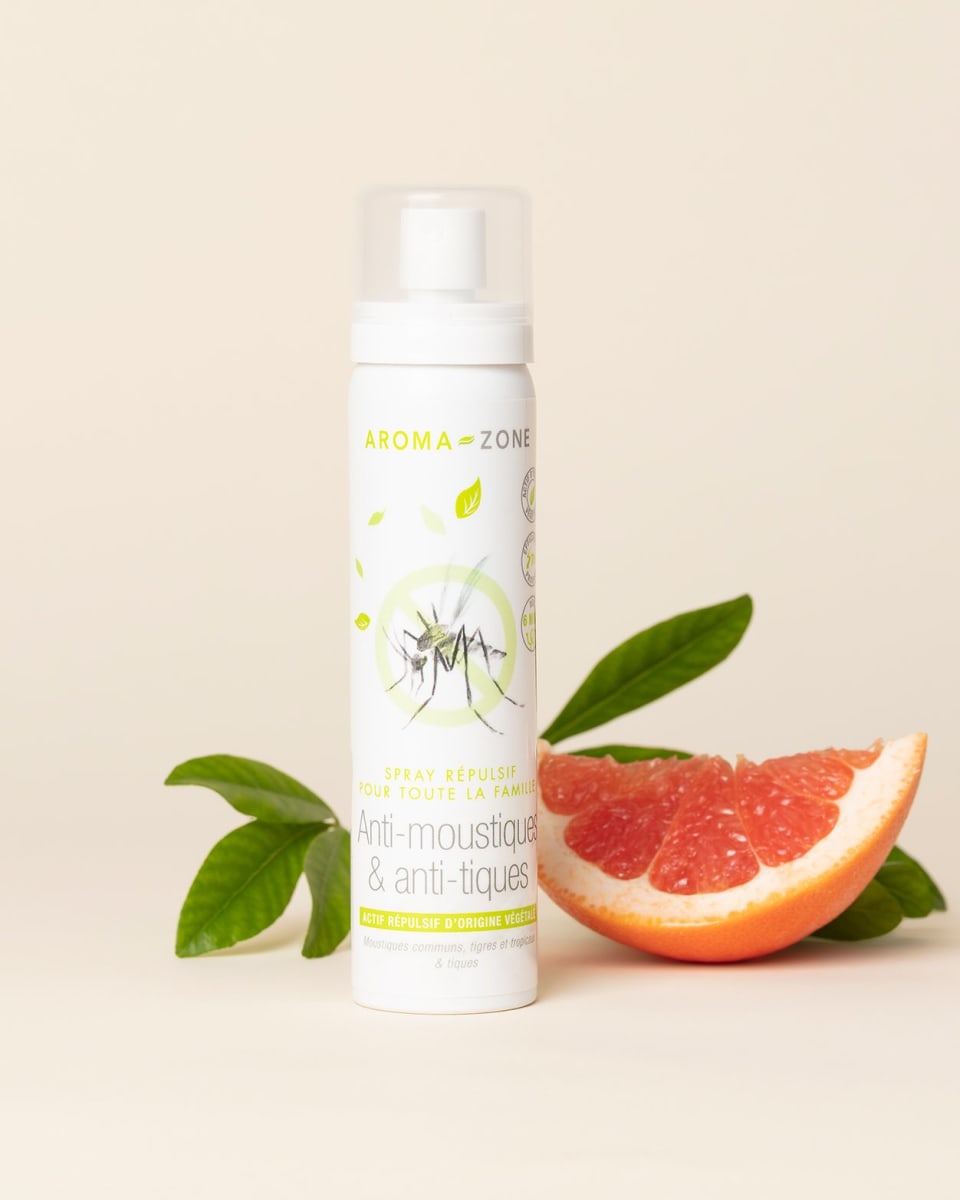
Mosquito repellent for adults and children : Aroma-Zone’s mosquito and tick repellent spray features a plant-based formula suitable for babies from 6 months, children and adults. It contains 30 per cent of an active ingredient derived from citronella in a hydroalcoholic base without a propellant, and has a mild grapefruit scent. Independent tests demonstrate effectiveness for up to 7 hours against tiger and common mosquitoes, and up to 6 hours against tropical mosquitoes. The 75 ml aluminium bottle, which is convenient to carry, is largely recyclable. Precautions for use recommend not spraying directly onto the face, avoiding contact with the eyes, and advise against use by pregnant or breastfeeding women.
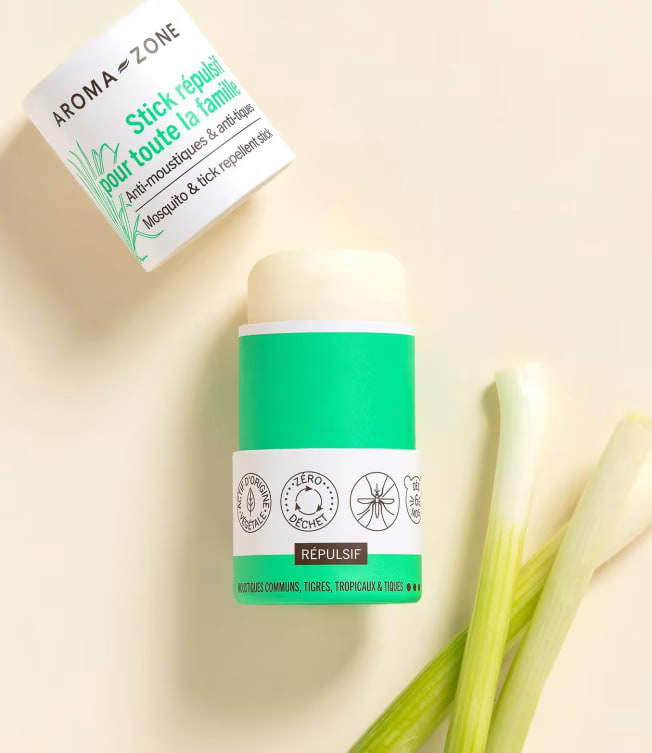
Mosquito and tick repellent stick : the Aroma-Zone mosquito and tick repellent stick is also formulated using a plant-based active ingredient derived from lemongrass, contains no neurotoxic insecticides, and has a mild fragrance reminiscent of grapefruit. This solid, compact format allows for precise, localised application without coming into contact with the hands or eyes, making it ideal for children aged 6 months and over. Tested by an independent laboratory, it provides up to 5 hours’ protection against common mosquitoes and ticks, and up to 4 hours’ protection against tiger and tropical mosquitoes. The 20 g stick comes in a recycled cardboard case containing over 40 % recycled material. The recommended use is 1 to 3 applications per day depending on age, avoiding the face and reapplying after swimming or sweating.
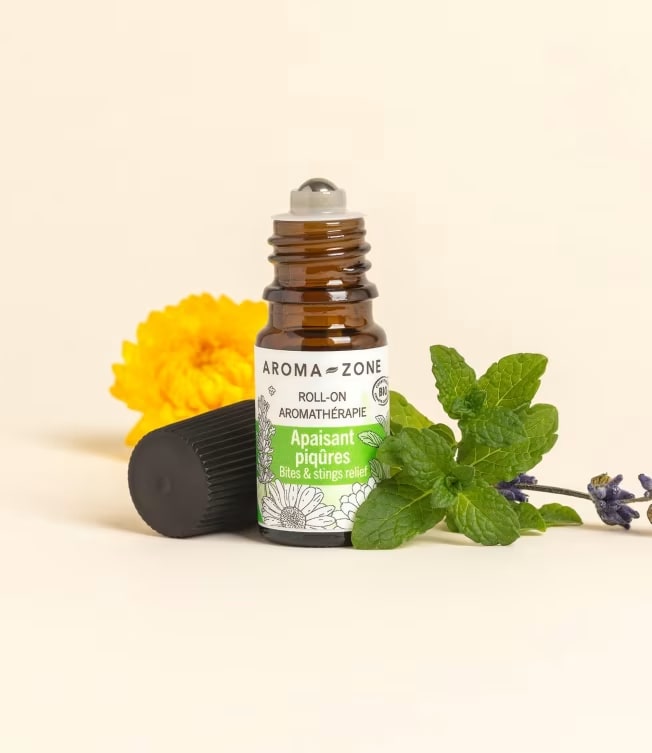
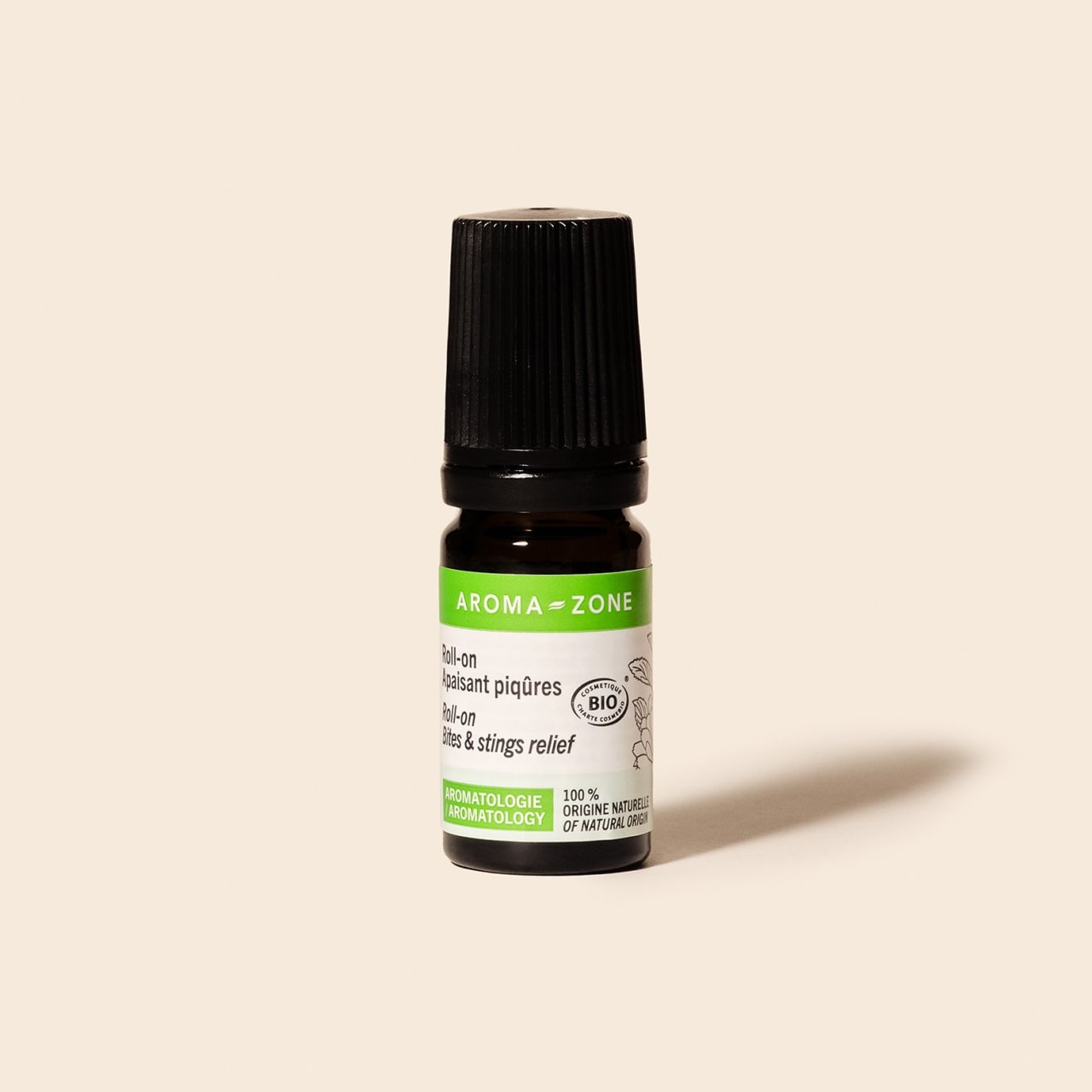
Soothing essential oil roll-on for insect bites : The rsoothing aromatherapy roll-on is a 100 % natural product, certified Cosmos Organic, designed to quickly relieve itching caused by insect or plant stings. It combines organic essential oils of true lavender and chamomile (Roman and German), calendula extract and organic menthol crystals, providing an immediate cooling and soothing effect. Suitable for adults and children aged 3 and over, this 5 ml roll-on in a glass bottle with a steel ball is convenient to carry around. It is recommended that pregnant or breastfeeding women avoid using this product, and that it be stored away from heat and light.
Discover our Soothing Essential Oil Roll-on for Insect Bites :
What can you do to prevent a bite from becoming infected?
To avoid any infected mosquito bites and complications, we advise you to:
Clean the bite immediately: with lukewarm water and mild soap within two minutes of being bitten
Disinfect: using an alcohol-free antiseptic solution morning and evening for 48 hours
Cool the area: you can use a wrapped ice pack for a maximum of 10 minutes to reduce swelling
Avoid scratching: if the itching becomes unbearable, gently tap the area
Monitor: mark the edge of the redness with a pen; if it spreads beyond this mark within 24 hours, seek medical advice
Prevent future bites: wear covering clothing, fit a mosquito net, and use an approved bug repellent.
Our related recipes

Standard precautions
Any systemic symptoms (persistent fever, joint pain, severe headaches) following a bite from an infected mosquito require prompt medical attention, as the bite may be a sign of a generalised infection or an arbovirus infection.
Expert advice
An infected mosquito bite often remains harmless if it is cleaned and monitored from the outset. Keeping the skin clean, minimising scratching and using approved soothing treatments helps to contain the local reaction. In Europe, the real threat lies mainly in the viruses carried by the tiger mosquito, hence the need for strict repellent measures, particularly at dawn and dusk, when Aedes females are most active. If in doubt, it is best to consult a healthcare professional to ensure early treatment and avoid any complications.
Meet Our Expert Writer: Stéphanie Le Guillou

Stéphanie is a pharmacist (since 2010) and holds a PhD in molecular biology (since 2012). Passionate about writing, she has produced medical content for nearly 15 years. Her goal is to make information accessible and easy to understand, without ever sacrificing scientific accuracy.
Bibliography
ameli.fr. Mosquito bites: diseases and modes of transmission.
May 2025.
ars. Tiger mosquito: how can you protect yourself?
June 2025.