A mosquito repellent is a substance applied to the skin, clothing or other surfaces to deter mosquitoes from landing and biting. These products work by masking or altering the sensory signals that mosquitoes use to locate their target.
How can you make your own homemade mosquito repellent?
By The Aroma-Zone editorial team
Published on: Wednesday, July 10, 2024, Updated on: Wednesday, October 28, 2026
The return of summer means… Mosquitoes! These pesky little insects can spoil our evenings outdoors, disturb our sleep and, worse still, can carry serious diseases such as malaria, dengue fever and the Zika virus. Fortunately, there are plenty of natural and effective ways to keep them at bay. In this article, discover our tips and solutions to protect yourself effectively and naturally against mosquitoes, so you can enjoy the summer with complete peace of mind.
Contents
What is a mosquito repellent?
What attracts mosquitoes?
Mosquitoes are generally attracted to:
Carbon dioxide (CO₂): When we breathe, we emit CO₂. Mosquitoes are able to detect these emissions from several metres away.
Body heat: Our bodies give off heat, a clear indication of the presence of a potential host.
Certain chemical compounds on the skin: Sweat, lactic acid and other compounds present on our skin also attract mosquitoes.
Certain perfumes and cosmetics: Floral or fruity fragrances can be particularly attractive to mosquitoes.
Humidity: Damp areas and stagnant water are favourite breeding grounds for mosquitoes.
What keeps mosquitoes away?
Mosquitoes are repelled by:
Certain smells: Many odour compounds, such as those found in certain plants (garlic, lemongrass, lemon eucalyptus, lavender, basil and geranium) or in other products such as vinegar, are very unpleasant to mosquitoes.
Wind: Mosquitoes are poor flyers and find it difficult to navigate in windy areas.
Ultraviolet light: Although this varies between species, some mosquitoes are less attracted to UV light.
Light-coloured clothing: Mosquitoes are more easily attracted to dark colours. Wearing light-coloured clothing can help reduce bites.
Why use a natural mosquito repellent?
Natural mosquito repellents, usually made from plant extracts such as lemongrass and lavender, are effective at keeping mosquitoes at bay whilst being safe for our health and the environment. Their gentle formula makes them suitable for the whole family, including children and those with sensitive skin. They offer a healthy solution to prevent bites.
A closer look at our two natural mosquito repellents from Aroma-Zone
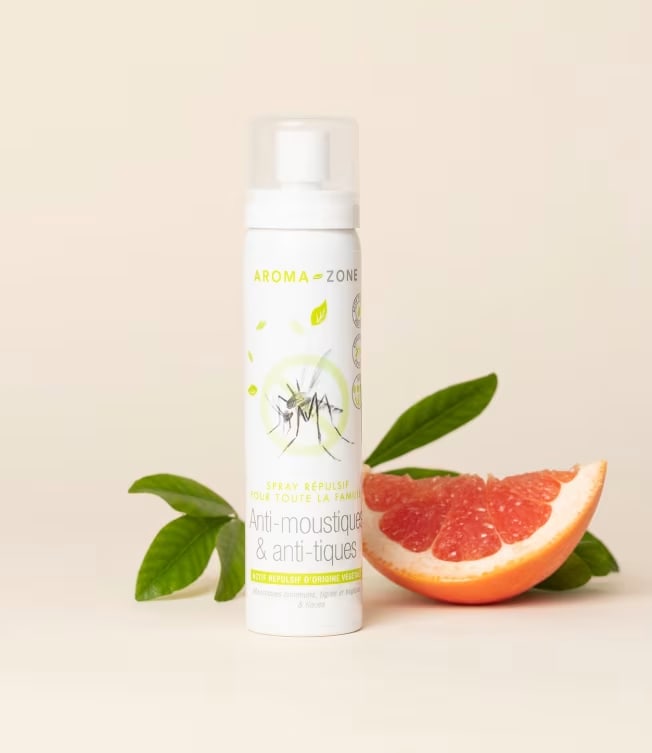
Our Mosquito Repellent Spray for Adults and Children
With proven effectiveness lasting up to 7 hours against tiger and common mosquitoes, and up to 6 hours against tropical mosquitoes, this plant-based repellent spray is ideal for the whole family. Formulated with an active ingredient derived from lemongrass, it is suitable for children from 6 months old and leaves a gentle grapefruit scent. Easy to apply thanks to its light, non-greasy texture, this spray – which contains no neurotoxic insecticides – offers long-lasting and pleasant protection.
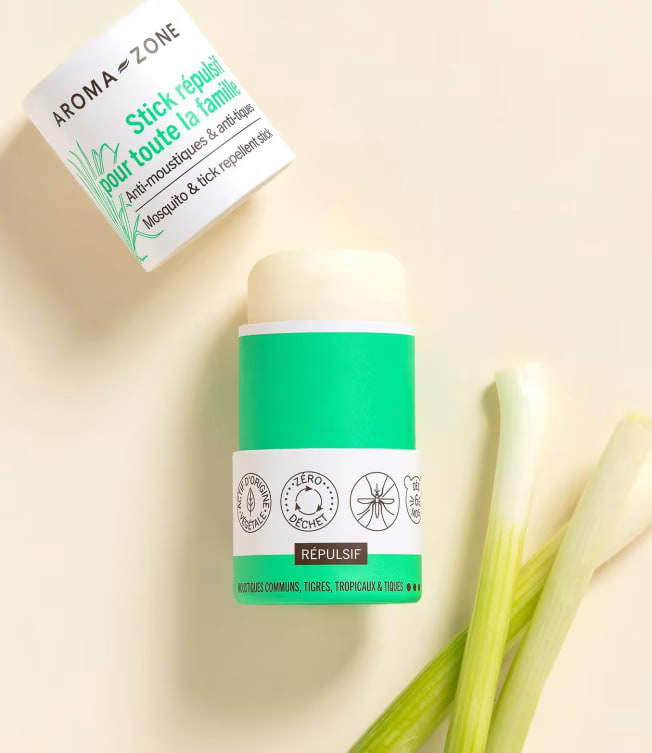
Our Mosquito and Tick Repellent Stick
This compact and handy stick provides effective protection for up to 5 hours against common mosquitoes and ticks, and for up to 4 hours against tiger and tropical mosquitoes. Formulated using an active ingredient derived from citronella and free from neurotoxic insect repellents, it is suitable for children from 6 months of age. Its solid formula allows for precise application without direct contact with the hands, and its pocket-sized design means you can slip it into your handbag to carry it with you every day.
Our top natural mosquito repellent solutions
Here is our selection of the best natural mosquito repellents:
Citronella
Citronella is renowned for its repellent properties thanks to its active compounds, citronellal and geraniol, which mask the odours that attract mosquitoes.
You can use it in various forms:
Essential oil: Add a few drops of citronella essential oil to an electric diffuser. Leave it to diffuse for 15 to 30 minutes before entering the room. This creates an olfactory barrier that repels mosquitoes while leaving your home smelling lovely.
The plant: Plant lemongrass in pots around your patio or in your garden to naturally keep mosquitoes at bay.
Candles: Use lemongrass candles during your evenings outdoors. They give off a pleasant scent whilst repelling insects.
Insect-repellent plants
Certain plants such as lavender, basil, geranium and peppermint give off strong scents that mosquitoes hate. Plant them in pots around your home.
White vinegar
White vinegar, thanks to its acetic acid, has a strong smell that deters mosquitoes. Mix equal parts white vinegar and water in a spray bottle. Spray this mixture onto your clothes, around the openings of your home and in the areas where you spend time outdoors to create a protective barrier.
Coffee grounds
Burnt coffee grounds give off a smoke that disturbs mosquitoes and effectively keeps them at bay. Let the used coffee grounds dry out, then burn them in a container outdoors. The strong smell they give off repels mosquitoes and other pesky insects.
Cloves
Cloves contain eugenol, a compound that is effective at repelling mosquitoes. Steep some cloves in water, then strain the mixture. Pour the liquid into a spray bottle and spray it around your home or onto your skin to keep mosquitoes at bay.
How do you make your own homemade mosquito repellent?


Essential steps to keep mosquitoes at bay
As well as natural solutions, here are our ten practical tips to protect yourself effectively against mosquitoes:
Avoid going out at dusk and dawn, when mosquitoes are most active.
Wear long, lightweight clothing to cover your skin.
Use mosquito nets around beds and on windows.
Get rid of stagnant water around the house, as this is where mosquito larvae breed and develop.
Plant insect-repellent plants around the entrances to your home, such as lemongrass, lavender and basil.
Install fans to create an environment less favourable to mosquitoes.
Change the water in vases and bird baths regularly.
Use mosquito traps to reduce the mosquito population.
Avoid floral and fruity fragrances, which attract mosquitoes.
Apply your natural mosquito repellent regularly, especially after sweating or swimming.
Precautions to take
Always test a new product on a small area of skin to check for any allergic reaction. Avoid exposure to the sun after applying essential oils or photosensitising solutions.
Use essential oils in moderation, especially on children and pregnant or breastfeeding women. Always check the contraindications before using any essential oil. Also take care if you have pets at home.
Never apply essential oils directly to the skin without diluting them in a carrier oil, and avoid contact with the eyes and mucous membranes.
Expert advice
If, despite all our advice, you’ve still managed to get a mosquito bite, try our “Bite Relief” roll-on. Its 100% natural formula provides immediate relief from itching and a burning sensation thanks to a blend of soothing essential oils.
Spotlight on Our Naturopathic Writer: Stéphanie Catrysse

Stéphanie Catrysse is a naturopath (certified by the FENA), a wellness massage and lymphatic drainage practitioner, and a personal development coach. She is passionate about alternative medicine and practices a holistic approach to health.