Do coffee grounds really keep mosquitoes away?

Do coffee grounds really keep mosquitoes away?


By Hélène Betoux

Published on: Thursday, July 11, 2024, Updated on: Wednesday, September 30, 2026

You may already be using it as a natural fertiliser, a skin exfoliant or a room deodoriser. But have you ever used coffee grounds to repel mosquitoes? According to several studies, this natural and inexpensive ingredient seems to be genuinely effective against both larvae and adult mosquitoes – provided you use it correctly! So here’s everything you need to know to make it your best ally this summer.

Contents

What are coffee grounds?

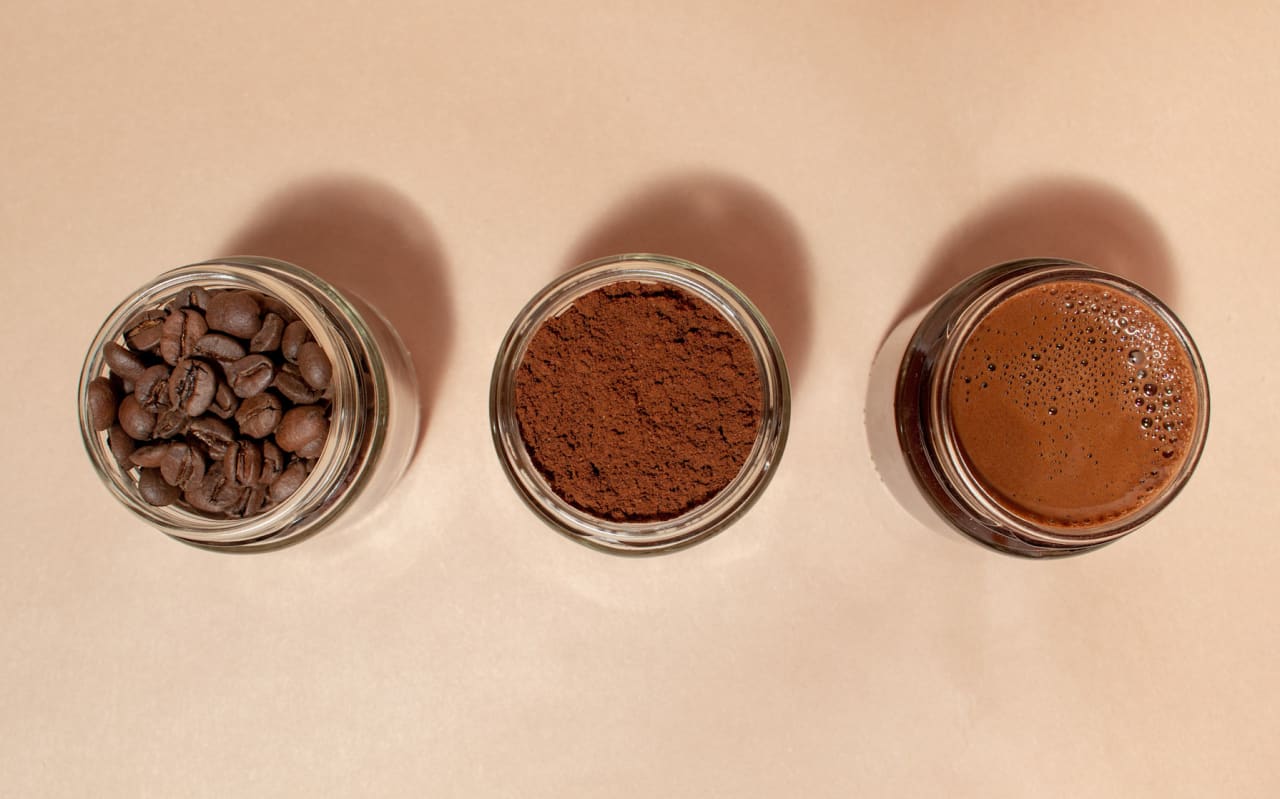
Coffee grounds are what’s left of your ground coffee after it has been brewed or steeped to make your drink. It is quite simply ‘used’ coffee through which water has passed, stripping out most of its flavour and active molecules. 

As it cannot be reused to brew more coffee, coffee grounds are often treated as waste. Yet they can still be put to good use! At home, in the garden or even in the bathroom, they have many uses, most of which are inspired by old-fashioned home remedies. But what is less well known is that coffee grounds can also be a very effective ally in keeping mosquitoes away from our living spaces.

What keeps mosquitoes away?

Scents are the main way that we can scare off mosquitoes – hence the popularity of aromatic plants for this purpose, particularly lemongrass and mint. They disrupt the ‘radar’ of biting female mosquitoes, which rely on their sense of smell to find their next target.  

Conventional repellents largely work in this way. They often contain DEET, a synthetic compound. This repels mosquitoes by disrupting some of their olfactory receptors. This makes it harder for mosquitoes to identify us as prey. Coffee grounds, for their part, appear to possess both repellent and insecticidal properties.

Why use coffee grounds to keep mosquitoes at bay?

It acts as a repellent

Coffee is considered a natural mosquito repellent. It appears to be particularly effective against female tiger mosquitoes. A study by Satho et al. (2015) demonstrated that female tiger mosquitoes avoid laying eggs in a solution of water and highly concentrated coffee extract. They lay far fewer eggs in this solution than in pure water. It therefore appears that coffee is unattractive to these insects, or even acts as a repellent.

It disrupts the development of embryos and reduces the lifespan of adult mosquitoes

That’s not all! As well as naturally repelling adult mosquitoes, coffee extract appears to inhibit the development of their embryos. In the previous experiment, far fewer eggs laid in a ‘caffeinated’ environment hatched. Once again, the comparison was made with environments consisting solely of water. In 2016, Dieng et al. took their research a step further. They demonstrated that, as well as disrupting the embryonic development of tiger mosquitoes, it could also reduce the life expectancy of adults.

It acts as a larvicide

Coffee grounds are also thought to be capable of eliminating mosquito larvae. Experiments in this area have been carried out on the species Aedes aegypti, the main vector for dengue fever (tropical fever). However, the amount of coffee grounds used in the studies varied: from 50 mg/mL to 300 mg/mL in two different simulations, with a 100 per cent mortality rate among the larvae in each case.

Using coffee grounds: what you need to know to make it work

Caffeine is the main molecule responsible for coffee’s insecticidal effect. However, some of it is lost when you brew your coffee. Caffeine is water-soluble: this means it is carried away by the water passing through the ground coffee as it is turned into a drink. The grounds left over at the end therefore contain less caffeine than the original ground coffee. In other words: the more water you use to make your coffee, the lower the caffeine content of your coffee grounds will be… and the less effective they’ll be against mosquitoes!

Good to know

Some varieties of coffee naturally contain more caffeine than others. Robusta coffee contains around twice as much as Arabica coffee. However, this concentration may vary depending on the brand and geographical origin of your coffee.

How can you use coffee grounds as a natural mosquito repellent?

Burning coffee grounds

This is the most commonly used method. However, it isn’t necessarily the most effective. Here, the main benefit of coffee grounds is that they give off smoke when burnt. And smoke (whatever its source) bothers insects, particularly our little bloodsuckers: they can no longer use their sense of smell to ‘track’ us down. So, when dining outdoors, you could try burning a tiny pile of it in a spot that’s easy to keep an eye on and at a reasonable distance from your table. Avoid breathing in the smoke.

How to use it

Use thoroughly dried coffee grounds. Place them in a small ceramic dish, strike a match and let them burn gently. Refresh the pile once it has burnt out, if necessary.

Making a candle with coffee grounds

You can also make a mosquito-repellent candle using coffee grounds. As an added bonus, it will fill the air with the pleasant scent of roasted coffee. It’s a fun activity and a nice change from the usual citronella-scented candles. Place this candle in the centre of a table where you want to keep mosquitoes at bay, while you’re having a meal or relaxing.

How to do it

Melt some wax (vegetable or beeswax) in a bain-marie and along with thoroughly dried coffee grounds. Pour the mixture into a candle mould or a small jam jar, remembering to insert a wick. Leave your candle to cool completely before removing it from the mould, if necessary. To learn all the tricks of the trade for making homemade candles, check out our tutorial.

Using coffee grounds to repel mosquitoes in the garden

The most effective way to avoid attracting mosquitoes is to get rid of all standing water in your garden (including those pools and puddles hidden in corners and crevices!) If some prove difficult to get rid of, you can try placing fresh coffee grounds in them. This will recreate conditions similar to those in the experiments mentioned in the previous sections. The presence of coffee in these potential egg-laying sites should deter females from laying their eggs there.

Our tip

This method should be used with caution, in isolated areas and in small amounts of water. If used incorrectly, coffee grounds can acidify the soil and inhibit plant growth.

Our extra tips for keeping mosquitoes at bay

  1. Use a mosquito repellent stick to protect your family (including babies and children 6 months old) from mosquito bites. Our stick is also effective against ticks.

  2. At home, avoid switching on lights after dark. Fit mosquito nets if you sleep with the window open.

  3. Get rid of any standing water in your garden, but also indoors (vases, plant pots, kitchen, bathroom, etc.).

  4. Place pots of herbs (lemongrass, mint, basil, rosemary, verbena) or geraniums on your windowsills.

Our natural mosquito repellent recipes to try at home

Precautions for use

Mosquito repellent stick: Keep out of reach of children.​ Avoid contact with the eyes. Do not swallow. Do not use on babies under 6 months. There is insufficient data to recommend the use of this spray on pregnant or breastfeeding women, so we advise against it. Dangerous. Follow the safety precautions. Use the Mosquito Repellent Stick with care. Before use, read the label and product information. Formulation type: Anhydrous stick. Active ingredient: Cymbopogon winterianus oil, fractionated, hydrated cyclised (CAS: 42822-86-6): 30% (w/w). Biocide TP19. Causes severe eye irritation. In case of contact with eyes: rinse cautiously with water for several minutes. Remove contact lenses, if present and easy to do. Continue rinsing. Wash hands thoroughly after each use. Contains citronellol, linalool and limonene. May cause an allergic reaction.

Expert advice

Why not let nature do the work for you? Mosquitoes have many natural predators: swallows, swifts, spiders, bats, dragonflies, frogs, and so on. Try to attract them to your garden by providing an environment where they can thrive. For example, you could put up artificial nesting boxes for birds.

Focus on Our Writer: Hélène Betoux

Hélène Betoux is a French beauty journalist specialising in web media. Every day she writes tips, advice, and guides to help consumers choose the right beauty products. With a strong interest in natural, organic, and clean cosmetics, she analyses and shares trends and innovations in the sector.

Bibliography

  1. Satho T, Dieng H, Ahmad MH, Ellias SB, Hassan AA, Abang F, Ghani IA, Miake F, Ahmad H, Fukumitsu Y, Zuharah WF, Majid AH, Kassim NF, Hashim NA, Ajibola OO, Al-Khayyat FA, Nolasco-Hipolito C.

    Coffee and its waste repel gravid Aedes albopictus females and inhibit the development of their embryos. Parasit Vectors. 14 May 2015;8:272. doi: 10.1186/s13071-015-0874-6. PMID: 25966847; PMCID: PMC4436121. Online: https://www.ncbi.nlm.nih.gov/pmc/articles/PMC4436121/

  2. Dieng H, Ellias SB, Satho T, Abang F, Morales Vargas RE, Morales NP.

    Response to the letter sent by Dr Viroj Wiwanitkit entitled "Coffee waste, vector control and dengue". Environ Sci Pollut Res Int. Nov 2018;25(32):32823–32825. doi: 10.1007/s11356-018-3363-6. Epub 11 October 2018. PMID: 30311114.

  3. Drago, Andrea & Vettore, Stefano & Martini, S. & Dutto, M. (2021).

    Efficacy of used coffee grounds as larvicide against Aedes albopictus (Skuse, 1894) and Ae. aegypti Linné, 1762 (Diptera: Culicidae). Journal of the European Mosquito Control Association. 39. 1–4. 10.52004/JEMCA2021.0004. Online: https://www.researchgate.net/publication/353947208_Efficacy_of_used_coffee_grounds_as_larvicide_against_Aedes_albopictus_Skuse_1894_and_Ae_aegypti_Linne_1762_Diptera_Culicidae

Frequently Asked Questions

Frequently Asked Questions