A medicinal plant known since ancient times
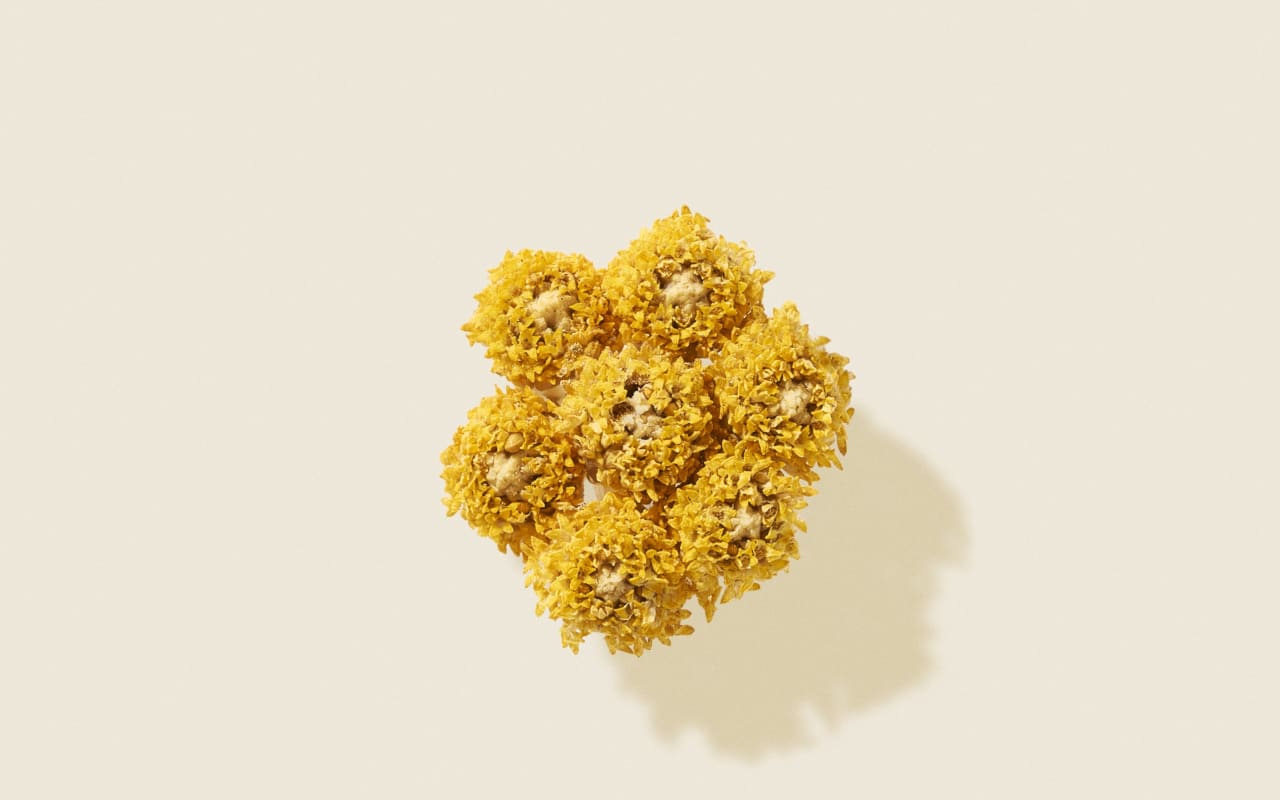
From the Greek helios, meaning “sun”, & chrysos, meaning “gold”, Italian Helichrysum, also known as Italian Immortelle or Corsican Immortelle, grows in small clumps throughout the Mediterranean region. Its name, Immortelle, comes from its flowers, which do not wilt after being picked.
In ancient Greek times, Helichrysum flowers symbolised love & were used to crown statues of Apollo. Helichrysum was already used in the form of solar macerates, poultices, & ointments to promote the healing of wounds & scars. Decoctions made from its flowering tops were also used to clear the respiratory tract & for their diuretic action.
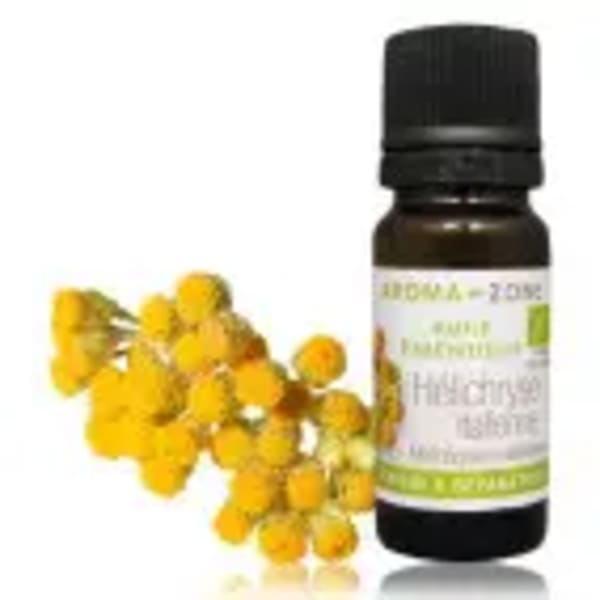
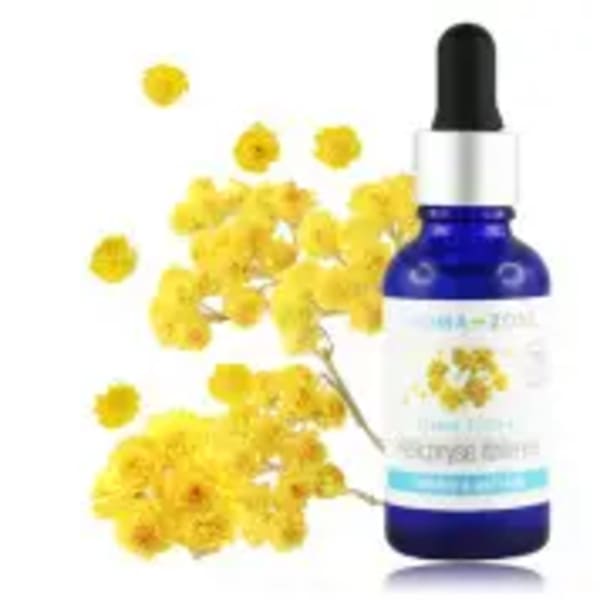
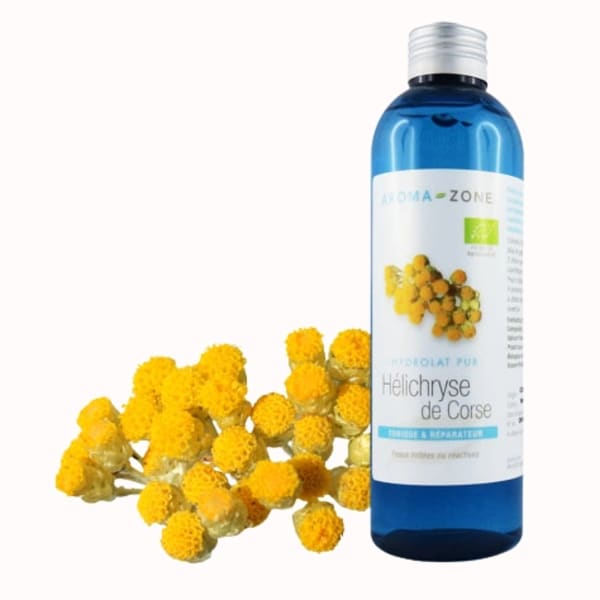
In herbal medicine, the golden-yellow flower heads are used in various forms, including dried plants, Helichrysum essential oil, Helichrysum oil macerate (sometimes commonly called Immortelle oil), or Helichrysum hydrosol (Helichrysum floral water).
Italian Helichrysum
Helichrysum italicum is the most famous and prized subspecies of Helichrysum, particularly for its essential oil from Corsica. An essential in aromatherapy, this essential oil is renowned for its powerful properties: anticoagulant, circulatory, anti-hematoma, anti-inflammatory, and healing.
The most sought-after species is Helichrysum italicum ssp.italicum, Italian or Corsican immortelle, which has the most interesting composition for skincare. Its complex and exceptional biochemical composition is linked to the terroir on which the plant grows, the nature of the soil, the climate, and the amount of sunshine.
Exceptional products, Aroma-Zone's organic Italian Helichrysum essential oil and hydrosol both come from the Isle of Beauty. To find out more and discover their history, read our article Stéphane's Italian Helichrysum, Corsica's little sun
Several types of Helichrysum, different properties
There are several sources of Helichrysum on the market. Did you know that there are more than 300 herbaceous or shrubby species of the Helichrysum genus? Depending on their origin, Helichrysum essential oils will not have the same active molecule compositions and will therefore not have the same properties. If you are looking for Corsican Helichrysum (Helichrysum italicum), be careful not to confuse it with Balkan Helichrysum (Helichrysum angustifolium) or Madagascar Helichrysum (Helichrysum gymnocephalum). Each of these essential oils has a different chemotype (i.e., biochemical composition) in aromatherapy. So remember to check the botanical name of the plant before purchasing a Helichrysum product.