Atopic Skin in Babies: What Is Recommended?

Atopic Skin in Babies: What Is Recommended?


By Alice Blanchard

Published on: Wednesday, March 05, 2025, Updated on: Wednesday, October 28, 2026

A baby’s skin is naturally thinner and more delicate than that of an adult. When it is atopic, it tends to be dry, sensitive, reactive and more vulnerable to everyday irritants. This fragility may be accompanied by redness, itching, or patches of atopic eczema, also known as atopic dermatitis. Therefore, the aim is to adopt gentle, regular skincare routines that are suitable for infants.

Contents

Related products

What Is Atopic Skin in Babies?

Atopic skin is skin that is prone to dryness, irritation, and inflammatory reactions. In babies, it can be rough, uncomfortable and more sensitive to friction, temperature changes, perfumed products, or overly harsh cleansers.

The term ‘atopy’ refers to a predisposition to developing certain manifestations of hypersensitivity, such as atopic eczema, asthma, allergic rhinitis, or certain allergies. This predisposition may run in the family, but it does not mean that a baby will necessarily develop all of these conditions.

Atopic skin is often linked to a more fragile skin barrier. The skin barrier is the protective layer on the surface of the skin. It limits water loss and protects the body against external irritants. When it does not function as well, the skin dries out more easily and becomes more permeable to irritants.

In babies, this sensitivity can come and go in phases. Some phases are milder, with the skin simply feeling dry. Others are characterised by redness, patches, itching or lesions of eczema. Pruritus refers to itching. In an infant, this may manifest as restlessness, disturbed sleep or rubbing against clothing and bed linen.

Atopic Skin and Eczema: What’s the Difference?

Atopic skin refers to skin that is fragile, dry, and reactive. It describes a predisposition. Atopic eczema, or atopic dermatitis, is an inflammatory skin condition that often occurs in flare-ups.

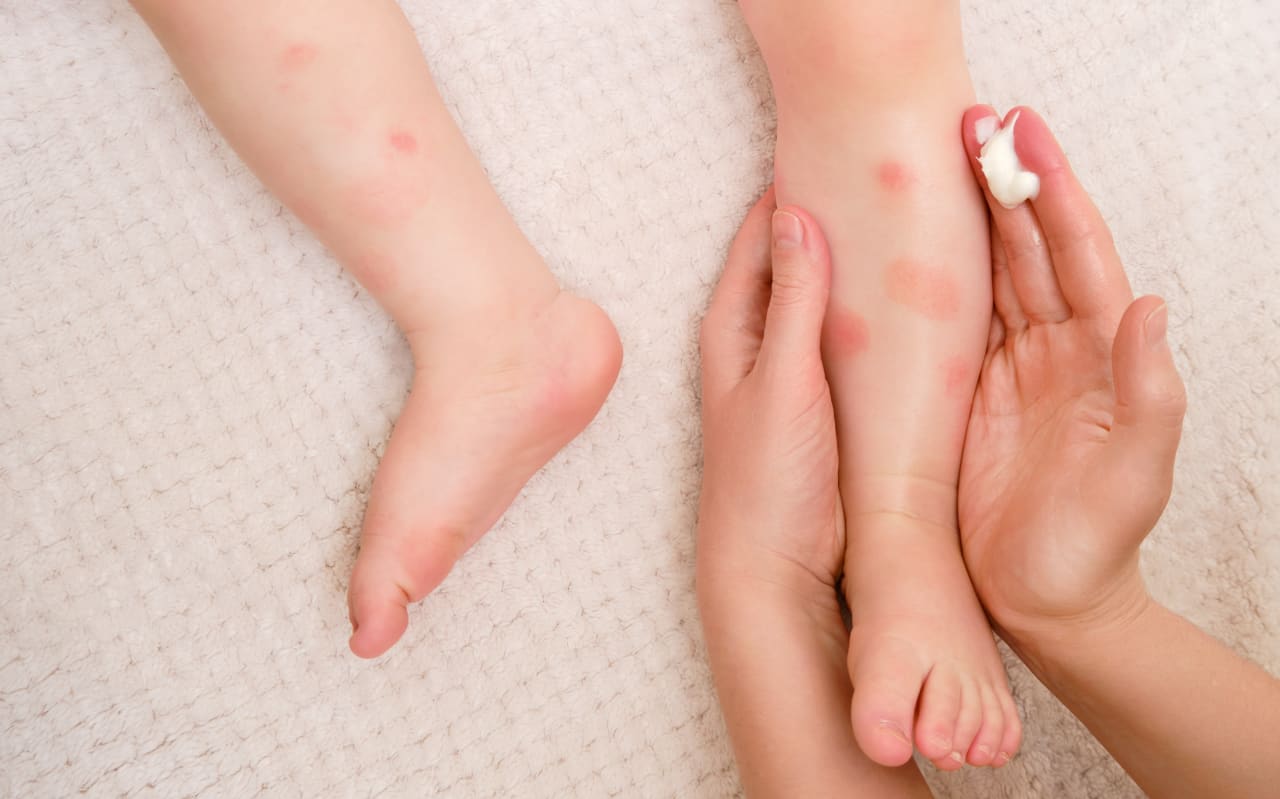
In practice, a baby may have atopic skin without constantly showing visible patches of eczema. During a flare-up, the skin becomes redder and more irritated and may sometimes be weeping or crusted, often accompanied by severe itching.

The two conditions are therefore linked, but they are not entirely the same. Daily care for atopic skin focuses primarily on managing dryness and maintaining skin comfort. However, a more severe flare-up of eczema that is widespread, markedly inflamed, weeping, or causing significant discomfort requires medical advice.
What Are the Possible Causes of Atopic Skin in Babies?

Genetic Predisposition

Atopic skin is often influenced by a family history of the condition. If a parent or close family member has atopic dermatitis, asthma, allergic rhinitis, or certain allergies, the baby may be more likely to have an atopic predisposition themselves.

However, this predisposition does not allow us to predict how the condition will develop in each individual case. Some babies will only have dry, sensitive skin, while others will experience more severe flare-ups.

Impaired Skin Barrier

The skin barrier plays a protective role. When it is compromised, the skin loses moisture more easily. It becomes dry, uncomfortable and more sensitive to external irritants.

In atopic dermatitis, this impairment of the skin barrier contributes to a vicious cycle of irritation: dry skin itches, the baby rubs or scratches, and this rubbing further weakens the skin.

Dry Skin

Dry skin, also known as xerosis, is very common in atopic skin. It gives the skin a rough, sometimes scaly appearance, with small flakes visible on the surface.

This dryness can be exacerbated by excessively hot baths, washing too frequently, foaming or perfumed products, hard water, cold weather, or dry air. It is not in itself sufficient to diagnose eczema, but it contributes to a feeling of skin discomfort.

Inflammatory Skin Reaction

Atopic dermatitis involves both a compromised skin barrier and an inflammatory reaction. Inflammation is the body’s defence response, which can manifest on the skin as redness, localised warmth, itching, or patches.

In babies, these patches may appear on the cheeks, forehead, scalp, arms or legs. Their location changes as the child grows. The severity of flare-ups varies from time to time.

Environmental Irritants

Certain everyday factors can irritate atopic skin: perfumed products, harsh soaps, poorly rinsed washing powder, rough clothing, wool worn directly against the skin, excessive heat, sweating, friction or baths that last too long.

These factors are not always the cause of atopic skin, but they can exacerbate discomfort in a baby who is predisposed to it. A simple, gentle and regular routine can help to minimise everyday irritants.

Allergens and Atopic Predisposition

Atopic predisposition may be associated with increased sensitivity to certain allergens. An allergen is a substance capable of triggering an allergic reaction in a predisposed individual.

However, one should not conclude that a particular food, animal or everyday product is to blame without seeking medical advice. Allergy tests are only useful in certain situations, particularly when the eczema is severe, persists despite appropriate care, or is associated with growth delay or signs suggestive of a food allergy.

Climatic Factors or Temperature Fluctuations

Cold, wind, dry air, heat, or rapid changes in temperature can affect skin comfort. In winter, cold outdoor air and indoor heating can exacerbate dryness. In summer, perspiration can irritate certain areas, particularly in skin folds.

These factors cannot always be avoided, but they can be managed with simple measures: soft clothing, a moderate temperature, gentle washing (particularly when changing nappies) and the regular application of a product suitable for dry or atopic skin.

What Are the Associated Characteristics?

Here are the main signs: 

  • Dry Skin: The skin appears rough, less supple, sometimes flaky, and feels uncomfortable to the touch

  • Redness: Certain areas may become red, particularly during flare-ups or after rubbing

  • Eczema Patches: These may be dry, rough, and sometimes weeping or crusted, depending on the severity of the inflammation

  • Itching: This is common in atopic dermatitis and may manifest in babies as rubbing, restlessness, or disturbed sleep

  • Rough Skin: The skin’s surface may appear grainy, thickened, or less smooth than usual

  • Repeated Rubbing: The baby may rub their cheeks, arms or legs against the sheets, their clothes or the person holding them

  • Small Scratch Marks: When the baby scratches or rubs a lot, the skin may become marked, cracked or further irritated

  • Sensitivity to Toiletries: Certain scented, foaming, or overly harsh products can exacerbate dryness and discomfort

  • Disturbed Sleep: Night-time itching can wake the baby or make it harder for them to fall asleep

  • Flare-Ups: The condition of the skin may alternate between calmer periods and episodes of more pronounced redness, dryness or itching

What Are the Natural Solutions for Soothing a Baby’s Atopic Skin?

Gentle organic donkey milk soap – plant-based & SAF

Gently Cleanse

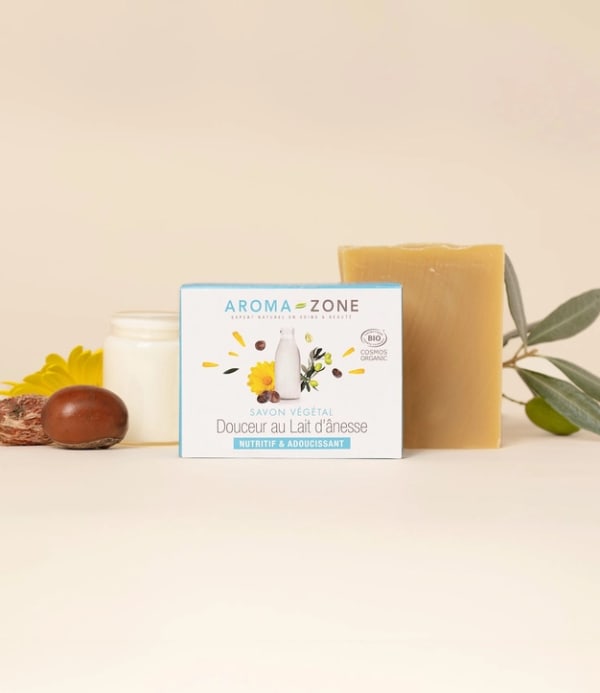
The Aroma-Zone Organic Donkey’s Milk Gentle Soap is suitable for babies with atopic skin, as it is designed for dry, delicate, and sensitive skin. Its ultra-moisturising formula, naturally rich in glycerine, contains 40% fresh organic donkey milk, shea butter, olive oil, avocado and calendula, which are ingredients with nourishing, softening and soothing properties. It cleanses gently without stripping the already weakened skin barrier of skin prone to atopic conditions. 

Directions for Use: For the whole family. Suitable for all skin types, even delicate skin. For the body, face and hands.

Storage and Precautions : The recommended use-by date for this product is 12 months. Store away from heat and light. Net weight as packaged. Product is prone to drying out.

Try the gentle organic donkey milk soap

Organic Colloidal Oat Powder

Preparing a Soothing Bath

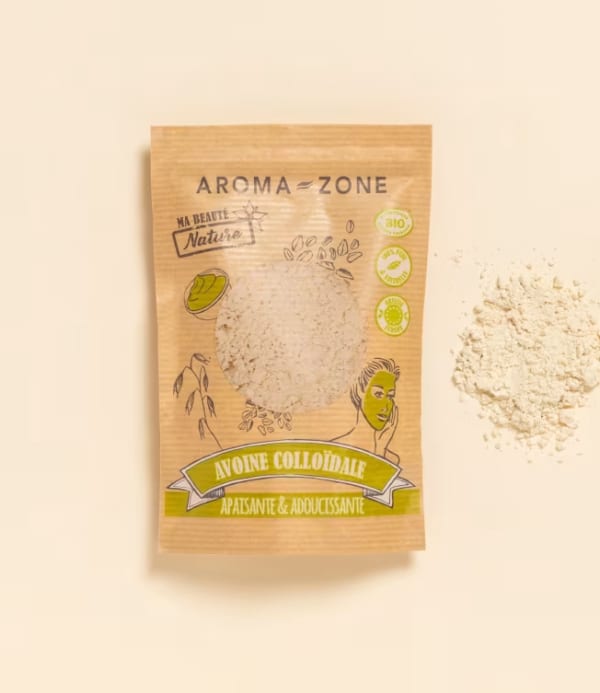
Aroma-Zone Organic Colloidal Oat Powder is suitable for babies with atopic skin, as colloidal oats are recognised for their soothing, softening and protective properties on dry, sensitive, or itchy skin. Used as an ingredient in bath preparations, it creates a very gentle, milky bath that helps to soothe feelings of discomfort and preserve the skin’s protective barrier. After the bath, the skin should be rinsed gently, patted dry without rubbing, then moisturised with a lipid-replenishing product.

Use: As an ingredient in your emollient and softening bath powders.

Storage: This product is sensitive to moisture. Store in its original sachet in a cool, dry place, away from light. Seal the sachet carefully after each use.

Precautions: Powdered product; do not use near a ventilation source; do not inhale. For external use only; do not swallow. Keep out of reach of children.

Try Organic Colloidal Oat Powder

Focus on Our Ready-to-Use Lipid-Restoring Balm

Capture 02 02

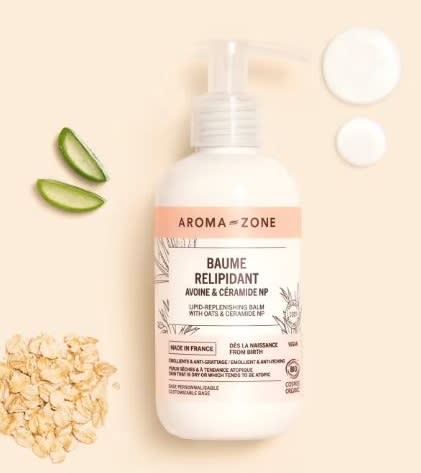
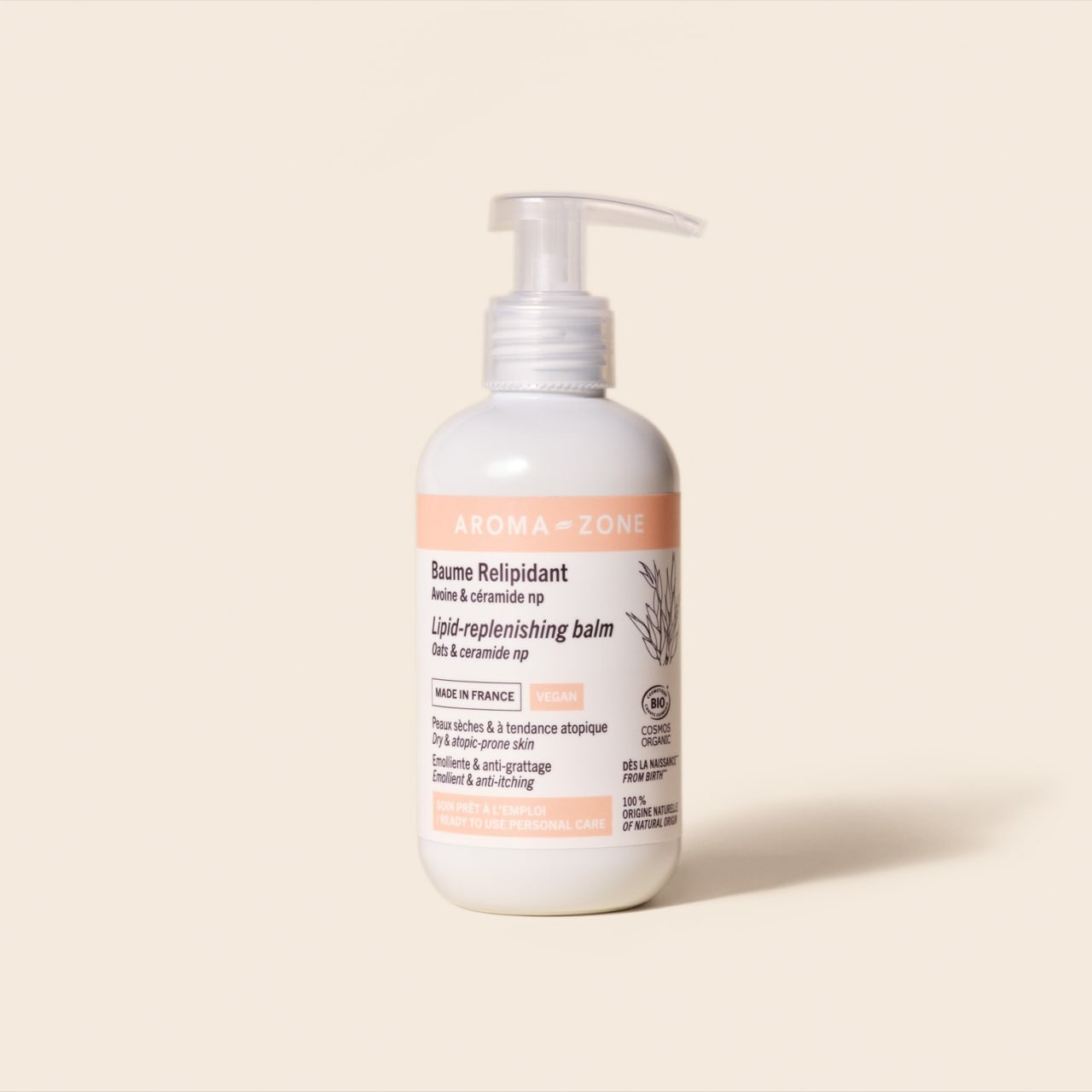
Clinically tested and proven, and designed for dry, fragile, or atopic-prone skin, this triple-action lipid-replenishing balm soothes irritation and redness, reduces itching and intensely nourishes the skin. Enriched with restorative oat oil and lipid-replenishing Ceramide NP, its anti-dryness formula strengthens the skin barrier and protects even the most sensitive skin. Suitable for the whole family from birth, for use on the face and body. It is best used undiluted on infants and young children.

Directions for Use: Apply to the face and/or body in the morning and/or evening on clean, completely dry skin. Then warm the product for a few moments in the palms of your hands before gently massaging it into the affected areas.

Storage: Store away from heat.

Precautions: The PAO (Period After Opening) for this product is 9 months. Apply to healthy skin. Do not apply to severely irritated or damaged skin, or to weeping lesions. Personalisation is recommended for adults only.

Discover the Oat and Ceramide NP Lipid-Restoring Balm

What Are the Best Practices for Caring for a Baby’s Atopic Skin?

Here are a few tips: 

  • Opt for a Short, Lukewarm Wash: A bath or shower that is too hot can exacerbate skin dryness, especially in a baby with atopic skin

  • Use a Gentle Cleanser Suitable for Infants: Harsh soaps, perfumed products and bubble baths can further weaken the skin’s barrier

  • Dry the Skin Without Rubbing: After washing, gently pat the skin dry with a clean towel to minimise irritation

  • Regularly Apply an Age-Appropriate Lipid-Replenishing or Emollient Cream: This type of cream helps combat dryness, softens the skin and promotes skin comfort

  • Choose Soft Clothing: Cotton is generally better tolerated than wool or synthetic fabrics worn directly against the skin

  • Avoid Overheating and Excessive Sweating: Heat, friction and sweating can increase discomfort and itching

  • Keep Your Routine Simple: Using too many products increases the risk of irritation or adverse reactions, especially on sensitive skin

  • Avoid Essential Oils: These are not recommended for babies and must not be used on atopic, irritated, or damaged skin

  • Monitor How the Skin Is Responding: Very red, weeping, crusty or painful patches, a fever, severely disturbed sleep, or a lack of improvement should prompt you to seek medical advice.

Precautions

A baby’s atopic skin requires great care, as it is thin, delicate and sometimes damaged. Fragranced products, harsh soaps, bubble baths, scrubs, home remedies, and skincare products not suitable for infants should be avoided.

Medical advice is required if the patches are very red, widespread, weeping, painful or crusted; if the baby has a fever; if their general condition changes; if their sleep is severely disrupted; or if the skin does not improve despite appropriate care. You should also seek medical advice if the baby is not gaining weight or if a food allergy is suspected.

Cosmetic skincare products designed for atopic skin help to soothe the skin and combat dryness. They are not a substitute for the treatments prescribed by a doctor when atopic dermatitis requiring specific management has been diagnosed.

Expert Advice

For a baby’s atopic skin, simplicity is often the best approach. A short, regular and well-tolerated routine minimises unnecessary irritation: gentle washing, lukewarm water, patting dry without rubbing, cotton clothing and a lipid-replenishing or emollient skincare product suitable for the baby’s age.

An emollient is designed to soften the skin, reduce dryness and support the skin barrier. It is generally applied regularly, often after bathing, to clean, gently patted-dry skin. Consistency is more important than using a multitude of products.

When the skin becomes red, very itchy, weeping or damaged, cosmetic care alone is not always sufficient. A healthcare professional will be able to assess the baby’s skin and recommend appropriate measures or treatments.

Spotlight on Our Beauty Writer: Alice Blanchard

Alice Blanchard

Formerly a manager at an organic shop, Alice spent several years helping her customers choose healthy products that respect both their health and the natural world. Having suffered from endometriosis since her teenage years, she chose to prioritise natural solutions to ease her symptoms and improve her day-to-day well-being. Drawing on her knowledge of naturopathy, she has always explored the benefits of plants and nutrition. Passionate about ecology and deeply connected to nature, Alice makes her own cosmetics and household products to reduce her impact on the planet and all its inhabitants.

Bibliography

  1. Assurance Maladie. Atopic eczema or atopic dermatitis: definition, symptoms and progression. June 2026.

    https://www.ameli.fr/assure/sante/themes/eczema-atopique/reconnaitre-eczema-atopique

  2. Assurance Maladie. Atopic dermatitis: what to do and when to seek medical advice? June 2026.

    https://www.ameli.fr/assure/sante/themes/eczema-atopique/que-faire-quand-consulter

  3. French Society of Dermatology. Recommendations: atopic dermatitis.

    https://reco.sfdermato.org/fr/recommandations-dermatite-atopique

  4. Vidal. Causes and prevention of atopic dermatitis. November 2022.

    https://www.vidal.fr/maladies/peau-cheveux-ongles/dermatite-eczema-atopique/causes-prevention.html

  5. French Paediatric Society. Atopic dermatitis. February 2012.

    https://www.sfpediatrie.com/sites/www.sfpediatrie.com/files/documents/BrochureFocus/focus_dermatite.pdf

Frequently Asked Questions

Frequently Asked Questions