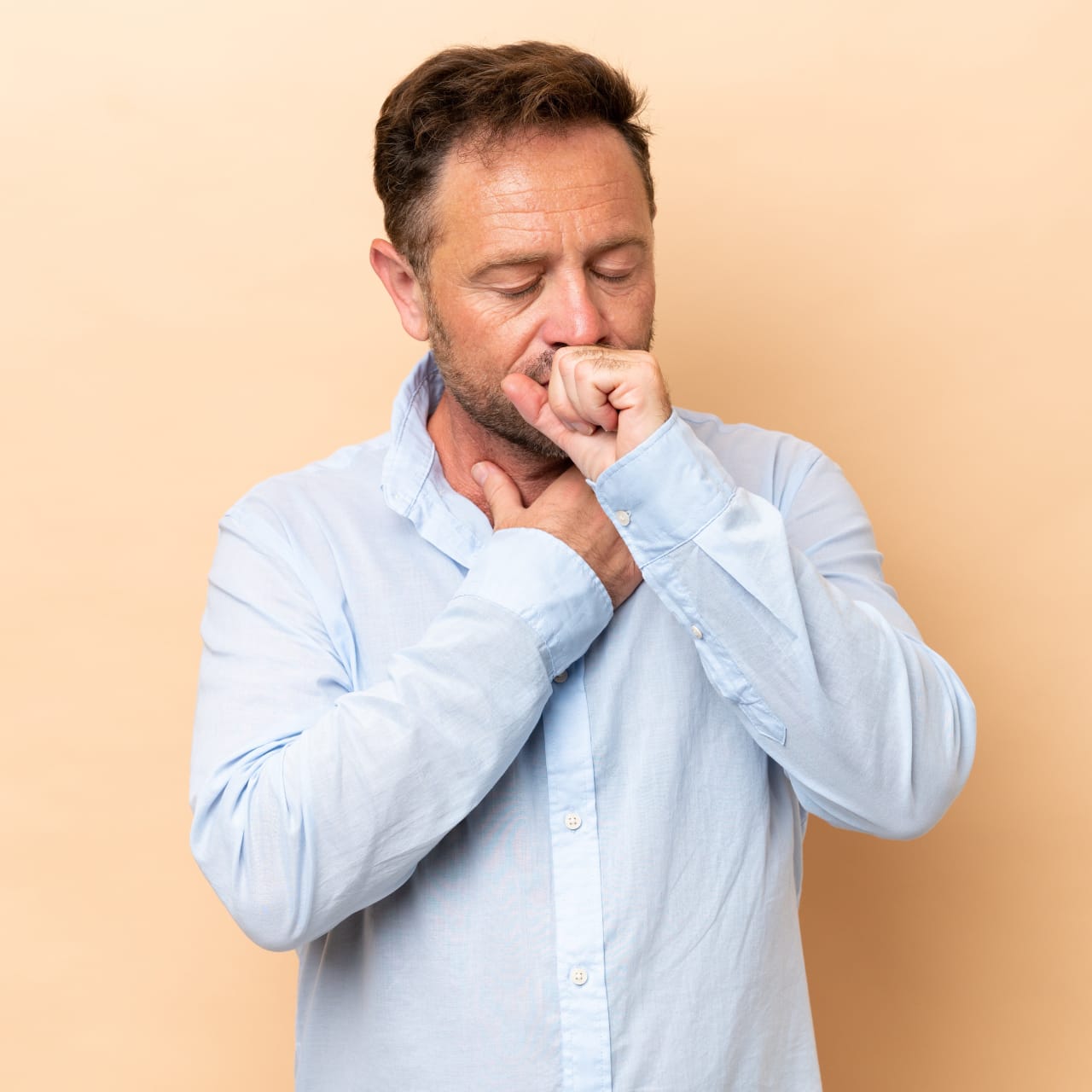
An asthmatic cough results from bronchial hyperreactivity. The bronchial walls, already sensitive, react excessively to triggers that vary from person to person. For some people, exposure to allergens is enough to cause a persistent cough; for others, weather conditions, physical exertion, or even emotions trigger the onset of symptoms. Understanding these causes helps identify high-risk situations and address aggravating factors.
Environmental Factors
The environment often plays a key role in triggering an asthmatic cough. Two main categories exist: allergens and irritants.
Allergens: Pollen, house dust mites, pet hair or feathers, and mould are among the main culprits. In people with allergies, contact with these substances triggers an immune response: the airways become inflamed and hypersensitive. This leads to a dry or nocturnal cough, which is particularly disruptive to sleep. Repeated exposure to allergens maintains this hyperreactivity, which explains why some people with asthma find their symptoms worsen at certain times of year (spring for pollen, autumn for dust mites).
Irritants: Apart from allergens, many respiratory irritants exacerbate bronchial inflammation. Air pollution, tobacco smoke, solvents and household cleaning products, as well as perfumes, scented candles and air fresheners, can trigger a persistent cough. Unlike a temporary cough caused by a one-off irritation, these episodes are characteristic of asthma and reflect chronic airway hypersensitivity. Regular exposure to these irritants creates a vicious circle: the more the bronchi are stressed, the more sensitive they become, and the more frequent the coughing fits.
Infectious Factors
Viral respiratory infections such as the common cold, the flu or bronchitis also play an important role. They weaken the bronchial tubes and can trigger a cough that persists for several weeks after apparent recovery. In infants and young children, this is sometimes called asthmatic bronchitis: after every common infection, coughing episodes recur, sometimes with wheezing or breathing difficulties. In adults, a prolonged post-infectious cough may mask underlying asthma, delaying diagnosis. These infections act as triggers, but they also reveal a predisposition to bronchial hyperreactivity.
Factors Linked to Lifestyle and Environmental Conditions
Physical exertion: Physical exertion, particularly when undertaken in cold or dry weather, can easily trigger an asthmatic cough. Rapid breathing dries out and cools the airways, making the airways more reactive and causing them to constrict. Coughing fits then occur during or shortly after the activity: this is known as exercise-induced asthma. If left unrecognised and untreated, this type of cough can become a barrier to taking part in sport, even though physical activity remains beneficial when carried out appropriately.
Weather conditions: Temperature fluctuations, cool night-time air or a dry climate are well-known aggravating factors. They heighten airway sensitivity, which is already weakened by hyperreactivity. Many people with asthma therefore describe coughing episodes at night or in the early hours of the morning, when the air is cooler, and the airways are naturally more reactive. Travel involving a sudden change in climate, or the transition from one season to another, also presents a risk, as it forces the airways to adapt rapidly, which can trigger coughing fits.
Psychological Factors
The role of emotions in an asthmatic cough is often overlooked, yet it is very real. Stress, anxiety, anger, frustration or even a burst of laughter can be enough to trigger a coughing fit. This reaction stems from a combination of mechanisms: reflex hyperventilation, increased muscle tension, and pre-existing airway hypersensitivity. For some people, these psychological triggers are as significant as physical or environmental factors, which complicates day-to-day symptom management. This highlights that asthma and the cough that accompanies it are not merely the result of a mechanical reaction in the airways, but are part of a close interaction between the body, the environment and emotional experiences.