

Improperly Removed Tick: How to React Naturally and Calmly

Improperly Removed Tick: How to React Naturally and Calmly


By Hélène Durand

Published on: Monday, September 29, 2025, Updated on: Friday, October 30, 2026

A small, easily overlooked parasite, a tick can become a real problem if it isn't removed properly. An incomplete removal, often caused by using the wrong technique or pulling too abruptly, can sometimes leave the tick's head or mouthpart embedded under the skin. Far from harmless, this leftover fragment can cause local inflammation and, in some cases, carries a risk of pathogen transmission. Find out how to recognise a poorly removed tick and how to respond calmly if this happens to you.

Contents

Related products

What is a tick bite?

A tick bite refers to the act whereby a tick, a small parasitic mite of the arachnid family, pierces the skin using its serrated rostrum to feed on the blood of its host, whether human or animal. The bite is generally painless, as the tick injects an anaesthetic substance when it attaches itself, which often makes it inconspicuous and difficult to notice. The most common sites for bites are warm, moist areas of the body, such as the groin, armpits, scalp, behind the knees or behind the ears.

Unlike a simple insect bite, a tick can remain attached to the skin for several hours, or even several days, facilitating the transmission of bacteria responsible for diseases such as Lyme disease. On the skin, you may sometimes see a small, slightly raised dark spot or erythema migrans (a circular red patch spreading out from the bite). Sometimes, however, no signs are immediately visible.

Why might a tick be removed incorrectly?

A tick is considered to have been removed incorrectly when its head or mouthparts remain partially embedded in the skin. This can be caused by:

  • Using an unsuitable tool: Using standard tweezers or your fingers rather than a tick remover or fine-tipped tweezers risks crushing the tick and leaving the head or rostrum in the skin.

  • A movement that is too abrupt or too rapid: Pulling abruptly or with a sudden jerk can cause the parasite to break. The body detaches, but the mouthparts remain embedded in the skin.

  • Incorrectly grasping the tick: Grasping the tick too far from the point of attachment – by holding it by the body rather than the head – puts pressure on the parasite’s abdomen. This can cause it to regurgitate infectious fluids into the skin and increases the risk of disease transmission.

  • Using substances to ‘ suffocate ’ the tick : applying alcohol, oil, nail varnish remover or any other product before removal stresses the tick, which may regurgitate more pathogens into the wound.

  • Failure to rotate when removing the tick with a tick remover: The rotating motion with the tick remover helps to detach the rostrum – the tick’s mouthparts firmly embedded in the skin. Failure to rotate may leave fragments under the skin.

  • Failure to monitor the area after removal: The appearance of redness, inflammation or symptoms after removal may indicate that the tick has not been completely removed.

How can you tell if a tick has been removed incorrectly?

There are several signs that a tick has been removed incorrectly:

  • Persistence of a bump, redness or scab: After removal, the presence of a red bump, a swollen area or a small scab that has not healed after several days often indicates that all or part of the tick’s rostrum has remained embedded under the skin.

  • Prolonged local inflammation: The affected area may remain slightly painful, irritated or inflamed, whereas the mark normally fades within a few days following correct removal.

  • Erythema migrans: The appearance, several days after removal, of a red ring spreading around the bite (erythema migrans) is a sign that the tick has not been removed properly.

  • General flu-like symptoms: Tiredness, mild fever, headaches, and muscle or joint pain in the days or weeks following removal are warning signs, particularly if they are accompanied by skin symptoms.

What natural anti-tick remedies are available?

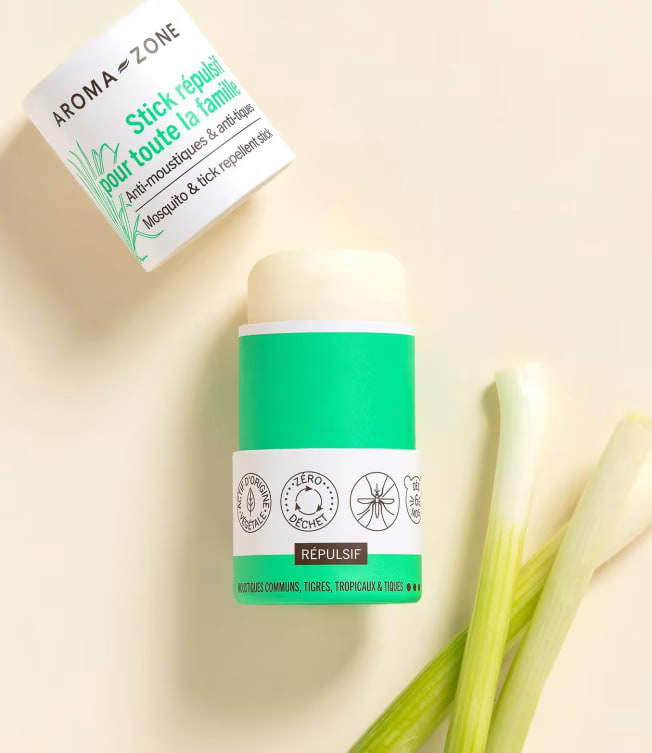
Mosquito and tick repellent stick

Mosquito and tick repellent stick

Aroma-Zone’s natural tick repellent harnesses the synergy of essential oils and vegetable oils to protect the skin against ticks whilst preserving the skin’s microbiome and respecting the environment. These ingredients give off powerful, distinctive scents that disrupt the ticks’ sensory receptors and prevent them from approaching or remaining on the skin. Free from neurotoxic insect repellents, its formula is suitable for the whole family, including babies from 6 months old. It has a gentle, grapefruit-like scent.

Discover our natural tick repellent

How do you go about removing a tick properly?

To avoid leaving a tick behind:

  1. Use a tick remover or suitable fine-tipped tweezers: A tick remover (available from chemists) or fine-tipped tweezers allows you to grasp the tick without squeezing it. Avoid using your fingers or standard tweezers, as this could crush the tick’s body and leave its head embedded in the skin, thereby increasing the risk of infection.

  2. Grasp the tick as close to the skin as possible: Position the chosen tool as close as possible to the point of attachment, at the base of the tick, to get a firm grip on the mouthparts (the rostrum) and maximise your chances of removing the entire parasite in one go, without breaking it off.

  3. Use a slow, continuous twisting motion: Gently turn the tick remover or tweezers anti-clockwise, without pulling sharply. This action helps to free the rostrum, which is firmly embedded in the skin, without leaving any fragments behind.

  4. Disinfect the area after removal: After removing the tick, clean the area with soap and water, then apply a mild antiseptic to prevent a secondary infection. Also, disinfect your hands.

  5. Never apply any substance before removal: Do not use alcohol, oil or ether. These products may stress the tick, causing it to regurgitate its infectious fluids.

  6. Monitor the area for several weeks: After removal, keep an eye on the skin for at least one month. If persistent redness, erythema migrans (a spreading red ring), pain, unusual swelling or flu-like symptoms appear, seek medical advice promptly.

  7. Make a note of the date and location of the bite: This information may be useful during a subsequent medical consultation, should any delayed symptoms develop.

Following these steps significantly reduces the risk of infection or complications following a tick bite.

Precautions

After removing a tick, it is advisable to monitor the affected area for at least several weeks and to consult a healthcare professional at the slightest sign of concern or in the event of any complications.

Expert advice

Failing to disinfect the skin after removal or handling the tick with unwashed hands increases the risk of local secondary infection, even if the tick has been removed correctly. This slows down healing and can lead to complications. Remember to always wash your hands thoroughly before removing a tick from the skin.

Spotlight on our expert writer: Hélène Durand

PHOTO CREDIT - Hélène Durand_Ok

With her dual expertise in literature and marketing, Hélène Durand uses her writing skills to explore topics that are close to her heart: natural beauty, wellbeing and a healthy lifestyle. Through her articles, she aims to share a supportive perspective and practical advice.

Bibliography

  1. National Library of Medicine, Tick Removal, May 2023

    https://www.has-sante.fr/upload/docs/application/pdf/2025-02/borreliose_de_lyme_et_autres_maladies_vectorielles_a_tiques_mvt_-_fiche_de_synthese.pdf

  2. Guidance for Clinicians, Caring for Patients after a Tick Bite

    https://www.cdc.gov/lyme/media/pdfs/Caring-for-Patients-after-a-Tick-Bite.pdf

  3. Méditerranée Infection, What to do if you are bitten by a tick

    https://www.mediterranee-infection.com/conduite-a-tenir-lors-dune-piqure-de-tique/

Frequently Asked Questions

Frequently Asked Questions