
Which Natural Repellents Work Best Against Ticks?

Which Natural Repellents Work Best Against Ticks?


By Louise Hourcade

Published on: Wednesday, June 26, 2024, Updated on: Wednesday, October 28, 2026

When you're heading out for some time in nature, you want to make the most of it: wearing shorts, walking through the mud, lying down in the tall grass. But watch out for ticks, they'll happily take the opportunity to latch onto your skin. "Is it serious, doctor?" Not if you remove it quickly using the right technique. That said, there's always a risk that the tick is carrying the Borrelia bacteria and could pass on Lyme disease. Here's how to naturally repel ticks, and how to remove one safely if you need to.

Contents

Related products

What is a tick?

A tick is a small ectoparasitic arthropod belonging to the subclass of mites. It feeds on the blood of various hosts, including mammals, birds, and sometimes reptiles and amphibians. Here are some key characteristics and facts about ticks. 

Morphology: Ticks have an oval, flattened body, which swells when they feed on blood; they generally have eight legs, particularly as adults.

Life cycle: Ticks go through four stages of development: egg, larva (6 legs), nymph (8 legs) and adult. After hatching, they require blood in order to develop.

Habitat: Ticks live in damp, wooded areas, tall grass and undergrowth. They often lie in wait on blades of grass or leaves to latch onto a passing host.
How do you get a tick?

Ticks generally live in wooded, damp areas, particularly in tall grass, so you can pick them up whilst out walking or during other outdoor activities. Ticks can attach themselves to humans as well as animals. 

They feed on the blood of their hosts, whether humans or animals (wild, farmed or domestic). They attach themselves using their mouthparts (the rostrum) and, once firmly embedded in the skin, feed on the host’s blood. This occurs at every stage of their development (larvae, nymphs and adults).

How can you recognise a tick?

How can you spot such a tiny creature on your skin? By carrying out a thorough check after any outing in the forest or in wooded, damp and bushy areas. At the end of the day, make sure you check your body as soon as possible. 

Be careful – a quick glance won’t be enough. You’ll need to examine yourself thoroughly, as ticks are tiny, measuring no more than 2–3 mm. Don’t overlook certain areas of your body, particularly where the skin is thin: tick bites are common in these areas and all the more difficult to spot.

Check your body

  • Underarms

  • Genitals

  • Knee creases

  • The navel

  • The neck

Biting behaviour

  • Ticks attach themselves firmly to their host’s skin and insert their mouthparts to feed on blood.

  • They can remain attached for several days, swelling as they feed.

What are the symptoms associated with a tick bite?

  • Localised redness: A redness or rash often appears around the bite site.

  • Itching: The bite site may cause itching, pain and/or discomfort.

  • Target-shaped rash (erythema migrans): This is a characteristic sign of Lyme disease. The rash usually begins as a small red patch that spreads, forming a sort of target or circle around the bite site.

  • Flu-like symptoms: Fever, chills, fatigue, headaches, muscle and joint pain may occur, particularly in the case of Lyme disease or other tick-borne infections.

  • Swollen lymph nodes: Lymph nodes near the bite site may swell.

  • Neurological problems: In more severe cases of untreated Lyme disease, neurological symptoms such as numbness, tingling, nerve pain or facial paralysis (Bell’s palsy) may develop.

Warning

If you’ve been bitten by a tick and are experiencing worrying symptoms, it’s important to consult a healthcare professional for an assessment and, if necessary, appropriate treatment.

What repellents should you use against ticks?

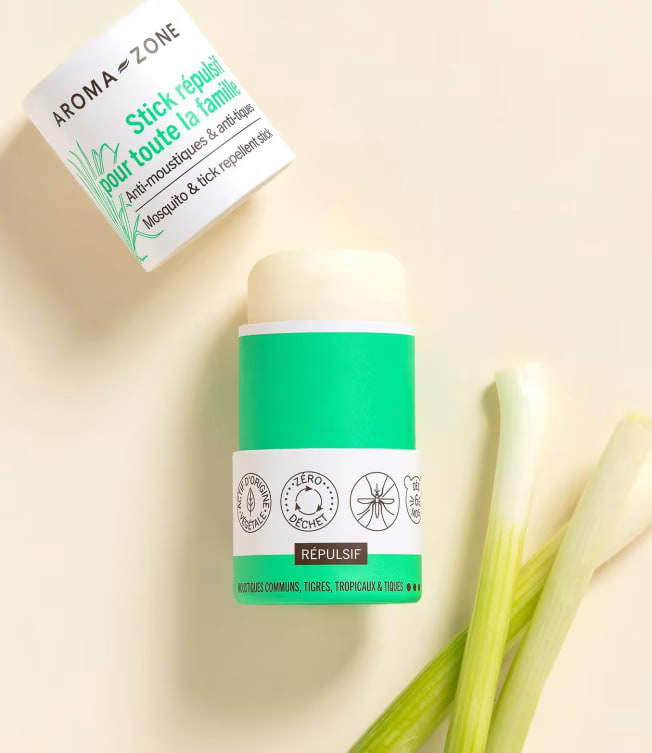
Mosquito and tick repellent stick

Mosquito and tick repellent stick

This mosquito and tick repellent stick, with proven effectiveness, keeps mosquitoes and ticks at bay for a long time. Its solid formula allows for easy and precise application, providing optimal protection against mosquito and tick bites.

Discover our Mosquito and Tick Repellent Stick

Mosquito repellents for adults and children

Mosquito repellents for adults and children

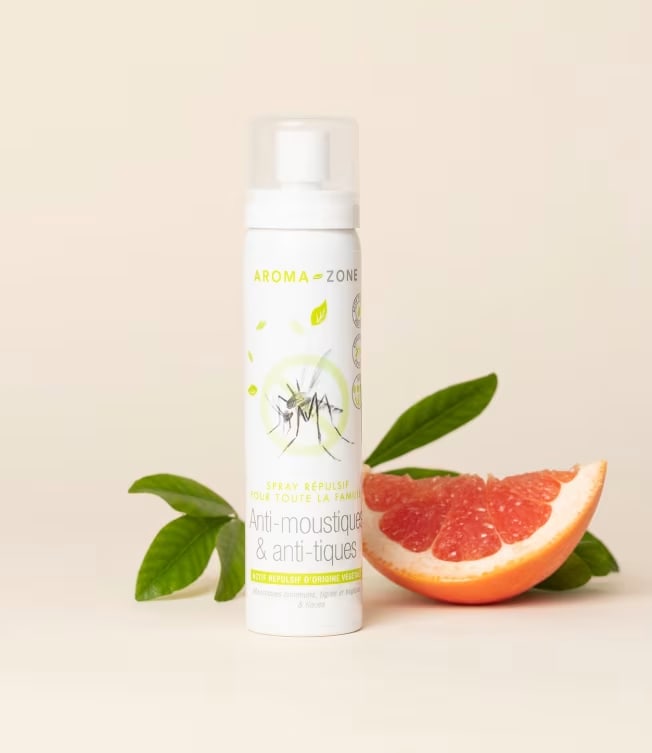
Keep mosquitoes and ticks at bay with this effective, plant-based mosquito repellent spray. Suitable for the whole family, it can be used on children from 6 months old. Formulated with an active ingredient derived from citronella, this spray is free from neurotoxic insecticides and leaves a gentle, pleasant scent reminiscent of grapefruit.

Discover our mosquito repellent for adults and children

How do you get rid of ticks?

Despite your precautions, a tick has attached itself to your skin. Don’t panic! The priority is simply to remove it as quickly as possible. This is because the risk of transmission of the Borrelia bacterium increases over time.

  1. Removing a tick embedded in the skin: Be careful not to apply any products, as this could cause the tick to regurgitate and release the bacteria. Ideally, within 12 to 24 hours of the bite, use a tick remover (available from pharmacies). Holding the tick perpendicular to the skin, gently grasp it as close to the skin as possible and use a circular motion to avoid tearing off the tick’s head. If you can't do this, ask your pharmacist or doctor for advice.

  2. Disinfect the area: Once the tick has been removed, it is important to wash your hands with soap and disinfect the area with an antiseptic.

  3. Monitor the bite site for a month: Does a small red patch appear within 24 hours of the bite? Don’t worry. This is a normal reaction and not a sign of infection. The safest course of action is to contact your GP, who will be able to confirm the diagnosis and prescribe the appropriate course of antibiotics.

How can you prevent ticks?

  1. Make sure you have a tick remover so you can act as quickly as possible in the event of a bite.

  2. Wear long, close-fitting clothing, particularly around the ankles, wrists, and neck, to prevent bites through any openings.

  3. Wear socks and closed-toe shoes.

  4. Apply a skin repellent to your clothing and/or exposed skin to keep ticks at bay. 

  5. Stay on paths and tracks to avoid tall grass and ferns, which are ideal hiding places for ticks.

  6. Avoid lying down or sitting directly on the ground. If you do, make sure to spread a picnic mat or towel on the ground.

  7. Don’t forget to give yourself a quick check-up when you get back from your walk. Look out for tiny black spots on your body! Check your children too!

What are the risks associated with ticks?

Ticks are found almost everywhere in the world. Depending on the continent, they can transmit a variety of viruses and bacteria. These pathogens can cause diseases such as borreliosis (including Lyme disease in Europe and North America), certain rickettsial diseases (such as Mediterranean spotted fever), viral encephalitis and haemorrhagic fevers.

A Closer Look at Lyme Disease (or Lyme borreliosis)

Lyme disease can only occur following a bite from a tick infected with the Borrelia bacterium; it can infect both humans and animals. In France, between 45,000 and 70,000 people are affected each year, resulting in several hundred hospital admissions.  Generally, the first symptoms appear within 3 to 30 days of the bite. If you are infected, you will notice a red, inflamed patch appearing around the bite site, with the edges redder than the centre. This may gradually spread to a diameter of at least 5 cm. You will not usually experience any itching or fever. 

It is therefore crucial to contact your GP, who will be able to confirm the diagnosis and prescribe the appropriate course of antibiotics. The symptoms will then disappear within 1 to 4 weeks.

Without antibiotic treatment, Lyme disease can cause skin, neurological, joint, cardiac, ophthalmological and/or cognitive problems. This can occur more than 6 months or even years after the tick bite.

Our natural remedies

Expert advice

There’s no real secret to avoiding tick bites. Wear long, tight-fitting, full-length clothing. Combine this with effective tick repellents, which you should apply to bare skin. Next, don’t tempt fate by rolling about in the undergrowth: that’s a guaranteed bite! Finally, after every outing, a thorough check is essential: of your own body, your children, and also your pets. By taking these simple precautions, you’ll greatly reduce the risk of tick bites.

Spotlight on Our Writer: Louise Hourcade

After graduating from ESCP Business School in 2020, Louise began her career as a writer in 2021. Today, she writes a newsletter where she shares cultural recommendations and more personal articles, such as dating apps, therapy, and career guidance. She also writes for media outlets, brands and agencies on subjects such as well-being, mental health, culture, and society.

Bibliography

  1. https://www.ameli.fr/assure/sante/urgence/morsures-griffures-piqures/morsure-tique-maladie-de-lyme-que-faire

  2. https://www.ameli.fr/assure/actualites/tiques-une-semaine-de-sensibilisation-pour-prevenir-les-morsures-et-les-maladies-associees

  3. http://www.club-vosgien-colmar.fr/2017/07/morsure-de-tique.html

  4. https://sante.gouv.fr/soins-et-maladies/maladies/maladies-vectorielles-et-zoonoses/maladie-de-lyme

  5. https://www.passeportsante.net/fr/Actualites/Dossiers/DossierComplexe.aspx?doc=10-remedes-naturels-eloigner-tiques-puces

  6. https://www.santepubliquefrance.fr/les-actualites/2021/borreliose-de-lyme-donnees-epidemiologiques-2020

Frequently Asked Questions

Frequently Asked Questions

Associated tip