
Aloe vera is a succulent plant with fleshy, spiny-edged leaves. It grows mainly in hot, arid regions, but is also quite common in tropical areas, where it thrives in the wild. Whilst aloe vera is appreciated as an ornamental plant, it is loved above all for its numerous benefits.
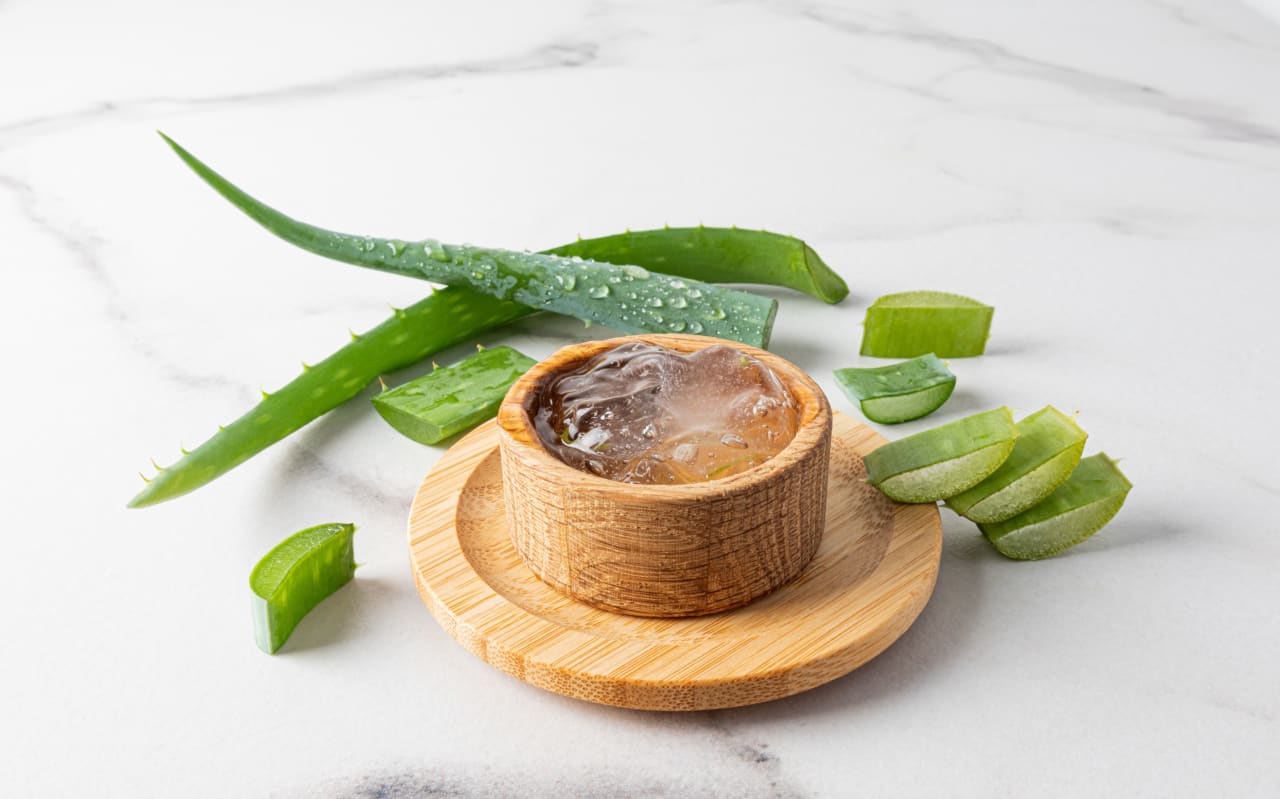
Aloe vera leaves: What are the benefits?
Published on: Friday, May 03, 2024, Updated on: Friday, October 30, 2026
Aloe vera is a plant that is very beneficial for both our skin and our body. Its fleshy leaves contain a nutrient-rich gel that is particularly prized in the health and cosmetics sectors. What benefits do these leaves really offer? How can we make the most of them? We give you the full details.
Contents
Related products
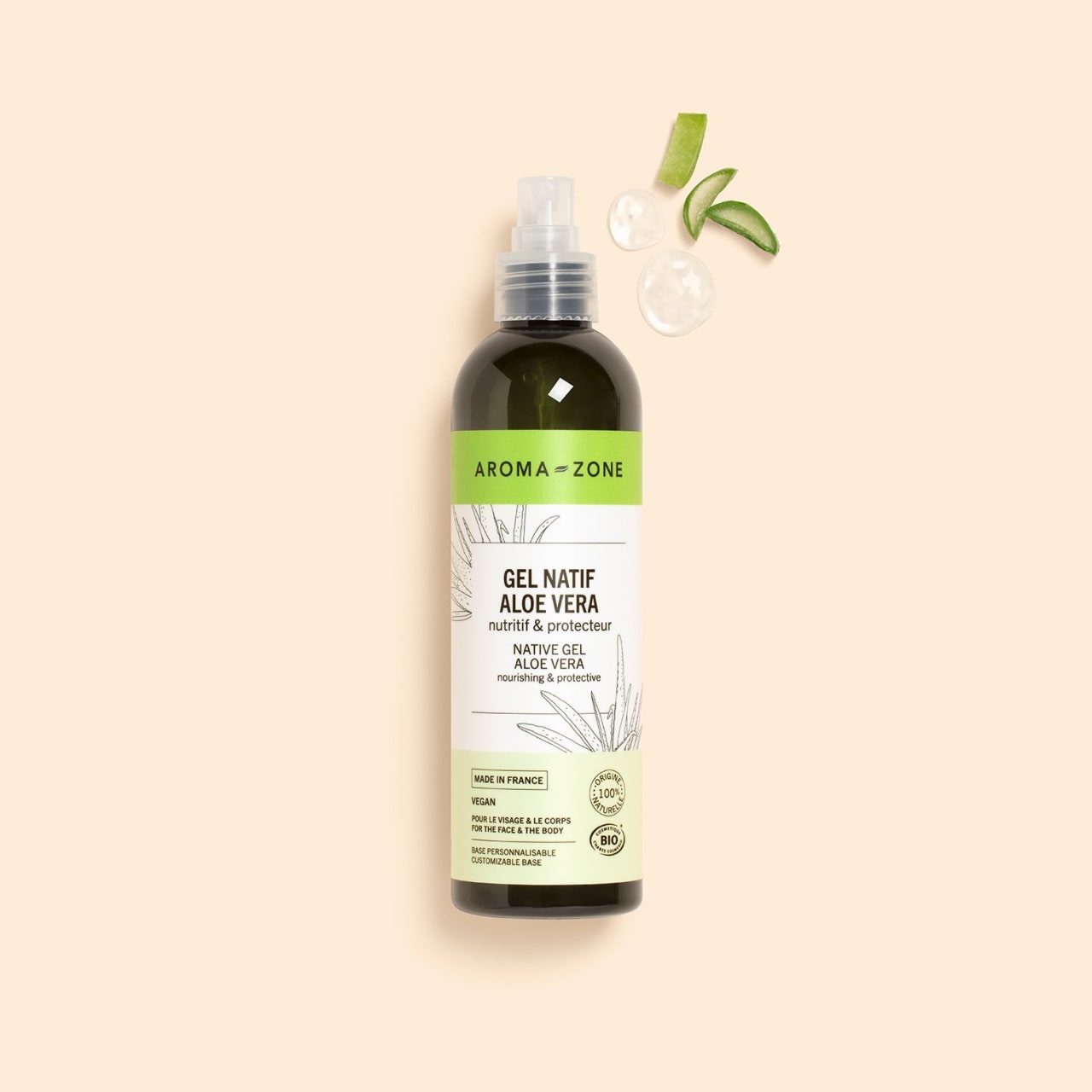
Organic Native Aloe Vera Gel
Protective
Nourishing
£10.00
250 ml
3 options
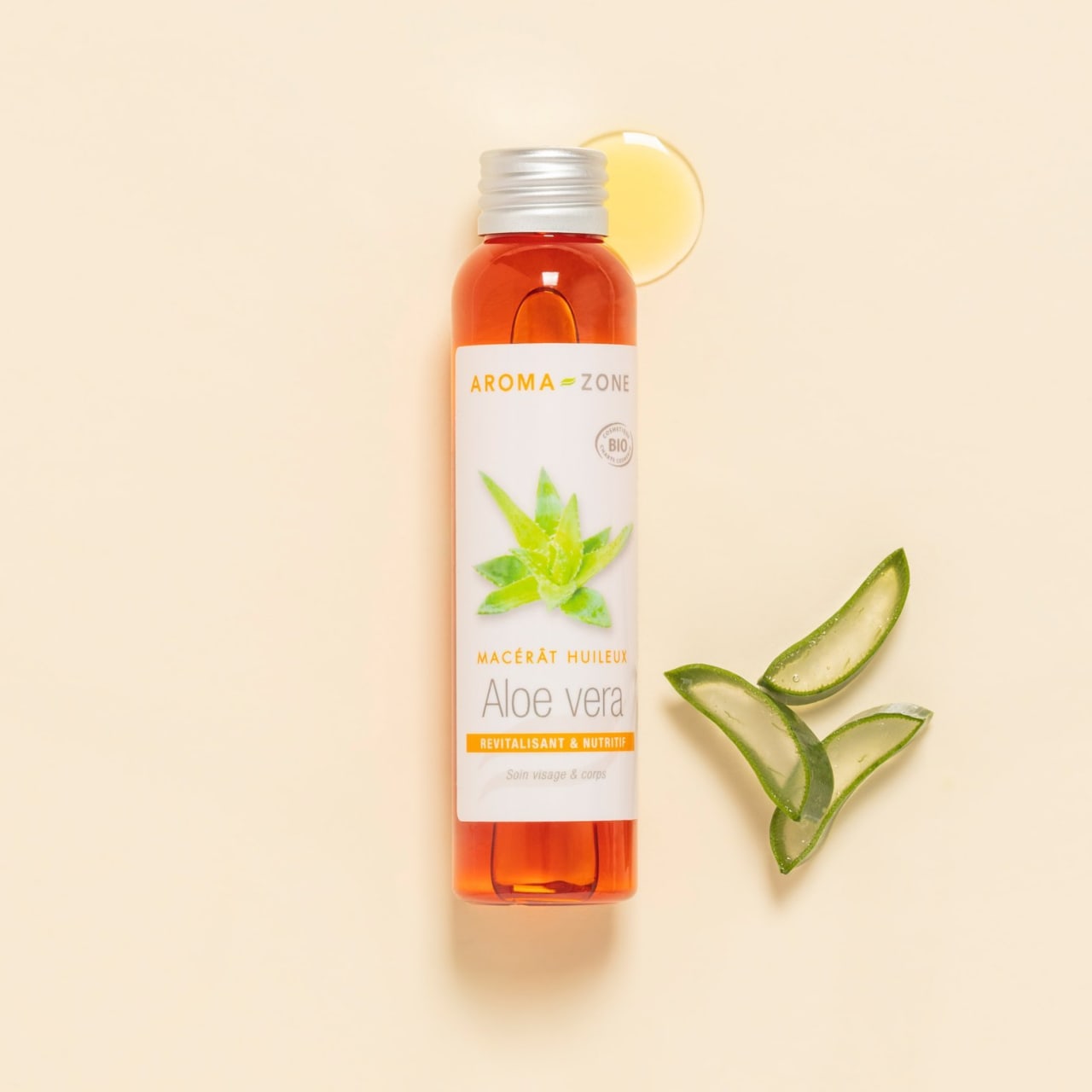
£5.95
£8.50
100 ml
What is aloe vera?
How can you recognise aloe vera leaves?
Recognising aloe vera leaves is fairly straightforward, as they stand out easily in the wild.
Shape and size: Aloe vera leaves are thick and fleshy, adapted to store water in the arid environments where this plant grows naturally. They are elongated and lanceolate in shape, widening at the base and tapering to a point. They can grow up to 50 cm in length and 7 cm in width.
Colour: The colour of the leaves varies from light green to dark green. Some varieties may have slightly bluish or greyish leaves. In strong sunlight, the leaves may take on reddish hues.
Texture: The leaves are smooth but firm to the touch, with a thick surface covered in a waxy coating that helps reduce water loss.
Leaf margins: The edges of the leaves are generally serrated, with small spines arranged regularly along the margins. These spines are soft but slightly pointed.
Leaf arrangement: The leaves grow directly from the ground or from a short central stem, forming a dense rosette. In young plants, the leaves are more likely to stand upright, whilst in mature plants, they may begin to arch outwards.
Presence of gel: If you cut a leaf, you should see a clear, mucilaginous gel inside. This gel is the part of the plant used for skincare and other remedies.
Properties and benefits of aloe vera leaves?
Aloe vera leaves are long, green and edged with spines. The plant grows in a fan-shaped cluster and can have a multitude of leaves. It is from these leaves that the famous aloe vera gel is extracted. This clear gel is 90 per cent water, but also contains nutrients and vitamins, which give it numerous properties:
Moisturising: The gel extracted from aloe vera leaves is an excellent moisturiser for the skin. It helps retain moisture and is very effective at soothing dry and irritated skin.
Healing: Renowned for its ability to speed up the healing of wounds, minor burns, cuts, grazes and sunburn.
Anti-inflammatory: Aloe vera gel has anti-inflammatory properties. It is very useful for treating inflammatory skin conditions such as psoriasis and eczema.
Antibacterial and antifungal: These properties help prevent bacterial and fungal skin infections, making aloe vera useful in the treatment and prevention of conditions such as acne.
Antioxidant: The gel from the leaves contains several types of antioxidants, including vitamins C and E as well as beta-carotene, which protect the skin against damage caused by the passage of time and, consequently, against skin ageing.
Digestive: When ingested, aloe vera gel is beneficial for the digestive system. It is used to soothe and reduce the symptoms of digestive disorders, such as constipation and indigestion.
What are the uses of aloe vera leaves?
Aloe vera leaves – and especially the gel they contain – are incredibly versatile. If you’re lucky enough to have a plant to hand, here’s how you can make the most of it:
Skin care: To moisturise all skin types, aloe vera can be used as a day or night treatment. For even more hydration, you can apply a thick layer as a face mask.
Treating burns and sunburn: A minor burn? Sunburn? You can apply your aloe vera gel directly to the affected area.
Hair care: Aloe vera acts as a natural conditioner; it also helps soothe an itchy scalp and effectively moisturises those with textured hair, who can apply it as a leave-in treatment without rinsing.
Digestive health: If you’re having trouble digesting your food, take a teaspoon of pure aloe vera gel.
Anti-acne: Thanks to its antifungal properties, aloe vera is excellent for treating acne. Simply apply it to the affected areas without rinsing.
Using aloe vera leaves: precautions
When using aloe vera leaves, please take the following precautions:
Handle with care: Aloe vera leaves may have spines along their edges, so handle them carefully to avoid injury!
Proper cleaning: Before using the leaves, wash them thoroughly to remove any dirt or contamination.
Skin sensitivity test: Carry out a skin sensitivity test on a small area before applying aloe vera gel to a large area of skin to avoid allergic reactions.
Expert advice
For those who are not yet familiar with what aloe vera looks like, it may be helpful to consult photos or plant guides to confirm its identification. Be sure to compare it with images from reliable sources to avoid any disappointment.
Spotlight on Our Writer: Coralie Técher

Coralie has been a journalist and editor specialising in women’s interests for seven years. With a particular interest in topics related to beauty and wellbeing, she is passionate about highlighting the solutions nature offers for self-care and is always keen to stay informed on the subject so she can share the very best insights.
Bibliography
Dr Pierre Ricaudhttps://www.ricaud.com › ... › Advice › IngredientsWhat are the benefits of aloe vera? – Dr Pierre Ricaud
https://www.marqueverte.com/blog/aloe-vera-une-plante-medicinale-aux-multiples-vertus-en-cosmetique-n529
https://www.passeportsante.net/fr/Solutions/PlantesSupplements/Fiche.aspx?doc=aloes_ps

Frequently Asked Questions
Associated tips

Face care tips

Superfoods
Face care tips


