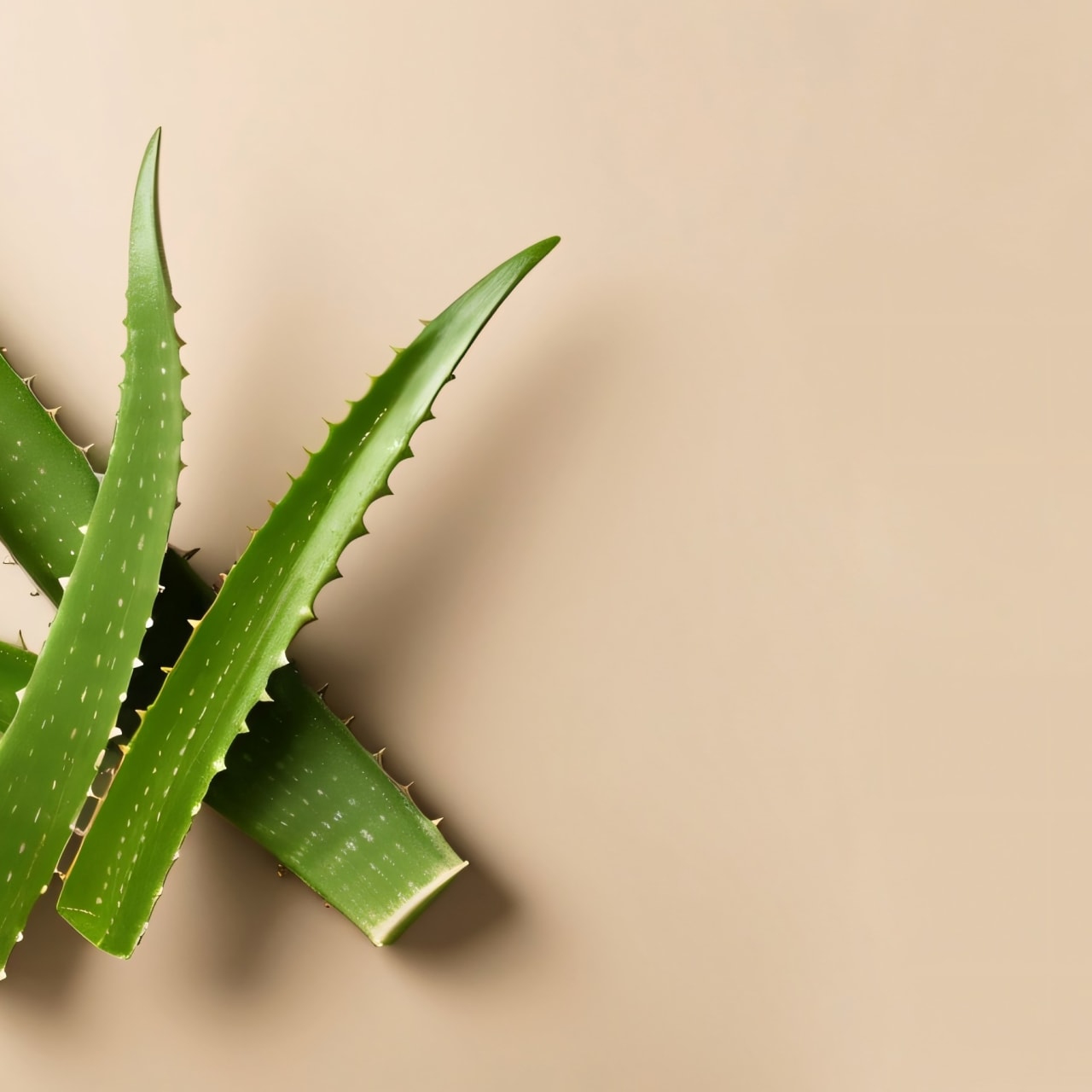
Aloe vera, also known as Aloe barbadensis, is a succulent plant native to the arid regions of Africa and the Middle East. It belongs to the Liliaceae family, which also includes garlic, onions and asparagus. Aloe vera is recognisable by its thick, fleshy leaves, edged with small spines, which contain a clear, mucilaginous gel.
Aloe vera gel has been used for thousands of years for its medicinal and cosmetic properties. The ancient Egyptians called it the ‘plant of immortality’ and used it in their beauty and skincare rituals. Today, aloe vera is incorporated into a wide range of products, from skin creams and sun care to health drinks and dietary supplements. From a botanical perspective, aloe vera is particularly fascinating due to its ability to survive and thrive in extremely arid environments. The plant stores water in its leaves, enabling it to survive long periods of drought. The gel inside the leaves is more than 95 per cent water, with the remainder being a rich blend of vitamins, minerals, enzymes and amino acids that are essential for human health.