Kokum Butter
Protective
Nourishing
free delivery up to £25 in United Kingdom
100% secure payment CB, Visa, Mastercard, Paypal, Apple Pay, Google Pay

Eco Friendly Cultivation

100% Pure And Natural
Uses
As an ingredient in your cosmetic blends to formulate repairing and protective make-up and lip sticks
As a consistency agent in your cosmetic blends
In your massage balms or exfoliating treatments for the face and body
As an active ingredient in superfatted soaps
Uses
As an ingredient in your cosmetic blends to formulate:
Repairing hair masks and balms
Properties
As a cosmetic ingredient, kokum butter is known for the following properties:
Nourishing and protective, regenerates and invigorates dry, tired skin.
An excellent emollient, leaves skin soft and velvety.
Easy to formulate, produces non-granular products.
Produces rich balms with a pleasant, melting feel .
As a co-emulsifier, it thickens and makes your cosmetic blends creamier.
Easily absorbed, it leaves no greasy feeling.
Indications
Normal to dry skin
Mature skin lacking tone
Restorative and regenerating skin care
Synergies
For mature skin: argan, rosehip, borage, evening primrose and prickly pear carrier oils, frankincense, damask rose, rosewood, ho wood essential oils, etc.
For very dry skin: wheat germ, avocado, olive and sweet almond carrier oils. ..
For sensitive skin: calendula macacerated oil, avocado phytosterol concentrate, CO2 extracts of calendula, chamomile and pomegranate, essential oils of spike lavender, Roman and German chamomile and blue cypress, etc.
Properties
As a hair improvement ingredient, kokum butter is known for the following properties:
Nourishing, leaves hair shiny.
Restores hair's strength and vitality .
Provides long-lasting protection against dryness.
Indications
Dry, brittle and damaged hair
Split ends
Instant recipe by Aroma-Zone
Cleansing and soothing mud for the scalp
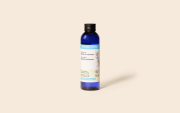
Rosemary hydrosol (heated in a bain-marie)
7 Tablespoons
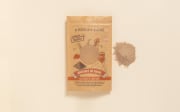
Rhassoul
3 Tablespoons
Melted kokum butter
1 Teaspoon
Step 1
Prepare a paste by mixing all the ingredients.
Step 2
Apply to wet scalp and leave on for a few minutes.
Step 3
Add a little warm water and gently massage in, then rinse.
Synergies
Hair products for dry hair: coconut and yangu carrier oils and other butters, etc.
To improve hair condition and make it shiny: ceramides, castor oil, ylang-ylang essential oil, etc.
To nourish hair: Silk and Rice Proteins, phytokeratin, provitamin B5 (in emulsion), etc.
In practice
This butter is added as an ingredient in the fatty phase of your cosmetic preparations of nourishing creams, balms and sticks: from 1 to 80% for a balm and from 1 to 5% in an emulsion.
In practice
This butter is added as an ingredient in the fatty phase of your cosmetic preparations of hair creams (conditioners, masks) and hair balms. Apply your mixture to your hair, concentrating on the ends.
Massage into the hair, then wrap with a warm towel. Leave in overnight if possible, then shampoo.
Culture
Grown without the use of pesticides or synthetic fertilisers
Quality
100% pure and natural butter
Production process
Mechanical pressure then purification by physical processes without solvents or chemical raw materials
Part of the plant used
Fruit seeds
Botanical name
Garcinia indica
Botanical family
Clusiaceae
Function
Cosmetic ingredients
Other names
Gurgi nut fat
Oxidative potential
Not very sensitive
Learn more
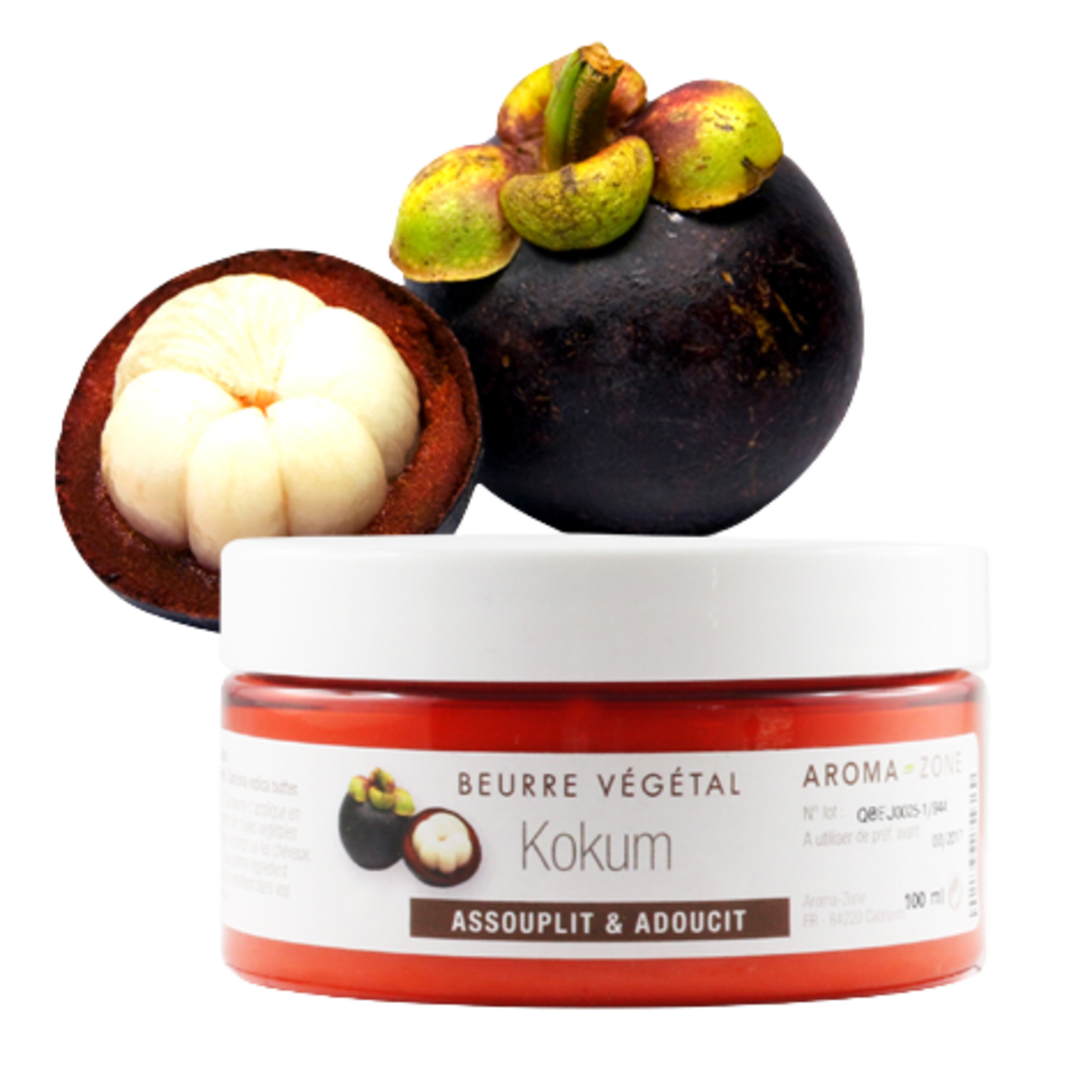
Kokum -Garcinia indica- is an evergreen tree found only in the rainforests ofwestern India. In April/May, it produces small, round red fruits 2 to 3 cm in diameter with dark purple pulp when ripe.
The fruit is traditionally dried in the sun, leaving 5 to 8 small seeds.
The dried pulp and seeds are used as aspice in typical Indian dishes (curries, lentil and potato dishes), adding a sweet and sour flavour. The fruit is also used to make syrups and refreshing infusions. It is the seeds contained in the pulp that, once pressed, produce Kokum butter.
This butter is an excellent raw material because it is very easy to process thanks to its balanced blend of stearic, palmitic and oleic acids. Research is also underway to produce biodiesel from these fats.
In cosmetics, as an ingredient, it makes it easy to obtain creamy, homogenous and smooth (grain-free) balms, giving it an undeniable advantage over shea butter when it comes to obtaining pleasant textures. It's a product that keeps well for a long time. It has excellent emollient qualities (softens and smoothes the skin).
Organoleptic properties
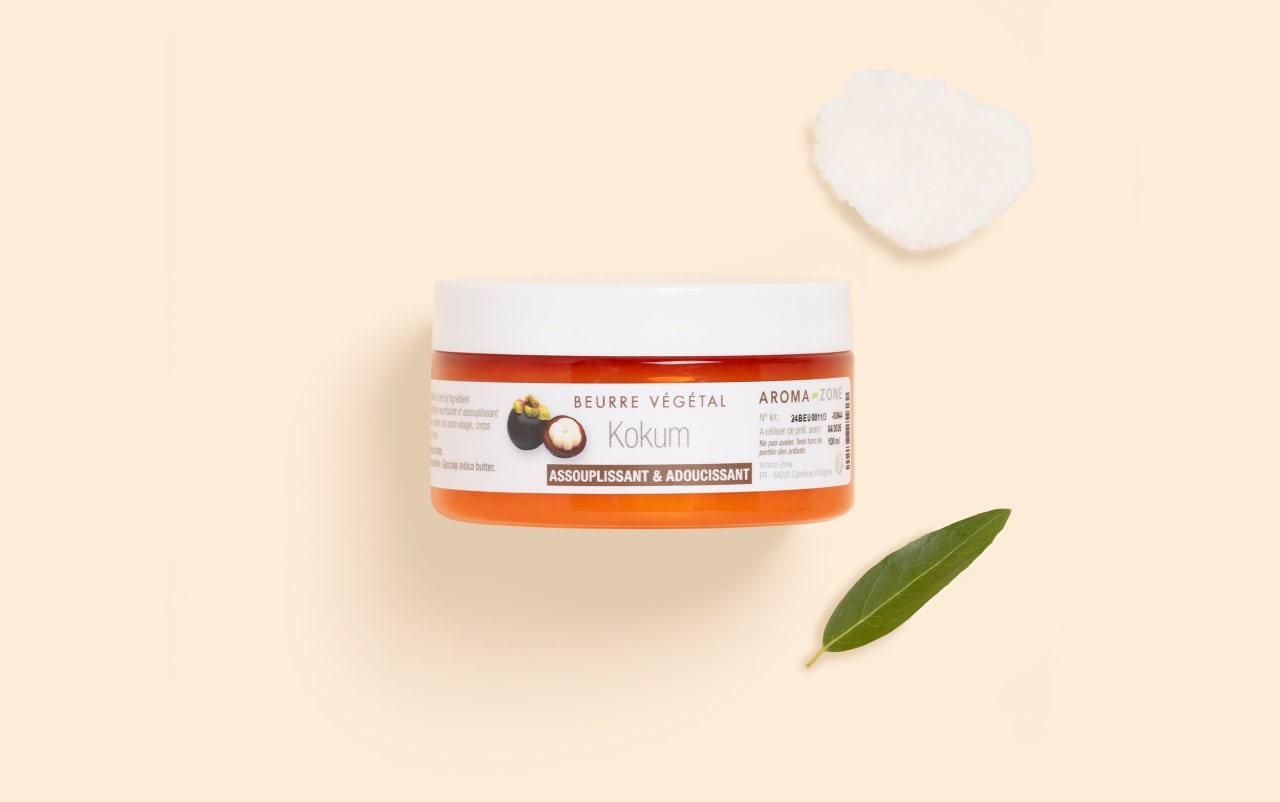
Appearance: very hard butter at room temperature; oily at 38°C
Colour: off-white
Odour: light, plant-based
Feel: smooth and grainy, does not leave a greasy film on the skin
Density
0.900 - 0.930 (density corresponds to density at 20°C)
Density at 40°C
0.88 (measured by the Aroma-Zone quality laboratory)
Melting point
32°C (measured by the Aroma-Zone quality laboratory)
Saponification index
187-193
Store in a dry place away from heat and light.
Warning
The properties, information and methods of use below are quotes from reference books or websites on aromatherapy, hydrolatherapy and phytotherapy. This general information is provided for informative purposes only and in no way constitutes medical guidance. Under no circumstances can this information be used as a substitute for a medical diagnosis, consultation or follow-up, nor can it incur our liability. We recommend that you consult the guide to essential oils before using them, so that you are aware of any precautions that need to be taken. If in doubt, consult a doctor before using essential oils.
Environmental qualities and characteristics product sheet
Reference
0117801 - Kokum butter sample 10 ml
Main packaging material
PP Pot
Recyclability
Most packaging can be recycled
Reference
0094401 - Pure kokum butter 100 ml
Main packaging material
RPET (recycled PET) pot
Recyclability
Most packaging can be recycled
Recycled material
Packaging contains at least 65% recycled material.
Rewards and penalties
Aroma-Zone gets a bonus for managing packaging made from recycled plastic.
EO = Essential Oil
VO = Carrier Oil or Macerated Oil
30 g kokum butter
10 g rice bran wax
10 g baobab carrier oil
1 teaspoon aloe vera gel
1 teaspoon plant-based glycerine
1 espresso spoon of manuka honey
10 drops of blue cypress essential oil
5 drops of manuka essential oil
Directions: Melt the wax and butter in the carrier oil in a bain-marie. When the wax has melted, remove from the heat and leave to cool for a few minutes. Add the remaining ingredients and blend with a whisk or pestle. Pour into the jar before the mixture hardens.
Use: Melt a small dab of balm in your hand and then apply to the sunburnt areas of your body, massaging thoroughly.
9 g Kokum butter
6 g apricot kernel oil
3 g beeswax
1 teaspoon vegetable glycerine
5 drops Ginger essential oil
5 drops Cinnamon essential oil
5 drops Cardamom essential oil
5 drops Nutmeg essential oil
Procedure: Melt the wax and butter in the oil in a bain-marie. When the wax has melted, remove from the heat and leave to cool. Add the remaining ingredients and whisk to combine. Pour into the jar before the mixture hardens.
Use: Apply a dab to the inside of the wrists and neck.
15 g Kokum butter
20 ml Hemp oil
15 ml castor oil
20 drops Cedarwood essential oil
Procedure: Melt the butter in the HV gently over a bain-marie. Remove from the heat, add the essential oil and transfer to a jar or pump bottle before cooling completely.
Supplier documentation
Thippeswany H.T., Raina P.L. Lipids of Kokum (Garcinia indica) and Dhupa (Veteria indica). J. Food Sci. Technol, 1991, 28(4), 195-199
Hosamani K.M., Hirematha V.B., Keria R.S. Renewable energy sources from Michelia champaca and Garcinia indica seed oils: A rich source of oil. Biomass and Bioenergy, 2009, 33(2), 267-270
'90 recettes de beauté bio à faire soi-même' by Sophie Macheteau and Vanina Guet
"Essential oils for the skin" by Hélène Berton
Frequently Asked Questions
Very effective
Puikus
Much too grainy – difficult to melt and apply. I don't use it because of that.
Not yet used
Alright
Associated products
Associated recipe

Aromatherapy & Wellness