
Floor Fleas: How Do You Get Rid of Them?

Floor Fleas: How Do You Get Rid of Them?


By Marie-Adine Bories

Published on: Wednesday, June 26, 2024, Updated on: Friday, October 30, 2026

Floor fleas, though barely visible to the naked eye, can seriously disrupt the comfort of your home. These tiny parasites, also known as carpet fleas, are carried in by our pets and settle into the gaps in our flooring. They multiply quickly, feed on our blood, and cause itching and discomfort.

In this article, I'll explain everything you need to know about floor fleas and answer one key question: how do you get rid of them?

Contents

Related products

What is a floor flea?

Floor fleas, also known as Ctenocephalides felis, are tiny, wingless insects that are brown in colour, varying in shade. They are oval and flat in shape and measure between 2 and 5 millimetres in length, making them almost invisible to the naked eye. 

These tiny parasites live for between 6 months and 1 year and feed mainly on the blood of mammals, whether ours or that of our pets. They generally live in dark, warm places and often take up residence in wooden floors – which is where they get their name – but also in carpets, wooden skirting boards and laminate flooring.  If you have a pet, it’s also highly likely that they’ll make their home in its fur, nice and warm. 

A real nightmare for our homes, they reproduce at breakneck speed. An adult female lays up to 50 eggs a day, averaging nearly 1,500 eggs a month. It is this rate of reproduction, combined with their elusive nature, that makes them particularly difficult to eradicate.

The life cycle of a floor flea

  1. The egg: Parquet flea eggs are oval-shaped, whitish in colour and measure between 0.5 and 1 mm. They are usually laid either inside the house (in floorboards’ grooves, wooden skirting boards, rugs or carpets) or directly on their host (dog, cat, ferret).

  2. The larva: After a few days, the eggs hatch, giving rise to white larvae that resemble tiny caterpillars. This stage lasts between 1 and 2 weeks, during which the larvae feed on organic waste, dust and hair. 

  3. The pupa: At the end of the larval stage, the larva spins a cocoon and becomes a pupa. This cocoon is the stage of transition and transformation into their adult form. 

  4. The adult flea: The adult flea emerges from the cocoon after several days or weeks of incubation. It is then brownish in colour and has a flattened shape, which allows it to move easily between the fur of domestic animals and the grooves in wooden flooring. It feeds on human or animal blood and lives for between a few months and a year, depending on the food available to it.

Why and how do they get inside the house?

The outdoor environment

Fleas thrive in dark, warm and damp environments. This is why they are found in large numbers in the wooden floors of our flats, but also in our pets’ fur. In fact, it is often our pets that carry them from outside into our homes. But that’s not all! Fleas are also perfectly capable of clinging to our shoes or clothes to be carried into the warmth of our homes. 

Once inside, they find an environment perfectly suited to their life and reproductive cycle.

What are the symptoms associated with a flea bite?

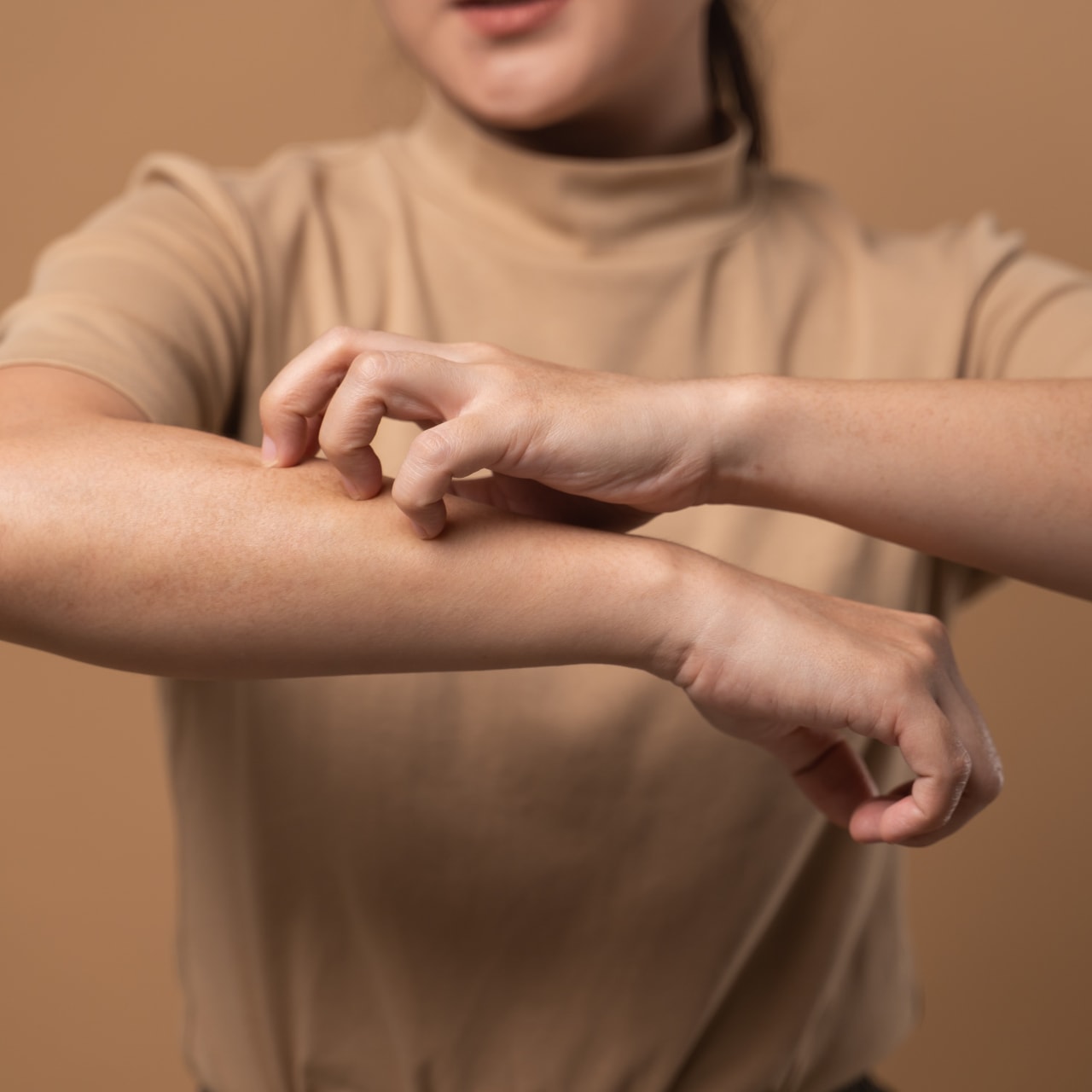
When wood floor fleas feed on our blood, they leave behind small, unpleasant bites. Here are some typical symptoms of flea bites: 

  • Small pink or red spots; Small raised bumps, often in clusters, which feel hard to the touch; 

  • May develop into small blisters filled with fluid;

  • Mainly found on the ankles and legs, but also in the groin;

  • Accompanied by intense itching.

How can you tell if you have floor fleas?

There are a few tell-tale signs that may indicate the presence of floor fleas in your home: 

  1. You have small red spots on your skin that itch;

  2. Your pet is scratching a lot, especially around the ears and the base of the tail; 

  3. You notice lots of tiny black specks on your soft furnishings or in your pet’s coat – these may be flea droppings; 

  4. You see a flea jumping on your wooden floor or carpet.

What are the natural solutions for getting rid of floor fleas?

Here are a few natural solutions to try if you suspect you have fleas in your home.

Lavender: The scent of lavender repels many insects. It can be used in all its forms: small sachets of lavender in cupboards, a few drops of lavender essential oil in hot mop water, or to mist household fabrics.

White vinegar: The smell of white vinegar is also a powerful repellent that can persuade fleas to settle elsewhere. Simply spray a mixture of water and a few drops of white vinegar in the four corners of your home. It’s even more effective when combined with lemon.

Sea salt: Salt is one of the key remedies for killing fleas on wooden floors. To do this, simply sprinkle a little fine salt over the infested areas and leave it for a few hours before vacuuming. The salt dehydrates the fleas and their larvae, helping to eradicate them.

How can you prevent floor fleas?

  1. Treat your pets for fleas, following your vet’s advice. 

  2. Vacuum your floors and carpets regularly. Sweeping and mopping simply move the fleas around.

  3. Take your shoes off when you come into the house.

  4. Wash your pets’ bedding at a high temperature.

Our natural remedies

Precautions to take

Natural methods take time to work and may require patience. If none of these techniques work, there are more radical solutions: powders, sprays and a wide range of anti-flea products and shampoos for pets. As a last resort, you can call in a pest control professional.

Expert advice

Not everyone is keen on the smell of lavender. Fortunately, there are plenty of essential oils with repellent properties. These include tea tree, lemongrass and clove, amongst others.

Spotlight on Our Specialist Editor: Marie-Adine Bories

Marie Adine.jpg

Marie-Adine is a naturopath and a graduate of the Institut de Naturopathie Humaniste. For several years now, she has been helping her clients to be proactive about their own health by creating personalised, educational programmes. Passionate about our emotions and their impact on our ability to heal, she teaches a range of health techniques to help us manage stress, improve sleep, and boost vitality.

Frequently Asked Questions

Frequently Asked Questions