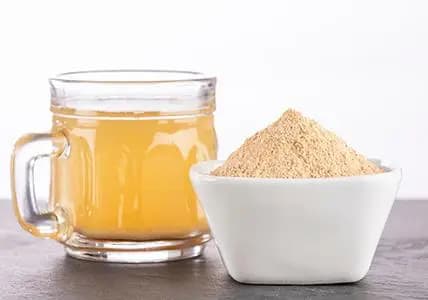
What are the benefits of Alfalfa?

For thousands of years, certain plants have played a central role in medicinal traditions the world over. One of them, humble but incredibly powerful, is Alfalfa. This seemingly unassuming plant actually hides a multitude of benefits for our health and well-being.

In this guide, we'll delve into the heart of Alfalfa to explore all its benefits and uses. Discover this fascinating plant and adopt it in your diet to take care of yourself and your health.

By The Aroma-Zone editorial team

Reading time: 0 min.

What is Alfalfa powder or Alfalfa leaf powder?

Alfalfa, also known as lucerne, is a perennial plant belonging to the legume family. It is widely cultivated throughout the world, both for its direct use as animal fodder and for its nutritional and therapeutic benefits for humans. Alfalfa powder is obtained by drying and grinding the leaves of the plant, transforming it into a concentrated, versatile form.

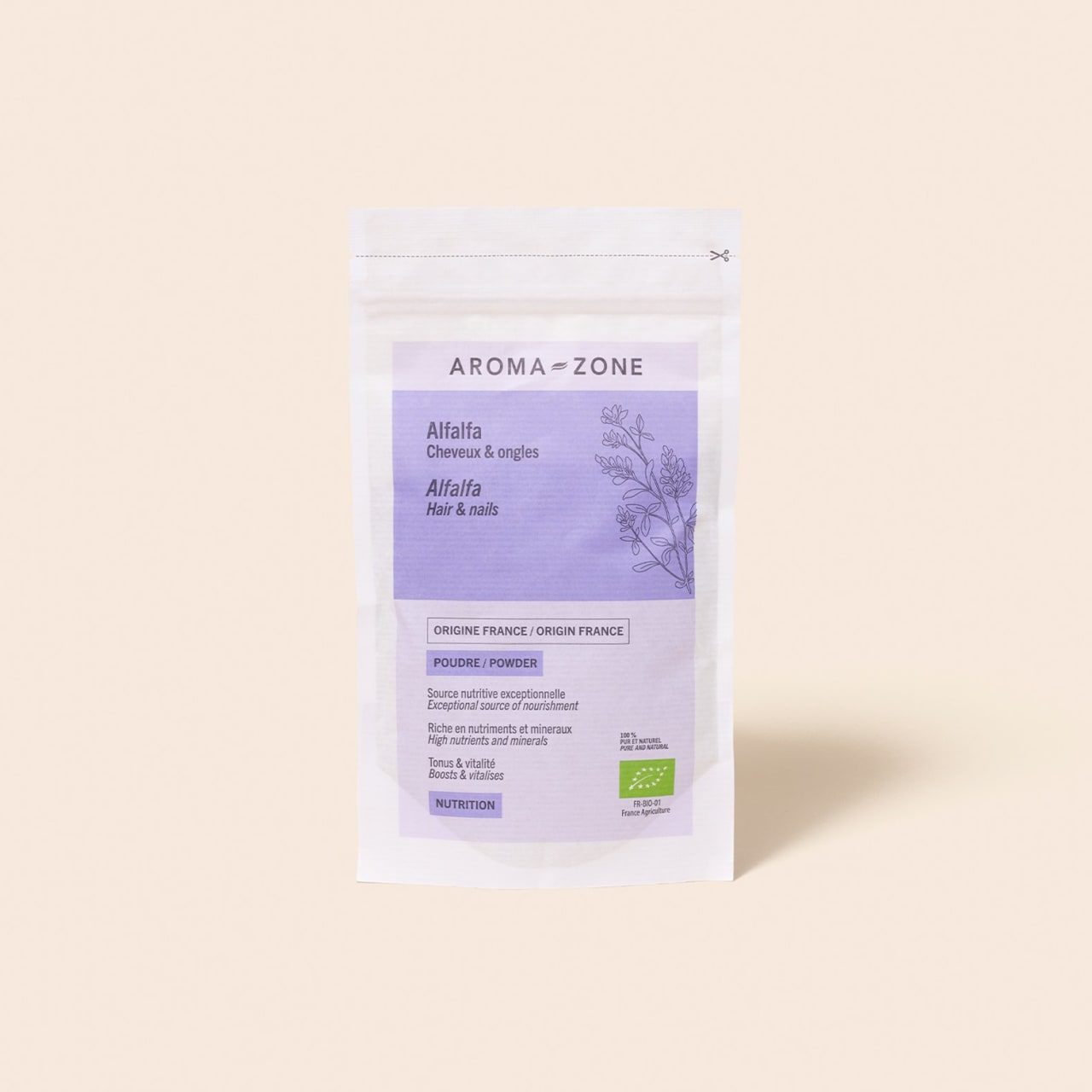
Discover our Aroma-Zone ORGANIC Alfalfa Superfood Powder 100% ORGANIC, pure and grown in France. Easy to add to your drinks, infusions, smoothies or to sprinkle on your dishes, this powder is your health and beauty ally. Rich in proteins, minerals, vitamins and active plant ingredients, it promotes beautiful hair, strengthens nails and supports you during periods of temporary fatigue.

What are its benefits?

Alfalfa powder is rich in vitamins and minerals, in particular vitamins A, B, C, E and K, as well as Calcium, Potassium, Iron and Zinc. It also contains proteins and essential amino acids, making it particularly valuable for people looking for plant-based protein sources. Alfalfa is also a rich source of Chlorophyll, which contributes to its detoxifying properties.

Alfalfa, with its rich nutritional components, offers multiple benefits not only for overall health, but also for hair and skin.

Let's explore these hair and skin benefits in more detail:

On the hair

  1. Stimulates hair growth: Alfalfa's rich vitamin content, particularly vitamin E and vitamin C, promotes blood circulation to the scalp, nourishing the hair follicles and stimulating hair growth.

  2. Reduces hair loss: The presence of proteins and essential amino acids in Alfalfa helps to strengthen the hair, reducing breakage and loss.

  3. Improves hair texture: The nutrients in Alfalfa can help make hair softer, smoother and shinier.

On the skin

Detoxifying effect: The Chlorophyll present in abundance in Alfalfa has detoxifying properties that help to cleanse the skin from the inside out, promoting a clear, radiant complexion.

  1. Anti-ageing: Its antioxidants, particularly vitamin C and vitamin E, combat the free radicals responsible for premature ageing of the skin. This can help reduce the appearance of wrinkles and maintain skin elasticity.

  2. Improved healing: Alfalfa is rich in vitamin K, which plays a crucial role in blood coagulation. This can help reduce scarring and improve wound healing.

  3. Hydration: Alfalfa's richness in essential nutrients helps to hydrate and nourish the skin, leaving it soft and supple.

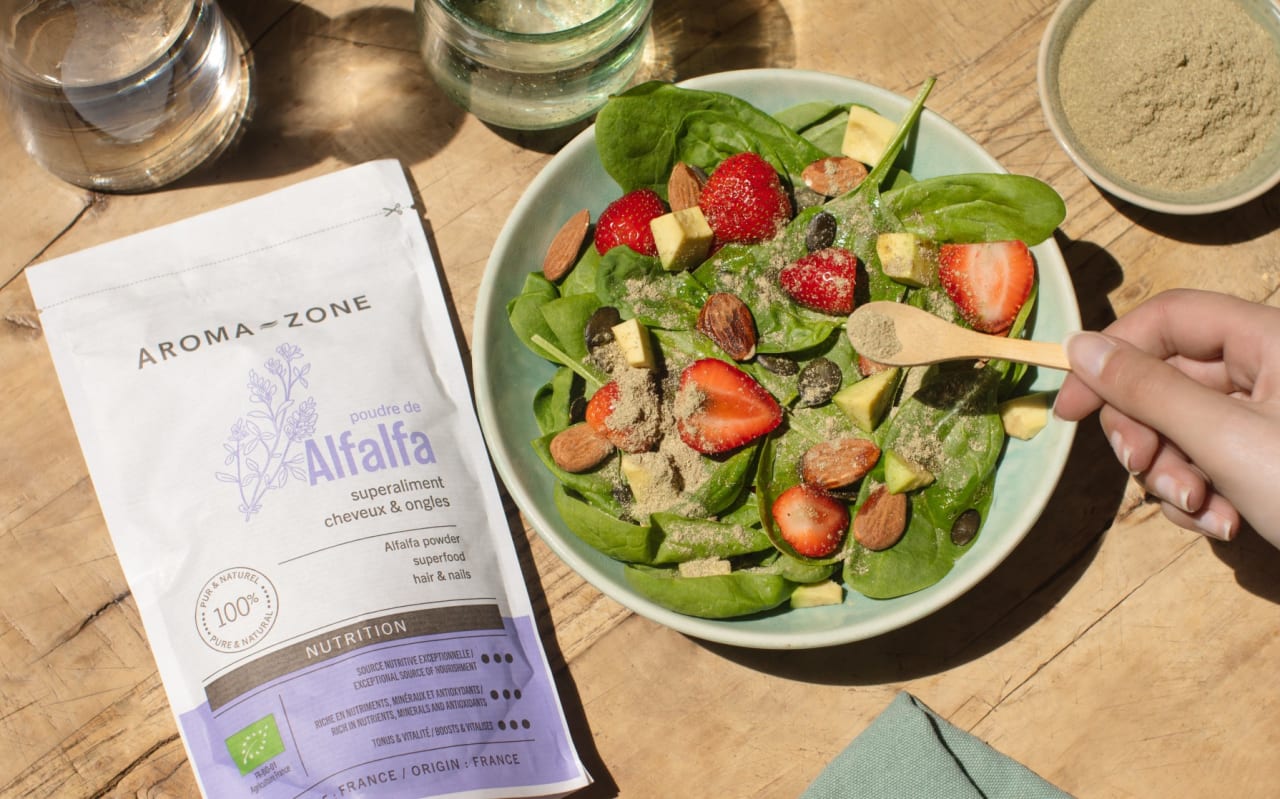
How should Alfalfa be eaten?

Alfalfa powder is a concentrated form of this nutritious plant, and can be easily incorporated into your daily diet. Here are our ideas for using Alfalfa powder:

  1. Smoothies: Add a teaspoon of Alfalfa powder to your green smoothies or any other mixture of your choice. It goes perfectly with fruits such as bananas, apples, mangoes and berries.

  2. Juices: Add 1 teaspoon of Alfalfa powder to your vegetable or fruit juices for a nutritional boost.

  3. Soups: Sprinkle 1 teaspoon of Alfalfa powder into your soups or broths before serving to enrich the nutritional value.

  4. Yoghurts and cereal bowls: Mix 1 teaspoon of Alfalfa powder with yoghurt or sprinkle it over your cereal bowls in the morning.

  5. Salads: Before adding dressing, you can sprinkle 1 teaspoon of Alfalfa powder over your salads for a nutritional boost.

  6. Pastries and bread: Add Alfalfa powder to your bread or pastry recipes.

  7. Tea: Although less common, you can add 1 teaspoon of Alfalfa powder to your favourite tea or herbal tea.

This superfood should be consumed as part of a varied diet and a healthy lifestyle.

When should Alfalfa be taken?

Alfalfa, in its various forms, is consumed for its many nutritional and therapeutic benefits. You can eat it at any time of day, according to your needs and preferences: in the morning, at lunchtime or even in the evening.

Alfalfa is ideal if you want to look after your hair, nails or skin. It is also recommended in the event of temporary fatigue, digestive problems, stress or to help you through the change of seasons.

As with most food supplements, the key is regularity. If you take Alfalfa for its benefits, we recommend that you take it regularly, for example as a one-month course.

Are there any side effects to taking Alfalfa?

Alfalfa, when consumed in moderate quantities, is considered safe for most people. However, there are potential concerns and side effects associated with excessive consumption or specific situations. Here are some side effects and precautions to consider:

  1. Allergic reactions: Some people may be allergic to Alfalfa and experience symptoms such as itching, skin rashes or breathing difficulties.

  2. Hormonal problems: Alfalfa contains natural phytoestrogens, which can affect hormone levels. As a precautionary measure, people with hormone-dependent cancers, such as certain types of breast cancer, should consult their doctor before consuming Alfalfa.

  3. Gastrointestinal disorders: Some individuals may experience stomach upset, bloating or diarrhoea after consuming Alfalfa, although these symptoms are generally mild and very rare.

  4. Drug interactions :

  • Alfalfa is rich in vitamin K, which can interfere with anticoagulant drugs such as warfarin.

  • People taking drugs for the immune system or hormone products should also be cautious, as Alfalfa could interact with these drugs.

If in doubt, we advise you to consult a health professional before consuming Alfalfa.

Our recipe ideas with Alfalfa

You can make many recipes with Alfalfa. Here is a small selection:

Alfalfa powder infusion: ideal for temporary tiredness

Green juice with Alfalfa: to boost your energy

Preparation

1

After washing, cut the ingredients into large chunks.

2

Place them in your juice extractor or blender and blend together, adding water as required to achieve the desired consistency.

3

If you have used a blender, remember to filter your mixture.

4

Enjoy!

Autumn salad: a healthy, nutrient-rich meal

Preparation

1

Cook the chopped butternut using the cooking method of your choice (steamed, boiled or baked in olive oil). We recommend removing the skin after cooking for ease.

2

Mix the cooked lentils, butternut, rocket and feta in a large salad bowl and add the seasoning: lemon juice, olive oil and balsamic vinegar.

3

Season with salt and pepper, add the alfalfa powder and walnuts and serve chilled. Enjoy your meal!

Find out more

Is Alfalfa good for your health?

Yes, Alfalfa is good for your health. It is rich in vitamins, minerals and proteins and has antioxidant properties. It contributes to good nutrition and strengthens the immune system.