Sodium percarbonate: a natural alternative for effective cleaning

Sodium percarbonate: a natural alternative for effective cleaning


By Lou Dumas

Published on: Tuesday, January 20, 2026, Updated on: Thursday, September 24, 2026

Sodium percarbonate is attracting growing interest from consumers keen to adopt natural solutions for their cleaning routines. This white powder with oxygenating properties offers an eco-friendly alternative to conventional chemical products, whilst delivering remarkable effectiveness for a wide range of household uses. Here’s an overview of best practices.

Contents

Sodium percarbonate fact sheet

INCI name: sodium percarbonate

Other names: sodium percarbonate, peroxyhydrated sodium carbonate

Appearance: white crystalline powder

Origin: synthetic (combination of sodium carbonate and hydrogen peroxide)

pH: alkaline (approximately 10–11 in solution)

Solubility: soluble in water

How does it work?

Sodium percarbonate is a chemical compound formed by combining sodium carbonate (Na₂CO₃) and hydrogen peroxide (H₂O₂). Its chemical formula is 2Na₂CO₃·3H₂O₂. This specific structure gives it its unique properties. On contact with water, this compound spontaneously decomposes into two active components: sodium carbonate and hydrogen peroxide.

Decomposition on contact with water

As soon as sodium percarbonate comes into contact with moisture, it releases active oxygen in the form of microscopic bubbles. It is this release of oxygen that is the real ‘driving force’ behind its cleaning and whitening action.

The action of active oxygen

The oxygen released penetrates deep into the fibres of textiles and directly attacks the molecules responsible for stains and discolouration. It breaks the chemical bonds of these coloured compounds, transforming them into colourless particles that are easily rinsed away. This process, known as oxidation, helps to remove organic stains (sweat, food, cosmetics), eliminate accumulated detergent residues and restore textiles to their original whiteness. 

Gentle on fabrics

Unlike harsh bleaching agents, sodium percarbonate is gentle on fibres. The oxygen it releases acts gradually and breaks down naturally into water and oxygen, leaving no chemical residues. It bleaches pigments without damaging textile fibres (unlike chlorine, which destroys cellulose).

The role of sodium percarbonate

At the same time, sodium carbonate (the other component produced by decomposition) helps to soften the water and optimises cleaning efficiency by maintaining a slightly alkaline pH, which is ideal for detergent action as it promotes the hydrolysis of fats. Under its influence, these fats are converted into soluble compounds (soaps), making them easier to remove.

This dual action explains its effectiveness in natural cleaning and its remarkable stain-removing properties.

Why choose this natural ingredient?

As part of an eco-friendly cleaning approach, sodium percarbonate offers several advantages:

Biodegradability: it breaks down into sodium carbonate, water and oxygen.

Safety in use: it is less harsh than chlorine-based products.

Versatility: it has a wide range of uses around the home.

Proven effectiveness: it delivers visible results on stubborn stains.

What are its benefits?

Sodium percarbonate offers a wealth of benefits for natural home cleaning.

Exceptional stain-removing power

Sodium percarbonate excels at removing organic stains thanks to the active oxygen released when it dissolves. It is particularly effective on sweat and deodorant stains, food stains (coffee, tea, red fruits) and blood stains.

A natural whitening action

Active oxygen acts as a natural bleaching agent that preserves textile fibres. Unlike chlorinated bleaching agents, it does not damage fabrics and maintains their structural integrity.

Degreasing action

The alkaline environment created by sodium carbonate helps dissolve grease and fatty residues, making cleaning more effective.

What are some practical uses?

For laundry

  1. Pre-wash stain removal: mix 2 tablespoons of sodium percarbonate into 500 ml of lukewarm water. Apply to the stain and leave for 30 minutes before washing.

  2. Bleaching white laundry: Add 1 to 2 tablespoons directly into the drum with your usual washing powder.

  3. Intensive soaking: For heavily stained fabrics, prepare a soaking solution using 3 tablespoons per litre of hot water (40–60°C)

For surfaces

  1. Cleaning grout: make a paste with sodium percarbonate and a little water. Apply, leave to work and scrub with a brush.

  2. Disinfecting chopping boards: Sprinkle the surface, pour over hot water and leave to work for a few minutes.

For the kitchen and household appliances

  1. Cleaning and deodorising the dishwasher: Pour 2 to 3 tablespoons of percarbonate directly onto the bottom of the empty dishwasher. Run a long cycle at a high temperature (60°C minimum). Do this about once a month for a thorough clean.

  2. Deep-clean the washing machine: Put 2 to 4 tablespoons into the empty drum. Run a cotton cycle at 60°C or 90°C without any laundry. Then clean the seal with a damp cloth.

  3. Degrease heavily soiled utensils (dishes, saucepans, oven racks): Fill a basin with hot water, add 1 to 2 tablespoons per litre of water. Leave to soak for 30 minutes to several hours, then scrub and rinse.

  4. Clean sponges and dishcloths: soak them in a bowl of very hot water with 1 teaspoon of percarbonate for 30 minutes. Rinse thoroughly.

  5. Cleaning water bottles, flasks and reusable bottles: Put 1 teaspoon into the bottle, fill with hot water, leave to soak for 30 minutes, then rinse several times.

For the bathroom and wet areas

  1. Cleaning the toilet: Pour 2 tablespoons into the bowl, add hot (not boiling) water, leave for 30 minutes, then scrub and flush.

  2. Cleaning shower grout and tiles: make a paste with percarbonate and hot water. Apply to the grout, leave for 20 to 30 minutes, then scrub and rinse.

  3. Cleaning fabric shower curtains: Soak in a basin of hot water with 2 tablespoons for 1 hour, then machine wash.

  4. Deodorise drains: Pour 1 tablespoon down the drain, add hot water, leave for 30 minutes, then rinse with hot water.

For textiles and furnishings

  1. Cleaning rugs and carpets (localised stains): Dilute 1 teaspoon in 500 ml of hot water. Dab the area with a clean cloth, leave for 10 minutes, then rinse lightly.

  2. Deodorising mattresses and sofas: Gently dab with a diluted solution (1 teaspoon in 500 ml of hot water). Leave to dry completely.

  3. Cleaning fabric shoes: soak for 1 hour in hot water with 1 tablespoon of the product. Rinse, then machine wash if possible.

  4. Refresh curtains and net curtains: Soak in hot water with 1 to 2 tablespoons for 1 hour before machine washing.

For the outside of the house

  1. Cleaning tiled or concrete patios: dilute 2 to 3 tablespoons in 1 litre of hot water. Apply with a scrubbing brush, leave for 15 minutes, then rinse.

  2. Cleaning plastic garden furniture: clean with a sponge soaked in hot water and percarbonate (1 tablespoon per litre). Rinse thoroughly.

  3. Cleaning flower pots and planters: soak for 1 hour in hot water with 1 tablespoon per litre, then rinse.

  4. Cleaning garden tools: soak for 30 minutes, then rinse and dry.

For DIY projects and homemade cleaning products

  1. Boost a homemade laundry detergent: add 1 tablespoon directly into the drum with white laundry.

  2. Make a homemade stain remover powder: mix percarbonate + soda crystals + bicarbonate of soda. Use 1 to 2 spoonfuls in the washing machine.

  3. Make an oxygen-based all-purpose cleaner: dilute 1 teaspoon in 500 ml of hot water and use immediately (do not store).

Technical uses

  1. Cleaning home fermentation equipment: dilute 1 tablespoon per litre of hot water. Soak for 30 minutes, then rinse very thoroughly.

  2. Cleaning durable plastic toys: soak for 30 minutes in hot water with 1 tablespoon of the powder, then rinse.

  3. Restore the colour of certain yellowed plastics (test first): Apply a diluted solution (1 tablespoon in 1 litre of hot water), leave for 30 minutes, then rinse.

  4. Clean hairbrushes and beauty accessories: soak for 30 minutes in hot water with 1 teaspoon of the product, then rinse.

  5. Cleaning cooker hood filters (excluding aluminium): soak in hot water with 2 tablespoons for 1 hour, then rinse.

Other uses

  1. Cleaning camping equipment (cool boxes, folding tables): clean with a sponge, hot water and percarbonate (1 tablespoon per litre).

  2. Cleaning bins and recycling bins: sprinkle 1 tablespoon, add hot water, leave to soak for 30 minutes, then rinse.

  3. Clean bath toys: soak for 30 minutes in hot water with 1 teaspoon, then rinse.

  4. Clean litter trays (excluding aluminium ones): clean with a solution of hot water and 1 spoonful per litre, then rinse.

  5. Cleaning washable fabric blinds: soak for 30 to 60 minutes, then rinse and wash if possible.

  6. Pre-soaking heavily soiled laundry: dilute 1 to 2 tablespoons in hot water, soak for 1 to 6 hours before washing.

  7. Cleaning organic biofilms (damp areas, technical joints): apply a hot, concentrated solution, leave to work for 30 minutes, then rinse.

  8. Cleaning non-fragile food containers (occasional use): soak in the diluted solution for 20 minutes, then rinse very thoroughly.

Our other effective natural solutions for household cleaning

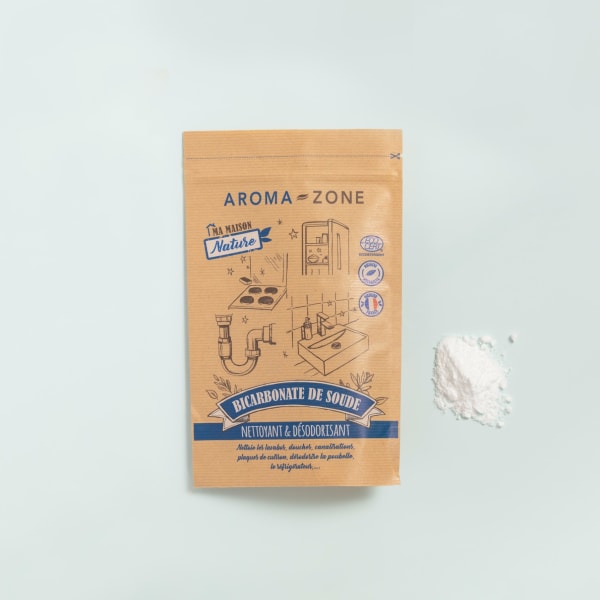
Bicarbonate of soda: bicarbonate of soda perfectly complements the action of sodium percarbonate. Ideal for gentle cleaning and deodorising, it can be used on delicate surfaces and in many DIY recipes. Its fine texture and purity make it an essential for natural cleaning.

Discover bicarbonate of soda

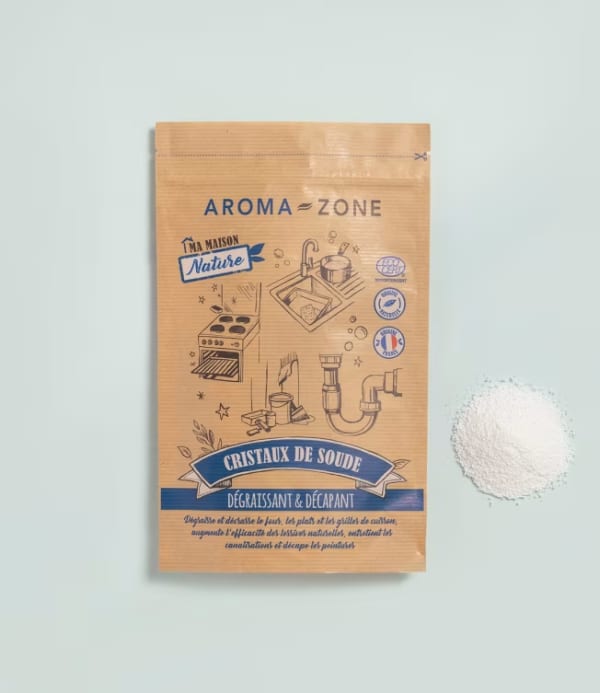
Soda crystals Ecodetergent

Soda crystals: Soda crystals have powerful degreasing properties that complement the effect of percarbonate. Perfect for cleaning heavily soiled surfaces, they can be incorporated into your homemade cleaning solutions for a deep clean that’s kind to the environment.

Find out more about soda crystals

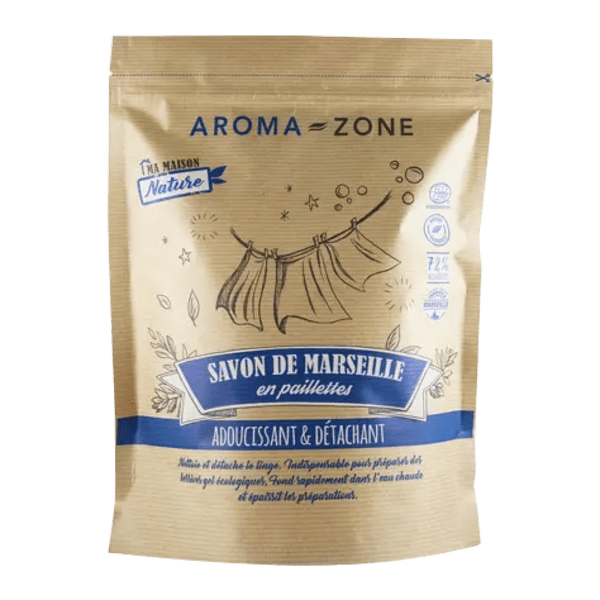
Marseille soap flakes: Aroma-Zone’s Marseille soap flakes blend harmoniously with sodium percarbonate to create effective homemade laundry detergents. Their 100% plant-based composition and traditional manufacturing method guarantee natural cleaning that is gentle on delicate fabrics.

Discover Marseille soap flakes

Combinations and compatibility

Sodium percarbonate works effectively with other natural ingredients:

With bicarbonate of soda: for enhanced stain-removing power

With soda crystals: for optimised degreasing action

With Marseille soap: they form an ideal base for homemade laundry detergents

With essential oils: to naturally fragrance your preparations. See our online guide to essential oils.

Incompatibilities

  • Avoid mixing with acids (vinegar, citric acid)

  • Do not use with products containing chlorine

  • Incompatible with oxidisable metals.

Precautions

Store in an airtight container, away from moisture. Storage temperature: between 15 and 25°C. Shelf life: 2 years under the right conditions. Avoid direct exposure to sunlight. Do not use on aluminium, wool or silk. Test on an inconspicuous area before using on coloured fabrics.

Expert advice

Myth or reality? It is often claimed that sodium percarbonate damages coloured fabrics. When used at the correct concentrations and temperatures, it actually preserves colours better than chlorinated bleaching agents. Its stain-removing power rivals that of conventional products on most organic stains, and it poses fewer risks than chlorinated products, though it does require a few precautions to ensure it works effectively.

Article written by Lou Dumas, Naturopath

Lou_Dumas_02.JPG

Lou graduated from HEC in 2012. She gained ten years of experience in marketing for cosmetics and perfumes before becoming an independent consultant in this field. She recently completed a three-year naturopathy program at the European College of Holistic Naturopathy (CENATHO, Paris) with the goal of supporting the physical and mental health of the people she works with through a holistic approach to lifestyle.

Bibliography

  1. Environmental Protection Agency. (2020).

    "Safer Chemical Ingredients List: Sodium Percarbonate." o

  2. Journal of Cleaner Production. (2019). "Comparative assessment of environmental impacts of oxygen-based vs chlorine-based bleaching agents."

    https://www.sciencedirect.com/journal/journal-of-cleaner-production

  3. International Journal of Environmental Science. (2021). "Biodegradation pathways of sodium percarbonate in aquatic environments."

    https://link.springer.com/journal/13762

  4. Household Products Database. (2022). "Safety profiles of oxygen-releasing compounds." National Institutes of Health.

    https://householdproducts.nlm.nih.gov

  5. ANSES – French National Agency for Food, Environmental and Occupational Health & Safety. (2020). “Assessment of oxygen-based bleaching agents.”

    https://www.anses.fr

  6. European Centre for Ecotoxicology and Toxicology of Chemicals. (2019). "Environmental fate of sodium percarbonate."

    https://www.ecetoc.org

Frequently Asked Questions

Frequently Asked Questions