
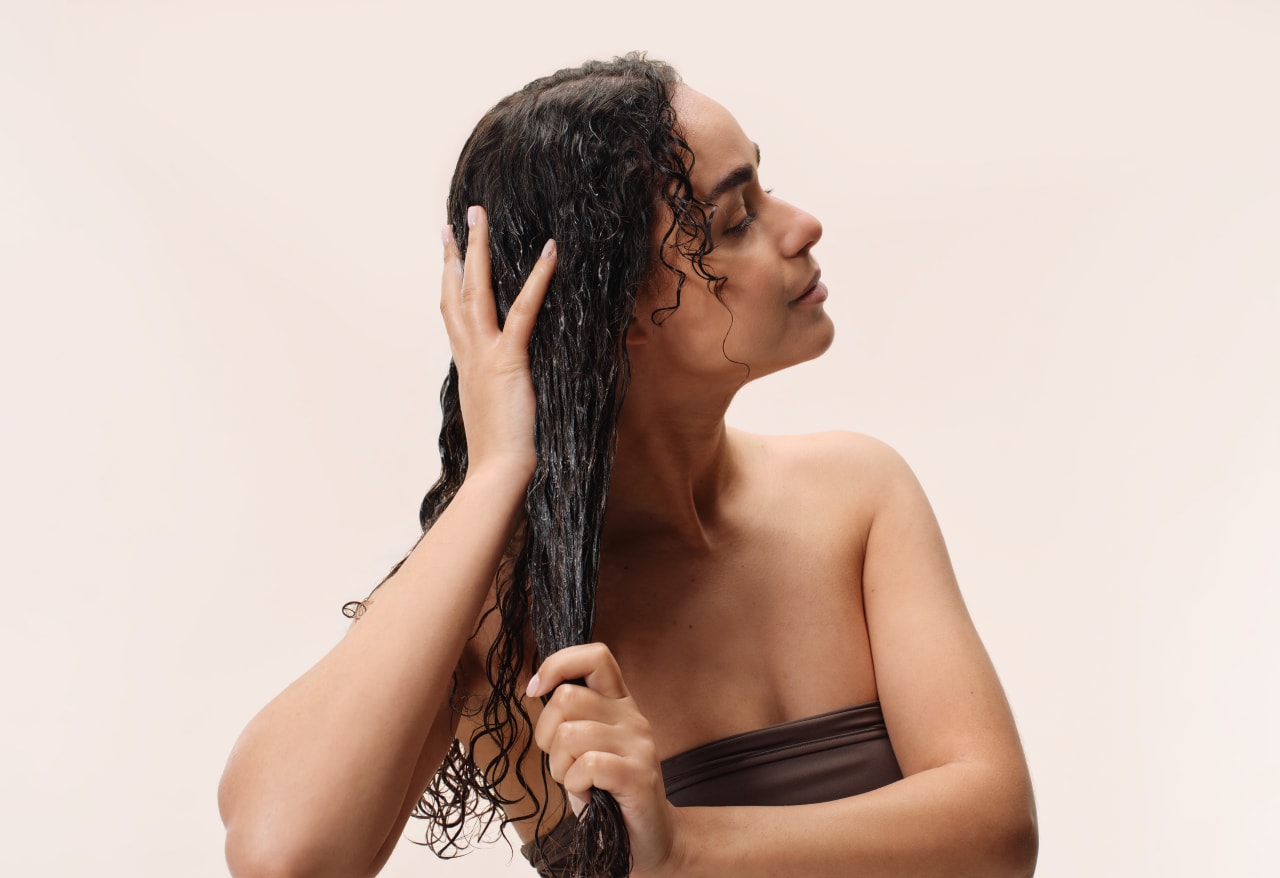
How can you refresh your curls between washes?
Published on: Wednesday, November 08, 2023, Updated on: Thursday, November 12, 2026
As the effects of your last shampoo wear off, curly hair can lose its shape and bounce. It then tends to go limp, lose its definition and become frizzy. In this situation, refreshing your curls helps restore their bounce without having to go through the whole washing routine again. A few targeted steps are all it takes; the key is to avoid damaging your curls through excessive handling. Remember: no, water isn’t the enemy of your curls’ definition.
Contents
Related products
£4.00
10 ml

Defines & sets curls
Hair
£32.50
article
Curl care
£20.50
article
Hair conditioner
Curl care
£10.50
200 ml
2 options
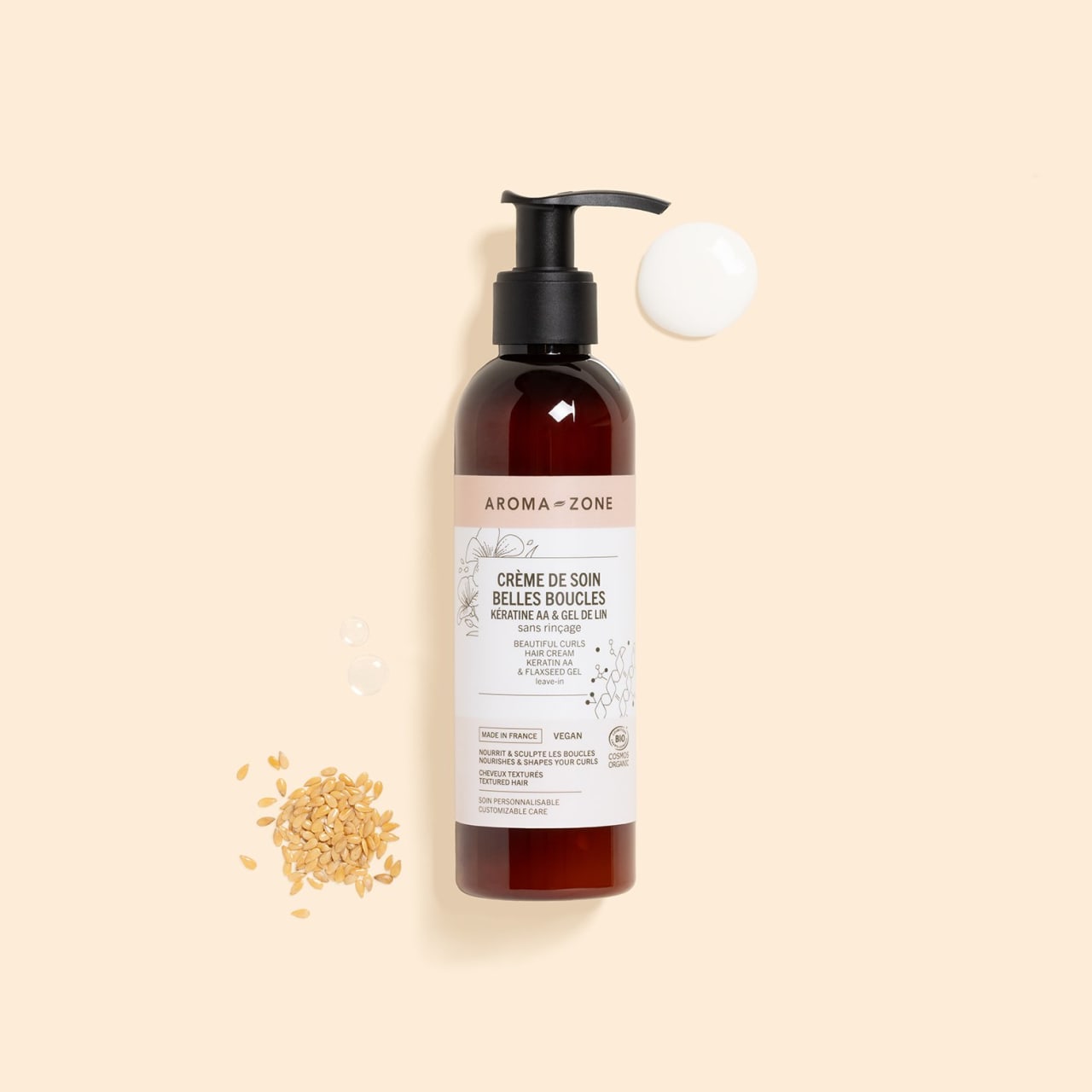
Curl care
Hair conditioner
£10.00
200 ml
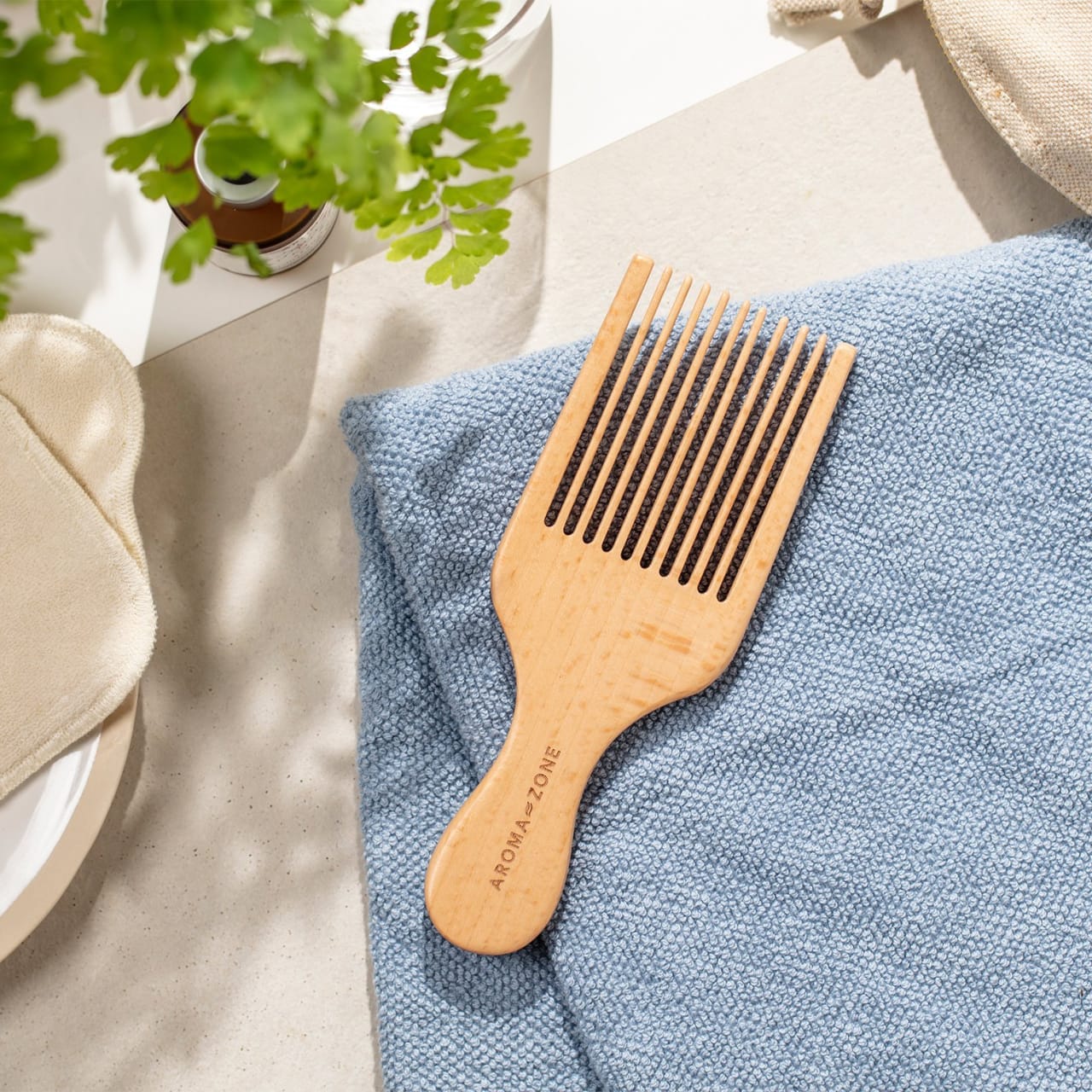
£7.00
1 article
In brief
Refreshing your curls every day takes just four steps: dampen, reshape, set and dry.
It’s best to work in sections rather than on the whole head to minimise handling.
You may need to adapt your refreshing techniques to suit the shape of your curls, the thickness of your hair and how it responds to the products.
Do you need to wet your hair to refresh your curls?
Moisten
Lightly dampening a few flat, squashed or misshapen curls will make them more supple and easier to style.
Yes, dampening your hair is one of the steps generally recommended for refreshing your curls between washes. Water and moisture temporarily alter the mechanical properties of your hair fibre, particularly its viscoelasticity: when your hair is damp, it is less rigid and more quickly dissipates the internal stresses you place on it when reshaping a curl (1). In practical terms, this means it is more supple and malleable, and therefore easier to style. Moistening your curls is therefore the first step in reshaping them.
That said, you don’t necessarily need to wet your whole head of hair to refresh your curls. Many hairdressing professionals recommend focusing only on the strands that are flattened, frizzy or have lost their definition. The curls around the face and on the crown of the head are particularly important to rework, as these are often the ones we handle the most or that get flattened against the pillow during the night. Conversely, if some of your curls are still well-defined and voluminous, there’s no need to touch them up any further.
Tip: if your tap water is hard, replace it with distilled or bottled water. Limescale tends to build up on the hair shaft and interfere with its hydration, which can make your curly hair coarser and increase the appearance of frizz.
What are the steps for refreshing curly hair between washes?
The four essential steps
The four essential steps for refreshing your curls every day are: dampen, reshape, set and let dry.
Below, we’ve put together a simple 4-step routine to refresh your curls between washes. These recommendations are based primarily on the practical experience of hairdressers and cosmetic chemists. Whilst this provides a useful starting point, we naturally encourage you to gradually build on it with your own observations, so that you can adapt it not only to the shape of your curls, but also to the characteristics of your hair.
If you have fine hair, for example, using styling creams every day may be counterproductive. So start by reshaping your curls on hair that’s just slightly damp and see how they behave without adding any styling or anti-humidity products. If your curls go flat straight away, you can use a styling product on a daily basis, but make sure to choose a lightweight formula and adjust the amount you use to suit your hair. Similarly, curly and frizzy hair is characterised by very tight curls which can cause particular mechanical stress during styling (2), as well as the risk of shrinkage.
Moisten the curls that are noticeably misshapen. Use a water spray, applying it locally to the affected strands without completely soaking the hair. A very small amount of water can be enough to effectively reshape a curl.
Reshape your curls using your fingers. To do this, use techniques such as twisting (twisting the strand) or finger coiling (wrapping the strand around a finger).
Apply a styling product if your curls lack hold. The aim is, in particular, to preserve the shape of your curls in high-humidity conditions, for example by using formulas enriched with emollients (if your curly hair is rather dry and frizzy) and film-forming agents (some of which help to maintain the curl’s structure).
Let your curls dry before finishing the look. You can either let them air-dry or use a hairdryer fitted with a diffuser to add volume. Gently separate your curls with your fingers and lift your roots for a more natural look.
How can you refresh your curls the next day without damaging them?
It’s best to reduce both the frequency and the intensity
It’s best to minimise both the frequency and intensity of the physical handling you subject your curls to.
Styling techniques used to refresh your curls subject the hair shaft to mechanical stress. Over time, this can lead to increased breakage – a risk that is all the more relevant for textured hair, as it already has naturally fragile areas. Rest assured, however: this damage is cumulative. It stems from the repetition of bad habits, not from the occasional overly aggressive action taken on a day when you’re in a rush (3).
For example, it’s a proven fact that repeatedly running a comb through your hair can damage the cuticle of frizzy hair, as can braiding (4).
To reshape your curls without damaging them, the aim is therefore to keep handling them to an absolute minimum. For example:
only work on curls that are genuinely out of shape;
do not pull your strands too hard when shaping your curls;
avoid reshaping the same curl several times in a row;
limit the number of times you run a comb or brush through your hair whilst detangling;
do not brush your hair again after applying your styling product (5).
Read also : what are the best anti-breakage ingredients?
The trichologist’s advice
A dehydrated curl can be recognised by a lack of suppleness and definition: it looks dry, becomes duller, has more frizz and struggles to regain its shape. Coarse, less supple curls can benefit from the Belles Boucles Keratin AA & Flaxseed Leave-in Cream. If they’re simply out of shape after a night’s sleep, lightly dampening them with the Belles Boucles Hyaluronic Acid and Linseed Gel, followed by a bit of scrunching (lifting the curls with your hands), is often enough. However, greasy roots, product build-up or an uncomfortable, itchy scalp indicate that a wash may be necessary.
Dalila Belmokhtar, Doctor of Pharmacy and trichologist @dalilahairscience
What products should you use to revive your curls in the morning?
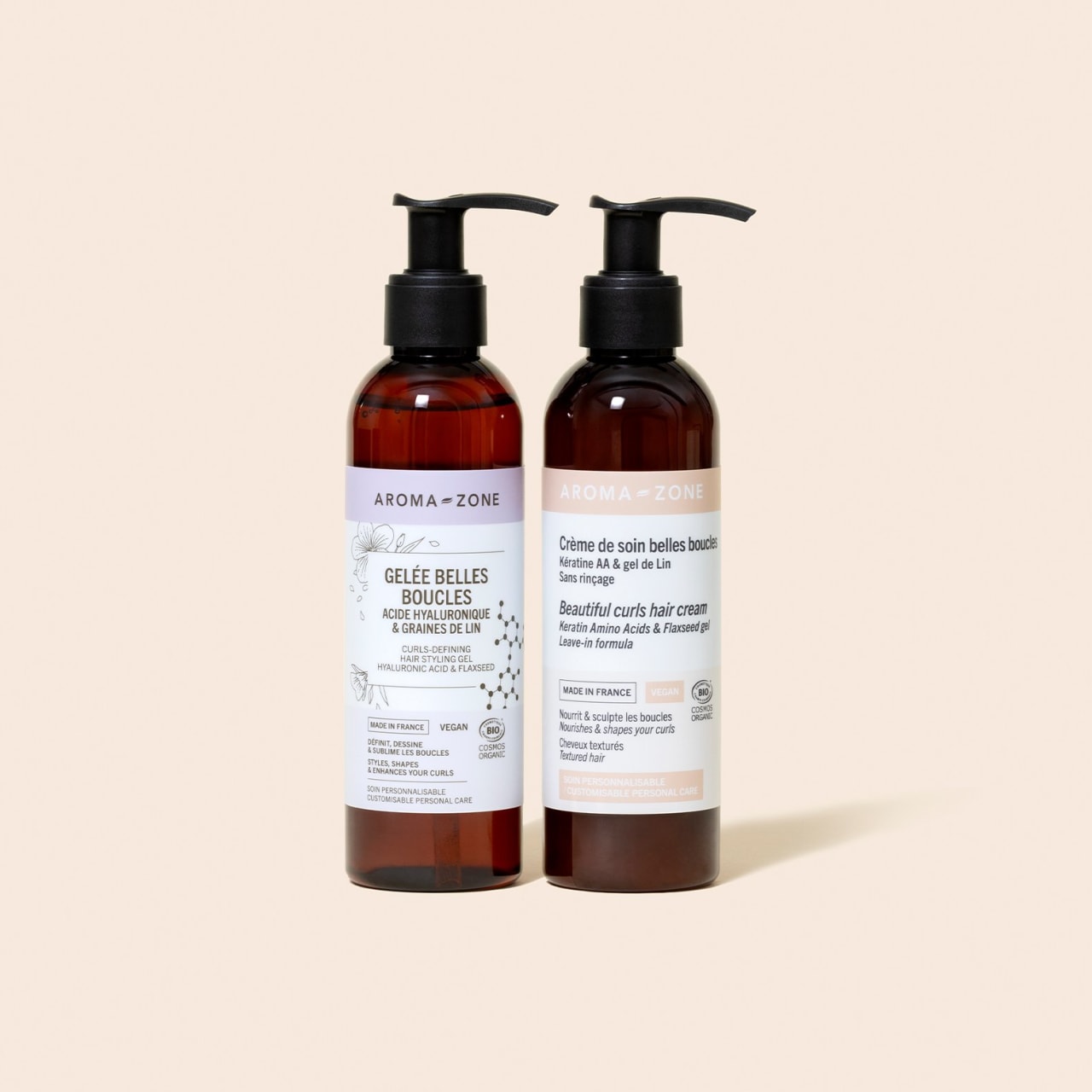
To keep your curls light and bouncy from one day to the next, it’s essential to avoid weighing down your hair by layering on multiple styling products. Beautiful Curls Gel or Beautiful Curls Care Cream: choose just one of these two products (or alternate between them) and complete your high-definition routine with our wide-toothed comb to restore suppleness and volume.
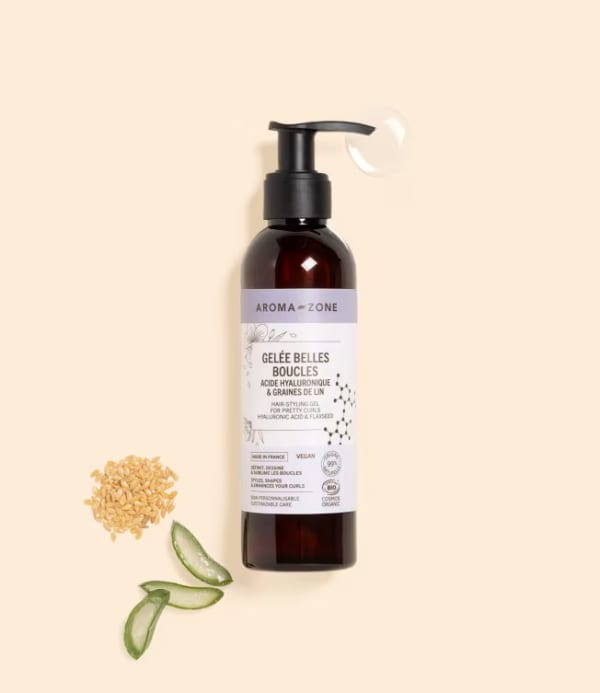
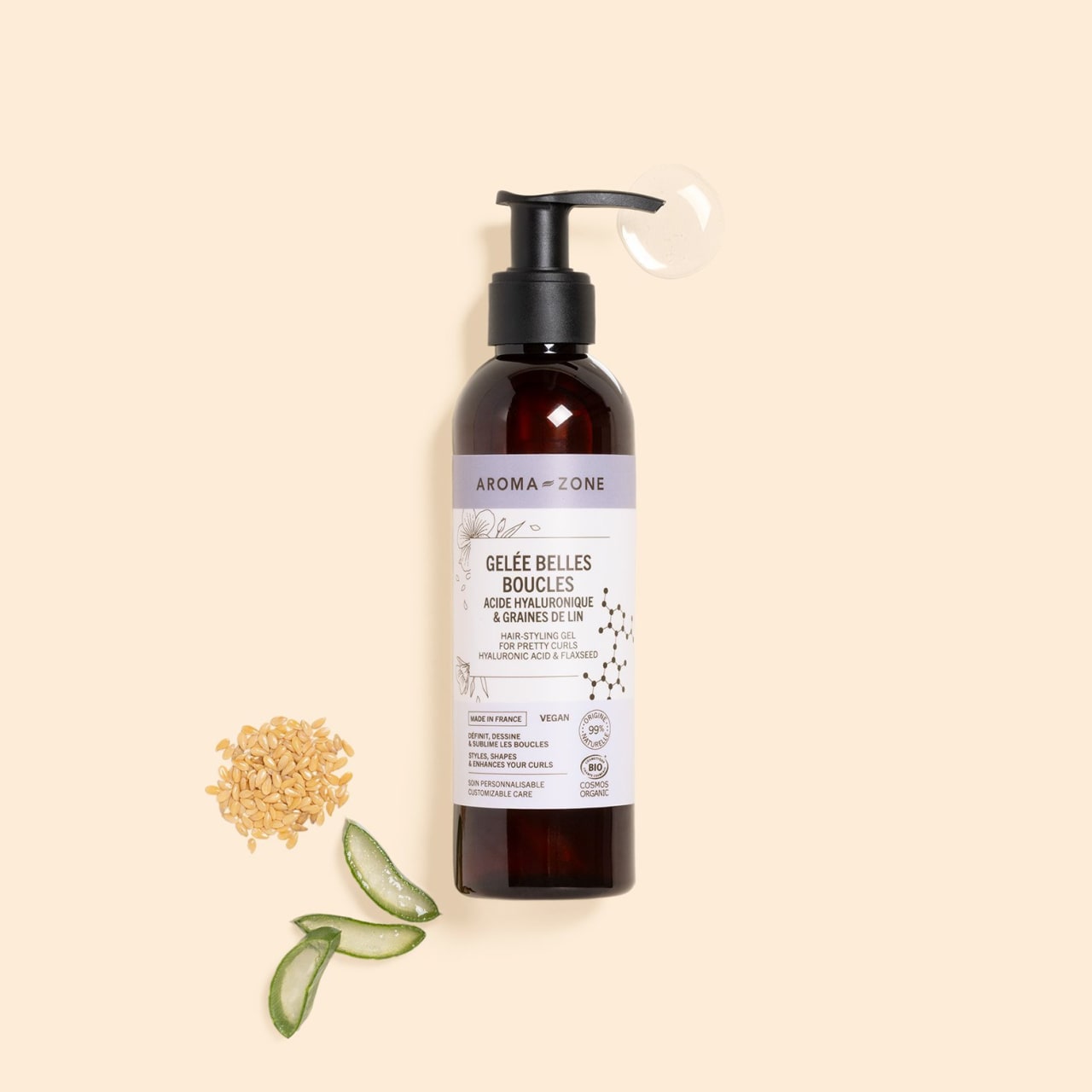
Beautiful Curls Gel with Hyaluronic Acid and Linseeds
This styling gel has a light, non-greasy texture that defines, enhances and holds curls without leaving a stiff finish. Its anti-frizz and humidity-resistant formula is ideal for providing long-lasting hold to unruly strands or creating sleek styles. To refresh the bounce in your curly hair, apply it to damp hair, then reshape your curls with your fingers before letting them dry.
Discover our Beautiful Curls Gel with hyaluronic acid and linseed
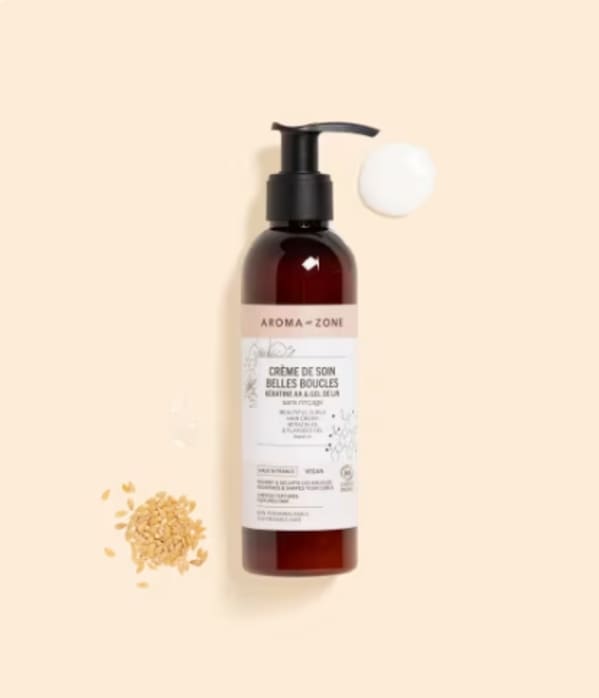
AA Keratin Beautiful Curls Care Cream & Leave-in Flax Gel
This styling cream is specially formulated to define and hold curls whilst repairing and strengthening them. Its light, creamy texture coats curly hair in a protective, soft and radiant layer. To revitalise your curls between washes, dampen several sections of hair and work in a small amount of the product, then style your lengths with a comb or your fingers, scrunch them to maximise definition, and finally move on to the drying stage.
Discover our AA Keratin Beautiful Curls Care Cream & Leave-in Flaxseed Gel
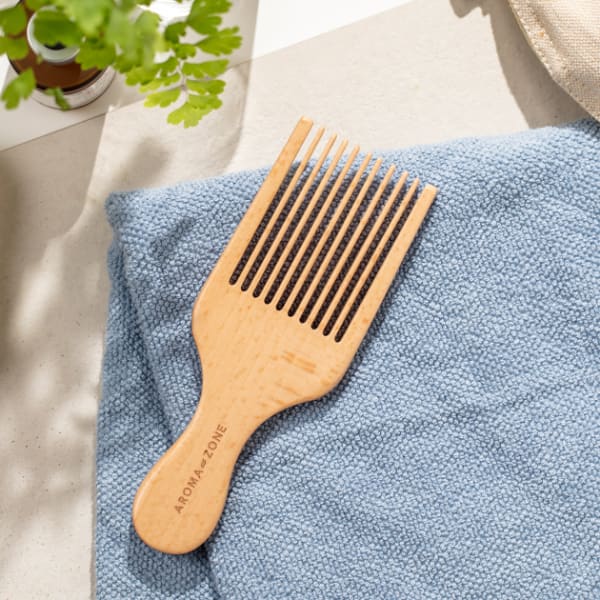
Beechwood curl-boosting comb
You can use this comb on damp or dry hair. Thanks to its fine, long teeth, it glides easily through the hair to loosen curls and boost volume right from the roots. Ergonomically designed and suitable for thick, curly hair, it is designed to enhance curls without breaking them or damaging the hair fibre.
Precautions
Even the haircare products you apply to your hair are bound to come into contact with your skin. We therefore recommend that you take the time to carry out a sensitivity test for every new product you introduce into your haircare routine. Apply a small amount of the product to a hidden area of your skin, such as the crook of your elbow, and wait 48 hours to check for any adverse reactions. This precaution applies equally to ready-to-use products, customised formulas and your own homemade recipes.
Expert advice
If we feel the need to refresh our curls the day after or two days after washing, it’s often because we flatten them and rub them against the pillow whilst we sleep. To avoid broken or frizzy curls first thing in the morning, why not try the ‘pineapple’ technique? The idea is to pull your hair back into a ponytail tied as high as possible on the crown of your head, letting your curls fall around your face (which resembles the crown of green leaves at the top of a pineapple, hence the name of the method). It’s important not to pull your hair too tight to avoid leaving marks: opt for silk or satin hair ties.
Spotlight On Our Writer: Lauréna Valette

Lauréna is a journalist and editor specialising in lifestyle, wellbeing and psychology. Between writing articles, she travels to discover the world and what it has to teach us.
Bibliography
Zuidema, P., et al. (2003). The influence of humidity on the viscoelastic behaviour of human hair. Biorheology, 40(4), 431–439, DOI: 10.1177/0006355X2003040004002
Cloete, E., Khumalo, N. P., & Ngoepe, M. N. (2019). The what, why and how of curly hair: A review. Proceedings of the Royal Society A: Mathematical, Physical and Engineering Sciences, 475(2231), Article 20190516. https://doi.org/10.1098/rspa.2019.0516
Camacho-Bragado, G. A., et al. (2015). Understanding breakage in curly hair. The British Journal of Dermatology, 173(Suppl. 2), 10–16. https://doi.org/10.1111/bjd.13241
Molamodi, K., et al. (2021). Quantifying the impact of braiding and combing on the integrity of natural African hair. International Journal of Cosmetic Science, 43(3), 321–331. https://doi.org/10.1111/ics.12699
Hair styling without damage, American Academy of Dermatology Association, https://www.aad.org/public/diseases/hair-loss/hair-care/styling [online, accessed 17/10/2026]

Frequently Asked Questions
Associated recipe
Associated tip
Hair care tips


