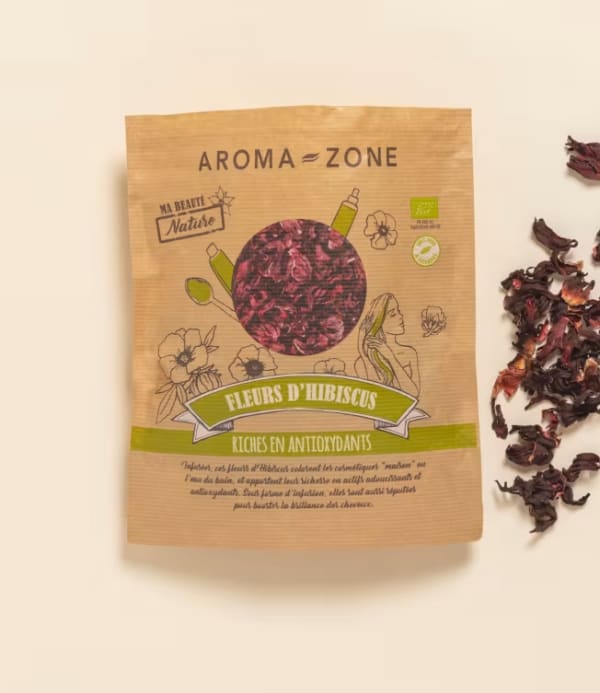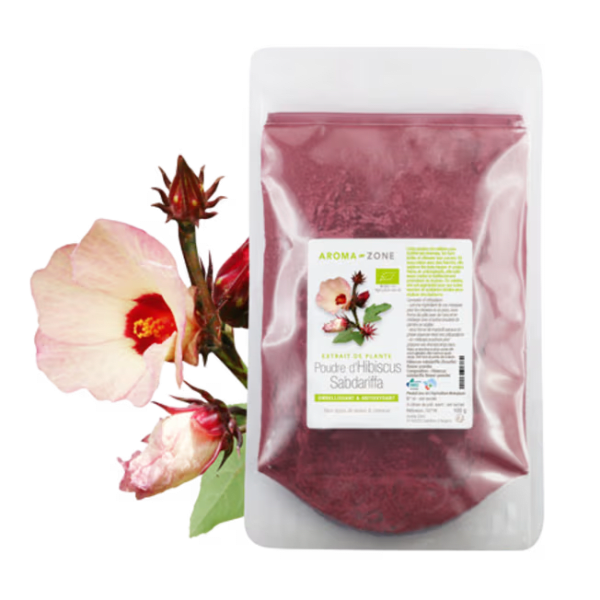
Hibiscus is a plant or shrub that can grow 2 to 3 metres tall, with beautiful, colourful red, orange, or yellow flowers. It belongs to the Malvaceae family. Native to Africa, its cultivation subsequently spread to Asia and then across the globe, particularly in tropical regions. There are over 300 species of hibiscus, but it is undoubtedly Hibiscus sabdariffa, also known as Guinea sorrel or karkadé, that is most commonly used and has been the subject of the greatest number of studies.
Its active compounds are concentrated in various parts of the plant:
The Petals: The richest in anthocyanins, powerful pigments
The Flower Calyxes: These contain flavonoids and polysaccharides
The Leaves: These mainly contain mucilage
Hibiscus has been used for thousands of years for its many health benefits, particularly in the preparation of bissap, a traditional drink from Senegal and the Ivory Coast with refreshing qualities. But we shall see that this is not its only benefit.