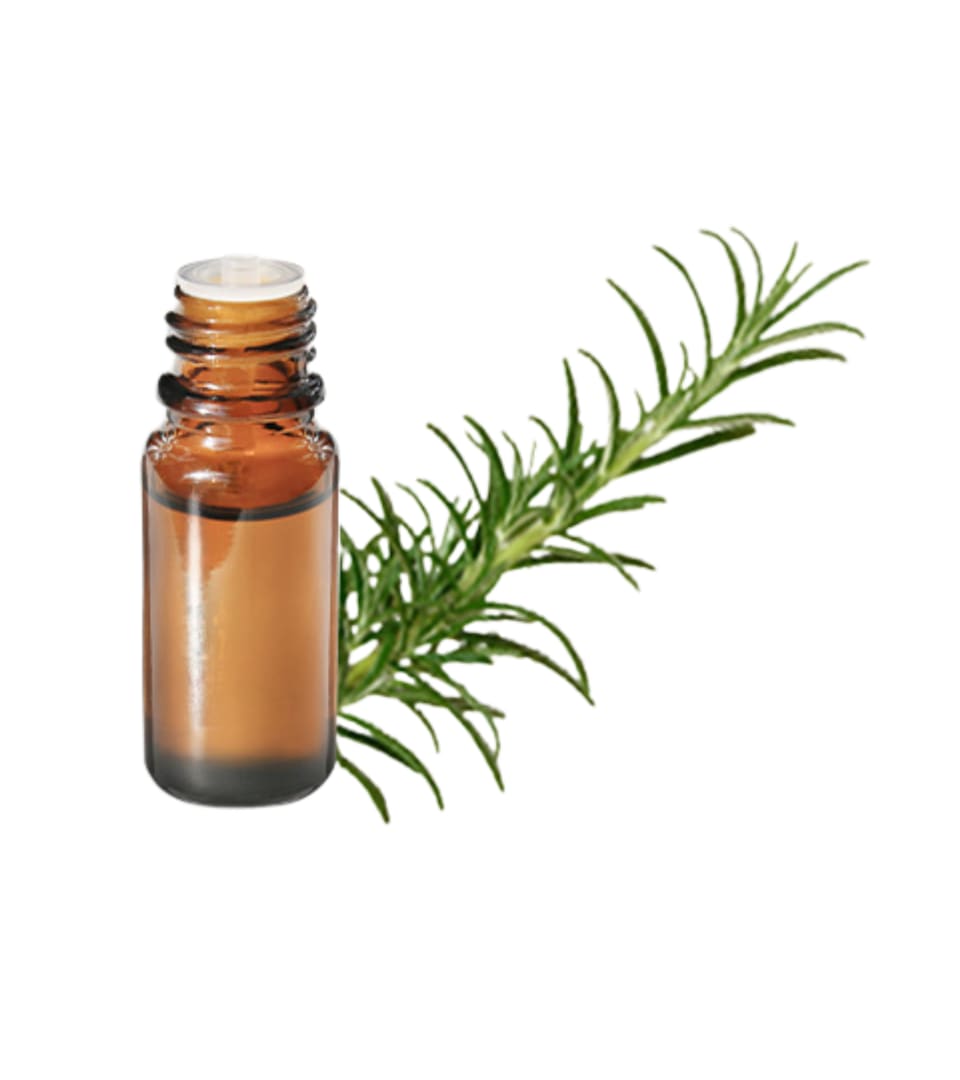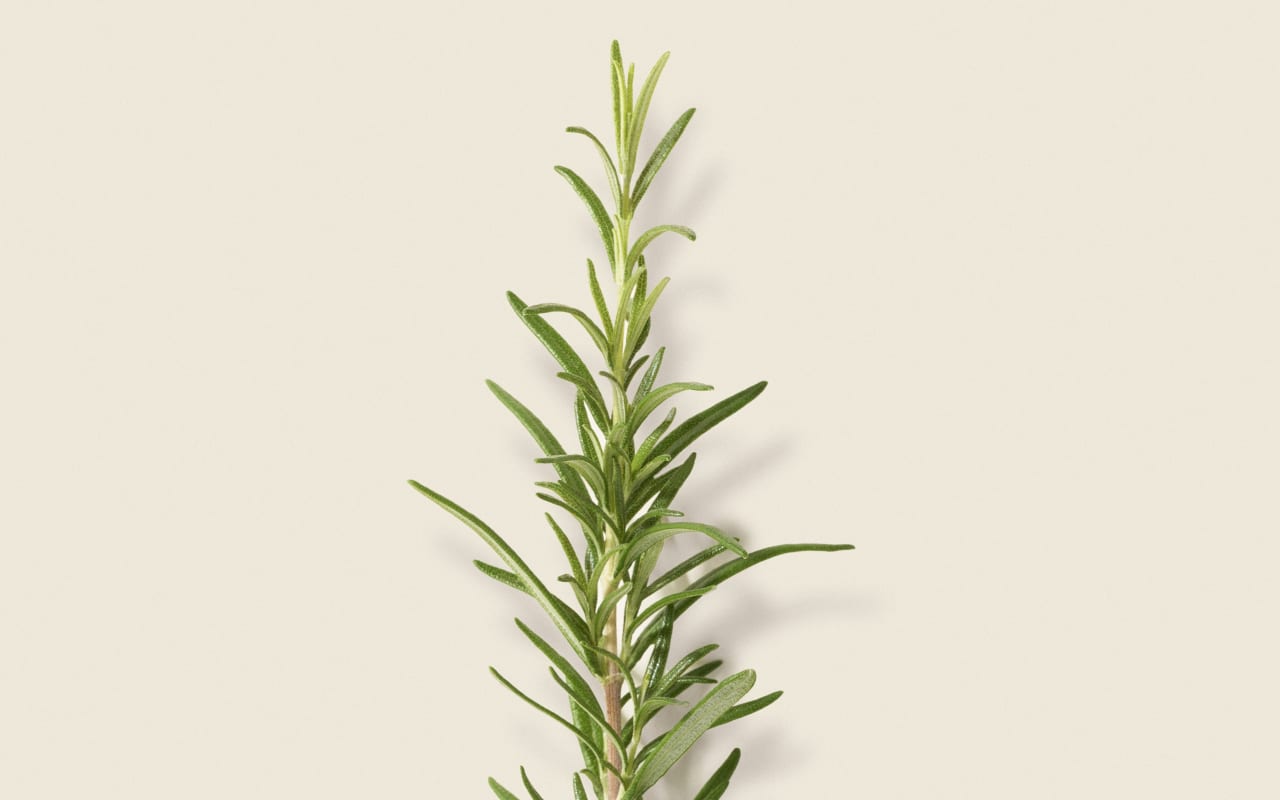
INCI Name: Rosemary verbenone, Rosmarinus officinalis CT ABV (bornyl acetate, verbenone) or CT verbenone or Rosmarinus officinalis verbenoniferum
A recent botanical classification places Rosmarinus officinalis within the genus Salvia. It should therefore be classified among the sage species: Salvia rosmarinus is its new Latin name.
Do not confuse this essential oil with those derived from the same species but with different chemotypes: Camphor Rosemary essential oil and 1.8-cineole Rosemary essential oil.
Part of the plant used: Flowering tops
METHOD OF EXTRACTION
Full steam distillation
BIOCHEMICAL COMPOSITION
Monoterpenes (20–50%): alpha-pinene (15–45%), camphene, beta-pinene
Ketones (20–35%): borneone (camphor, 1–16%), verbenone (4–15% depending on the batch)
Esters: bornyl acetate (5–15%)
Terpene oxides: 1,8-cineole (4–15%)
Monoterpenols (approx. 10%): borneol, linalool, terpinol-4
ITS ACTIVE MOLECULES
The verbenone molecule is antioxidant, lipolytic, anti-infectious (bactericidal), mucolytic, and digestive.
Camphor has a wide range of effects: nervous system, circulatory, cardiac, respiratory, local anesthetic, insect repellent, parasiticidal (anti-lice), and antifungal.
Bornyl acetate is analgesic, anti-inflammatory, and antispasmodic.
1,8-Cineole also possesses anti-infectious (bactericidal, virucidal, and antifungal), mucolytic, expectorant, and anti-inflammatory properties.