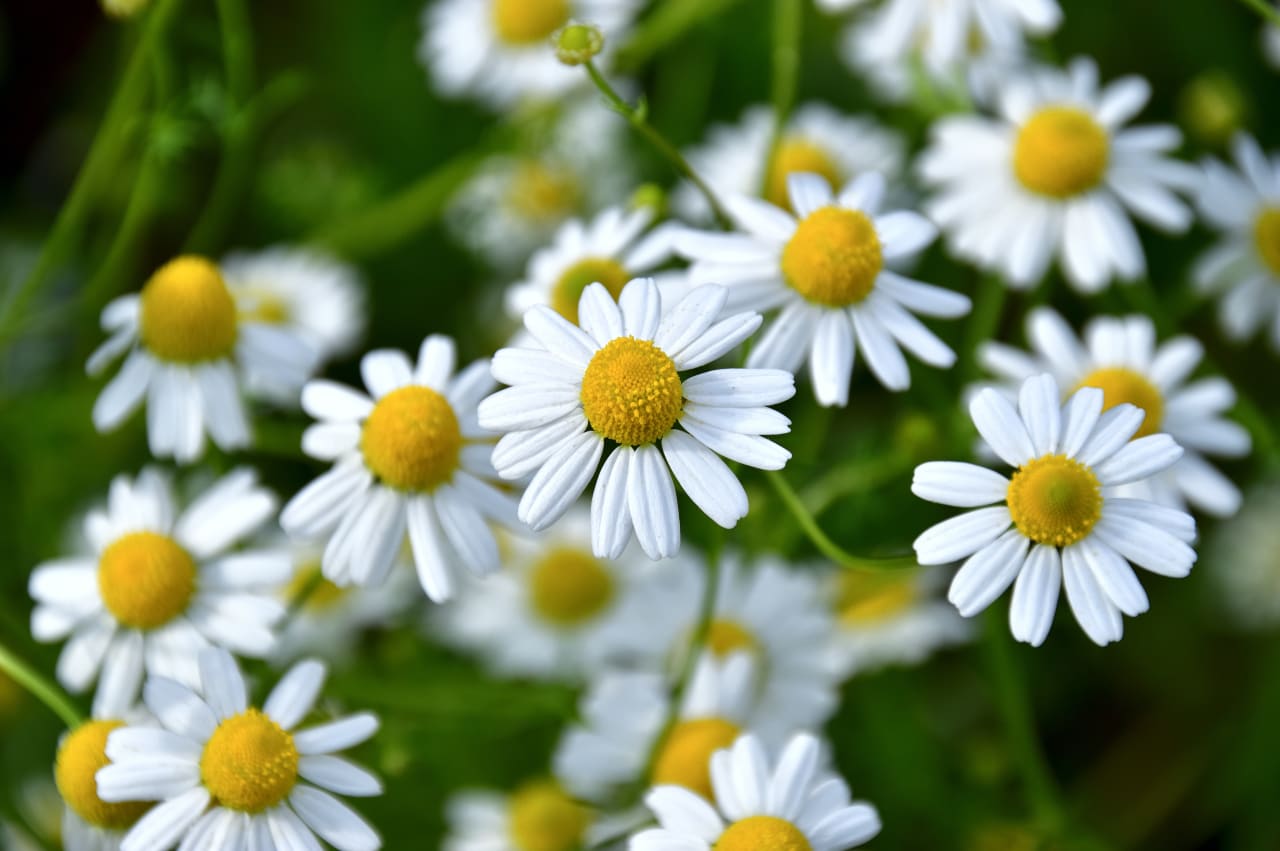
German Chamomile (Matricaria chamomilla): Benefits, Origins, and Consumption Tips

German Chamomile (Matricaria chamomilla): Benefits, Origins, and Consumption Tips


By Coralie Techer

Published on: Wednesday, November 15, 2023, Updated on: Thursday, October 29, 2026

German chamomile, scientifically known as Matricaria chamomilla, is a plant native to Europe that has been used in traditional medicine for centuries. It belongs to the Asteraceae family, alongside other types of chamomile, such as Roman chamomile and blue chamomile. This diverse family includes a wide range of plants traditionally valued for their various properties and uses.

Contents

Origins and Varieties of German Chamomile (Matricaria chamomile)

German chamomile, also known as matricaria (Matricaria recutita), is an annual herbaceous plant belonging to the Asteraceae family. Renowned for its abundant flowering and slightly fruity fragrance, it has been used since ancient times in herbal medicine and natural remedies. For example, the Egyptians valued it for its soothing properties and for alleviating certain discomforts.

Native to Europe and Western Asia, chamomile has gradually spread to other continents and has adapted well to temperate regions. It grows wild in fields, wasteland, or along roadsides, preferring light, sandy, or calcareous soils, as well as sunny locations.

This plant can grow to a height of 15 to 60cm and has branched stems bearing deeply lobed leaves. Its distinctive flowers consist of white ligules surrounding a conical, hollow yellow centre – a botanical feature that distinguishes it from closely related species with which it is often confused, such as false chamomile or small chamomile. Traditionally prized for the soothing and antispasmodic properties of its flowers, German chamomile is now one of the most widely used varieties of chamomile in herbal medicine.

What Are the Benefits of Chamomile?

German chamomile has been used since ancient times in herbal medicine and natural remedies. Its flowers contain numerous plant compounds, notably flavonoids, sesquiterpene lactones, and coumarins, which contribute to its various uses in wellness and cosmetic routines.

Among the benefits traditionally associated with German chamomile are:

  • Skin Soothing: Chamomile extracts are traditionally valued for soothing feelings of discomfort, heat, or redness. They are often incorporated into skincare products for sensitive or reactive skin

  • Care for Sensitive Skin: Thanks to its gentle nature, German chamomile is frequently used in skincare products for delicate skin, including certain formulations designed for fragile skin or baby care

  • Clarifying and Brightening the Complexion: Rich in antioxidants, German chamomile is used in skincare routines designed to clarify the skin, support the skin’s natural regeneration and restore radiance to a dull or tired complexion

  • Digestive Comfort: When consumed as a herbal tea, German chamomile is traditionally used to aid digestion and promote digestive comfort after meals

  • Relaxation and Calm: Chamomile is also renowned for promoting moments of physical and mental relaxation. The infusion is often enjoyed at the end of the day to aid unwinding and support a wellness routine, as well as to help with anxiety. It helps to relieve nervous tension, headaches, and even sleep disturbances

  • Support During Times of Transition: During seasonal changes or periods of tiredness or stress, chamomile is sometimes incorporated into natural routines to gently support the body

  • Hair Care: When used as a rinse or in hair care products, it can help add shine to light or blonde hair and help soothe sensitive scalps

  • Natural Relief for Allergic Rhinitis: Chamomile is often recommended for its beneficial effects. Hay fever symptoms can also be soothed with an infusion of this herb, offering natural relief from unpleasant symptoms

Thanks to its wide range of uses, German chamomile naturally finds its place in skincare, haircare, and wellness drinks, where it complements natural routines designed to promote the body’s comfort and balance.

Good to Know:

In the world of beauty, German chamomile proves to be a true marvel. It is mainly found in the form of essential oil or hydrosol. Its anti-inflammatory, soothing, and antibacterial properties make it a versatile ingredient for the skin and hair. 

How Should German Chamomile Be Consumed?

To make the most of the benefits of German chamomile, an infusion made from its flowers is the most common form of herbal tea. Generally, two to three cups a day are enough to feel its soothing effects. To make an infusion, pour hot water over a teaspoon of dried flowers and leave to infuse for about 5 to 10 minutes before straining.

In Cooking

Although its culinary use is less widespread, chamomile can be used in herbal tea or to add a delicate flavour to sweet dishes. An infusion of fresh or dried flowers, combined with honey or lemon, makes a mild drink, often enjoyed after a meal or in the evening.

Chamomile is widely used in DIY skincare. It can be used as:

  • An Infusion: To make soothing lotions, toners or mists

  • A Glycerine or water-soluble macerate: Incorporated into the aqueous phase of a face or hair care product

  • A Powder: To create gentle masks with balancing properties

  • A hair rinse: Particularly to brighten blonde hair, restore shine, and soothe sensitive scalps

As a reminder, the topical application of chamomile essential oil can be beneficial for soothing skin irritations and promoting healing. However, it is essential to check for any contraindications, as some people may be sensitive to chamomile and experience allergic reactions.

In Perfumery

Its floral, slightly herbaceous scent is used in the composition of certain homemade floral waters, or as a heart note in relaxing blends. It blends well with sweet scents such as rose, lavender, or orange blossom.

As a Dietary Supplement

Chamomile can easily be enjoyed as a herbal tea, using one teaspoon of dried flowers per cup. It is also found in certain powdered or capsule supplements, particularly in blends designed to promote relaxation or aid digestion. As always, moderate consumption and alternating with other plants are recommended.

What Is the Difference Between Roman Chamomile and German Chamomile?

Roman chamomile (Anthemis nobilis) and German chamomile (Matricaria chamomilla or Matricaria recutita) are two plants that are often confused because of their similarities, although they have some notable differences. For example, their active compounds differ slightly. Roman chamomile is known for its essential oil, which is rich in esters, while German chamomile contains higher levels of sesquiterpenes, including chamazulene. In terms of their uses, both are traditionally valued for their soothing properties and are commonly used as herbal teas to help relieve digestive discomfort and support sleep. They are also used topically to soothe irritated skin.

Precautions and Contraindications for German Chamomile

Despite its many benefits, chamomile is not without risks. People who are allergic to plants in the Asteraceae family should avoid chamomile, as they may experience allergic reactions. Furthermore, its use is not recommended for pregnant women, as it may potentially affect the pregnancy. In addition, and to avoid any complications, it is advisable to consult a healthcare professional before starting any chamomile-based treatment, especially if you are already taking medication that may interact with this plant.

German chamomile, with its many uses and health benefits, remains an essential plant in the world of herbal medicine. Its long history, soothing properties and effects on a variety of ailments have made it a prized natural remedy for centuries. Please note, however, that careful use and prior medical consultation are essential to avoid any contraindications and to fully benefit from its therapeutic properties.

Spotlight on Our Writer: Coralie Técher

Coralie Técher

Coralie has been a journalist and editor specialising in women’s interests for seven years. With a particular interest in topics related to beauty and wellbeing, she is passionate about highlighting the solutions nature offers for self-care and is always keen to stay informed on the subject so she can share the very best insights. 

Bibliography

  1. Goetz, P., Ghedira, K. (2012). Matricaria recutita L. Rauschert (Asteraceae): German chamomile, feverfew. In: Anti-infective Phytotherapy. Practical Phytotherapy Series. Springer, Paris.

    https://doi.org/10.1007/978-2-8178-0058-5_19

  2. Matricaria species, ‘chamomiles’ of interest in phyto-aromatherapy. F. Petitet

    https://doi.org/10.1007/s10298-016-1039-2

  3. Chronic inflammatory bowel diseases: what role for phyto-aromatherapy? Boukhatem Mohamed Nadjib, Belkadi Asma

    https://ajhs.atrss.dz/

  4. Bruneton J. (1999)

    Pharmacognosy, phytochemistry, medicinal plants.

  5. Mills S., Bone K. (2013)

    Principles and Practice of Phytotherapy.

  6. European Medicines Agency

    Assessment Report on Matricaria recutita

  7. Duke JA. (2002)

    Handbook of Medicinal Herbs.

  8. EMA Monograph

    Matricaria recutita L. (EMA/HMPC/144003/2009).

Frequently Asked Questions

Frequently Asked Questions