
Daisy oil: its benefits for the skin and our tips for use

Daisy oil: its benefits for the skin and our tips for use


By Coralie Techer

Published on: Wednesday, November 15, 2023, Updated on: Thursday, October 29, 2026

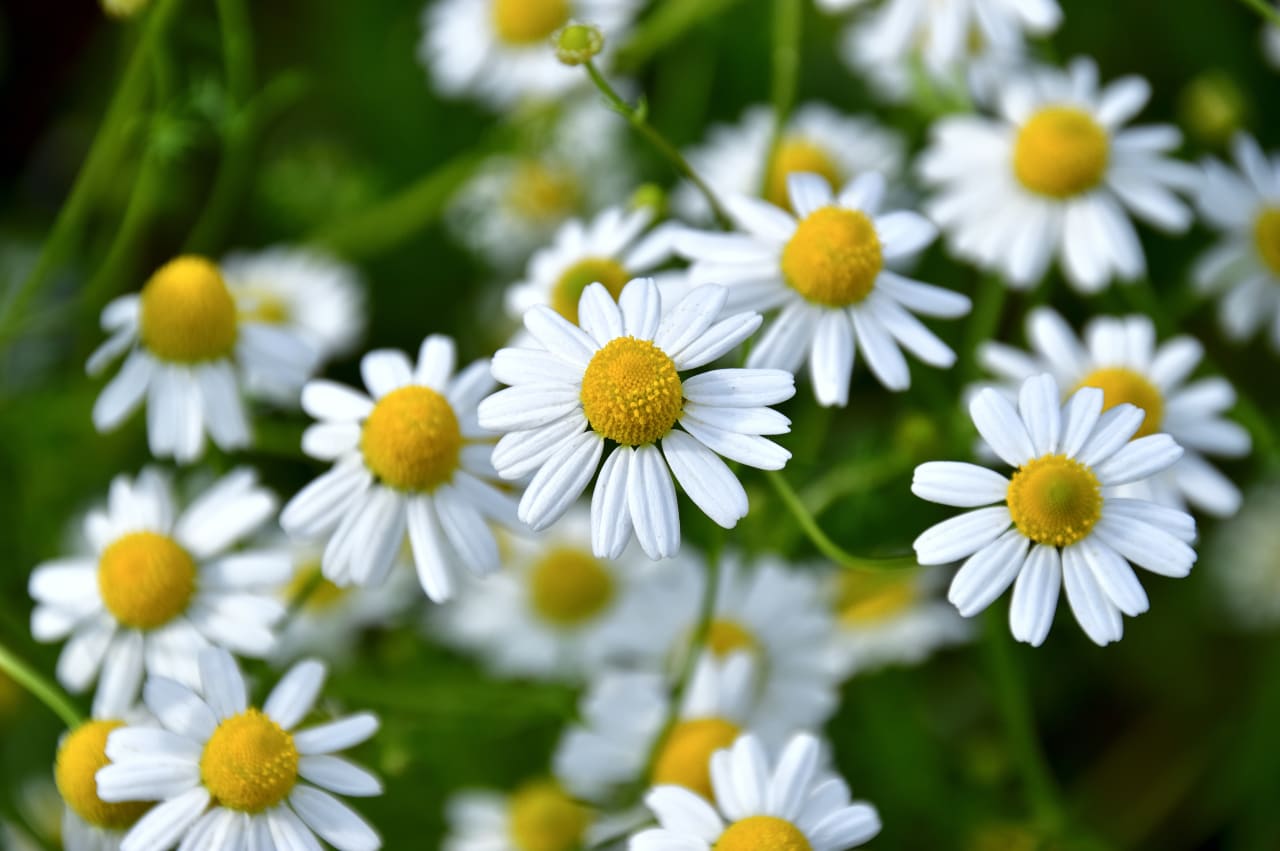
Daisy oil, extracted from the delicate flowers of Bellis perennis, is a real help for the skin. Renowned for its beneficial properties, this plant-based oil is packed with essential fatty acids and natural compounds, making it a highly prized ingredient in skincare products. Let’s explore the benefits, and some top tips for using this natural oil.

Contents

Related products

Its origin and composition

Daisy oil, also known as daisy oil macerate, is obtained by macerating the daisy flowers in a vegetable oil such as sunflower oil or calophyllum inophyllum oil. This process, often carried out by first cold pressing, helps to preserve as much as possible the properties of this plant from the Asteraceae family.

Its high content of essential fatty acids, particularly linoleic acid, makes it a valuable ingredient for skincare. Furthermore, daisy oil is often free from chemical additives, especially when organically grown, thus guaranteeing a natural origin and genuine benefits for the skin.
The benefits of daisy oil for the skin

Daisy oil offers a wealth of benefits for the skin thanks to its composition, which is rich in nutrients and active compounds. Here are some of its main benefits:

  • Tissue firmness: Daisy oil is renowned for its firming properties, which help to improve the firmness of skin tissue. Its tightening effect makes it a valuable ally in bust care.

  • Care for mature skin: Thanks to its high fatty acid content, this oil is valued in skincare products designed for mature skin, helping to preserve elasticity and deeply nourish the skin.

  • Soothing redness:Its ability to reduce the appearance of dilated blood vessels makes it a popular choice for soothing redness and rosacea, thereby promoting a more even complexion.

  • Treatment for stretch marks: In some cases of stretch marks, regular application of daisy oil can help to reduce their appearance.

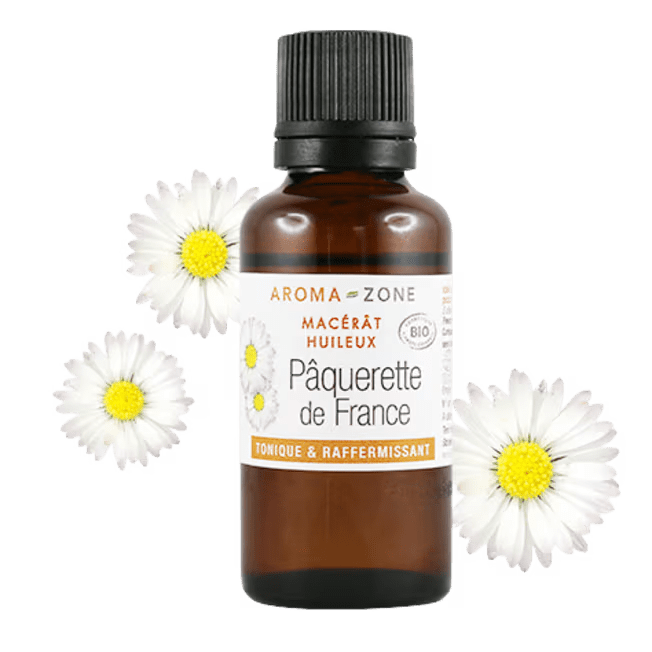
Organic French Daisy Oil (oily macerate)

Organic French Daisy Oil (oily macerate)

Made from fresh daisy flowers harvested in Burgundy, this artisanal macerate is renowned for its toning and firming properties on the skin and is particularly beneficial for the delicate skin of the breasts. It is ideal for firming and shaping the bust and for bust care. It helps to maintain the tone of mature skin.

Discover our Organic French Daisy Oil (oily macerate)

Can you make your own daisy oil?

It’s perfectly possible to make your own daisy oil at home. Here’s a simple method for making a daisy oil macerate:

How to make a daisy oil macerate?

Ingredients:

  • Fresh daisy flowers (make sure they haven’t been exposed to pesticides or herbicides)

  • Vegetable oil of your choice (sunflower oil, jojoba oil, sweet almond oil, etc.)

Steps:

  • Picking and Drying the Flowers: Pick fresh daisy flowers, preferably in the morning when they are open. Avoid wilted flowers. Leave them to dry slightly for a few hours to remove excess moisture.

  • Maceration : Place the dried flowers in a clean, dry glass jar. Fill the jar halfway with the daisy flowers. Then pour in your chosen vegetable oil until the flowers are completely covered. Seal the jar tightly.

  • Infusion: Place the jar in a sunny, warm spot, such as on a windowsill, for around 4 to 6 weeks. Gently shake the jar every day to help the flowers infuse into the oil.

  • Straining: Once the infusion is complete, strain the mixture using muslin, a coffee filter or a clean cloth to separate the oil from the flowers. Squeeze the flowers well to extract all the oil.

  • Storage : Transfer the filtered daisy oil to a tinted or opaque glass bottle to protect it from light. Store it in a cool, dry place, away from heat and direct sunlight.

Practical tips

Use equal quantities of flowers and oil to prepare the macerate, but adjust according to the desired amount.

Ensure that the jar and any utensils used for preparation are clean and dry to prevent contamination.

This traditional method allows you to make a pure, natural daisy oil, free from chemicals or additives. It can be used for skincare, such as massages, moisturising or specific treatments to soothe skin irritation or redness.

Usage and precautions

Before use, it is recommended that you carry out a patch test to check for any allergic reactions. This oil is intended for external use only; gently massage it into the skin using circular movements until it is fully absorbed.

  • For daily skincare: Apply in the evening to the affected areas using circular massage movements to make the most of the benefits of daisy oil.

  • When mixing with other ingredients: To enhance its effects, mix a few drops of daisy oil with shea butter, beeswax or rose geranium or Damask rose essential oil.

  • Storage: Store your daisy oil in a cool place, away from heat and light, to ensure it lasts as long as possible and retains its properties.

Daisy oil is a valuable natural ingredient in skincare. Its benefits in firming, soothing and maintaining skin elasticity make it a popular choice for those seeking a natural solution for their skincare routine. Incorporating this oil into your skincare routine can help preserve your skin’s youthfulness and vitality in a gentle and natural way.

Spotlight on our expert writer: Coralie Técher

Coralie Técher

Coralie has been a journalist and editor specialising in women’s interests for seven years. With a particular interest in topics related to beauty and wellbeing, she is committed to highlighting the solutions offered by nature for self-care and is always keen to stay informed on the subject so she can share the very best insights. 

Photo: Micheile Henderson / Unsplash

Bibliography

  1. Bellis perennis, Daisy. P. Goetz. Phytotherapy Volume 20, Issue 1, February–April 2022

    https://doi.org/10.3166/phyto-2022-0308

  2. A Modern Grimoire of Natural Recipes, by Valérie Catala, published by Albin Michel

    Excerpt: https://books.google.fr/books?hl=fr&lr=&id=-CeHEAAAQBAJ&oi=fnd&pg=PT3&dq=huile+de+p%C3%A2querettes&ots=-rHIiQHbBt&sig=3odDMxWNXeKWLra0SPGF_jqr4R4&redir_esc=y#v=onepage&q=huile%20de%20p%C3%A2querettes&f=false