Tomato tart: secrets to healthy, homemade preparation

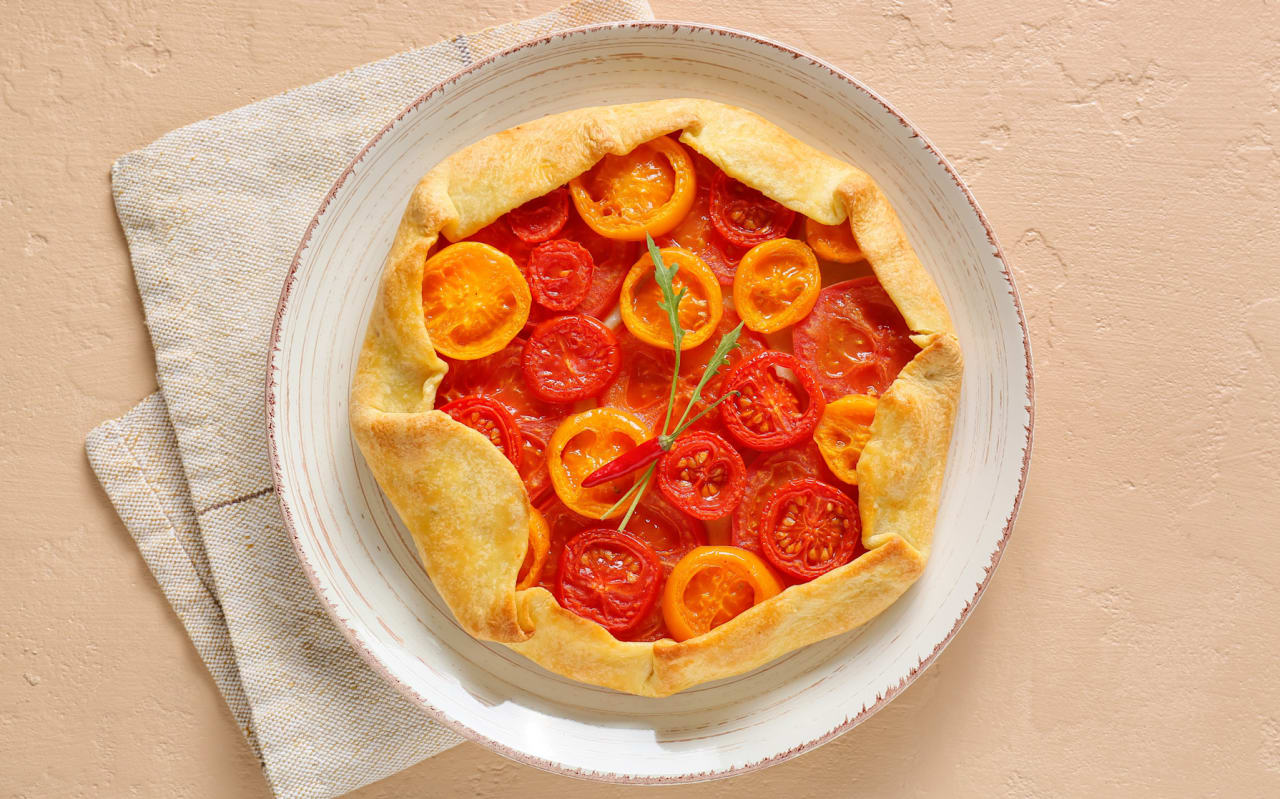
Homemade tomato tart is one of those simple, generous recipes that we make in summer. It is a typical family dish from the South of France and can easily be adapted to suit your tastes: with melted mozzarella, tuna, a few cherry tomatoes, or even a little mustard to spice it up.

Made with shortcrust or puff pastry and everyday ingredients, it can be served as a starter, a main course accompanied by raw vegetables, or in mini versions as an appetizer. Its simplicity, conviviality, and many possible variations make it an essential recipe for sunny days, ideal for making the most of tomato season.

Reading time: 0 min.

What are the health benefits of tomatoes?

Tomatoes are mainly a summer product, the season when they are most flavourful and environmentally friendly to consume. They are also easily found in other forms, such as canned, puréed, or in sauce, allowing you to enjoy them all year round. In addition to their flavour, they provide various nutrients.

  • A natural source of antioxidants: Tomatoes contain various antioxidants, including lycopene, which is mainly found in their skin. According to scientific literature, this pigment may help the body better manage certain free radicals. Tomatoes also provide beta-carotene, a precursor to vitamin A.

  • A source of useful nutrients: Tomatoes also provide potassium, an important mineral for the body. Incorporating tomatoes regularly into meals, in salads, coulis, or sauces, is a simple way to add variety to your diet while enjoying a light and hydrating food.

  • An easy food to cook with every day: its juicy texture, mild flavour, and many varieties make it a practical ingredient: cherry tomatoes for quick pies, elongated tomatoes to limit water when cooking, or more generous versions with mozzarella and herbs. It is a versatile fruit vegetable, perfect for adding colour and freshness to any dish.

What are the benefits of tomatoes for the skin?

Tomatoes are often one of those ingredients we cook with without giving them much thought, yet they contain compounds that are beneficial for the skin. They naturally contain antioxidant pigments that can contribute to daily skin wellness.

Lycopene, for example, is mainly found in the skin of the fruit. According to several scientific studies, this pigment may help the body better manage certain free radicals, which tend to accumulate when the skin is exposed to the sun or pollution. This is not a promise, just a general observation that often appears in the literature.

Tomatoes also contain a small amount of vitamin C and other compounds that contribute to healthy skin when included in a varied diet. It's a little extra that's easy to add to your daily routine.

How to choose the right tomatoes?

To make a successful homemade tomato tart, the choice of tomatoes really changes the result. Some varieties release a lot of water, others hold up better when cooked, and sometimes that's enough to transform a slightly soft pastry into a crispy tart.

Beefsteak tomatoes

They have dense flesh and a fairly strong flavour. When they are still a little firm, they hold up well during cooking and retain their shape. If they are too ripe, however, they quickly become soggy.

Oval tomatoes

Roma tomatoes are often the variety we instinctively choose for pies: they contain less water and cook fairly evenly. They work very well for a simple pie or a slightly Provençal version.

Heirloom tomatoes

Tomatoes are colourful and fragrant, with some varieties being firm and others much softer. Choose tomatoes that are not too ripe, otherwise the pastry may absorb all their juice.

Cherry tomatoes

Cherry tomatoes are ideal for tartlets or a small, slightly caramelised thin tart. They burst slightly when cooked, but this adds to the flavour. 

What about green tomatoes?

Less commonly used, but they can give the tart a more tangy flavour. They generally release a little less water, so they can be an option for adding variety without complicating the recipe.

Which mozzarella should you choose for a homemade tomato tart?

Mozzarella always adds a comforting touch to a homemade tomato tart, but not all mozzarella behaves the same way when cooked. As with tomatoes, some release a lot of water, others have a stronger flavour... and this can really change the result.

Fior di latte or di bufala: what are the differences?

Mozzarella fior di latte, made from cow's milk, has a soft texture and a fairly mild taste. It generally contains slightly less fat than mozzarella di bufala, which gives it a lighter texture after cooking. The buffalo milk version is creamier, sometimes a little richer, but has a more pronounced flavour. Both are suitable for use in a tart, depending on the desired result: more subtle or more indulgent.

The question of water

As mozzarella is a fresh cheese, it naturally contains a lot of water. When cooked, this can make the pastry soggy. To avoid this, simply leave the mozzarella to drain for a few minutes or press it lightly in paper towels. Adding it at the end of cooking can also limit excess moisture.

What about "special cooking" mozzarella?

These industrial versions sometimes have a drier texture, but their taste is often less expressive. They may be suitable on occasion, of course, but are not essential for making a classic tomato and mozzarella tart.

What if mozzarella doesn't agree with you?

Mozzarella is a fresh cheese, so it contains lactose. Some people who are sensitive to lactose may experience digestive discomfort, while others digest it without any problems. Mozzarella di bufala generally contains slightly less lactose, which may make it easier for some people to consume.

Vary the pleasures

For a change from the classic version, you can also use other cheeses: a few slices of goat's cheese, crumbled feta, or even a little Parmesan for a more Provençal version. These alternatives work well in a tomato and cheese tart without making the recipe too heavy.

Recipe for homemade tomato tart

Recipe for tomato and mozzarella tart

Ingredients for olive oil shortcrust pastry

Ingredients for the filling

Preparation

1

Start by preparing the shortcrust pastry: mix the flour and salt. Gradually add the oil to the flour, mixing with a spoon or by hand. You should obtain a sandy texture. Then add the water little by little. Mix (without over-kneading) until you obtain a smooth ball. Cover with plastic wrap and let rest in the refrigerator for about 20 minutes.

2

Meanwhile, slice the tomatoes and use paper towels to remove excess juice.

3

When the dough is ready, flour your work surface and roll it out into a circle the same diameter as your pan. The dough should not be too thin, otherwise it may absorb water during baking and break.

4

Spread a thin layer of mustard on the bottom of your tart. Cover with breadcrumbs and arrange the tomatoes on top. Add a drizzle of olive oil and the mozzarella.

5

Bake for 40 to 45 minutes at 340°F.

6

Add the fresh basil leaves as soon as it comes out of the oven.

7

Serve!

A word from the dietitian

"This tomato tart can easily be incorporated into a balanced diet, especially when accompanied by a serving of raw vegetables or a green salad. As it is made with simple ingredients, it allows you to vary your meals without complicating your daily cooking. Depending on individual preferences, you can adapt the choice of cheese or pastry to create a lighter or more indulgent version."

Joséphine Bourcier - Dietitian

Find out more

Why put mustard on a pie crust?

The mustard adds a little spice that complements the sweetness of the tomatoes. It also helps to limit the moisture that can accumulate during cooking. This simple step results in a tastier homemade tomato tart with a firmer base.

Can mozzarella be replaced with goat cheese?

Goat cheese works very well with tomatoes, whether in log form or fresh. Its taste is more pronounced, so it can quickly take over, meaning that just a few slices are often enough. This provides a pleasant alternative to vary tomato and cheese tarts.

How can you prevent tomato tart from releasing water?

Tomatoes can release a lot of juice during cooking, especially if they are very ripe. Placing them on paper towels for a few minutes, adding a little breadcrumbs or almond powder to the bottom, or choosing firmer tomatoes are tricks that limit moisture. This results in a more even tart and less soggy pastry.

How can you prevent the pie crust from becoming soggy?

Pre-baking the pastry for a few minutes will help it hold its shape better. You can also add a dry ingredient such as breadcrumbs, or spread a thin layer of mustard before arranging the tomatoes. These little touches will help keep the base crispy, even with a juicy filling.

About the authors

This article was written by Joséphine Bourcier, dietitian at Ginette et Josiane, and Audrey Ho Van Cam, co-founder of Ginette et Josiane. Together, they work daily on developing a platform dedicated to digestive disorders and, in particular, creating low FODMAP recipes that are easy to digest and healthy. Their ambition is to reconcile the French with their food and their digestive health.

Spotlight on our editor, Audrey HO VAN CAM

Audrey Ho Van is the author of the book Vivre en paix avec ses intestins, published by Larousse, and co founder of Ginette et Josiane, an online support platform dedicated to Irritable Bowel Syndrome.

After 15 years of friendship and 10 years of exploration, unexpected experiences, medical tests and daily conversations on the subject, Audrey and Audrey, two childhood friends both living with Irritable Bowel Syndrome, chose to turn their personal and professional journeys into something meaningful. Together, they created Ginette et Josiane, a genuine support platform designed to help people live better with Irritable Bowel Syndrome and digestive disorders more broadly.

Their ambition is clear. To provide practical, concrete solutions, and above all to bring patients and healthcare professionals together within one shared community, raising awareness of this condition and transforming it into a collective movement.

Bibliography

1

Coelho MC, Rodrigues AS, Teixeira JA, Pintado ME. Integral valorization of tomato by-products towards bioactive compounds recovery: Human health benefits. Food Chem.

2023 Jun 1;410:135319. doi: 10.1016/j.foodchem.2022.135319. Epub 2022 Dec 30. PMID: 36634564.

2

Ciqual. (n.d.).