
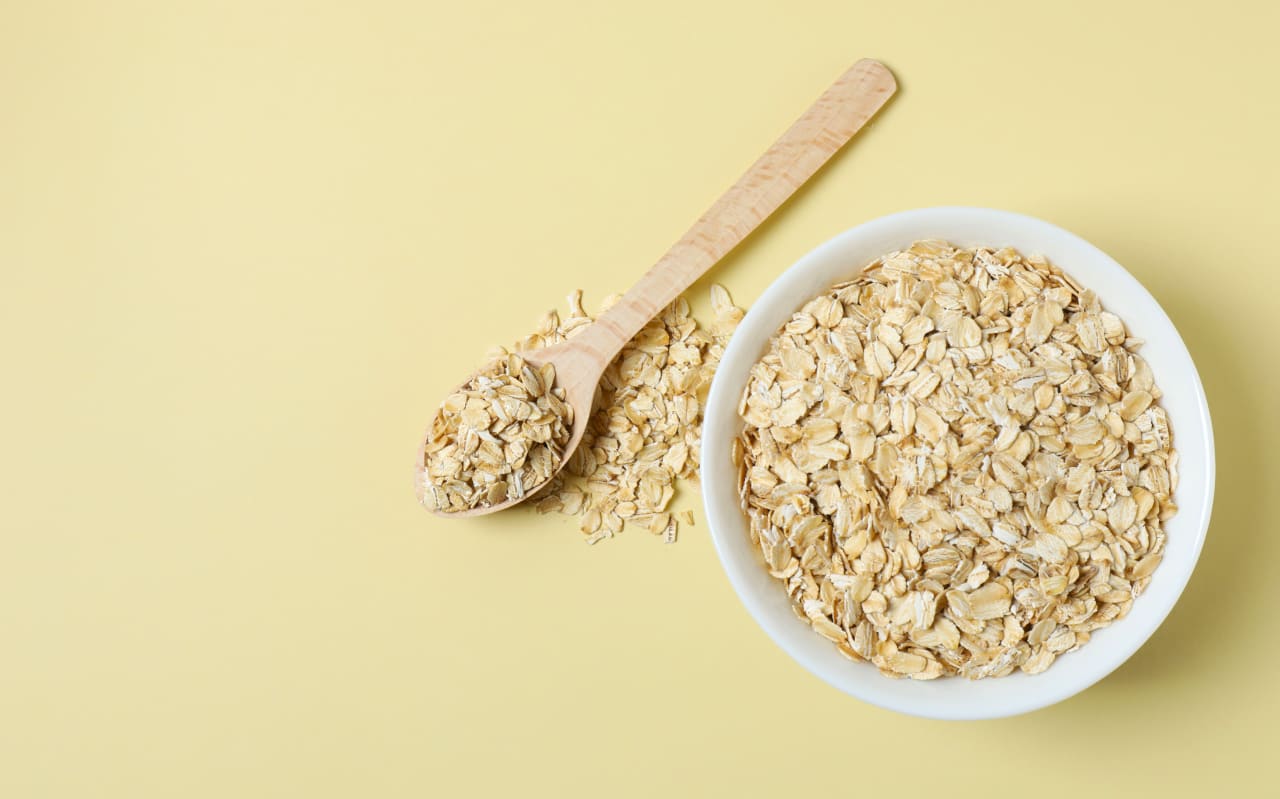



Origin and history of rolled oats
Oat flakes come from oats (Avena sativa), a grain that has been cultivated for over 4,000 years. Native to Northern Europe and Asia, oats have been adopted over the centuries for their ability to thrive in temperate and humid climates. Valued since ancient times for their nutritional value, they have become a staple in both human and animal diets. Today, rolled oats are an essential ingredient in many households, recognised for their versatility and nutritional qualities.
The Different Varieties of Oatmeal
There are several main varieties of oatmeal, each with specific characteristics:
Classic Oat Flakes: Made from white oats, they are the most common choice for breakfasts and traditional recipes.
Whole-grain rolled oats: Unrefined, they retain the bran and germ, giving them a high fibre and mineral content.
Naked Oat Flakes: Made from naked oats, which lack the husk, they contain a higher concentration of nutrients.
Organic rolled oats: Grown without pesticides or chemical fertilisers, they are preferred for a natural and environmentally friendly diet.
Botanical characteristics and cultivation of oat flakes
Oats belong to the Poaceae family. They are an annual plant that thrives in cool, well-drained soil rich in organic matter. They are distinguished by their resistance to moisture and their ability to grow in temperate regions. Their cultivation is often incorporated into crop rotation to preserve soil biodiversity. After harvest, the grains are cleaned, pre-cooked with steam, and then rolled to form flakes, all while preserving their nutritional value.




