
When removing hair from the legs—whether using a razor, wax, or an electric epilator—the hair may be pulled out improperly, causing the next hair to grow beneath the skin. Instead of emerging from the hair follicle, they are unable to break through the dermis to reach the skin’s surface. As a result, they continue to grow beneath the skin, curling back on themselves. This is how ingrown hairs form in the underarms, pubic area, or on the legs. They are often accompanied by redness, pimples, or itching.
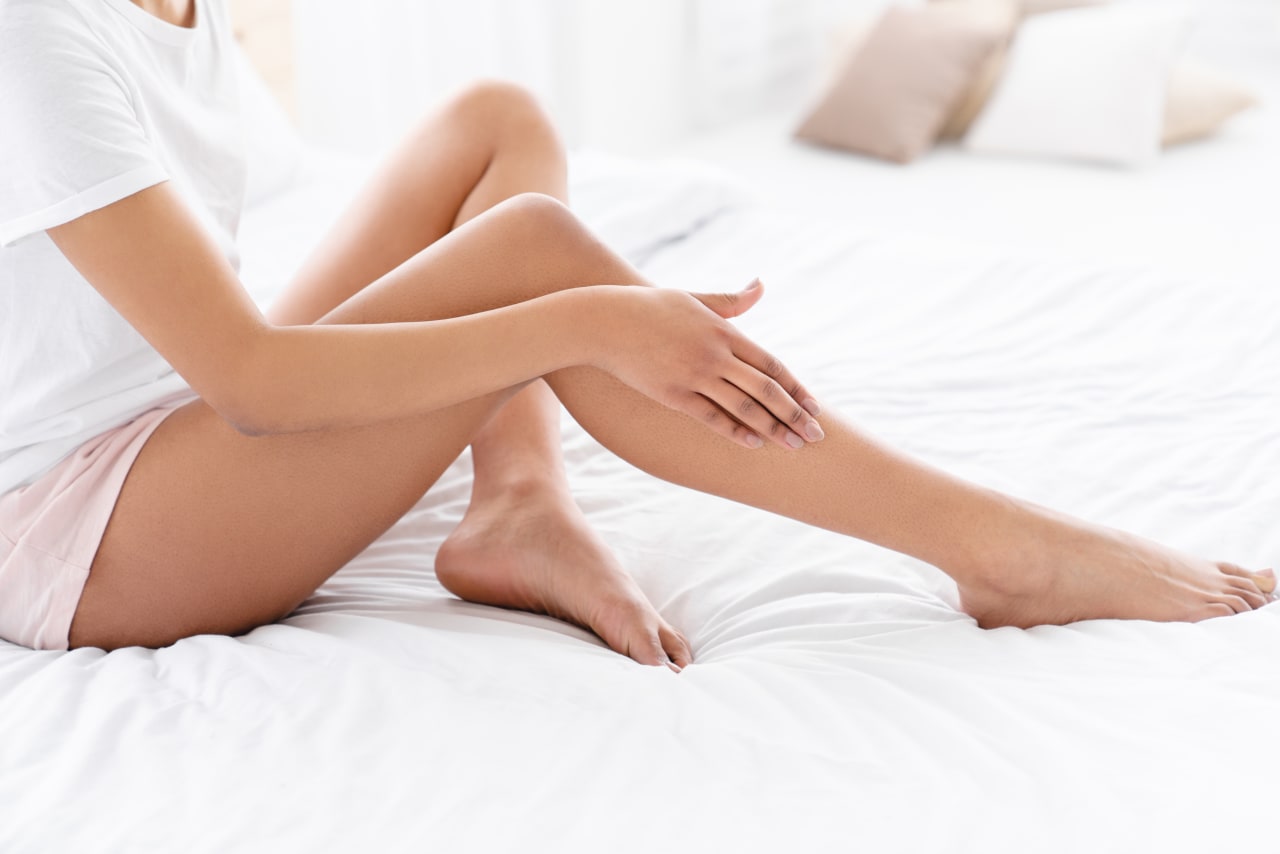
Ingrown Hair on the Legs: Causes and Solutions
Published on: Monday, December 04, 2023, Updated on: Wednesday, October 28, 2026
Ingrown hairs are very common and can appear after hair removal. Unsightly and painful, they can make life difficult, particularly since they can lead to infection if not dealt with properly. Let's explore how to treat ingrown hairs on the legs and how to prevent them.
Contents
Related products
£7.00
1 article
What is an ingrown hair?
Why do I have ingrown hairs on my legs?
Some people are more prone to ingrown hairs than others. There are several reasons for this:
Hair type: If you have curly or kinky hair, it tends to twist under the skin and grow inward.
Thick, dry skin: Pores are more easily clogged by dead skin, making it difficult for the hair to break through the dermis.
Shaving with two or more blades: The first blade pulls the hair backward so that the others can cut it as close as possible. When the hair regrows, it will no longer have a predefined direction.
Hair removal methods that pull the hair out, such as electric epilators or waxing: When pulled out, the new hair will have no specific direction for regrowth.
Tight clothing: It promotes skin dryness and influences the direction of hair growth.
How to get rid of ingrown hairs on the legs?
Apply a hydrogen peroxide compress to treat an ingrown hair
The antiseptic properties of hydrogen peroxide will help treat the ingrown hair. To do this, dilute a hydrogen peroxide solution in water and apply it to the ingrown hair for several hours or overnight. When you wake up, it should be softened and come to the surface more easily. A warm compress can also help open the pores and soften the hair.
Green clay mask, a solution for ingrown hairs
Apply a thick layer of green clay to the hair, especially if there is a pimple on it. Leave it on for ten minutes to stimulate hair growth thanks to the clay’s properties.
A scrub and exfoliant
Pores clogged with dead skin cells can contribute to ingrown hairs. Exfoliation removes dead skin cells that accumulate on the skin’s surface, allowing the hair to grow normally. Additionally, it improves blood circulation and promotes better oxygenation of skin cells.
How do you remove a deep ingrown hair?
Do not try to remove the ingrown hair yourself or attempt to pierce it with a needle or other object, as this could cause an infection and leave scars. Apply a warm compress to the area for about 15 minutes. This will help open the pores and soften the skin, making it easier for the ingrown hair to come out. Moisturise and exfoliate your skin, and wait patiently for it to come out on its own. If the ingrown hair is deeply rooted and doesn’t seem to be coming out on its own, consult a healthcare professional. In the meantime, avoid shaving the area until the ingrown hair is resolved to prevent further irritation.
Infected Ingrown Hair
Sometimes ingrown hairs become infected and form a small, painful, swollen bump with a little pus. Again, do not pierce it with your fingers or a needle, as this risks infecting it further and leaving scars. Disinfect the area with an antiseptic, exfoliate, and be patient.
Does the ingrown hair go away on its own?
An ingrown hair may come out naturally after some time if the body recognises it as a foreign object. But this can take time, and it doesn’t always happen.
What should you do about ingrown hairs that won’t go away?
Sometimes, certain ingrown hairs do not go away. In that case, you should make an appointment with a dermatologist, who will prescribe an anti-inflammatory cream to help the hair come out cleanly. They may also extract it using a sterilised needle.
How to prevent ingrown hairs?
Exfoliate your skin before hair removal: this will remove dead skin cells
Disinfect your razor: to prevent germs from entering the skin
Use an after-shave cream: to properly moisturise the skin and prevent dry skin
Shave properly: by going over the same area as few times as possible, never shaving your legs dry, and shaving in the direction of hair growth
Use shaving cream: it will soften the hair and allow the razor to glide more easily, which will prevent skin irritation and future ingrown hairs
Avoid tight-fitting clothing, which can promote ingrown hairs
If your ingrown hair becomes infected or a cyst develops, consult a general practitioner or a dermatologist.
Scars from ingrown hairs on the legs
Ingrown hairs on the legs, if you’ve tried to remove them at home, can leave scars and marks. These can be unsightly. To minimise their appearance, gently exfoliate your skin to remove dead cells and encourage cell renewal, while improving skin texture. Apply creams containing ingredients such as vitamin C, acid, or rosehip oil, which will help lighten scars and promote cell regeneration. In addition, moisturise your legs daily. When you’re out in the sun, apply sunscreen to protect the scars—UV rays can worsen their pigmentation. Finally, for more stubborn scars, you might consider laser or intense pulsed light (IPL) treatments. These procedures can help reduce pigmentation and stimulate collagen production for smoother skin.
Spotlight On Our Writer: Lauréna Valette

Lauréna is a journalist specialising in lifestyle, wellness and psychology. Alongside her writing, she travels the world, discovering all it has to teach us.
Bibliography
Women's Beauty Care
http://stacommunications.com/journals/leclinicien/images/clinicienpdf/jan02/soinsaufeminin.pdf
Women and Body Hair in France
http://cosf59.fr/wp-content/uploads/2020/06/FEMMES-ET-PILOSITE-EN-FRANCE.pdf
Associated tip

Body Care Tips


