
Tannins are chemical substances produced by plants as part of their secondary metabolism. They are extracted from various parts of plants, including wood, bark, leaves, fruit, galls and pods. Chemically speaking, plant tannins are polyphenolic compounds classified into two main categories: hydrolysable tannins and condensed tannins. These compounds play an important role in various biological processes and are widely used in a variety of fields, including the leather industry and textile dyeing . In recent years, certain tannins have been used to dye hair because of their ability to dye proteins. Tannin also acts as a smoothing agent. It penetrates the cuticle, the outer layer of the hair. Inside the cuticle, tannin reacts with hair proteins, creating temporary chemical bonds. These bonds help to relax the hair structure, reducing frizz and curl.
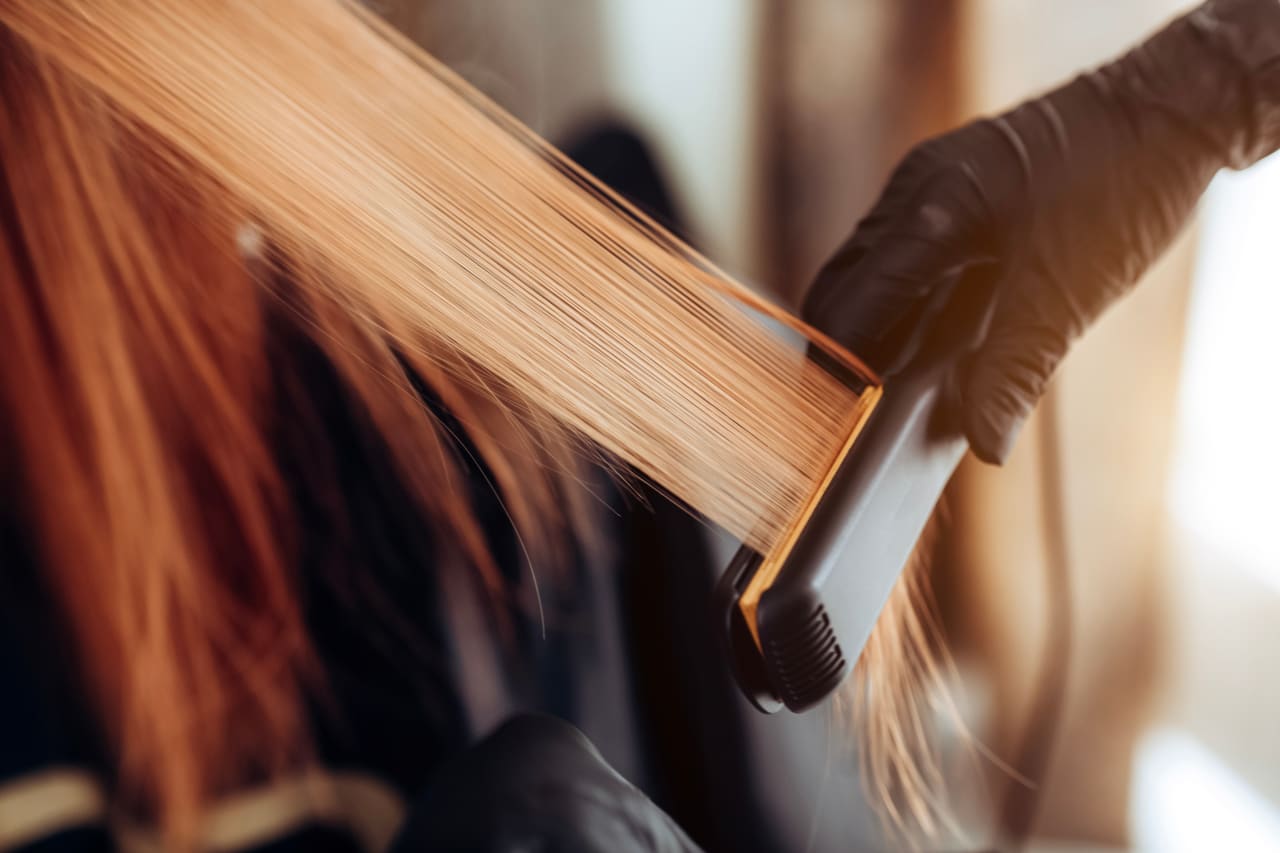
All you need to know about tanninoplasty: information, precautions and potential dangers
By Gipsy Dauge
Published on: Friday, October 20, 2023, Updated on: Wednesday, September 30, 2026
Tanninoplasty is a revolutionary hair treatment. This innovative hair straightening method is becoming increasingly popular for its natural, long-lasting results. This revolutionary technique, based on the use of plant tannins, offers a unique alternative for improving hair texture and vitality. With Aroma-Zone, explore tanninoplasty in depth, the secret to healthy, radiant hair.
Contents
What is tannin straightening and what is it used for?
The origins of tannin
A study by the University of Hamburg reveals that the use of tannin as a dyeing method dates back multiple centuries. The process was first used by the Roman senator Gajus Plinius Secundus between 23 and 79 AD. Since then, the dyeing properties of tannin have never ceased to fascinate. Although tannin was initially used for its dyeing properties, it is now recognised as having other uses, such as smoothing hair.
Is tannin straightening good for hair?
Tannin straightening has become popular because it offers a gentler alternative to traditional chemical products. Unlike other straightening methods, tannin is extracted from natural sources, such as plants, and does not contain harsh chemicals. This means that tannin straightening does not damage the hair as much as other chemical straightening methods. The process is good for the hair because it helps to relax frizz and smooth strands. This makes it easier to style. Like Brazilian straightening, tannin straightening also has the added benefit of nourishing the hair.
Is tannin straightening effective?
Tannin straightening is popular because it is compatible with a variety of hair types, including coloured, bleached and highlighted hair, as long as the technique and advice are followed correctly. However, it can slightly alter hair colour, so this treatment is not recommended if you plan to change your hair colour at a later date. Another disadvantage of tannin straightening is the possibility of a colour difference between the lengths of the hair and the roots. It is therefore necessary to touch up at the roots as the hair grows back to maintain an even colour.
Tannin or Brazilian straightening?
Tannin straightening is different from Brazilian straightening. Tanninoplasty is a more natural option than Brazilian straightening. The former uses plant extracts to relax frizz and give a smoother look. Brazilian straightening, although very popular in hairdressing salons, uses chemicals to achieve a similar result. Both straightening methods make hair easier to style. What's more, both types of straightening have nourishing benefits for the hair. Brazilian straightening, through the application of keratin-rich solutions, repairs and strengthens the hair structure by filling in gaps in the cuticle, resulting in softer, more supple, shinier hair. Tannin straightening, on the other hand, uses plant extracts rich in tannins, natural compounds with softening and moisturising properties. These tannins penetrate the hair, nourishing it from within, reducing frizz and improving texture.
How do you smooth with tannin?
Many hairdressing salons offer tannin straightening as a service. In a professional salon, the process begins with a thorough consultation with an expert hairdresser. After assessing your hair type and understanding your expectations, your hair will be prepared with a clarifying shampoo. Next, the hairdresser will meticulously apply the tannin straightening product, ensuring even coverage of every strand. The tannin dye must rest. Once the waiting time is over, your hair will be carefully rinsed and dried. Finally, the hairdresser will use a straightening iron to seal in the treatment, leaving you with smooth, shiny, beautifully groomed hair.
Can you do tannin straightening at home?
It's perfectly possible to straighten your hair with tannin at home. For best results, there are a number of steps to follow. Before applying the tannin dye solution, make sure your hair is clean and dry. Protect your hands by wearing gloves. Gently apply the tannin straightening product strand by strand using a brush, making sure to cover each strand evenly. Leave the product to work according to the manufacturer's instructions, usually for 30 minutes to an hour. Then air-dry or use a hairdryer on low heat to remove excess product. Once the hair is dry, use a straightening iron on a moderate heat on small sections to seal in the treatment.
Is tannin straightening dangerous?
Studies show that tannin straightening poses fewer risks to the hair than other, less natural forms of straightening. Nevertheless, as with any hair treatment, it is important to follow the professional's instructions and use suitable hair products to maintain the health of your hair after treatment.
How do you choose your tannin straightening product?
There are lots of tannin straightening products on the market. To be sure you're making the right choice, look for products with natural ingredients and no harsh chemicals. Look for organic certifications or quality labels on the packaging, and check online reviews and recommendations from hairdressing professionals to assess the product's effectiveness. Opt for reputable brands in the hair care industry, as they generally have high quality standards.
Tannin straightening: how do you maintain it?
To maintain your tannin straightening, choose sulphate-free hair care products that are suitable for chemically treated hair. Opt for a gentle shampoo and moisturising conditioner to preserve moisture. Products should be sulphate-free. Avoid products containing alcohol, as they can dry out the hair. reduce the use of excessive heat from heating appliances and use heat protection products if necessary. Also avoid sea water or chlorinated water, as these can damage the treatment. It is important to plan regular touch-ups as your hair grows back to maintain the results of tannin straightening.
Spotlight on Our Writer: Gipsy Dauge

Gipsy graduated from ESJ Paris. After 10 years in the general and women's specialist press, she chose to specialise in health and well-being. Now a certified Yin Yoga teacher, she skillfully combines her passion for writing with her love of yoga. Her goal goes far beyond simply informing the reader. She is passionate about helping readers embrace simple, practical habits that support their well-being while encouraging a more mindful approach to the world around them. Each article invites readers to adopt a healthier, more balanced, and fulfilling lifestyle.
Bibliography
Tannins and human health: a review
https://pubmed.ncbi.nlm.nih.gov/9759559/
Investigations of vegetable tannins as hair dyes and their interactions with pre-bleached hair fibres
https://onlinelibrary.wiley.com/doi/full/10.1111/ics.12624
Frequently Asked Questions
Associated tips
Hair care tips
Hair care tips
Hair care tips

Hair care tips


