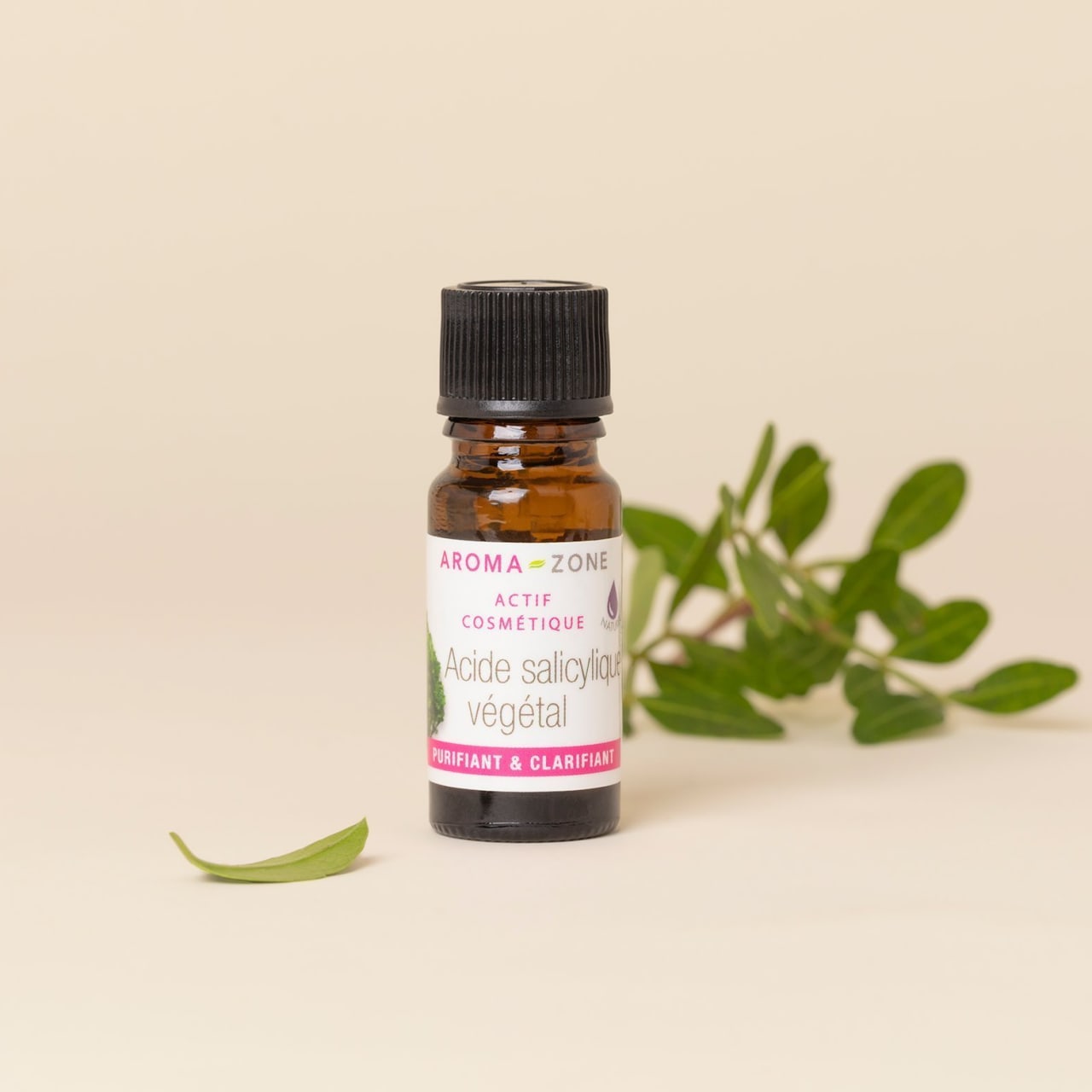
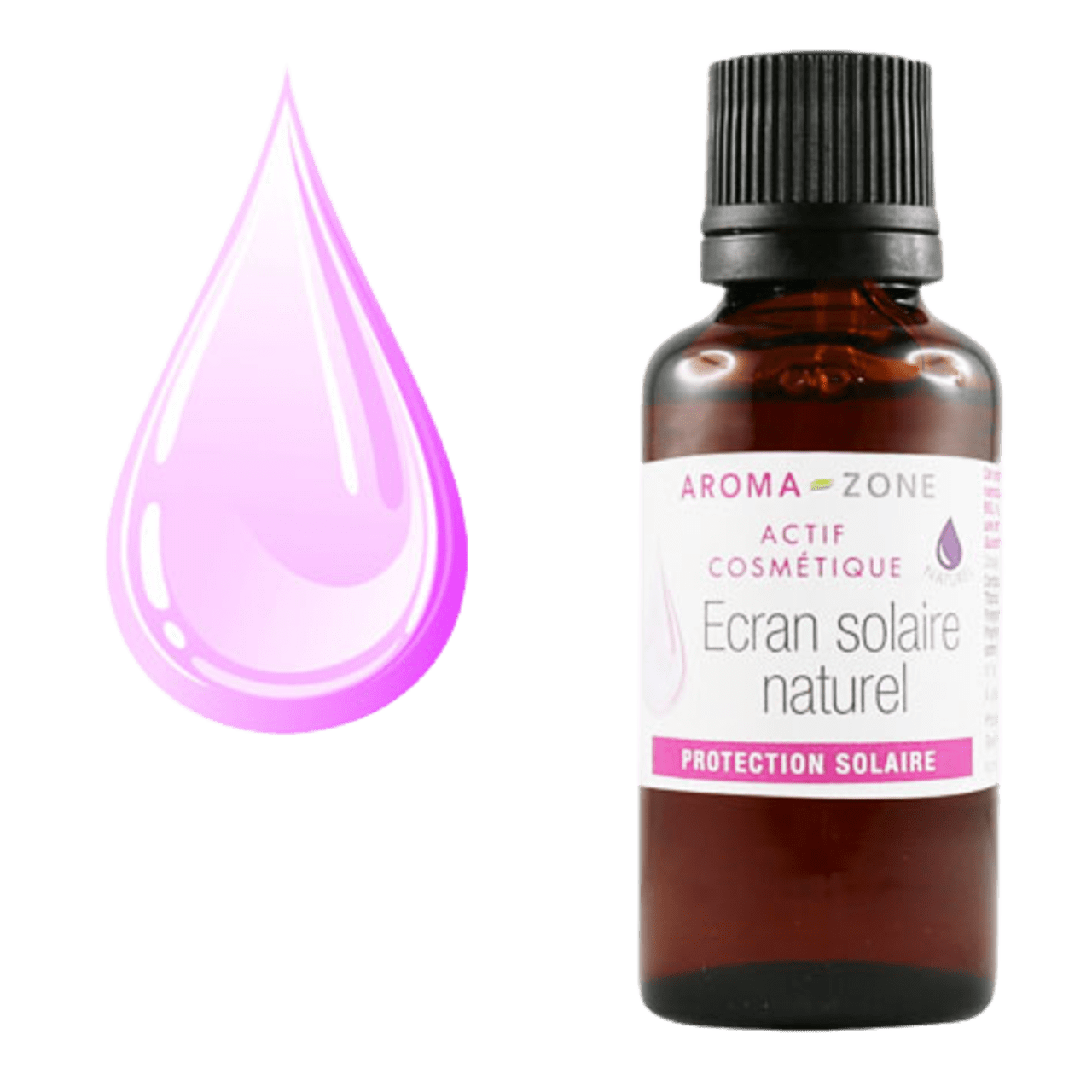
Natural Sunscreen Active Ingredient
Sun protection
free delivery up to £25 in United Kingdom
100% secure payment CB, Visa, Mastercard, Paypal, Apple Pay, Google Pay
Why we love it
El activo que debe incorporar en todas sus preparaciones solares caseras
Se incorpora fácilmente en sus preparaciones
Apto para el cuerpo y el rostro
Applications: Skin care
Ease of use: Easy
Cosmetic recipe making: Yes
The natural sunscreen active ingredient is used as an ingredient in your formulations for:
Protective products (sun, wind, dryness) for face and body
Protective lip balms
Moisturizing protective face cream
Protective body lotion
Nourishing and protective body balm
Protective lip stick
As a cosmetic ingredient, the natural sunscreen active ingredient is recognized for the following properties:
Photoprotective: thanks to its titanium dioxide content, a mineral sunscreen that reflects part of ultraviolet rays.
Emollient: thanks to its richness in oleic acid, this active ingredient softens the skin and helps protect it from dehydration.
I make my recipe from scratch
Integrating Natural Sunscreen into all your oil-based formulations
Natural Sunscreen can be incorporated at a level of 5 to 80% as an active ingredient in all your oil-based formulations: creams, lotions, gelled oils, balms, sticks, etc.
Incorporating Natural Sunscreen into cream and lotion formulations
Natural Sunscreen is preferably incorporated into the oil phase before emulsification. Shake the bottle of Natural Sunscreen well before use.
For the formulation of protective creams and lotions, we recommend choosing a water-in-oil emulsion type (using Olive Protection Wax or Emul’minute).
Natural Sunscreen can sometimes be incorporated after emulsification, either cold (especially with Emul’minute) or into a lukewarm emulsion.
Incorporating Natural Sunscreen into oil gel, balm and stick formulations
Natural Sunscreen is incorporated into the oil phase at the beginning of the preparation. Shake the bottle well before use.
It can be heated without any issue together with the other ingredients (oils, Cera bellina, butters, etc.).
Dosages to be respected when combined with Organic Karanja vegetable oil
Natural Sunscreen contains 25 to 40% Organic Karanja vegetable oil. In order not to exceed the maximum recommended percentages for this oil in formulations, we advise respecting the following proportions:
Type of care
% Natural Sunscreen | 0 % |
Maximum % of organic Karanja vegetable oil | 85% |
% Natural Sunscreen | 5 à 20% |
Maximum % of organic Karanja vegetable oil | 10 à 30% |
% Natural Sunscreen | 80% |
Maximum % of organic Karanja vegetable oil | 40% |
% Natural Sunscreen | 50% |
Maximum % of organic Karanja vegetable oil | 0 à 10% |
Formulation tips
To increase the protective power of your formulations, add zinc oxide (2–5%) to your formulas in addition to Natural Sunscreen. Zinc oxide enhances the UV-reflecting “screen” effect, notably boosting UVA protection, but may also provide a slight whitening effect.
For more effective sun protection, choose fairly rich textures that leave a protective film on the skin surface:
A rich, film-forming oil will protect better than a dry, fast-absorbing oil.
Preparing a gelled oil with Cera Bellina is an effective way to obtain a more film-forming and more protective oil.
Prefer oil-in-water emulsions (with Olive Protection Wax or the Emul’minute emulsifier), which are more protective and more resistant.
Avoid formulas containing a high proportion of dry, fast-penetrating emollients (Dry Touch, Coco Silicone, Dicaprylyl Carbonate).
It is impossible to determine in advance the sun protection factor (SPF) of a formula that has not been tested; it does not depend solely on the proportion of Natural Sunscreen. You may have your formulations tested by a specialized laboratory such as Helioscience (http://www.helioscience.org/).
General Characteristics
Dosage
5 to 80% (of the total weight of your preparation)
Insoluble in water
Density
1.0 - 1.1
Soluble in oil
Use in homemade cosmetics
Cream & lotion, balm, oil, stick
Typical Quantities
5% Natural Sunscreen | 1.5 g |
10% Natural Sunscreen | 1.5 g |
15% Natural Sunscreen | 1.5 g |
5% d'Ecran solaire naturel | 2.5 g |
10% d'Ecran solaire naturel | 5.0 g |
15% d'Ecran solaire naturel | 7.5 g |
5% d'Ecran solaire naturel | 5.0 g |
10% d'Ecran solaire naturel | 10.0 g |
15% d'Ecran solaire naturel | 15.0 g |
5% d'Ecran solaire naturel | 12.5 g |
10% d'Ecran solaire naturel | 25.0 g |
15% d'Ecran solaire naturel | 37.5 g |
Production process
Titanium dioxide coated with silica and jojoba esters dispersed in organic Karanja vegetable oil, as well as texturizing and emulsifying agents (which facilitate the formulation of the active ingredient and the stability of the formulation).
Function
Photoprotective cosmetic active ingredient
Presentation
Viscous oily liquid
Ivory to pale yellow
Packaged in an amber glass bottle without a dropper
Find out more
Find out more
Natural Sunscreen is an innovative active ingredient that combines the properties of plant-based and mineral ingredients. It consists of a titanium dioxide paste, a mineral sunscreen filter, coated with an oil complex (including Organic Karanja oil). Titanium dioxide is a white mineral pigment that acts as an effective physical sunscreen, as it reflects part of the sun’s rays, preventing them from being absorbed by the skin.
Organic Karanja vegetable oil is obtained from the seeds of Pongamia glabra, a tree native to India whose many benefits are well known in Ayurvedic medicine. It contains a particularly active molecule, pongamol. Organic Karanja vegetable oil is also renowned for its anti-aging effects and helps protect the skin from signs of premature aging linked to solar radiation.
Formulated without nanoparticles, it is a high-quality cosmetic ingredient that provides UV protection to your skincare products.
This exceptional active ingredient is ideally combined with Organic Karanja vegetable oil, whose richness in oleic acid gives it softening and emollient properties suitable for the care of all skin types.
INCI name
Pongamia Glabra Seed Oil, Helianthus annuus seed oil, Titanium dioxide, Polyglyceryl-3 Polyricinoleate, Silica, Jojoba esters, Polyhydroxystearic acid, Trihydroxystearin, Pongamol.
Storage
Store at room temperature, away from moisture and light, and far from any heat source.
Close the bottle tightly after use.
Precautions
This concentrated active ingredient must never be used pure on the skin. Always follow the recommended dosages.
Maximum dosage to be respected: 80% in face and body care products.
FOR EXTERNAL USE ONLY – Do not swallow. Avoid contact with eyes.
Cases of allergy to Karanja may occur. Always perform a tolerance test in the elbow crease 48 hours before use to check for any reaction.
Do not use on children under 6 years of age. In addition, young children should not be exposed to the sun. Do not expose children to intense sunlight. Avoid sun exposure during peak hours. Outside these hours, protect them as much as possible with a parasol, clothing, a hat and sunglasses.
Sunscreen products help filter part of UV rays and therefore limit the harmful effects of sun exposure, but they must always be combined with precautionary measures: avoid exposure during peak sunlight hours (12 p.m. – 4 p.m. in France during summer), limit exposure time, wear sunglasses and a hat, and even protective clothing for sensitive skin or intense exposure.
This active ingredient may settle (powder may sink to the bottom); shake well before use to ensure homogeneity.
Warning
The properties, indications and methods of use described above are derived from scientific literature and/or reference books or websites in aromatherapy, hydrolatherapy and phytotherapy. This general information is provided for informational purposes only and cannot under any circumstances be considered as medical information. This information cannot under any circumstances replace a diagnosis, consultation or medical follow-up, nor engage our liability.
Environmental qualities and characteristics product sheet
Reference
04391 - Natural sunscreen 10 mL
Main Packaging Material
Glass bottle
Recyclability
Most packaging can be recycled
Reference
02429 - Natural sunscreen 30 mL
Main Packaging Material
Glass bottle
Recyclability
Most packaging can be recycled

Supplier documentation 2.International Journal of Biotechnology Applications. Mar2011, Vol. 3 Issue 1, p52-54. 3p. 1 Chart, 2 Graphs.
Birajdar Suryakant, Ramesh Shinde, Chimkod Vishwanath, Patil C. S. Phytochemical and physiochemical screening of Pongamia pinnata seeds
Chopade V. V., Tankar A. N., Pande V. V., Tekade A. R., Gowekar N. M., Bhandari S. R., Khandake S. N.
Pongamia pinnata: Phytochemical constituents, Traditional uses and Pharmacological properties: A review. International Journal of Green Pharmacy. Apr-Jun2008, Vol. 2 Issue 1, p72-75. 4p.
Eram Sharmin, S.M. Ashraf, Sharif Ahmad. International Journal of Biological Macromolecules Volume 40, Number 5, April 10, 2007, Pages 407–422.
Synthesis, characterization, antibacterial and corrosion protective properties of epoxies, epoxy-polyols and epoxy-polyurethane coatings from linseed and Pongamia glabra seed oils.
Vigya Kesari, Archana Das, Latha Rangan. Biomass and bioenergy 34 (2010) 108-115.
Physico-chemical characterization and antimicrobial activity from seed oil of Pongamia pinnata, a potential biofuel crop.
Vismayaa,W. Sapna Eipesona, J.R. Manjunathab. Industrial Crops and Products 32 (2010) 118–122.
P. Srinivasb, T.C. Sindhu Kanyaa. Extraction and recovery of karanjin: A value addition to karanja (Pongamia pinnata) seed oil.
US Patent 5152983.
European Patent 0431755 A1.
Frequently Asked Questions
Essential Oils
1 ml = approximately 35 drops (with our Aroma-Zone dropper caps)
Carrier Oils
1 pump (Aroma-Zone aluminium pump) = approx. 0.15 ml
Mass / Volume conversion (for a liquid)
Mass (g) = Density x Volume (ml) at 20°C
Further information
1 full teaspoon = between 3 and 4.5 ml
1 full tablespoon = between 7.5 and 10 ml
However, these spoon ratios depend on a number of factors (e.g. viscosity of the liquid, temperature, depth and size of the spoon, rheological behaviour of the liquid), and we strongly advise you to use precise measuring equipment, such as graduated test tubes, graduated pipettes, and precision scales.
Loading...
Not bad but a little too thick for my taste
VERY GOOD
Good, I recommend it
Great, but be careful not to use too much if you don't want a white face :D But with the right amount, it's really great!
I add one drop each time I apply my cream which doesn't contain a filter. Very practical.