
Lime Water
free delivery up to £25 in United Kingdom
100% secure payment CB, Visa, Mastercard, Paypal, Apple Pay, Google Pay
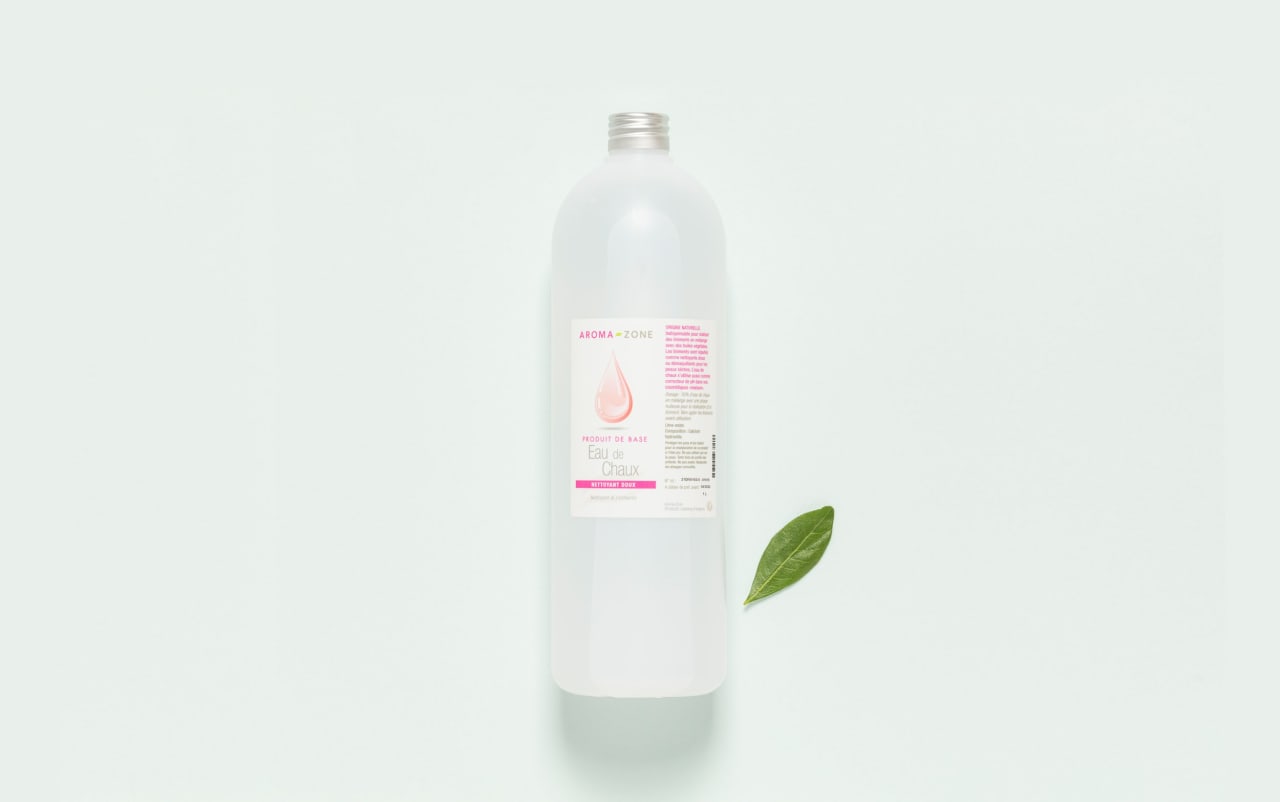
In beauty, lime water is known for these properties:
Reacts with vegetable oils to form an oil-lime liniment
Alkalising agent: increases the pH of acidic preparations
In animal welfare, lime water is recognised for the following properties: contains calcium
Aquariums: Lime water is used in aquariums to maintain the calcium levels that are vital for the development of certain species, such as calcareous algae, shelled mollusks, and hard corals.
Uses cosmetics
Use as an ingredient in your preparations:
Preparation of liniments
As a pH adjuster in lotions and cleansing products, to correct an overly acidic pH (in creams, use sodium bicarbonate instead)
Quick recipe from Aroma-Zone
Traditional-style liniment
Beeswax (melted in a double boiler in vegetable oil) thickens the formula and slightly stabilises the liniment, which otherwise tends to separate. It makes it creamier and more film-forming (and therefore more protective). Emulsification is done hot (also heat the hot water in a separate bowl before pouring it into the oil phase, while stirring).
Stir vigorously with a hand whisk until you obtain a creamy, homogeneous mixture.
A liniment must always be stirred before each use as it tends to separate over time (even with the addition of wax, slight separation may occur).
Dosage
Up to 50% for a liniment
PH
Pure lime water: approximately 12 When used in liniment, it poses no risk.
Oil-insoluble
Density
Approximately 1
Water soluble
To increase the pH of a lotion or foaming product that is too acidic
Add a small amount of lime water and mix well before retesting the pH using a pH test strip.
Repeat until the desired pH is achieved.
Method of production
Lime water is a saturated calcium hydroxide solution obtained by mixing slaked lime (extinguished lime) and water, then filtering.
Quality
Pharmaceutical and cosmetic
INCI designation
Aqua, calcium hydroxide
Composition
Water, calcium hydroxide (Ca(OH)2)
Presentation
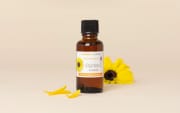
Translucent liquid that may contain small whitish calcium carbonate crystals (harmless), packaged in a PET "crystal" bottle.
Learn more
Oil-lime liniment
Liniment is a traditional formula composed of equal amounts of vegetable oil ("oleo"), originally olive oil, and lime water ("calcareous"). Adding a little beeswax stabilises the mixture, which otherwise tends to separate over time (shake the product well before use).
Pure lime water has a very basic pH and should never be used undiluted on the skin. In liniment, lime water reacts with vegetable oil to form a kind of "water-in-oil" emulsion (dispersion of water droplets in oil), which is completely safe.
Liniment is an oily product and therefore has no pH.
Liniment is a very gentle oil-based cleanser that is ideal for sensitive skin and leaves a protective film on the skin.
It is a recipe traditionally recommended for cleaning babies' bottoms during nappy changes. It cleanses while leaving a protective film that nourishes and protects the fragile skin of a baby's bottom. It prevents nappy rash by limiting redness and irritation caused by moisture or urine and stool, which can sometimes be acidic. Oleo-calcareous liniment can also be applied to cradle cap on infants' heads or to dry areas of a baby's body. Liniment is also very popular as a makeup remover.
Liniment is very easy to make and keeps very well without the need for preservatives (you can add vitamin E to protect the oil from rancidity).
Storage
Store at room temperature away from air. Close the bottle tightly.
Precautions
Keep out of reach of children.
Do not swallow, avoid contact with eyes, do not apply undiluted to skin. In case of contact with skin or eyes, rinse thoroughly with water.
Wearing gloves and protective eyewear is recommended when handling this product.
Do not mix with acids.
When making liniment, it is advisable not to modify the basic formula too much, i.e. to stick to liquid oils, particularly those composed of oleic and linoleic acids in terms of fatty acids (the saponification index should be around 185-195): Olive, Sunflower (and our sunflower-based oil macerates), Apricot, camellia, sesame, etc. On the other hand, avoid oils with "special" fatty acids such as castor oil, chaulmoogra oil, jojoba oil, abyssinian oil, etc., and oils that are solid at room temperature (coconut oil, piqui oil, babassu oil, etc.).
Environmental qualities and characteristics product sheet
Reference
01616 - lime water 1 L
Main packaging material
PE bottle
Recyclability
Most packaging can be recycled
Reference
00858 - lime water 250 mL
Main packaging material
RPET (recycled PET) bottle
Recyclability
Most packaging can be recycled
Recycled material
Packaging contains at least 85% recycled material
Rewards and penalties
Aroma-Zone gets a bonus for managing packaging made from recycled plastic.
Reference
02005 - lime water 100 mL pr cof
Main packaging material
RPET (recycled PET) bottle
Recyclability
Most packaging can be recycled
Recycled material
Packaging contains at least 80% recycled material
Rewards and penalties
Aroma-Zone gets a bonus for managing packaging made from recycled plastic.

EO = Essential Oil VO = Vegetable Oil or Oily Macerate
Lime water: 100 ml
Olive oil: 95 ml
Wheat germ oil: 5 ml
Method: Mix all the ingredients and beat until evenly distributed. Pour into a sterilised bottle.
Use: Shake before each use and use as a cleansing milk with washable wipes. No need to rinse.
Supplier documentation
http://www.bebe-beaute.com/beaute/infos-le-liniment-c-33_67.html
"Natural cosmetics"
Hélène Baron and Tiphaine Chagnoux - Editions Sully
http://www.web-libre.org/dossiers/eau-chaux,8894.html
Loading...
Perfect for making liniment
Will be used to make baby liniment
Excellent value for money for this lime water which I use to make the liniment I use to remove my makeup. It's a shame the liter size isn't available right now. So I ordered two 200ml bottles.
Perfect for making my oleic acid liniment
Essential for making liniment


