
Coeur De Crème Emulsifier
Product out of stock. Learn more
free delivery up to £25 in United Kingdom
100% secure payment CB, Visa, Mastercard, Paypal, Apple Pay, Google Pay

100% Plant-Based
Self-emulsifying base: capable of creating stable emulsions without the need for additional co-emulsifiers or stabilisers
Self-sufficient: Allows very simple emulsions to be prepared using only water, without adding a separate oil phase
Wide texture versatility: enables textures ranging from rich and thick (balms) to light and fluid (lotions, mists)
Very easy to use with the “one-pot” method: all aqueous and oil phases, together with the emulsifier, are mixed in the same bowl
Cold incorporation of vegetable oils: allows oils to be added without heating, helping preserve the properties of sensitive oils
Partial cold incorporation of the aqueous phase: enables up to half of the water phase (hydrosols, etc.) to be added without heating
Forms lamellar-structure emulsions: promotes long-lasting skin hydration, enhances epidermal protection and improves the bioavailability of active ingredients
Forms shear-thinning emulsions: allows the creation of sprayable lotions even at relatively high viscosity
Suitable for foaming products: creates rich, creamy textures without altering foaming performance
Preparation of creams and milks for the face or body. Particularly ideal for your:
Thick to fluid creams for all types of skincare
Face and body milks, cleansing milks
Cream deodorants
Mists and sprayable milks for face and body care, perfumed products
Rich and thick balms
Foaming products: creamy shower gels, cleansing creams, etc.
Cream-based make-up products: foundation, BB cream, etc.
A few ideas
Moisturising fluid for face and body
Anti-wrinkle/anti-ageing cream
Eye contour cream
Cocooning and velvety cream
Protective foaming balm
Moisturising and fragrant body mist
Gentle shower cream
BB cream, foundation
Fluid cream deodorant
Dosage
8-15% of the total weight of your preparation
Melting point
approximately 60°C
Insoluble in water
Emulsifiable in hot aqueous phase
Oil soluble
Hot
Further information
1 scoop 5 ml (level*) | 3.2 g +/- 0.1 g |
1 scoop 2 ml (level*) | 1.6 g +/- 0.1 g |
* leveled: spoon filled to the brim with the excess removed using a spatula or the back of a knife
Use as a single emulsifier
At low dosages (5-7%), it is also possible to make emulsions by adding a gelling agent, such as xanthan gum (0.1 to 0.5%) in the aqueous phase. The gelling agent provides a pleasant glide during application and improves the stability of the emulsion, while thickening it slightly.
To make oil-free emulsions, glycerin (3 to 10%) can be added to the aqueous phase or a gelling agent (0.1 to 0.5%) to improve the feel and emollience of the emulsion.
Compatible with preservatives.
Grapefruit Seed Extract | 1/3 |
Naticide | 3/3 |
Cosgard | 3/3 |
Benzoate & Sorbate Complex | 1/3 |
Leucidal | 1/3 |
(*** no influence on stability, ** a decrease in stability has been observed in some cases at low dosages, or temporary destabilization has been noted when adding the preservative, * risk of emulsion destabilization)
Compatibility with active ingredients:
The Cœur de crème emulsifier is compatible with all active ingredients and plant extracts in the Aroma-zone range, but in the presence of certain active ingredients, emulsions may be unstable or difficult to stabilize. We have noticed in particular that freshwater pearl powder, fruit acids (AHAs), and stabilized vitamin C tend to destabilize emulsions with the Cœur de crème emulsifier.
To make creamy creams: 8 to 10% Cœur de crème for 15 to 30% oil phase
To make fluid and silky creams: 6 to 7% Cream Heart for 5 to 10% fatty phase
To make milks, serums, and mists: 5% Cream Core for 3 to 15% fatty phase (preferably vegetable oils for this phase, as vegetable butters will make these fluid preparations too thick)
To make an oil-free emulsion: 5 to 10% Cream Heart as the sole fat phase. Disperse the Cream Heart in the aqueous phase, possibly in combination with 0.1% to 0.5% Xanthan gum to thicken and stabilize the preparation.
% oil phase
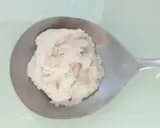
Rich, thick balm
Ustensile utilisé : Fouet manuel
Cœur de crème : 15%
Beurre de Cacao blanc : 30%
Eau minérale : 54.4%
Conservateur Cosgard : 0.6%
Sensory profile:
Spreadability/slipperiness | 3/5 |
Softness after application | 4/5 |
Film-forming, protective effect. | 5/5 |
Creaminess | 4/5 |
Richness | 4/5 |
Rapid penetration. | 0/5 |
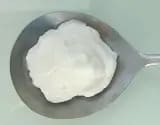
Thick, creamy texture
Ustensile utilisé : Fouet manuel
Cœur de crème : 12%
Beurre de Mangue : 5%
Macérât huileux de Vanille : 15%
Eau minérale : 61.4%
Conservateur Cosgard : 0.6%
Sensory profile:
Spreadability/slipperiness | 3/5 |
Softness after application | 4/5 |
Film-forming, protective effect. | 5/5 |
Creaminess | 4/5 |
Richness | 4/5 |
Rapid penetration. | 3/5 |
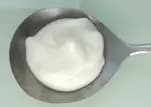
Creamy, penetrating cream
Ustensile utilisé : Fouet manuel
Cœur de crème : 10%
Huile végétale de Coton : 20%
Eau minérale : 69.4%
Conservateur Cosgard : 0.6%
Sensory profile:
Spreadability/slipperiness | 4/5 |
Softness after application | 4/5 |
Film-forming, protective effect. | 2/5 |
Creaminess | 4/5 |
Fresh feel | 3/5 |
Rapid penetration. | 4/5 |
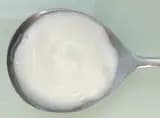
Medium-thick cream
Ustensile utilisé : Fouet manuel
Cœur de crème : 10%
Eau minérale : 89.4%
Conservateur Cosgard : 0.6%
Sensory profile:
Spreadability/slipperiness | 4/5 |
Softness after application | 3/5 |
Film-forming, protective effect. | 2/5 |
Creaminess | 3/5 |
Fresh feel | 4/5 |
Rapid penetration. | 5/5 |
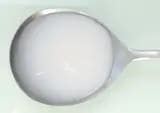
Light gel-cream
Ustensile utilisé : Fouet manuel
Cœur de crème : 8%
Huile végétale Jojoba : 10%
Gomme Xanthane : 0.8%
Eau : 80.6%
Conservateur Naticide : 0.6%
Sensory profile:
Spreadability/slipperiness | 4/5 |
Softness after application | 3/5 |
Film-forming, protective effect. | 1/5 |
Creaminess | 3/5 |
Fresh feel | 5/5 |
Rapid penetration. | 5/5 |
Note: The type of plant oil used has a significant influence on the texture and feel of emulsions. For example, an emulsion made with avocado oil or wheat germ will have a richer feel than the same emulsion made with a "dry" oil such as hazelnut oil or jojoba oil. In addition, adding essential oils, certain active ingredients, and certain preservatives to your preparation can change the consistency obtained. Feel free to note down all your experiences to build up a database of information that you can consult each time you formulate a new cream.
Precautions
Precautions and allergens
Precautions for use
Allergens
Allergen-free
Single-phase emulsification at 75°C - the "one pot" method.
Utensil: Hand whisk or electric mixer
Step 1
In the same container, heat all the ingredients of the oil phase and all the ingredients of the water phase in a double boiler to approximately 75°C.
Step 2
Outside the double boiler, shake vigorously for about 3 minutes (the emulsion will turn white and go through a slightly gelatinous and viscous phase, then it will homogenize).
Step 3
Without stopping stirring, place the container in cold water to accelerate cooling and emulsion setting. Continue stirring for another 3 minutes.
Step 4
Finally, add the active ingredients and preservatives, and any colorants and fragrances.
Two-phase emulsification at 75°C.
Utensil: Hand whisk or electric mixer
Step 1
Melt the Coeur de Crème emulsifier in the oil phase in a double boiler at approximately 163°F. At the same time, heat the aqueous phase in another mixing bowl to approximately 163°F.
Step 2
When both phases are at the same temperature, slowly pour the aqueous phase into the oil phase, stirring vigorously for about 3 minutes.
Step 3
Without stopping stirring, place the container in cold water to accelerate cooling and emulsion setting. Continue stirring for about 3 more minutes.
Step 4
Finally, add the active ingredients and preservatives, and any colorants and fragrances.
For more details, please refer to our know-how sheet no. 9: Emulsions.
Two-phase emulsification, one at 75°C and the other cold.
Utensil: Hand whisk or electric mixer
This method best preserves the properties of heat-sensitive raw materials (vegetable oils sensitive to oxidation, hydrosols, etc.).
Step 1
Dissolve the Coeur de crème emulsifier, half of the aqueous phase of the formula, and any solid ingredients in the oil phase (if the aqueous phase consists of mineral water and hydrosol, it is preferable to incorporate the mineral water here and keep the hydrosols for cold addition) in a double boiler at 75°C.
Step 2
Remove from the double boiler, add colorants, fragrances, or aromatic extracts and any active ingredients (only fat-soluble or fat-dispersible active ingredients), stirring constantly to ensure the preparation is completely homogeneous. If the preparation begins to solidify, return it to the double boiler for a few seconds to re-liquefy it.
Step 3
Without stopping stirring, place the container in cold water to accelerate cooling and emulsion setting. Continue stirring for about 3 more minutes.
Step 4
Add the oil phase cold, then the second half of your aqueous phase, while mixing.
Step 5
Finally, add the active ingredients and preservatives, and any colorants and fragrances.
Aroma-zone Tip
With the "one pot" method, to facilitate the emulsion setting, start mixing the preparation as soon as the temperature rises.
To obtain an emulsion with a gel texture, add a gum (xanthan, guar or locust bean) at a rate of 0.1 to 1%.
The greater the quantity of oil phase, the thicker the emulsion will be. It is possible to incorporate up to 30% of fatty substances, but for good stability, it is necessary to respect the following maximum proportions:
with a dosage of 15% Cœur de Crème, you can use 0 to 30% oil phase
with a dosage of 10% Cœur de Crème, you can use 10 to 3
0% oil phase
with an 8% dosage of Cœur de Crème, you can use 20 to 30% oil phase
The consistency and viscosity may change after formulation; emulsions generally thicken within 24 hours of preparation.
To formulate balms with a foamy texture, use a solid fatty phase at a level of 25 to 30% as the sole fatty phase. Leave your preparation to rest for 24 hours to allow the foamy texture to develop.
Quality
100% plant-based origin (coconut, palm, castor, sugar)
Method of production
Glycerol ester and stearic acid, sugar ester, polyglycerol ester and coconut fatty acids, cetyl alcohol, castor soap.
Function
Emulsifier, allows the formation and stability of an emulsion (creamy or milky mixture of an aqueous phase and an oily phase) over time.
INCI designation
Glyceryl stearate citrate, Polyglyceryl-4 cocoate, Sucrose stearate, Sucrose distearate, Cetyl alcohol, Sodium ricinoleate
Presentation
Small, semi-spherical waxy pellets, oily on the surface, off-white to pale yellow in color, packaged in PET jars.
Type
Self-emulsifying oil-in-water, non-ionic, non-ethoxylated
Focus on emulsifiers
Emulsifiers are surfactants, so their function is to enable the homogeneous mixing (on a macroscopic scale) of two immiscible liquids, such as water and oil, thus forming an emulsion (cream or milk). Emulsifiers have an amphiphilic structure, meaning they are composed of two parts with opposite affinities:
one part with an affinity for water (hydrophilic part)
a part with an affinity for oil (lipophilic part)
It is thanks to this characteristic that emulsifiers are able to orient themselves and position themselves between the aqueous phase and the oil phase of a mixture, forming a true bond between the two phases and thus making the mixture miscible. Depending on the nature of the emulsifiers, two types of emulsions can be produced:
Oil-in-water (O/W) or "direct" emulsion: these are the most common emulsions, where the oil phase is dispersed in the aqueous phase (the aqueous phase predominates). In this case, emulsifiers that are more hydrophilic are used, i.e., those that have a greater affinity with the aqueous phase than with the oil phase. These emulsions are suitable for all skin types.
Water-in-oil (W/O) or "reverse" emulsion: the aqueous phase is dispersed in the oil phase. In this case, lipophilic emulsifiers are used, i.e., those that have a greater affinity for the oil phase than for the aqueous phase.
The emulsions obtained have a rich and protective feel, particularly suitable for dry, very dry, and atopic-prone skin
.
Focus on emulsions with lamellar structures The Cœur de crème emulsifier that we offer has the ability to form emulsions with a lamellar structure, meaning that the emulsifying molecules will largely organize themselves into bilayers between the aqueous phase and the oil phase. This structure has very interesting properties for our epidermis. The lipids contained in the surface layers of the skin have a similar lamellar structure. The emulsion is therefore ideally suited to the epidermis, restoring the skin barrier, providing better protection for the skin, and prolonging hydration*. In addition, this structure increases the bioavailability of the active ingredients, i.e., it improves their absorption into the skin. For more details, see our "expertise" sheet: Emulsions.
* hydration of the upper layers of the epidermis
Preservation
Store at room temperature away from moisture and light. Close the jar tightly after use.
Precautions
Keep out of reach of children, do not swallow, avoid contact with eyes.
Environmental qualities and characteristics product sheet
Reference
02457 - cream base 30 g
Main packaging material
Paper bag
Recyclability
Most packaging can be recycled
Reference
02503 - cream base 100 g
Main packaging material
Paper bag
Recyclability
Most packaging can be recycled

Supplier documentation
Frequently Asked Questions
Essential Oils
1 ml = approximately 35 drops (with our Aroma-Zone dropper caps)
Carrier Oils
1 pump (Aroma-Zone aluminium pump) = approx. 0.15 ml
Mass / Volume conversion (for a liquid)
Mass (g) = Density x Volume (ml) at 20°C
Further information
1 full teaspoon = between 3 and 4.5 ml
1 full tablespoon = between 7.5 and 10 ml
However, these spoon ratios depend on a number of factors (e.g. viscosity of the liquid, temperature, depth and size of the spoon, rheological behaviour of the liquid), and we strongly advise you to use precise measuring equipment, such as graduated test tubes, graduated pipettes, and precision scales.
Loading...
Not tested yet but pleasant texture
Not tested yet
Very good product which perfectly met my expectations, the cream I made was smooth and really perfect
Used for the production of body butters and cocoa butters
Not yet used
Associated recipe
Body care


