
Botanical Conditioner
free delivery up to £25 in United Kingdom
100% secure payment CB, Visa, Mastercard, Paypal, Apple Pay, Google Pay

Self-emulsifying: enables the creation of stable emulsions without the need for co-emulsifiers or stabilisers
Hair conditioning agent: improves hair feel and appearance, and facilitates detangling on both wet and dry hair
Adds volume to fine, flat hair, giving body and bounce
Reduces hair breakage during styling and helps prevent split ends
Enhances softness and silkiness without weighing the hair down
Restores the hydrophobicity of chemically treated or highly damaged, porous hair, improving hydration, feel and appearance
Protects against dryness, frizz and a “straw-like” effect
Easy to rinse out and does not weigh the hair down
Reduces electrostatic charge in the hair
Non-irritating and respectful of the natural scalp microbiota, unlike some cationic conditioners
Preparation of emulsions for hair care. Ideal for making:
Detangling conditioners
Fortifying and volumising treatments
Nourishing and softening hair masks
Leave-in serums for split ends
Check out our feature article " Hair " to learn more and build your personalized hair care program...
Dosage
5 to 10% of the total weight of your preparation to be added to the oil phase
Melting temperature
40-55°
Insoluble in water
Can be dispersed in each aqueous phase when heated
Oil-soluble
To be dispersed in the hot oil phase
Further information
Measuring cup 25 ml (level top*) | 14.4 g |
1 scoop 5 ml (level measure*) | 3.0 g |
1 scoop 2 ml (level*) | 1.5 g |
1 stainless steel spoon TAD (arasée*) | 0.7 g |
1 stainless steel spoon DASH (arasée*) | 0.3 g |
1 stainless steel spoon PINCH (arasée*) | 0.2 g |
1 spoonful 2 ml (level*) | 1.2 g |
1 spoonful 0.5 ml (level*) | 0.4 g |
1 spoonful 0.05 ml (leveled*) | 0.04 g |
* leveled: spoon filled to the brim with the excess removed using a spatula or the back of a knife
Use as the sole emulsifier to prepare conditioners, masks, and hair creams.
In combination with cetearyl alcohol to prepare conditioners, masks, and hair creams
In combination with another emulsifier or co-emulsifier to make hair care products.
Compatibility with preservatives
Grapefruit Seed Extract | 3/3 |
Naticide | 3/3 |
Cosgard | 3/3 |
Benzoate & Sorbate Complex | 3/3 |
Leucidal | 3/3 |
(*** no effect on stability, ** a decrease in stability has been observed in some cases at low dosages, or temporary destabilization has been noted when the preservative is added, * risk of destabilization of the emulsion)
To make thick milks and fluid creams for conditioners and hair creams: 5 to 8% Vegetable Conditioner for 10 to 20% oil phase.
To make thick, rich creams for hair masks: 8 to 10% Vegetable Conditioner for 20 to 30% oil phase.
For good stability and effectiveness on the hair, the usual dosage of Vegetable Conditioner is 7-9%. The texture and thickness of the cream will be modified by the quantity and composition of the oil phase and the possible addition of cetearyl alcohol:
The higher the proportion of oil phase, the thicker and richer the emulsion will be and the more it will leave a protective film on the hair (or even a heavy effect if the oil phase is too rich).
The higher the proportion of dry emollients (Dry Touch, Coco silicone, Dicaprylyl carbonate, Caprylis) in the oil phase, the lighter and less heavy the feel will be on the hair. Conversely, the use of rich, thick vegetable oils will enrich the texture and make the product more nourishing and film-forming. Too high a proportion of vegetable oils can weigh down the hair.
To obtain thicker emulsions without weighing down the hair and while maintaining good rinsability, we recommend combining the Vegetable Conditioner with cetearyl alcohol.
Examples of typical formulas
Lightweight conditioner for all hair types:
Plant-based conditioner: 8%
Vegetable oil of your choice: 5%
Caprylis or Coco silicone: 8%
Preservative : according to recommended dosage
Water: supplement to 100%
Lightweight detangling cream
Plant-based conditioner: 8%
Cetearyl alcohol : 3%
Vegetable oil of your choice: 3%
Caprylis or Coco silicone : 7%
Vegetable glycerin: 1%
Preservative : according to recommended dosage
Water : supplement to 100%
Detangling care cream dry hair
Plant-based conditioner: 9%
Cetearyl alcohol : 3%
Vegetable butter of your choice : 1%
Vegetable oil of your choice: 4%
Caprylis or Coco silicone : 8%
Vegetable glycerin: 1%
Preservative : according to recommended dosage
Water : supplement to 100%
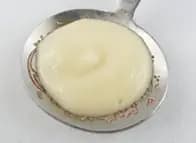
Milk, light texture
Ustensile utilisé : Fouet manuel
Conditionneur végétal : 5%
Huile végétale de Pépins de raisin : 10%
Eau : 84.4%
Conservateur Cosgard : 0.6%
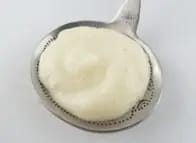
Foaming Milk
Ustensile utilisé : Batteur électrique mobile défloculeur
Conditionneur végétal : 5%
Huile végétale de Pépins de raisin : 10%
Eau : 84.4%
Conservateur Cosgard : 0.6%
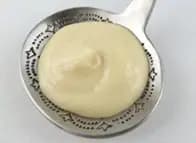
Cream, creamy texture
Ustensile utilisé : Fouet manuel
Conditionneur végétal : 10%
Huile végétale de Pépins de raisin : 10%
Eau : 79.4%
Conservateur Cosgard : 0.6%
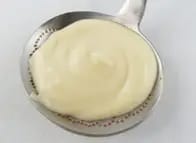
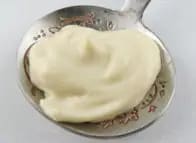
Cream, creamy texture
Ustensile utilisé : Fouet manuel
Conditionneur végétal : 7%
Huile végétale de Pépins de raisin : 20%
Eau : 72.4%
Conservateur Cosgard : 0.6%
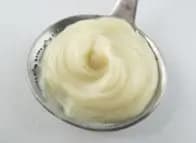
Thick mask texture
Ustensile utilisé : Fouet manuel
Conditionneur végétal : 10%
Huile végétale de Pépins de raisin : 30%
Eau : 59.4%
Conservateur Cosgard : 0.6%
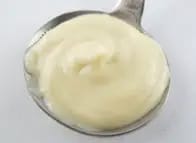
Extra-light creamy balm
Ustensile utilisé : Fouet manuel
Conditionneur végétal : 5%
Alcool cétéarylique : 2%
Dry Touch : 10%
Eau : 82.4%
Conservateur Cosgard : 0.6%
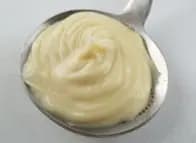
Creamy detangling balm
Ustensile utilisé : Fouet manuel
Conditionneur végétal : 7%
Alcool cétéarylique : 3%
Huile végétale de Pépins de raisin : 10%
Eau : 79.4%
Conservateur Cosgard : 0.6%
Thick and rich balm
Ustensile utilisé : Fouet manuel
Conditionneur : 10%
Alcool cétéarylique : 15%
Huile végétale de Pépins de raisin : 10%
Eau : 64.4%
Conservateur Cosgard : 0.6%
Note: The type of vegetable oil used has a major influence on the texture and feel of emulsions. For example, an emulsion made with avocado oil or wheat germ will have a richer feel than the same emulsion made with a "dry" oil such as hazelnut oil or melon oil. In addition, adding essential oils, certain active ingredients, and certain preservatives to your preparation can change the consistency obtained. Feel free to note down all your experiences to build up a database of information that you can consult each time you formulate a new cream.
Precautions
Precautions and allergens
Precautions for use
Allergens
Allergen-free
Examples of additions
Rice proteins | 1-5% |
Vegetable collagen | 0.5-5% |
Provitamline B5 | 2-5% |
Phytokeratin | 1-5% |
Silk proteins | 1-3% |
Provitamin B5 | 2-5% |
Fucocert | 1 to 5% |
Plant ceramides | 1-5% |
Plant ceramides | 1-5% |
Keratin'protect | 1-5% |
Silk proteins | 1-3% |
Phytokeratin | 1-5% |
Phyto'liss | 0.5-2% |
Keratin'protect | 1-5% |
Silk proteins | 1-3% |
Phytokeratin | 1-5% |
Honeyquat | 1-5% |
Inulin | 1-2% |
Vegetable silicone | 1 to 10% |
AHA fruit acids | 1-5% |
Keratin'protect | 1-5% |
Please note that certain active ingredients and essential oils may affect the viscosity of your product.
Hot emulsification at approximately 75°C: use in the oil phase (the simplest method)
Utensil : Hand whisk or electric mixer
Add the Vegetable Conditioner to the oil phase and melt the mixture at approximately 75°C in a preparation bowl. Heat the aqueous phase separately to approximately 75°C in another bowl.
Remove the bowls from the double boiler and immediately pour the aqueous phase into the melted oil phase, stirring vigorously with an electric mixer or manual whisk. The mixture will turn white and the emulsion will begin to form.
Continue shaking for at least 3 minutes without stopping, even if the texture takes on a strange appearance.
Once the emulsion is well formed, place the bowl in a bowl of cold water to speed up cooling and continue stirring for at least another 3 minutes.
Add the preservative(s), active ingredient(s) and any fragrance or essential oils to the cooled emulsion, mixing well after each addition.
Hot emulsification at approximately 75°C: use in the aqueous phase (the most technical)
Utensil : Hand whisk or electric mixer
Add the Vegetable Conditioner to the aqueous phase and heat to approximately 75°C in a preparation bowl. The Conditioner melts and forms soft lumps that disperse in the water when stirred. Heat the oil phase separately to approximately 75°C in another bowl.
Remove the bowls from the double boiler and immediately pour the aqueous phase into the oil phase, stirring vigorously with an electric mixer or manual whisk. The mixture will turn white and the emulsion will begin to form.
Continue shaking for at least 3 minutes without stopping, even if the texture takes on a strange appearance.
Once the emulsion is well formed, place the bowl in a bowl of cold water to speed up cooling and continue stirring for at least another 3 minutes.
Add the preservative(s), active ingredient(s) and any fragrance or essential oils to the cooled emulsion, mixing well after each addition.
Aroma-Zone tips
Do not stop stirring before the recommended time, even if the mixture takes on a strange appearance. Only begin to cool the emulsion once it has set and has a uniform appearance.
Emulsions made with an electric mixer are very foamy with Vegetable Conditioner, which also gives them thicker textures. For more fluid and less foamy textures, make the emulsions with a hand whisk instead.
For good emulsion stability, the fat phase should correspond to 10-30% of the mixture.
It is possible to add vegetable butters to the oil phase, but do not exceed 2% to ensure good stability and avoid weighing down the hair.
The higher the fat content, the richer and more coating the effect on the hair will be, but too high a proportion of vegetable oils may weigh down the hair (this may be more suitable for a nourishing pre-shampoo mask). For a lighter feel on the hair and good rinsability (conditioner for all hair types), reduce the oil phase to 10%. For even lighter creams, the oil phase can be partly made up of dry emollients such as Dry Touch, Coco silicone, Dicaprylyl carbonate, or Caprylis.
For a truly extra-light feel, it is possible to obtain stable emulsions with only 5% oil phase, but in this case, the emulsion must be made with a foam mixer. This produces a foamy texture.
The plant-based conditioner can be combined with cetearyl alcohol, which thickens textures and stabilises emulsions without weighing down the hair and while maintaining good rinsability.
Quality
Plant-based (coconut, rapeseed, palm kernel)
Method of production
A blend of cetearyl alcohol, lecithin, vegetable oil, and a plant-based surfactant.
Function
Emulsifier (allows the formation and maintenance of an emulsion over time) and hair conditioning agent (facilitates detangling of the hair).
INCI designation
Cetearyl Alcohol, Lecithin, Sodium Cetearyl Sulfate, Vegetable Oil
Presentation
Yellow to light brown pellets with a characteristic odor, packaged in recycled PET jars.
Type
Blend of non-ionic and anionic emulsifiers, non-ethoxylated.
Storage
Store at room temperature away from moisture and light. Close the jar tightly after use.
Precautions
Keep out of reach of children, do not swallow, avoid contact with eyes.
Hair conditioners
Conditioning agents are often criticized for their irritating properties, but it is sometimes difficult to do without their detangling and softening effects, especially on long and damaged hair.
In the "traditional" cosmetics industry, the main conditioners used are synthetic silicones, which tend to build up and suffocate the hair while making it "dependent," and quaternary ammonium compounds, which make detangling easier and provide a feeling of softness thanks to their ionic interaction with keratin.
Unfortunately, the latter are also controversial because they are often irritating and harmful to the environment.
Among quaternary ammonium compounds, we have already chosen to offer you BTMS and Conditioner emulsifier, which are good plant-based options and are much gentler than other commonly used quaternary ammonium compounds. However, these two conditioners are not permitted in organic cosmetics.
With Plant-based Conditioner, we now offer a 100% plant-based conditioning agent. It is non-irritating and authorized in organic cosmetics. It is therefore an excellent alternative to quaternary ammonium compounds for those who want to formulate natural and effective conditioners and hair masks. Laboratory tests prove its effectiveness in detangling, even if this effect is slightly less powerful than with quaternary ammonium compounds such as BTMS. It also has a volumizing effect on fine, flat hair and a strengthening effect on brittle or split ends. When incorporated into a hair care product, Plant Conditioner leaves hair very soft, with a feeling of nourished and strengthened hair, and prevents dryness and split ends. It will be particularly appreciated by dry and porous hair and bleached or colored hair, as it restores its hydrophobicity and thus protects it from drying out, frizz, and the "straw" effect.
Environmental qualities and characteristics product sheet
Reference
02591 - plant-based conditioner 50 g
Main packaging material
Paper bag
Recyclability
Most packaging can be recycled

Supplier documentation
Frequently Asked Questions
Essential Oils
1 ml = approximately 35 drops (with our Aroma-Zone dropper caps)
Carrier Oils
1 pump (Aroma-Zone aluminium pump) = approx. 0.15 ml
Mass / Volume conversion (for a liquid)
Mass (g) = Density x Volume (ml) at 20°C
Further information
1 full teaspoon = between 3 and 4.5 ml
1 full tablespoon = between 7.5 and 10 ml
However, these spoon ratios depend on a number of factors (e.g. viscosity of the liquid, temperature, depth and size of the spoon, rheological behaviour of the liquid), and we strongly advise you to use precise measuring equipment, such as graduated test tubes, graduated pipettes, and precision scales.
Loading...
Mixes poorly.
A must-have for my detangling hair treatments, easy to use, odorless, alternative to BTMS.
I love the result it gives to the hair! I've been making my own masks since I tried it
Used it to make my leave-in conditioner. Very satisfied.
A very easy-to-use essential for all my hair recipes, from pre-shampoo masks to styling creams and conditioners!


