
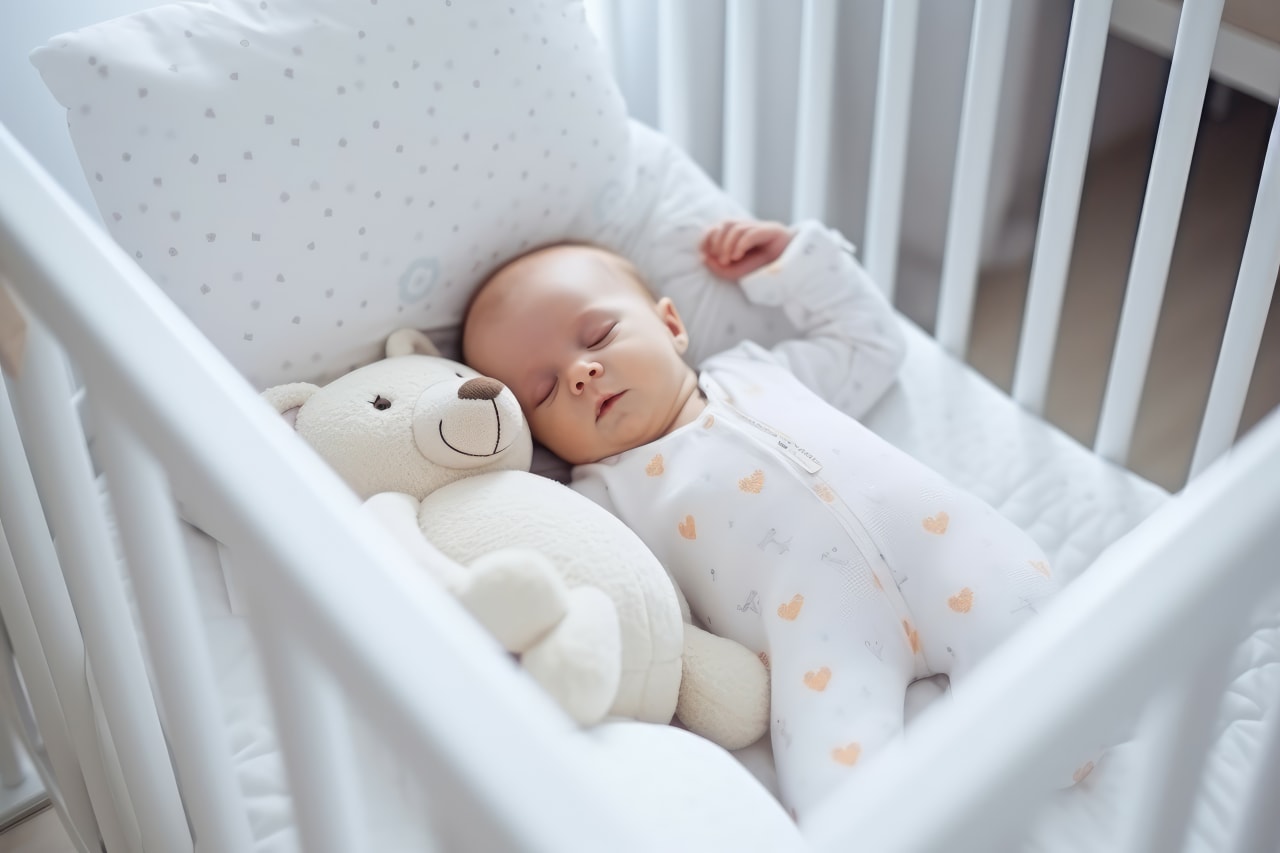
The dangers of melatonin for babies
Published on: Friday, March 29, 2024, Updated on: Friday, October 30, 2026
Babies’ sleep is often a source of concern for parents. When restless nights persist, many turn to solutions to help their little ones get some rest. Among these solutions, melatonin may sometimes be considered. However, it is essential first and foremost to understand and consider its potential risks. In this article, we’ll explore the potential dangers associated with using melatonin in babies and offer tips to help little ones sleep better.
Contents
What is melatonin?
Melatonin is a hormone naturally produced by the pineal gland, also known as the epiphysis. It plays an essential role in regulating the sleep-wake cycle, by signaling to the body when it is time to rest.
Melatonin production is influenced by light and darkness: it is generally secreted in greater quantities when the environment is dark, which then helps induce sleep.
It is synthesised from a neurotransmitter called tryptophan. This is then converted into serotonin in the body, then into N-acetyl serotonin, and finally into melatonin. Released into the bloodstream, it thus plays a crucial role in modulating sleep-wake cycles (also known as circadian cycles). Melatonin acts primarily by binding to specific receptors located in the brain and other tissues, thereby inducing numerous functions, including regulation of the body’s circadian rhythm, the onset of sleep, and adaptation to time zone changes (jet lag).
When discussing melatonin, one may also refer to synthetic melatonin or melatonin extracted from plants. This is marketed as a dietary supplement, intended to promote sleep, regulate sleep-wake cycles, and alleviate the effects of jet lag. Its use requires special attention and ideally medical advice, especially in infants and young children, due to safety and dosage concerns.
Melatonin for babies: what are the risks?
The use of melatonin in babies carries several potential risks.
First, it is important to note that the safety and efficacy of melatonin in infants and young children have not been sufficiently studied. The long-term effects on babies’ development and health remain largely unknown.
Furthermore, giving melatonin to a baby can disrupt their delicate hormonal system. Since this hormone regulates many physiological processes, a disruption could have repercussions on the child’s development.
Finally, the use of melatonin can mask underlying issues that contribute to sleep disorders in babies. Instead of addressing the root cause of the problem, this would merely mask the symptoms temporarily.
At what age can melatonin be taken?
There is no clear consensus on the age at which it is safe to administer melatonin. Due to the lack of data on its safety and efficacy for this age group, its use in infants and young children should be avoided (unless specifically recommended by a healthcare professional).
The use of melatonin is therefore restricted to adults.
Can a child take melatonin?
As noted above, melatonin is strongly discouraged for children.
If your child is having trouble sleeping, it is essential that you consult a pediatrician or sleep specialist before resorting to melatonin. These healthcare professionals can help you determine the underlying cause of the sleep disorder and suggest appropriate solutions and interventions.
Our Natural Tips for Baby Sleep
Above all, it is crucial to identify the specific cause of your baby’s sleep problems and address it appropriately rather than resorting to quick fixes like melatonin. By identifying and addressing contributing factors with the help of a professional, you can help your baby develop healthy, sustainable sleep habits.
Rather than relying on hormonal supplements, there are several natural approaches to gently promote sleep in babies. Here are our tips:
Establish a suitable sleep routine: We encourage you to create a soothing bedtime ritual to help mentally and physically prepare your baby for sleep.
Create a sleep-friendly environment: A calm, dark, and comfortable environment can promote better sleep for your baby. Make sure their room is cool enough, quiet, and dimly lit.
Encourage breastfeeding or bottle-feeding before bedtime: Feeding your child can calm and soothe them before they fall asleep.
Encourage skin-to-skin contact: Physical contact with parents can comfort babies and promote peaceful sleep.
Use relaxation techniques: Gentle massages, lullabies, or breathing exercises can help relax your baby before bedtime.
Expert advice
Since every child is unique, so are their sleep needs. When dealing with sleep disturbances in babies, patience and understanding are, in my opinion, paramount.
Take the time to observe and understand the signals your baby is sending you, and, as much as possible, be there to comfort them and offer your support during difficult times. Seek help from a healthcare professional to gently find the right solutions together.
Spotlight on Our Naturopathic Writer: Stéphanie Catrysse

Stéphanie Catrysse is a naturopath (certified by the FENA), a wellness massage and lymphatic drainage practitioner, and a personal development coach. She is passionate about alternative medicine and practices a holistic approach to health.

Frequently Asked Questions
Associated tips
Dietary supplements

Sleep tips


