
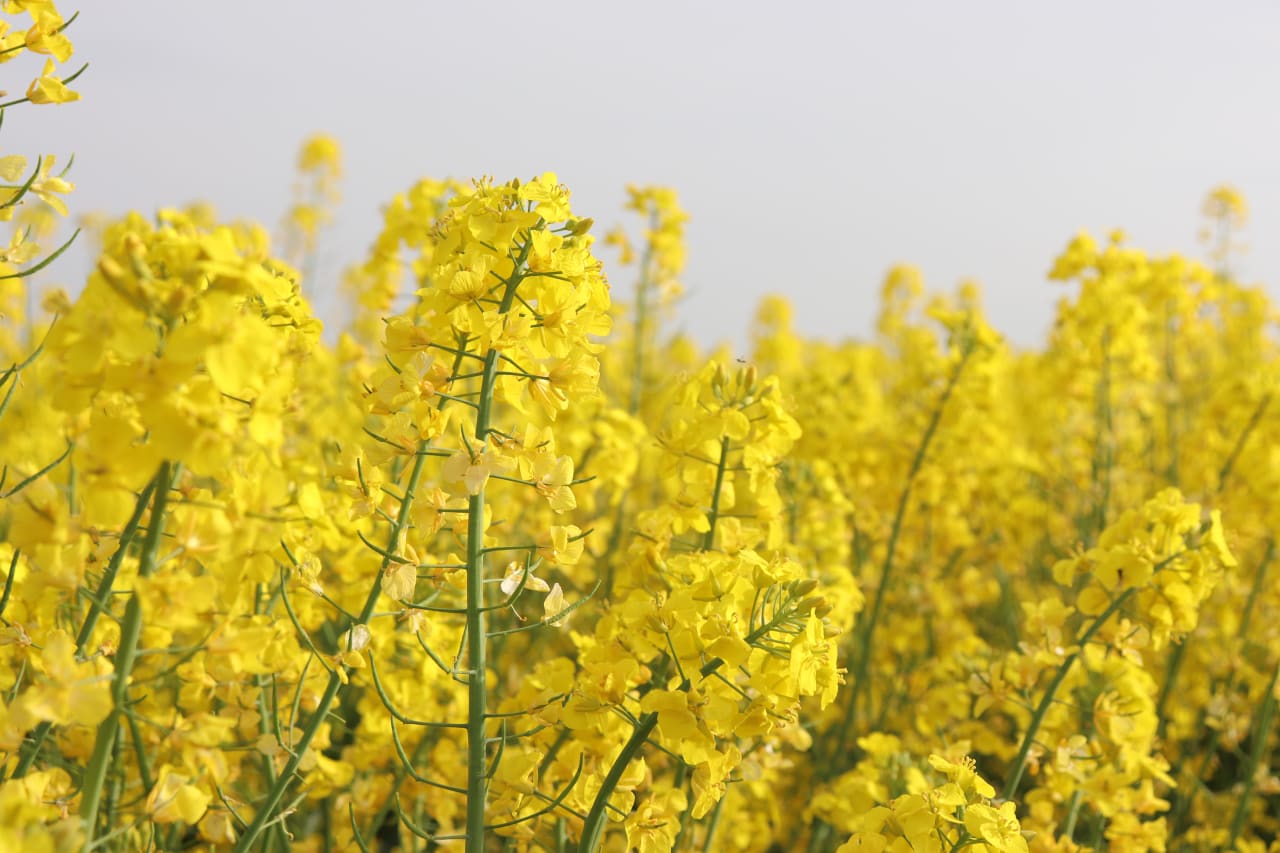
After soya and palm oils, rapeseed oil is the third most widely produced and consumed vegetable oil in the world, and the most important for human consumption in Western countries. Rapeseed oil, also known as canola oil or brassica oil, is mainly produced in Canada, Europe and China. Rapeseed oil is derived from the oil-rich seeds (containing up to 40% oil) of plants of the Brassica genus. This cruciferous plant is native to India and was introduced to Europe in 1360. Until the 19th century, rapeseed oil was not used in food. People used it for lighting and lubrication. Indeed, during the Second World War, rapeseed production became essential as it was used by the navy as a lubricant. This oil is also used in the production of biodiesel, a renewable substitute for petroleum.
The Benefits of Rapeseed Oil and Our Tips for Using It
By Gipsy Dauge
Published on: Friday, October 20, 2023, Updated on: Monday, November 09, 2026
Rapeseed oil is the third most produced and consumed oil in the world, after soya and palm oil. Rapeseed oil is renowned for its high omega-3 content. It is a healthy food with many benefits, especially for weight management, heart health, and lowering high cholesterol.
Contents
The history of rapeseed oil through the ages
Rapeseed Oil: An Oil With a Wide Range of Nutritional Benefits
Nutritionists praise rapeseed oil for its high nutritional value because of its bioactive compounds and unsaturated fatty acids. And for good reason: several studies show that consuming it can help partially offset a linolenic acid deficiency. Linolenic acid is a polyunsaturated fatty acid belonging to the omega-3 family. It is essential for the proper functioning of the human body, but the body cannot produce it itself. Consequently, it must be obtained from the diet. Dietary sources of linolenic acid include oily fish such as salmon, linseeds, walnuts and certain vegetable oils such as rapeseed oil. Rapeseed oil is also rich in linoleic acid, a polyunsaturated fatty acid belonging to the omega-6 family. It is an essential fatty acid, meaning the human body cannot produce it and must obtain it through the diet, just like linolenic acid.
Rapeseed oil: a friend to our heart
Some scientific studies suggest that rapeseed oil helps prevent cardiovascular disease (CVD). Indeed, this vegetable oil is low in saturated fats and rich in monounsaturated (MUFA) and polyunsaturated (PUFA) fatty acids. This composition gives it numerous properties that help protect the cardiovascular system.
Rapeseed oil and its effect on cholesterol
Rapeseed oil is also rich in monounsaturated fatty acids. The best-known of these is oleic acid. It promotes healthy cholesterol metabolism and protects our arteries. Conversely, the saturated fatty acids found in animal fats such as butter or cheese increase blood cholesterol levels and cardiovascular risks.
Rapeseed oil is recommended for weight management
Numerous studies have revealed the crucial role of omega-3 fatty acids in weight regulation. Research by C. Couet’s team at the Tours University Hospital Centre has confirmed that adding omega-3 to the diet increases the body’s energy expenditure by 5 per cent, encouraging the use of body fat reserves. Furthermore, researchers are investigating the link between high obesity rates in the United States and the low intake of omega-3 in the American population’s diet.
Rapeseed oil : precautions and contraindications
Types of oil | Smoke point (average) |
|---|---|
Virgin, unrefined rapeseed oil | 107 °C |
Semi-refined rapeseed oil | 177 °C |
Refined rapeseed oil | 204 °C |
HOLL rapeseed oil | 240 °C |
Is rapeseed oil a delicate oil?
Rapeseed oil has long been considered a delicate oil, prone to releasing health-harmful compounds, such as aldehydes, when heated to high temperatures. Furthermore, rapeseed oil, with its linolenic acid and triglyceride content, can change flavour if left exposed to light for too long. The oxidation of rapeseed oil can give it an unpleasant rancid taste.
Nevertheless, to make rapeseed oil more stable and prevent its oxidation, modified versions of this oil have been developed commercially. These modifications include a variant with low alpha-linolenic acid (ALA) content and higher linoleic acid content, and a variant with high oleic acid content. These modified oils are more heat-stable, meaning they can better withstand high temperatures during cooking. However, they are more expensive than standard rapeseed oil.
How should rapeseed oil be used?
To meet your daily requirements, just one tablespoon of rapeseed oil is sufficient. We therefore recommend choosing rapeseed oil over sunflower oil, maize oil, butter or cream when seasoning your dishes. Its added bonus? It has a very neutral flavour, making it the perfect accompaniment to your salads or other dishes.
How should rapeseed oil be stored?
A scientific study has shown that rapeseed oil should preferably be stored in opaque packaging and kept in a cool place.
How do you choose a good-quality rapeseed oil?
To choose a good-quality rapeseed oil, opt for organic options labelled ‘cold-pressed’ or ‘first cold-pressed’. Choose rapeseed oils where the origin is clearly stated on the packaging, thereby ensuring the product’s traceability. Avoid oils containing additives or preservatives, and check that the production process does not involve the use of pesticides or chemical fertilisers.
Spotlight on our expert writer: Gipsy Dauge

Gipsy is a graduate of ESJ Paris. After 10 years’ experience in general and women’s magazines, she decided to specialise in writing about health and wellbeing. With a certification in yin yoga under her belt, she now skilfully combines her writing with her yoga mat. Her aim goes far beyond mere words. Her commitment runs deep: to help readers incorporate small tips into their daily lives that help them look after themselves and their environment. Every word is an invitation to adopt a balanced and fulfilling lifestyle.
Photo credit: Photo by Toinane on Unsplash
Bibliography
Rapeseed oil: a versatile oil with a promising future
https://www.ocl-journal.org/articles/ocl/abs/2006/05/ocl2006135p363/ocl2006135p363.html
The growth of non-food uses for rapeseed oil in the EU: what impact will this have on global markets and prices?
https://www.ocl-journal.org/articles/ocl/abs/2005/05/ocl2005125-6p344/ocl2005125-6p344.html
A Comprehensive Review of Health-Benefiting Components in Rapeseed Oil
https://www.mdpi.com/2072-6643/15/4/999
Can rapeseed oil replace olive oil as part of a Mediterranean-style diet?
https://www.cambridge.org/core/journals/british-journal-of-nutrition/article/can-rapeseed-oil-replace-olive-oil-as-part-of-a-mediterraneanstyle-diet/09863075B159BA2CDBA1A056E4FA1268
Canola and Rapeseed: Production, Processing, Food Quality, and Nutrition
https://books.google.fr/books?hl=fr&lr=&id=4FepCC5yLf4C&oi=fnd&pg=PP1&dq=rapeseed+oil+benefits+health++&ots=fICiLOX2UP&sig=5pXdGwhXTTmE29x63wD5GjY0BR4&redir_esc=y#v=onepage&q=rapeseed%20oil%20benefits%20health&f=false
Cooking and health: Cooking is vital for your health
https://www.google.fr/books/edition/Cuisson_et_sant%C3%A9/Zg4Itni_ol0C?hl=fr&gbpv=1&dq=huile+colza+sant%C3%A9&pg=PA51&printsec=frontcover
Staying slim, healthy and feeling good about yourself
https://www.google.fr/books/edition/%C3%8Atre_mince_en_bonne_sant%C3%A9_et_bien_dans/31PXCQAAQBAJ?hl=fr&gbpv=1&dq=sant%C3%A9+huile+colza&pg=PT92&printsec=frontcover
Fats – nutrition and health
https://www.google.fr/books/edition/Les_lipides_nutrition_et_sant%C3%A9/_kCwAgAAQBAJ?hl=fr&gbpv=1&dq=sant%C3%A9+huile+colza&pg=PA26&printsec=frontcover
Associated tips
Muscle and joint comfort tips

Body Care Tips


