
Symptothermal contraception, also known as the symptothermal method, is a method based on observing three physiological signs: basal body temperature, cervical mucus and the position of the cervix. It aims to help women identify their fertile window, that is, the period of their cycle during which they can become pregnant. Depending on the objective – whether you're hoping to conceive or to avoid pregnancy – the symptothermal method allows you to accurately determine the right days to have sex, or the ones to avoid. This method is based on clear biological indicators, making it a reliable, natural approach that respects the female body. It lets every woman better understand her cycle and to adapt her sex life with full awareness and peace of mind.
The symptothermal method: how it works, benefits and precautions
Published on: Monday, November 03, 2025, Updated on: Wednesday, October 28, 2026
Symptothermal contraception is attracting growing interest amongst women who wish to better understand their bodies and manage their fertility naturally. Based on careful observation of the signs of the menstrual cycle, this method is often described as an alternative to hormonal or medical solutions. Whether the aim is to support conception or to avoid pregnancy, symptothermal contraception helps you develop a genuine understanding of yourself whilst respecting your body’s natural rhythm. Let’s explore how it works, its benefits and the precautions you need to be aware of before getting started.
Contents
What is symptothermal contraception?
What are the main methods of contraception?
Before adopting symptothermal contraception, it is useful to understand where this method fits within the range of contraceptive options. There are generally four main categories:
Hormonal contraceptive methods (the pill, patch, implant or vaginal ring): these methods work by blocking ovulation and altering the quality of cervical mucus using synthetic hormones. They are considered safe and effective, but may cause side effects due to the presence of hormones.
Intrauterine methods (hormonal or copper IUDs): these are inserted into the uterus by a gynaecologist to provide long-term protection. The hormonal IUD acts locally and is therefore sometimes preferred to hormonal methods that have a stronger effect on the rest of the body. The copper IUD does not contain any hormones. These methods are very effective when correctly inserted by a professional.
Barrier methods (male condoms, female condoms or diaphragms): these methods simply prevent sperm from entering the vagina by acting as a barrier. They therefore contain no hormones and are effective provided that they are used correctly.
Alternative methods (symptothermal method, Billings method, etc.): also known as fertility awareness methods, these are becoming increasingly popular amongst women seeking a gentler, more natural approach. However, there can be real concerns regarding their reliability in preventing pregnancy.
How does the menstrual cycle work?
To practise symptothermal contraception, it is essential to have a clear understanding of the key stages of the female menstrual cycle and the signs that accompany them. The cycle can be divided into four main phases:
Menstruation: this marks the start of a new menstrual cycle. During your period, the body sheds the lining of the womb because fertilisation did not occur during the previous cycle. Periods last between 3 and 7 days, depending on the individual.
The follicular phase: the follicular phase is the period between menstruation and ovulation. Under the influence of FSH, the cervical mucus becomes clearer and more fluid, a sign that the fertile phase is approaching. Meanwhile, the cervix softens, rises and opens slightly.
Ovulation: During ovulation, an egg is released, on average around the 14th day after the start of the cycle. The cervical mucus then becomes abundant and elastic, facilitating fertilisation. From this point, the fertile phase lasts between 5 and 6 days on average.
The luteal phase: the luteal phase begins once ovulation is complete. The oocyte develops into the corpus luteum, which produces progesterone. This hormone causes a slight rise in basal body temperature, a key indicator in the symptothermal method. If fertilisation has not taken place, hormone levels drop and menstruation begins again.
Please note: the female menstrual cycle refers to the set of hormonal and physiological processes that recur, in menstruating people, on average every 28 days, although its duration can vary between 21 and 35 days depending on the individual.
How do you practise symptothermal contraception?
Symptothermal contraception relies on the simultaneous observation of several biological markers of the menstrual cycle in order to accurately identify the fertile period. The method generally combines basal body temperature, the appearance and texture of cervical mucus, and sometimes the position of the cervix. Here’s how to practise it in everyday life:
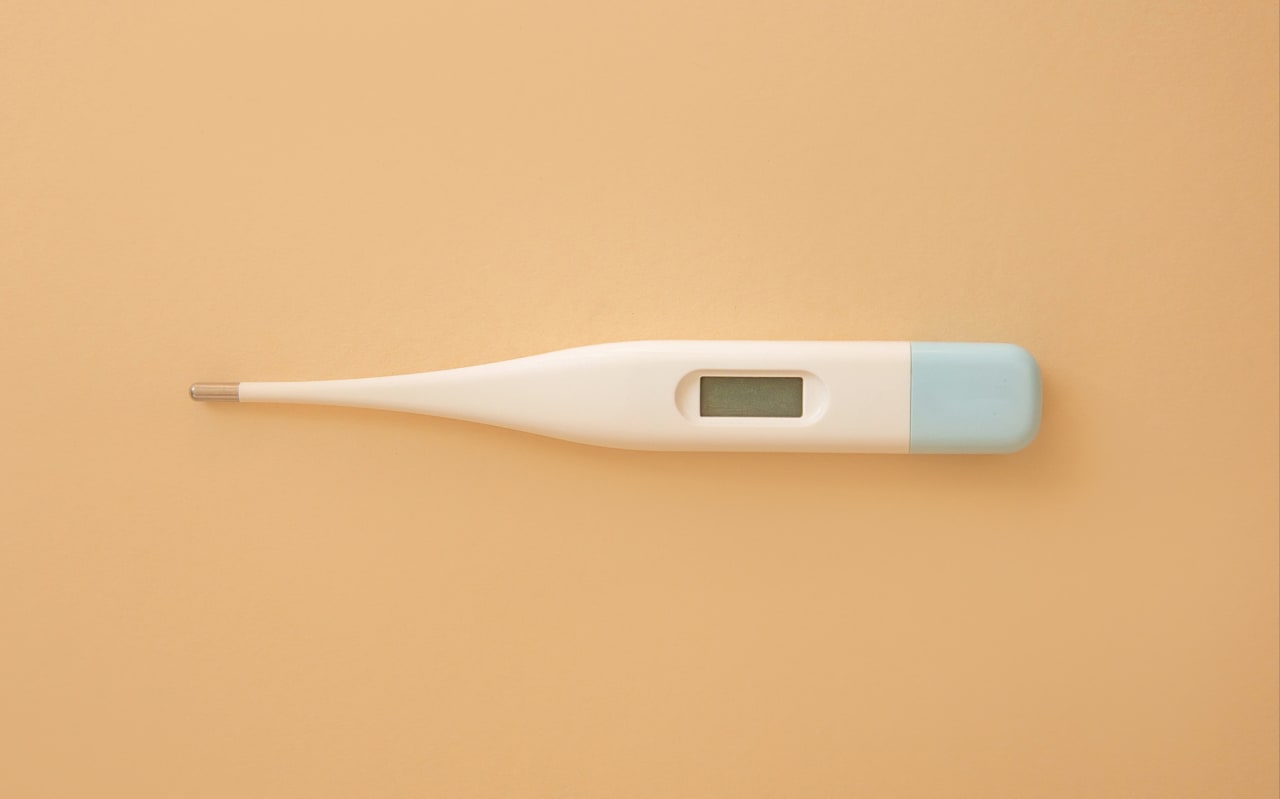
Measure your basal temperature: Every morning, before getting out of bed, take your temperature using an accurate thermometer that reads to two decimal places. After ovulation, oestrogen causes a rise in temperature of around 0.2 to 0.4 °C, which persists until your period starts. When you notice this high plateau, you know that you have entered the luteal phase, during which you are not fertile. Please note that your basal body temperature is not reliable if you have drunk alcohol the previous night or if you have slept for less than 5 hours. Basal body temperature can also be affected by illness or a temporary fever. It is therefore advisable to postpone taking your temperature or to make a note of these factors so as not to distort your overall interpretation of the cycle.
Monitoring cervical mucus: The cervix produces mucus whose texture changes in response to hormones. At the start of your cycle, your cervical mucus is thick and sticky. As you approach ovulation, the cervical mucus becomes abundant, clear and stretchy. After ovulation, you will notice a return to a thicker, drier and whitish mucus. You should check your cervical mucus daily, ideally at a regular time, noting any changes.
Checking the position of the cervix : The cervix softens, rises and opens slightly during the fertile period. After ovulation, it drops back down and closes. This additional indicator can help to confirm your interpretation, particularly when the mucus is difficult to analyse. However, it remains a supplementary sign that is not always used to identify the fertile phase in the symptothermal method.
Cross-referencing and interpreting the data : Now is the time to cross-reference your observations to determine your fertile phase. Reliability depends on all these indicators, analysed according to a precise protocol provided during training or via expert guidance. A fertile period is only deemed to have ended following cross-confirmation that the cervical mucus has returned to an infertile state and that there has been a stable rise in temperature for at least three days.
Using a barrier method during fertile days: If your aim is to avoid pregnancy, sexual intercourse must be protected using a barrier method throughout the entire fertile period to ensure contraceptive effectiveness. If, on the other hand, your aim in practising symptothermal contraception is to become pregnant, the fertile phase can be identified and used to plan sexual intercourse, maximising the chances of conception.
Please note: symptothermal contraception is not simply a matter of ‘observation’, but a structured scientific method guided by the biology of the cycle. Proper training or guidance from a certified practitioner is strongly recommended to minimise misinterpretations, especially when you first start using the method.
Advantages and limitations of symptothermal contraception
Symptothermal contraception offers a dual benefit: it enables you to better understand your body and manage your fertility naturally, while also providing an alternative to hormonal or invasive methods. However, this approach relies on the daily observation of specific physiological signs and requires a serious commitment. Before you start, it is therefore essential to be fully aware not only of its benefits, but also of the constraints and requirements involved, so that you can make the most of it. Here’s what you need to know:
The benefits of the symptothermal method
Natural method: with symptothermal contraception, there are no hormones and no invasive devices. It respects the physiological functioning of the cycle and is a gentle, natural method.
In-depth understanding of the body: it helps you understand your own bodily changes, recognise when you’re ovulating and anticipate the start of your period. This makes it a valuable tool for better appreciating and respecting your body as a woman.
Versatility: it can be used to prevent pregnancy or, conversely, to optimise fertility, depending on your needs. The method can support you throughout your fertile life, in line with your family planning.
Sharing and communication within a couple: managing fertility can become a shared commitment. Your partner can be involved in observing the signs and learning how your cycle works.
Things to bear in mind before getting started
Daily tasks: taking your temperature upon waking, observing cervical mucus, and recording the data. This method requires time, commitment and consistency.
Periods of abstinence or use of barrier methods: necessary if the aim is to prevent pregnancy (in accordance with the method’s guidelines).
Reliability depends on rigour: an approximate interpretation may lead to a risk of failure. Errors are common when first starting to use the method or if there is insufficient training.
Initial training is essential: several cycles are required to master the interpretation of biological signals before relying on fertile phases. The symptothermal method therefore requires patience and learning.
Please note: Certain physiological situations can temporarily alter fertility indicators, such as significant stress, travelling across time zones or a temporary illness. It is therefore essential to remain alert to any unusual variations and to adjust your interpretation of the signs accordingly.
Common misconceptions about symptothermal contraception
Alternative contraceptive methods often raise many questions, and it can be difficult to separate fact from fiction. Here are some common questions about symptothermal contraception, along with our clear answers, based on scientific facts:
Is symptothermal contraception reliable?
Yes, when practised correctly and using a recognised method, its effectiveness can match that of certain hormonal contraceptives. However, its success depends heavily on daily rigour and thorough training.
Do you need a regular cycle to use the symptothermal method?
No, irregular cycles can be tracked using symptothermal contraception because observations are made in real time. It is, in fact, a method that adapts to the natural variability of cycles.
Is symptothermal contraception difficult to learn?
Yes, it does require some serious learning at the start, but the steps quickly become second nature. Guidance from a trained practitioner helps you gain accuracy and confidence. This remains essential if you wish to avoid pregnancy.
Can it be used after pregnancy or whilst breastfeeding?
This is possible, but caution is advised. Due to hormonal changes, breastfeeding disrupts the usual indicators and requires specific rules for interpretation. Monitoring by a trained professional is therefore strongly recommended.
A word from the midwife
Symptothermal contraception is a respectful approach that encourages you to listen to the language of the female body. It is based on the careful observation of the incredibly rich ‘internal weather’ signs.
Observing these signs and understanding one’s cycle means reconnecting with a natural rhythm that is often forgotten. Whether the aim is to avoid or to encourage pregnancy, the symptothermal method also allows couples to share a common responsibility: the man can be attentive and respectful of the hormonal fluctuations in his partner’s cycle, whilst supporting and accompanying her. This shared knowledge can strengthen the bond between partners and foster meaningful discussions about fertility. But this harmony does not stop there: a well-nourished, active body and a calm mind make the cycle’s signals clearer and more reliable.
Marie-Elise Launay – Midwife
Precautions
Symptothermal contraception requires rigorous commitment and is not suitable for all women. It is less reliable in the postpartum period, while breastfeeding, in cases of irregular cycles or as the menopause approaches, as hormonal signs are more difficult to interpret during these periods. It does not protect against STIs and requires the correct use of a barrier method during fertile days. Support from a trained professional is strongly recommended to minimise the risk of error.
Expert advice
Symptothermal contraception can be your ally in helping you better understand how your body works and know exactly where you are in your menstrual cycle. It highlights the hormonal changes a woman experiences each month and helps her reconnect with her body in a deep and intimate way. If you’re trying to conceive, this method can help you pinpoint your fertile days accurately and maximise your chances of getting pregnant. However, we advise caution if you’re trying to avoid pregnancy, and encourage you to seek advice from a professional trained in the method to find out whether symptothermal contraception is suitable for your situation.
Spotlight on Our Naturopathic Writer: Marine Leleux

Marine is a naturopath specialising in children’s well-being and a parenting coach. With 10 years’ experience supporting families, she now channels her passion into serving her community by sharing natural and caring advice.
Bibliography
Symptothermal Contraception, National Library of Medicine, Azabelle Peters; Heba Mahdy, 2023, https://www.ncbi.nlm.nih.gov/books/NBK564316/
Family planning: a global handbook for providers: evidence-based guidance developed through worldwide collaboration, 3rd ed, World Health Organisation, 2022, https://www.who.int/publications/m/item/family-planning--a-global-handbook-for-providers--4th-ed
Basal body temperature for natural family planning, Mayo Clinic, https://www.mayoclinic.org/tests-procedures/basal-body-temperature/about/pac-20393026
The Menstrual Cycle: Menstruation, Ovulation, and How Pregnancy Occurs, American College of Obstetricians & Gynaecologists, https://www.acog.org/womens-health/infographics/the-menstrual-cycle
Contraception or the Desire for a Child: The Symptothermal Method, Angela Walder Lamas, https://www.hug.ch/sites/interhug/files/structures/sante_sexuelle_et_planning_familial/documents/2019_aw_contraception_ou_desir_d_enfant_la_methode_sympto_obstetrica.pdf
The timing of the “fertile window” in the menstrual cycle: day-specific estimates from a prospective study, National Library of Medicine, https://pubmed.ncbi.nlm.nih.gov/11082086/
Fertility Awareness-Based Methods of Family Planning, American College of Obstetricians & Gynaecologists, https://www.acog.org/womens-health/faqs/fertility-awareness-based-methods-of-family-planning




