
Linden (Tilia): benefits, properties and contraindications

Linden (Tilia): benefits, properties and contraindications


By Gipsy Dauge

Published on: Friday, October 20, 2023, Updated on: Monday, November 09, 2026

The lime tree (Tilia), grown throughout Europe, is one of France's favourite trees. This plant, long regarded as sacred, is brimming with health benefits. The lime tree is particularly recommended for promoting sleep and treating nervous exhaustion. It is also said to have properties that help manage stress. A real ally in our hectic, fast-paced lives!

Contents

The history of the lime tree through the ages

The use of the lime tree, which belongs to the Tiliaceae family (or Malvaceae according to phylogenetic classification), dates back many centuries. This tree, useful for providing shade in parks and along avenues, was considered sacred by the ancient Germanic people. And with good reason: the lime tree was dedicated to Frigga, the goddess of fertility and maternal love. The lime tree also featured in both Greek and Norse mythology. As a little-known fact, it was indeed a lime leaf that is said to have protected Siegfried’s back – the famous Norse hero’s only vulnerable spot. France has also honoured the lime tree greatly by making it one of its national symbols in 1792. It is a plant known to all, symbolising friendship, justice and peace. In days gone by, lime trees were planted in every village as communal trees or landmarks. They were also found near chapels.

Four species of Tilia, recognised for their health benefits, are listed in the French Pharmacopoeia. These are Tilia cordata Mill. (T. parvifolia) or small-leaved lime, Tilia platyphyllos Scop. or large-leaved lime, Tilia sylvestris Desf. or Roussillon lime, and finally Tilia X vulgaris Heyne (T. europaea) or common lime (a hybrid between T. cordata and T. platyphyllos). 

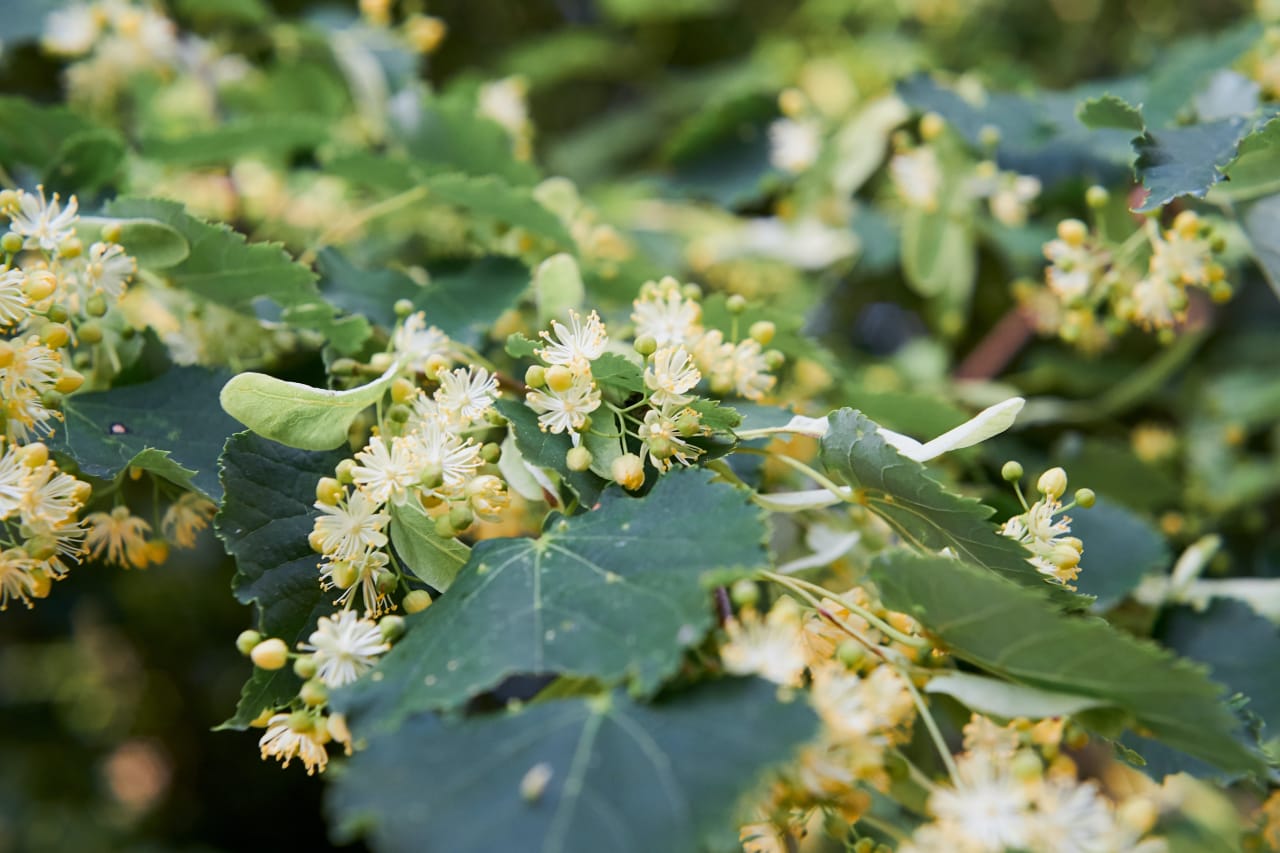
The lime tree is a majestic tree that can reach a height of 30 metres. It has smooth, dark brown bark and heart-shaped leaves that taper to a point at the tip. The lime tree’s inflorescence is greenish-yellow in colour, with aromatic greenish-yellow flowers clustered at the tips of the peduncles. The fruits are rounded, indehiscent capsules. Several species of lime tree are native to Western Europe: the small-leaved lime (Tilia cordata), the large-leaved lime (Tilia platyphyllos) and their natural hybrid, the common lime (Tilia x europaea). The silver lime (Tilia tomentosa), meanwhile, is native to south-eastern Europe.


The benefits of linden for the human body: recent scientific research and studies

Recently, scientists have carried out several studies to determine whether the lime tree is harmful or not. And with good reason: in various countries, insects – including bumblebees – had been found dead beneath lime trees. The scientists therefore focused their research primarily on the tree’s nectar to determine whether it was toxic and responsible for these suspicious deaths. They sought to discover whether the nectar contained mannose, a sugar that bees cannot metabolise. This mannose could cause paralysis and death in the insects. The nectar might also contain nicotine, which is toxic to these insects. However, studies have shown that no traces of mannose or nicotine were detected. This finding therefore calls into question the idea that the tree might be toxic. The bee deaths on the lime trees are probably due to starvation, caused by a lack of nectar resources at the end of the tree’s flowering period.

The various uses of the lime tree

Every part of the lime tree is of use to humans. Its very light wood is used for carving; its bark is used to make coarse mats; and its flowers are consumed as a herbal tea due to their beneficial health properties, particularly their calming effects. Linden honey is also highly prized for its flavour, aroma and medicinal properties. Furthermore, the soft part of the trunk beneath the bark – the sapwood – is rich in active compounds.

The calming properties of the lime tree

Among the linden tree’s best-known virtues are its calming and stress-relief properties. Linden promotes sleep without the risk of dependency and treats nervous exhaustion.

Other benefits of the lime tree

Linden flowers offer numerous health benefits. Scientists recognise their antispasmodic, diaphoretic (promoting perspiration), hypotensive, diuretic, tranquillising, anticonvulsant, analgesic and soothing properties. Linden is particularly recommended for colds and coughs, acting as a sedative and diuretic.

Linden: precautions and contraindications

There are no known side effects associated with lime blossom. However, we recommend that you do not use lime blossom, in any form, for more than two months at a time. The use of lime blossom is also not recommended for pregnant or breastfeeding women.

Linden: our tips for using it

Linden can be consumed in several ways: 

  1. Lime blossom tea: the most common way to consume it is as a herbal tea. Lime blossoms are steeped in hot water to create a soothing drink. This tea is known for its calming properties and is often used as a natural remedy for insomnia and stress.

  2. Linden tincture: Linden tincture is an alcohol-based preparation that extracts the plant’s active compounds. It is generally taken in drops and can be added to water or other drinks. Tinctures are often used for their higher concentration of active ingredients.

  3. Linden capsules or tablets: Linden is also available in capsule or tablet form. This form is convenient for people who prefer to avoid the taste of the herbal tea. Capsules offer a convenient way to benefit from the properties of linden without having to prepare an infusion.

  4. Linden syrup: Linden syrup is a sweetened preparation made from linden extracts. It is often used to soothe a sore throat and relieve a cough. Linden syrup is a pleasant option for those who enjoy sweet flavours.

  5. Lime blossom powder: Lime blossom is sometimes processed into a powder, which can be added to various dishes or mixed into drinks. Lime blossom powder can be used in smoothies, desserts or even sprinkled over cereal.

Where can you buy Linden?

Aroma-Zone sells linden in various forms on its website. It’s up to you to choose the product that suits you best.

Some recipes featuring lime blossom

We’ve put together a few recipes for you to enjoy linden in a delicious way: 

  1. Relaxing Linden Tea: Steep dried linden flowers in hot water for 5–10 minutes. Add a little honey or lemon for extra flavour.

  2. Linden and Fruit Smoothie: In a blender, mix fruits such as strawberries, bananas and blueberries with cooled linden tea. Add yoghurt and blend until smooth.

  3. Fruit Salad with Linden Syrup: Make a syrup by boiling water, sugar and dried linden flowers together until you have a syrupy liquid. Pour this syrup over a fresh fruit salad for a fragrant and slightly sweet touch.

  4. Linden ice cream: infuse linden in hot milk, then make ice cream by adding sugar and churning in an ice-cream maker. This linden ice cream is refreshing and perfect for summer.

  5. Chilled Linden and Mint Herbal Tea: Make a linden infusion and leave it to cool. Add a few fresh mint leaves and some ice cubes. 

Spotlight on our expert writer: Gipsy Dauge

Gipsy Dauge

Gipsy is a graduate of ESJ Paris. After 10 years’ experience in general and women’s magazines, she decided to specialise in writing about health and wellbeing. With a certification in yin yoga under her belt, she now skilfully combines her writing with her yoga mat. Her aim goes far beyond mere words. Her commitment runs deep: to help readers incorporate small tips into their daily lives that help them look after themselves and their environment. Every word is an invitation to adopt a balanced and fulfilling lifestyle.  

Photo credit: Photo by Rasa Kasparaviciene on Unsplash

Bibliography

  1. The toxicity of lime trees called into question

    https://www.cari.be/IMG/pdf/181_floreetmiellee.pdf

  2. A study on European lime trees

    https://books.google.fr/books?hl=fr&lr=&id=NZOP71YxtJcC&oi=fnd&pg=PA1&dq=Tilleul+plante&ots=1aQqnkX2DS&sig=YQrupiA2aHUXNXhqWZgB8lzcSL0&redir_esc=y#v=onepage&q=Linden%20benefits&f=false

  3. Linden

    https://www.sciencedirect.com/science/article/abs/pii/S0515370010706510