
Head lice are small parasites that live exclusively on the human scalp. These insects, also known as Pediculus humanus capitis, measure between 2 and 4 mm; they cannot fly or jump, but they crawl very quickly. Lice feed on blood by biting the scalp several times a day (it is, in fact, possible to relieve lice bites!). They lay eggs, known as nits, which attach firmly to the base of the hair near the scalp and hatch after 7 to 12 days. A female can lay up to 5 or 6 nits a day, which can quickly lead to a severe infestation.
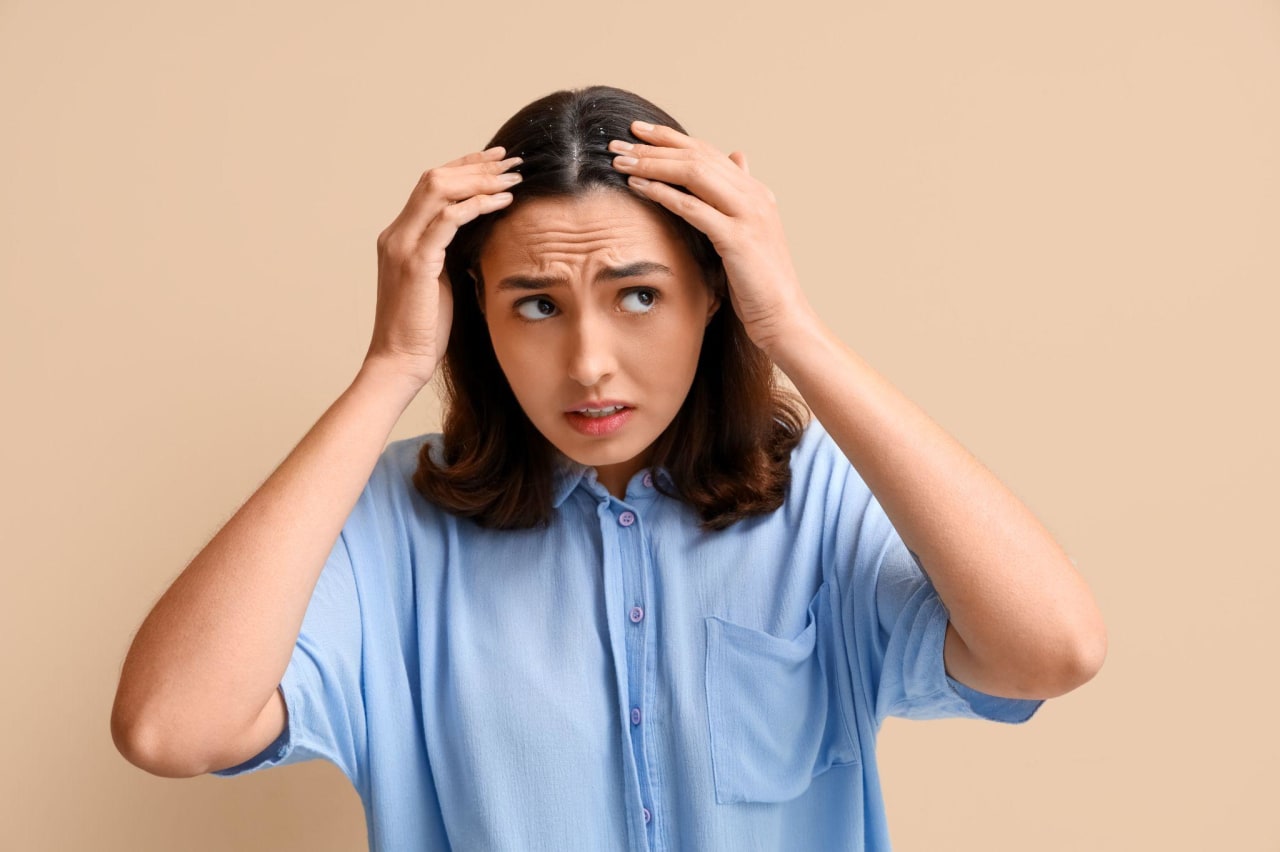
Head Lice and Nits: How Can You Get Rid of Them Naturally?
Published on: Thursday, June 26, 2025, Updated on: Wednesday, October 28, 2026
Lice and nits! Just hearing these words can make parents panic, especially during term time. These small, persistent, and annoying parasites regularly infest the heads of children (and sometimes adults), causing itching, discomfort, and sometimes embarrassment. Contrary to popular belief, having lice has nothing to do with poor hygiene. As lice become increasingly resistant to chemical treatments and can spread quickly, it helps to know the right steps to take, so you can choose suitable anti-lice products and deal with them effectively. This guide takes you through how to remove head lice and nits, and offers natural solutions and expert advice to help prevent reinfestation.
Contents
Related products
Scalp Massaging Brush
Hair strengthening
£5.00
1 article
What Are Head Lice?
Good to know
Head lice have nothing to do with poor hygiene. They can infest any scalp, whether clean or dirty, regardless of social class or environment. On average, an infestation includes 10 to 20 adult lice on a child’s head, sometimes fewer.
Why Do People Get Head Lice?
Transmission Through Direct Contact
Lice are mainly transmitted through direct head-to-head contact. Children are particularly affected because they spend a lot of time in close contact with one another at school, on public transport, or in childcare settings. This contact is often enough to allow a louse to move from one head to another. Children aged 3 to 11 are most commonly affected, with peak infestation around ages 8–9.
Transmission via Personal Items
Although rarer, indirect transmission is also possible through sharing personal items such as combs, brushes, hats, scarves, pillowcases, or towels. This remains a secondary route of infection, as lice rarely survive for more than 2 to 3 days off the human scalp.
Resistance to Treatment
Another indirect cause of recurrence or persistent infestation is resistance to anti-lice products. Studies in Canada have shown that over 97 per cent of the lice tested were resistant to certain active ingredients, such as pyrethrins or permethrin. This explains why live lice may still be found after treatment, despite thorough application of an anti-lice product considered effective.
Factors Contributing to Re-Infestation
Even after successfully eliminating lice, a child may come into contact with an infested classmate again. The duration of the infestation therefore depends not only on the treatment chosen, but also on adherence to preventive measures. Failure to comb hair regularly or check for live or dead nits can also contribute to re-infestation.
How Can You Tell If You Have Head Lice?
The presence of head lice and nits is often indicated by the following signs:
Itchy scalp: Itching is often felt behind the ears or at the nape of the neck. It appears 4 to 6 weeks after the initial infestation
Presence of particles clinging to the hair roots: Nits are white, greyish or translucent. They cling to the hair roots. If you find nits more than 6 mm from the scalp, don’t worry – they're probably dead
Live lice visible: You can comb through wet hair with a fine-toothed comb, strand by strand, under good lighting to find lice
Small sores or lesions: These lesions are caused by scratching and are sometimes accompanied by a secondary infection
Absence of symptoms in some children: Sometimes, some children with a head lice infestation do not experience any itching. This is particularly true during the initial infestation.
Which Natural Remedies Can Help with Head Lice?
Fine-Toothed Comb on Wet Hair
Recommended by public health authorities as an alternative to chemical treatments, this method involves combing wet hair with a very fine-toothed comb (less than 0.3 mm between the teeth) every 3 to 4 days until you find no white or live nits for three consecutive sessions. It is advisable to carry out this procedure under good lighting.
White Vinegar or Cider Vinegar
Often used as a traditional home remedy for head lice, vinegar also helps to loosen dead nits stuck to the hair. Apply to the hair after shampooing, leave on for 10 minutes under a warm towel, then rinse and comb through the entire head of hair.
Occlusive Vegetable Oils
Certain oils, such as coconut oil, neem oil, or olive oil, suffocate lice. Their composition deprives the lice of oxygen, causing them to suffocate and die. Apply a generous amount of your chosen oil to your entire head of hair, cover your head with a shower cap for several hours, then wash your hair and comb it through with a fine-toothed comb.
How Can You Avoid Getting Head Lice?
Here are a few tips to prevent head lice from appearing on your child’s head (or your own!):
Avoid head-to-head contact: Teach children to avoid putting their heads close to others’.
Do not share personal items: Combs, hats, helmets and towels must be kept separate.
Check your child’s hair regularly: During high-risk periods (autumn, the start of the school year, winter), check their hair once a week with a fine-toothed comb.
Inform schools and nurseries: In the event of an infestation, notify the school or nursery so that other parents can check their children’s heads.
Clean personal items: Wash clothes at 65 °C or tumble-dry textiles that come into contact with the head at a high temperature. You can also seal textiles in a closed plastic bag for 10 days.
Precautions for use
Never use household insecticide on the hair. Do not cover a child’s head with a plastic bag (risk of suffocation). Follow the recommended application times for anti-lice products.
Expert Advice
Dr Martin Dawes, a head lice expert at McGill University (Montreal), recommends prioritising a mechanical approach with a fine-toothed comb for mild infestations. He also notes that anti-lice treatments must be paired with regular preventative measures; otherwise, re-infestation remains possible. He strongly advises against using undiluted essential oils or insecticide treatments that are not suitable for children.
Spotlight on Our Beauty Writer: Alice Blanchard

Formerly a manager at an organic shop, Alice spent several years helping her customers choose healthy products that respect both their health and the natural world. Having suffered from endometriosis since her teenage years, she chose to prioritise natural solutions to ease her symptoms and improve her day-to-day well-being. Drawing on her knowledge of naturopathy, she has always explored the benefits of plants and nutrition. Passionate about ecology and deeply connected to nature, Alice makes her own cosmetics and household products to reduce her impact on the planet and all its inhabitants.
Bibliography
Recognising the presence of head lice
Ameli.fr, 26 February 2025
History and evolution of treatments for Pediculus humanus capitis, by Clément Duflot.
PhD thesis in Pharmacy, University of Lorraine. Pharmaceutical Sciences 2016
Canadian Paediatric Society (2018). Head lice infestations: A clinical update.
Paediatric Child Health
Vidal Dictionary: Treatments for head lice
Updated on 29 September 2022



