
Where does this name come from?
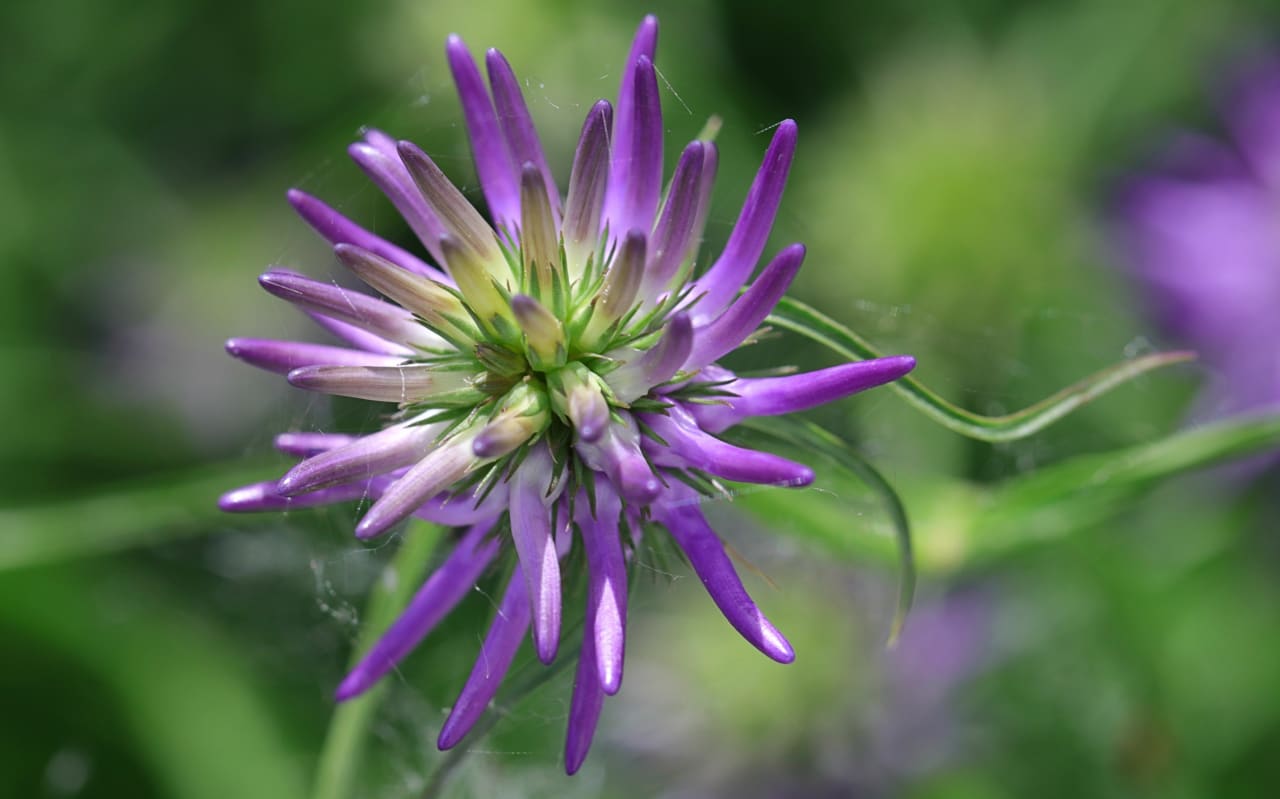
Harpagophytum, commonly known as devil's claw or Windhoek root (named after the capital of Namibia), is a tuberous perennial herbaceous plant of the genus Harpagophytum of the Pedaliaceae family, like sesame. This plant, recently discovered in the West, originates from the desert regions of southern Africa: the steppes of Namibia, the Kalahari Desert, and southern Africa. Harpagophytum, Harpagophytum procumbens, derives its name from the Greek phyton, "plant," and harpagos, "harpoon." This is the origin of the term devil's claw, as its harpoon-shaped fruits with sharp hooks attach themselves to the fur of animals such as sheep and cattle, and to the hooves of antelopes, all of which thrash about frantically to rid themselves of them as if they had "the devil in their bodies." It is a strategy, successful to say the least, for dispersing its seeds. As for procumbens, it is derived from the Latin procubo, meaning "to lie prone, stretched out." Indeed, its stem is creeping and can spread up to 2m in length. It bears alternate leaves with ovate blades as well as solitary, short-lived, red-violet, trumpet-shaped flowers that open for only a single day. The fruit is a woody capsule with a crown adorned with several sharp hooks, the famous devil's claw.
Its main, woody root burrows vertically up to 1m into clay or sandy soil. From this main root, several secondary roots branch out, forming bulbous storage tubers, sometimes very large, weighing up to 1.5kg, found as deep as 2m. These serve as a reserve of water and nutrients for the plant, enabling it to withstand periods of drought. These tubers reach a size of 4 to 6cm in diameter and 15 to 25cm in length after 3 to 4 years, at which point they are harvested. Indeed, only these tubers (which constitute up to 90% of the plant's weight) are used in traditional medicine in southern Africa and in our pharmaceutical industry.
The medicinal potential of Harpagophytum became widely known in the Western world in the 1970s and 1980s. A victim of its own success, Harpagophytum became an endangered species in the early 2000s. Today, devil's claw enjoys protected status that regulates its harvesting, but it remains vulnerable. Various cultivation trials are underway, yet devil's claw remains difficult to grow.