Although sources do not consistently use the term "photosensitizer," the use of glycolic acid-based skincare products is frequently associated with the application of sunscreen in clinical protocols to protect exfoliated skin from the effects of UV rays.
Aroma-Zone Glycolic Acid Active Ingredient
EXFOLIANT RADIANCE
An active ingredient that smooths the skin and restores the complexion’s radiance
Known for its keratolytic action, glycolic acid helps remove dead skin cells from the skin’s surface, helping to refine skin texture and visibly improve the evenness of the complexion.
By Delphine Duc

Glycolic Acid Aroma-Zone Profile
INCI Name: Glycolic Acid
VEGAN
BIOCHEMICAL COMPOSITION
It belongs to the family of alpha-hydroxy acids (AHAs). It is the smallest of the AHAs, giving it a simple molecular structure composed of a carboxyl group and a hydroxyl group.
SUSTAINABILITY & TRACEABILITY
This active ingredient is naturally present in several plants such as sugarcane, beets, and grapes.
Glycolic Acid: What Effect Does It Have on the Skin?
Glycolic acid acts primarily through a mechanism of exfoliation by reducing the cohesion between cells in the stratum corneum, which promotes natural desquamation. More specifically, it promotes the breakdown of corneodesmosomes—the bonds that hold dead cells together—thereby refining skin texture and smoothing the skin’s surface.
Beyond this superficial action, this active ingredient helps maintain hydration by increasing the tissues’ ability to retain water. It also supports epidermal cell renewal and promotes the synthesis of essential structural components, such as collagen and hyaluronic acid (glycosaminoglycans), which are naturally present in the dermis. Finally, it helps improve the quality of elastic fibers, offering a comprehensive solution to preserve the skin’s suppleness and firmness.
Glycolic Acid: Scientifically Proven Efficiency
The scientific validity* of glycolic acid is based on precise clinical results regarding the structure, hydration, and appearance of the skin.
First, regarding skin structure support, studies have shown that regular application can lead to a 59% thickening of the epidermis and a 100% thickening of the dermis, a remarkable result for preserving skin density. Over the long term, there is also a 25% increase in overall skin thickness, along with improved collagen density and elastin fiber quality.
Glycolic acid is also beneficial for blemish-prone skin. For skin prone to acne, daily application at 10% yields a significant improvement as early as the 45th day. More intensive regimens have shown a reduction in the severity of blemishes of up to 68%, with visible effects on the appearance of comedones, papules, and associated pigmentation. Following these treatments, 100% of volunteers noted smoother skin.
Glycolic acid is a solution capable of increasing skin hydration by up to 163%.
It is also highly effective at reducing dark spots: in comparative tests, 45% of users observed a reduction of more than 75% in the appearance of their spots. Finally, it acts on signs of aging, by stimulating the synthesis of collagen (up to +250%) and glycosaminoglycans (up to +267%), it helps visibly reduce the appearance of fine lines and sustainably improve skin texture.
*See the Scientific Bibliography for more information.

Skin Tolerance
A Note from Adeline Nalin, Head Pharmacist and Toxicologist at Aroma-Zone

“Skin tolerance to glycolic acid depends largely on its concentration in a product and on individual skin sensitivity. When used gradually, concentrations between 5% and 10% are generally well tolerated while providing effective exfoliation. Clinical studies show that glycolic acid may cause mild, temporary sensations of tingling or warmth, signs of effective keratolytic action, but without compromising the skin barrier in individuals with non-sensitive skin. This is why it is strongly recommended to introduce it gradually (1 to 2 times a week at first, then the frequency can be gradually increased).”
Adeline Nalin - Head Pharmacist and Toxicologist
A Safe Ingredient for your Health
A Note from Our Aroma-Zone Toxicologist
“Our 10% Glycolic Acid & AHA Concentrated Serum has undergone several local tolerance tests, involving reconstructed human skin, as well as dermatologically supervised clinical skin acceptance tests. All of this data ensures good local tolerance; however, the product is not recommended for the most sensitive skin types. Furthermore, glycolic acid has no direct phototoxic potential; however, due to its keratolytic activity (which can remove a superficial portion of the skin’s stratum corneum), it may increase the skin’s sensitivity to sunlight. It is therefore strongly recommended to use daily sunscreen and avoid sun exposure for up to one week after the last application.”
Adeline Nalin - Head Pharmacist and Toxicologist

A Note from the Dermatologist
“A fruit acid belonging to the AHA (alpha-hydroxy acid) family, it is the most studied and widely used. It acts as a superficial chemical exfoliant by performing a gentle peel that refines skin texture. It also helps regulate melanin production, thereby helping to reduce pigmentation spots. At the same time, it stimulates cell turnover and collagen production. Finally, its sebum-regulating action helps reduce excess sebum and minimize the appearance of blackheads.
It is recommended to use it 1 to 2 times a week at first, then gradually increase the frequency. It must always be used in combination with a moisturizing and soothing cream, and applying sunscreen is essential during the day.
It is best to use it in the evening. Direct combination with vitamin C should be avoided: use AHAs in the evening and vitamin C in the morning. Caution is also advised when combining it with other exfoliating or sensitizing active ingredients (retinol, retinoids). In the case of a combined routine, it is recommended to alternate, for example, every other night.”
Dr. Agathe Aoun - Dermatologist
Formulation Focus with the Aroma-Zone R&D Laboratory
Glycolic acid is an active ingredient known for its keratolytic action, meaning its ability to promote chemical exfoliation of the skin. Unlike mechanical exfoliants with grains, its action relies solely on the molecule itself, which helps gradually remove dead skin cells from the surface of the epidermis, resulting in a smoother skin texture and a more even complexion.
Its effectiveness depends heavily on its concentration: at low concentrations, it helps restore the complexion’s radiance and improve the skin’s overall appearance. At higher concentrations, its exfoliating action is enhanced, resulting in a more pronounced peeling effect.
In formulations, the key parameter remains the pH, which directly determines the activity of glycolic acid. To be effective, it must be formulated in an acidic environment, allowing the molecule to remain in its active form. However, a pH that is too low can cause discomfort or even irritation. The challenge, therefore, lies in finding a balance between efficacy and skin tolerance.
A pH of around 4 generally offers a good compromise: acidic enough to allow for exfoliating activity, while remaining close to the skin’s physiological pH (approximately 5.5), in order to best preserve its natural balance. This is the case with our 10% Glycolic Acid & AHA Concentrated Serum.
For Which Skin Types?
The use of glycolic acid can be tailored to each person’s needs and skin sensitivity. For optimal comfort, the choice of texture is important: gels are often recommended for oily or blemish-prone skin, while cream textures are better suited to provide comfort for dry skin.
Which Concerns Does This Address?
Glycolic acid offers a versatile solution for addressing various daily skin concerns. For skin prone to blemishes, this active ingredient helps reduce visible signs and refine pores, with improvements noticeable after just 45 days of use. Its effect on signs of aging is equally remarkable: by promoting a 59% thickening of the epidermis and a 100% thickening of the dermis, it actively helps reduce the appearance of wrinkles and fine lines and supports skin firmness. When it comes to hyperpigmentation, it is a valuable ally in reducing sunspots and irregularities such as melasma, leading to a reduction in severity scores of up to 62%. Skin with roughness or a lack of radiance also benefits from its properties, as it increases skin hydration by up to 163% while reducing roughness by 44%, offering a highly effective solution for revitalization. Finally, by refining skin texture and promoting the removal of dead surface cells, it helps achieve a smoother skin surface for a visibly more even and radiant complexion.
What Glycolic Acid Does for the Skin
Smoother skin and a refined texture: By promoting the removal of dead surface cells, this active ingredient helps soften skin texture, reduce roughness, and achieve a smoother complexion
Improves firmness and tone: It supports the skin’s structure by stimulating the natural production of collagen and essential components such as hyaluronic acid
A radiant, even complexion: By promoting more even melanin distribution, it helps even out the complexion and reduce pigmentation irregularities
Enhanced hydration: This ingredient is an effective solution for skin comfort, capable of increasing the skin’s moisture levels.
Glycolic acid: an essential ingredient for the skin

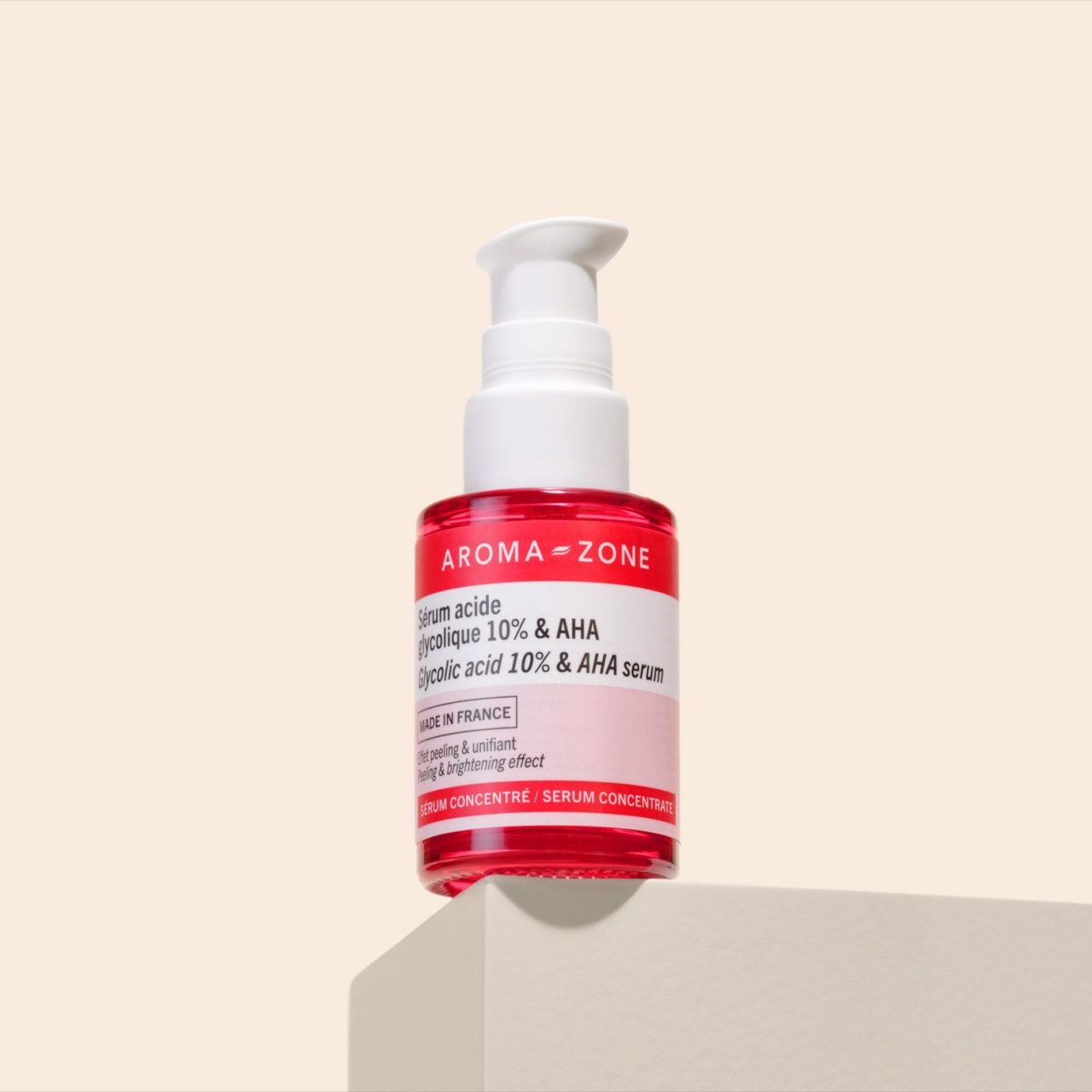
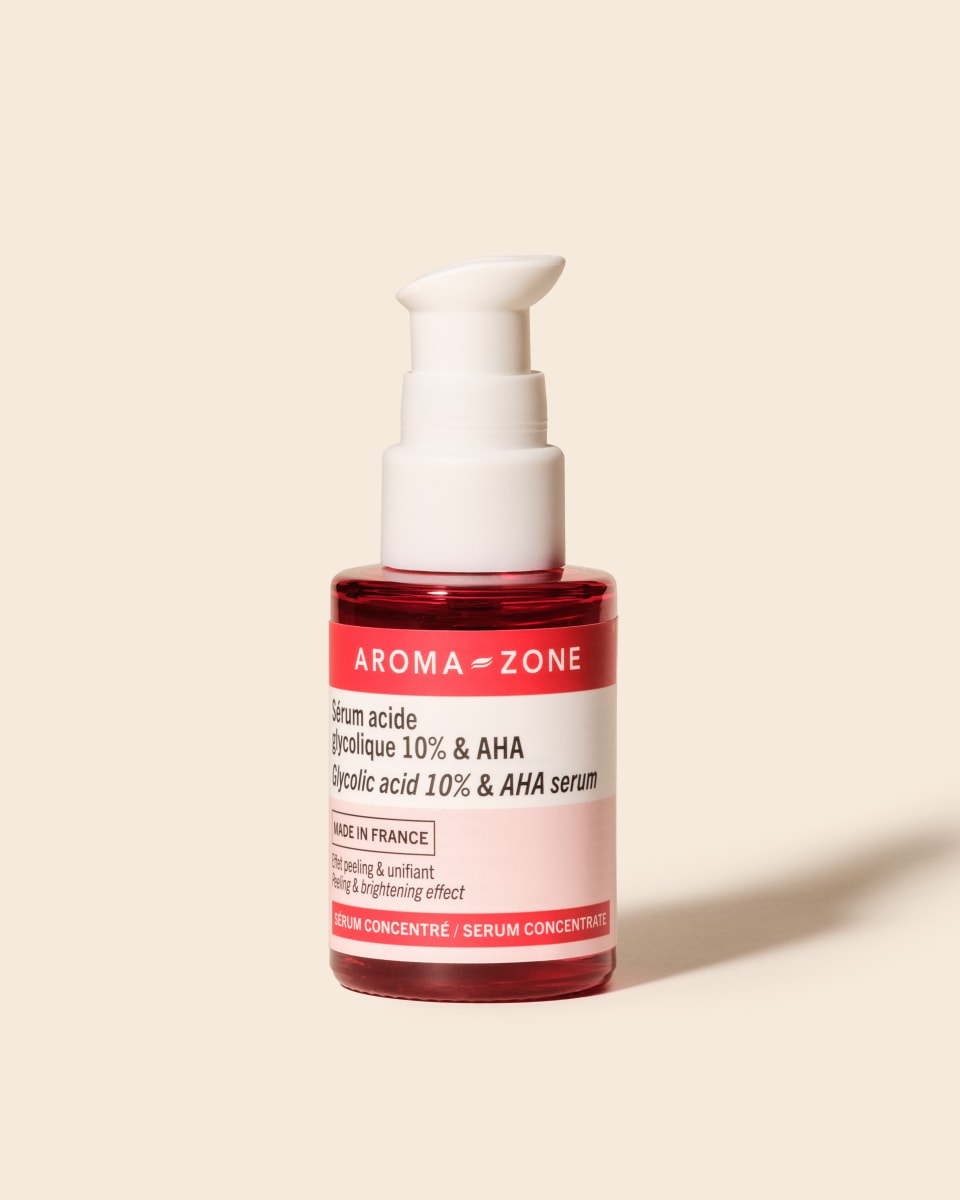
10% Glycolic Acid & AHA Concentrated Serum
Our 10% Glycolic Acid & AHA Concentrated Serum is highly concentrated in glycolic acid and AHA fruit acids. Thanks to its exfoliating effect, this serum removes dead skin cells and stimulates skin renewal for a radiant, even complexion. Particularly suitable for skin affected by sun exposure, smoking, or premature aging, it reduces acne scars and smooths out imperfections. It also tightens pores, fights blackheads, and reduces wrinkles and dark spots. With a non-greasy gel texture, our concentrated glycolic acid exfoliating serum is also enriched with hyaluronic acid, known for its moisturizing and anti-wrinkle properties, to plump the skin. Fragrance-free, this natural facial serum is also available in a recyclable and economical eco-refill, making it easy to refill your bottle while reducing waste.
Precautions
To safely incorporate glycolic acid into your skincare routine, a few tips are essential to maximize its benefits while maintaining your skin’s balance. It is best to take a gradual approach, starting with a lower concentration during the first week, then increasing the dosage based on your skin’s tolerance.
Some temporary discomfort may occur, such as a tingling sensation, mild burning, dryness, or localized redness. These side effects are often linked to a high concentration of free acid or a very low pH. For optimal comfort, the choice of texture is key: opt for a cream for dry skin and a gel for oily or acne-prone skin.
Finally, applying sunscreen is essential. The exfoliating action of this active ingredient can increase the skin’s sensitivity to the sun, making sun protection necessary to prevent the risk of hyperpigmentation or other issues related to UV rays.
For protocols using higher concentrations, professional supervision is required to minimize the risk of more severe skin reactions, such as scabbing or changes in pigmentation.
FAQ

Is glycolic acid photosensitizing?

Is glycolic acid photosensitizing?

Can glycolic acid be combined with retinol?

Can glycolic acid be combined with retinol?
Studies have explored the combination of glycolic acid with vitamin A derivatives for skin with imperfections. As part of a daily routine, however, it is often recommended to alternate serums to preserve the health of the skin barrier.

Can glycolic acid thicken the skin over the long term?

Can glycolic acid thicken the skin over the long term?
Yes, contrary to popular belief, regular use can lead to a healthy thickening of the epidermis and dermis. This phenomenon is due to the stimulation of collagen and glycosaminoglycan synthesis, thereby strengthening the skin’s structure.

What is the difference between a professional peel and a cosmetic treatment with glycolic acid?

What is the difference between a professional peel and a cosmetic treatment with glycolic acid?
At-home skincare products use moderate concentrations (up to 20%) with a pH often adjusted to around 4 to ensure good daily tolerance. Professional peels, performed by experts, use much higher concentrations (up to 70%) with a very acidic pH (often below 2) for intense and rapid exfoliation.

Is glycolic acid safe for rosacea?

Is glycolic acid safe for rosacea?
The studies* reviewed do not provide specific information on the compatibility of glycolic acid with rosacea. It should be noted that glycolic acid can sometimes cause a tingling sensation or mild redness depending on the concentration used. It is advisable to consult a healthcare professional before using glycolic acid on skin affected by this condition.
*See the Scientific Bibliography for more information.
Spotlight on our specialist editor, Delphine Duc.

Delphine DUC, a biological engineer specializing in cosmetology, has been passionate about the field of cosmetics for nearly 10 years. I started making my own homemade cosmetics using Aroma Zone products to address my skin concerns, then decided to train as a cosmetologist, and finally to create a custom-made cosmetics brand to address everyone’s unique skin concerns.
Bibliography
1
Abels, C., et al. (2011). A 10% glycolic acid-containing oil-in-water emulsion improves mild acne: a randomized double-blind placebo-controlled trial. Journal of Cosmetic Dermatology.
DOI: 10.1111/j.1473-2165.2011.00572.x.
2
Babilas, P., et al. (2012). Cosmetic and dermatologic use of alpha hydroxy acids. JDDG: Journal der Deutschen Dermatologischen Gesellschaft.
DOI: 10.1111/j.1610-0387.2012.07939.x.
3
Bernstein, E. F., et al. (2001). Glycolic Acid Treatment Increases Type I Collagen mRNA and Hyaluronic Acid Content of Human Skin. Dermatologic Surgery.
DOI: 10.1046/j.1524-4725.2001.00234.x.
4
DiNardo, J. C., et al. (1996). Clinical and Histological Effects of Glycolic Acid at Different Concentrations and pH Levels. Dermatologic Surgery.
DOI: 10.1111/j.1524-4725.1996.tb00341.x.
5
Ditre, C. M., et al. (1996). Effects of α-hydroxy acids on photoaged skin: A pilot clinical, histologic, and ultrastructural study. Journal of the American Academy of Dermatology.
DOI: 10.1016/S0190-9622(96)80110-1.
6
El Refaei, A. M., et al. (2015). Salicylic–mandelic acid versus glycolic acid peels in Egyptian patients with acne vulgaris. Journal of the Egyptian Women's Dermatologic Society.
DOI: 10.1097/01.EWX.0000464740.18592.42.
7
Kaminaka, C., et al. (2014). Clinical Evaluation of Glycolic Acid Chemical Peeling in Patients with Acne Vulgaris: A Randomized, Double-Blind, Placebo-Controlled, Split-Face Comparative Study. Dermatologic Surgery.
DOI: 10.1111/dsu.12417.
8
Kessler, E., et al. (2008). Comparison of α- and β-Hydroxy Acid Chemical Peels in the Treatment of Mild to Moderately Severe Facial Acne Vulgaris. Dermatologic Surgery.
DOI: 10.1111/j.1524-4725.2007.34007.x.
9
Kim, S. J., & Won, Y. H. (1998). The Effect of Glycolic Acid on Cultured Human Skin Fibroblasts: Cell Proliferative Effect and Increased Collagen Synthesis. The Journal of Dermatology.
DOI: 10.1111/j.1346-8138.1998.tb02355.x.
10
Narda, M., et al. (2020). Glycolic acid adjusted to pH 4 stimulates collagen production and epidermal renewal without affecting levels of proinflammatory TNF-alpha in human skin explants. Journal of Cosmetic Dermatology.
DOI: 10.1111/jocd.13570.
11
Newman, N., et al. (1996). Clinical Improvement of Photoaged Skin with 50% Glycolic Acid: A Double-Blind Vehicle-Controlled Study. Dermatologic Surgery.
DOI: 10.1111/j.1524-4725.1996.tb00347.x.
12
Ravikumar, B., et al. (2022). Efficacy of Alpha and Beta Hydroxy Acid Chemical Peels in Postacne Pigmentation: A Double-Blinded, Randomized, Controlled Trial. Journal of Clinical and Aesthetic Dermatology.
https://pubmed.ncbi.nlm.nih.gov/35309278/
13
Sarkar, R., et al. (2016). Comparative Evaluation of Efficacy and Tolerability of Glycolic Acid, Salicylic Mandelic Acid, and Phytic Acid Combination Peels in Melasma. Dermatologic Surgery.
DOI: 10.1097/DSS.0000000000000642.
14
Thibault, P. K., et al. (1998). A Double-Blind Randomized Clinical Trial on the Effectiveness of a Daily Glycolic Acid 5% Formulation in the Treatment of Photoaging. Dermatologic Surgery.
DOI: 10.1111/j.1524-4725.1998.tb04209.x.
15
Wang, C. M., et al. (1997). The Effect of Glycolic Acid on the Treatment of Acne in Asian Skin. Dermatologic Surgery.
DOI: 10.1111/j.1524-4725.1997.tb00003.x.
16
Yamamoto, Y., et al. (2006). Effects of alpha-hydroxy acids on the human skin of Japanese subjects: The rationale for chemical peeling. The Journal of Dermatology.
DOI: 10.1111/j.1346-8138.2006.00003.x.