Aroma-Zone Creatine

SKIN ENERGIZER


An active ingredient that supports skin vitality and firmness


Naturally present in the body, creatine contributes to cellular energy metabolism, helping the skin maintain its tone and preserve its smooth, plump appearance.


Reading time: 0 min.

Creatine Aroma-Zone Profile

VEGAN

SOURCE

Formed endogenously through reactions involving several amino acids: arginine, glycine, and methionine. Synthesis occurs in the kidneys, liver, and pancreas. Obtained through diet and dietary supplements.

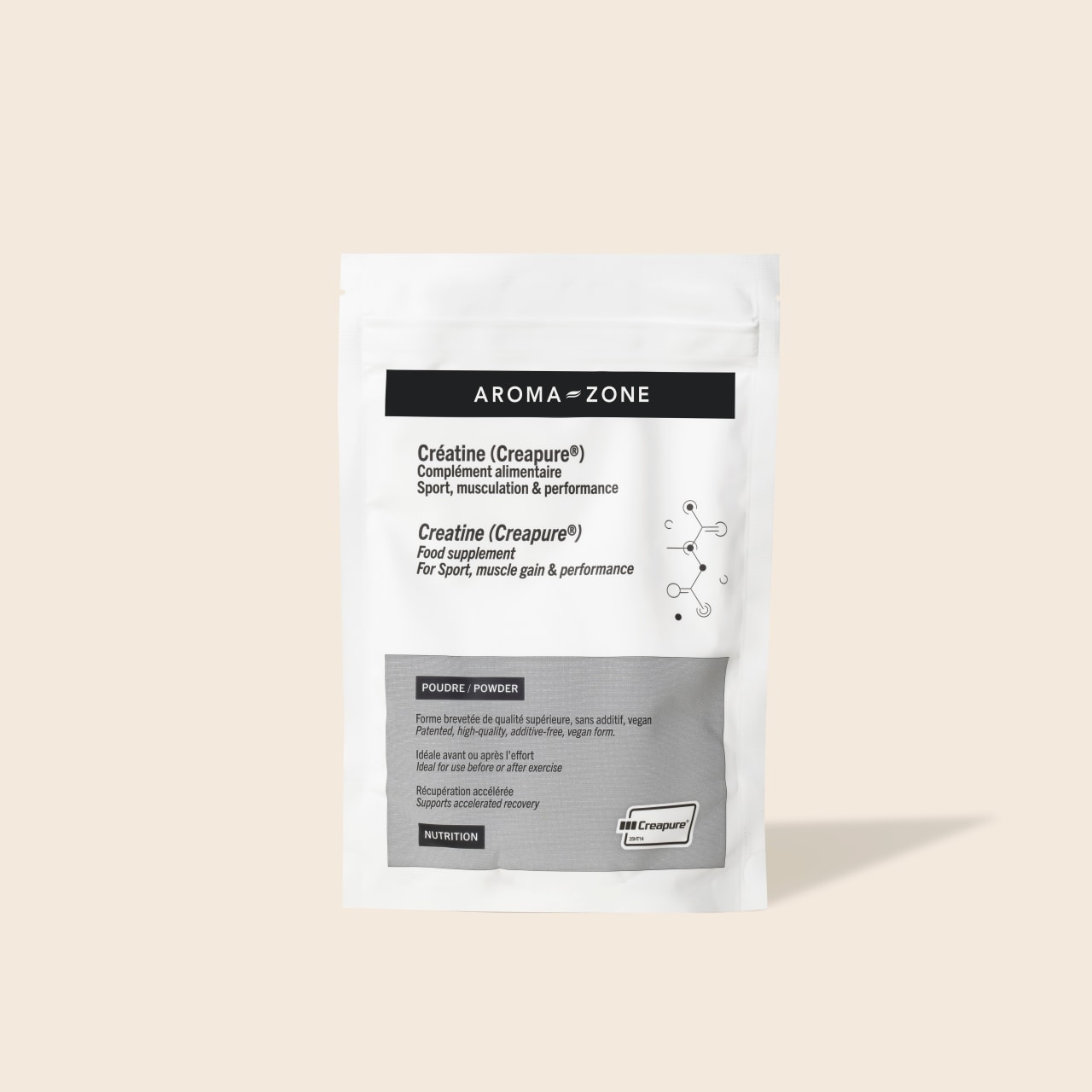
Aroma-Zone dietary supplement: synthetic, Creapure®, a registered trademark of AlzChem.

BIOCHEMICAL COMPOSITION

Creatine is an amino acid derivative composed mainly of glycine, arginine, and methionine, forming a nitrogen-containing molecule involved in energy metabolism.

SUSTAINABILITY / TRACEABILITY

Creatine produced in Germany. Packaged in France.

Creatine: What Effect Does It Have on the Body?

Creatine acts directly on cellular energy production by increasing phosphocreatine reserves in the muscle, which allows for faster resynthesis of ATP, the central molecule involved in energy production. In fact, ATP can be considered the body’s “fuel.”

This mechanism therefore improves the ability to perform short, intense, and repeated efforts with a daily intake of 3g of creatine, by facilitating the immediate availability of energy and limiting the accumulation of muscle fatigue associated with hydrogen ions. This increase in work capacity is reflected in particular by improved tolerance to variations in intensity and intermittent exertion. Furthermore, creatine supplementation over several weeks is associated with faster muscle recovery after exercise, along with improved strength, range of motion, and a reduction in the muscle changes observed after exercise.

Additional effects have also been suggested, such as a decrease in oxidative stress, a reduction in certain inflammatory processes, and a potential impact on mitochondrial function, although these mechanisms remain secondary to its primary role in energy production.

Creatine: Scientifically Proven Efficiency

The effectiveness of creatine is supported by several studies* showing measurable effects, particularly when combined with resistance training. An analysis highlights an increase in lean body mass and a decrease in fat mass compared to training alone, confirming its benefits for body composition.

In terms of performance, creatine improves the ability to sustain intense, intermittent efforts, as well as the time to exhaustion, with more variable effects on continuous endurance.

Finally, data indicate that supplementation over several weeks is associated with faster muscle recovery after exercise, along with improvements in certain functional parameters such as strength or range of motion.

*See the Scientific Bibliography for more information.

A Plant Extract Safe for Your Health

A Note from Our Aroma-Zone Toxicologist

“Creatine is a substance naturally present in the body. As a dietary supplement, it is considered safe for health when consumed at recommended doses, up to 3,000 mg per day.


However, some sensitive individuals may experience adverse effects. As a precaution, it is therefore not recommended to combine multiple sources of creatine, and we advise consulting a healthcare professional, particularly for those taking medication.”

Adeline Nalin - Head Pharmacist and Toxicologist

Who Is It For?

Creatine is primarily intended for people engaged in physical activities involving intense efforts, whether short or repeated, such as strength and power sports. It may also be beneficial for endurance athletes when their disciplines include variations in intensity or bursts of speed.

Its use may be appropriate for active individuals experiencing exercise-related physical fatigue, given its role in energy production and muscle recovery.

Finally, vegetarians and vegans, whose diets do not contain creatine of animal origin, may constitute a population for whom supplemental intake is considered in order to maintain levels comparable to those observed in omnivores.

Which Concerns Does This Address?

Creatine is used to address needs related to physical performance and recovery. It is particularly suitable when the goal is to improve the ability to perform intense exercise, increase muscle mass as part of resistance training, or support performance involving repeated efforts or variations in intensity.

It may also be considered in situations where post-exercise recovery is a concern, particularly when muscle stress is high. However, its effects appear to be more variable when it comes to continuous endurance efforts without variations in intensity.

What Creatine Does for the Body

  • Improved energy production in muscles by increasing phosphocreatine stores, which allows for faster ATP resynthesis during exercise

  • Improved ability to sustain intense, intermittent exertion

  • Increase in time to exhaustion under certain conditions

  • Increase in lean body mass and decrease in body fat compared to training alone

  • Faster muscle recovery after exercise, with improvements observed in strength and certain functional parameters in the days following exercise.

Creatine : An Essential Ingredient for the Body

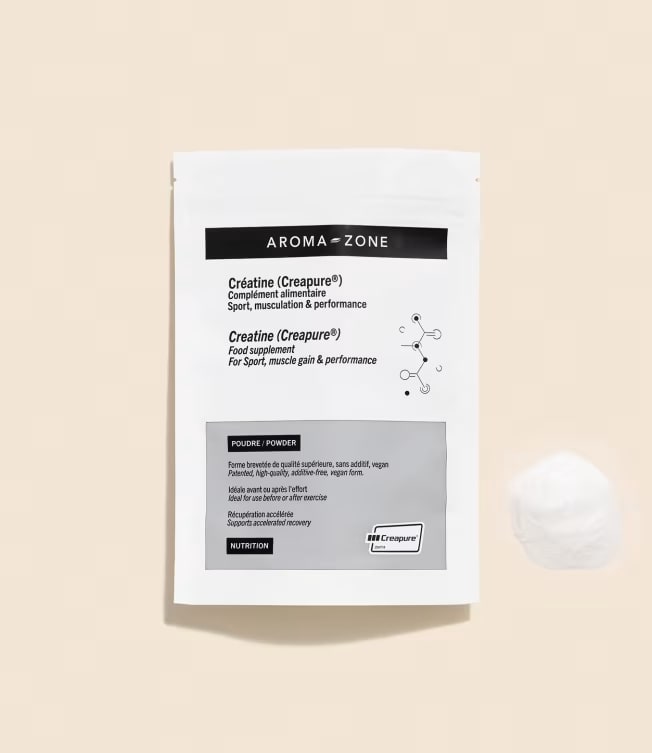
Creatine (Creapure®) - Dietary supplement

Precautions

Creatine is not a substitute for a varied and balanced diet or a healthy lifestyle, and it is recommended not to exceed the recommended daily dose. It is intended for adults only and is not recommended during pregnancy or breastfeeding. It must be kept out of the reach of children and should not be combined with other sources of creatine.

Furthermore, its use is not recommended for individuals with certain medical conditions, such as diabetes, kidney disease, or those who have undergone a nephrectomy. It is therefore recommended to consult a healthcare professional, particularly for individuals currently taking medication.

Finally, based on the available data, its use should be tailored to training goals, as its effects are primarily observed during intense and specific physical exertion.

FAQ

Can someone who doesn’t exercise benefit from a creatine supplement?

Available studies focus primarily on individuals engaged in physical activity, particularly in the context of resistance training or intense exercise. The observed effects relate to body composition, performance, and muscle recovery after exercise. To date, these data do not allow for conclusions regarding the benefits of creatine in non-athletes.

Does creatine have an impact on the microbiome?

The studies reviewed do not mention any effect of creatine on the gut microbiome. The available research focuses on its effects on performance, body composition, and muscle recovery. It is therefore not possible, based on this data, to establish a link between creatine and the microbiome.

How does a highly stressful lifestyle affect creatine needs?

The available scientific data focuses on the effect of creatine in the context of physical activity and does not assess the impact of stress or lifestyle on creatine requirements. To date, no direct link can be established between a stressful lifestyle and an increased need for creatine based on these studies.

Is creatine better absorbed if taken with a meal?

The analyzed data indicate that taking creatine with carbohydrates may promote glycogen resynthesis and storage. However, this combination does not appear to enhance creatine’s effects on muscle mass. Studies do not support the conclusion that creatine is better absorbed when consumed with a meal.

Spotlight on our specialist editor, Delphine Duc.

Delphine DUC, a biological engineer specializing in cosmetology, has been passionate about the field of cosmetics for nearly 10 years. I started making my own homemade cosmetics using Aroma Zone products to address my skin concerns, then decided to train as a cosmetologist, and finally to create a custom-made cosmetics brand to address everyone’s unique skin concerns.

Bibliography

1

Desai, I., Wewege, M. A., Jones, M. D., Clifford, B. K., Pandit, A., Kaakoush, N. O., Simar, D., & Hagstrom, A. D. (2024). The effect of creatine supplementation on resistance training-based changes to body composition: A systematic review and meta-analysis.

2

Forbes, S. C., Candow, D. G., Falk Neto, J. H., Kennedy, M. D., Forbes, J. L., Machado, M., Bustillo, E., Gomez-Lopez, J., Zapata, A., & Antonio, J. (2023). Creatine supplementation and endurance performance: surges and sprints to win the race.

3

Yamaguchi, S., Inami, T., Ishida, H., Morito, A., Yamada, S., Nagata, N., & Murayama, M. (2024). The effect of prior creatine intake for 28 days on accelerated recovery from exercise-induced muscle damage: A double-blind, randomized, placebo-controlled trial.