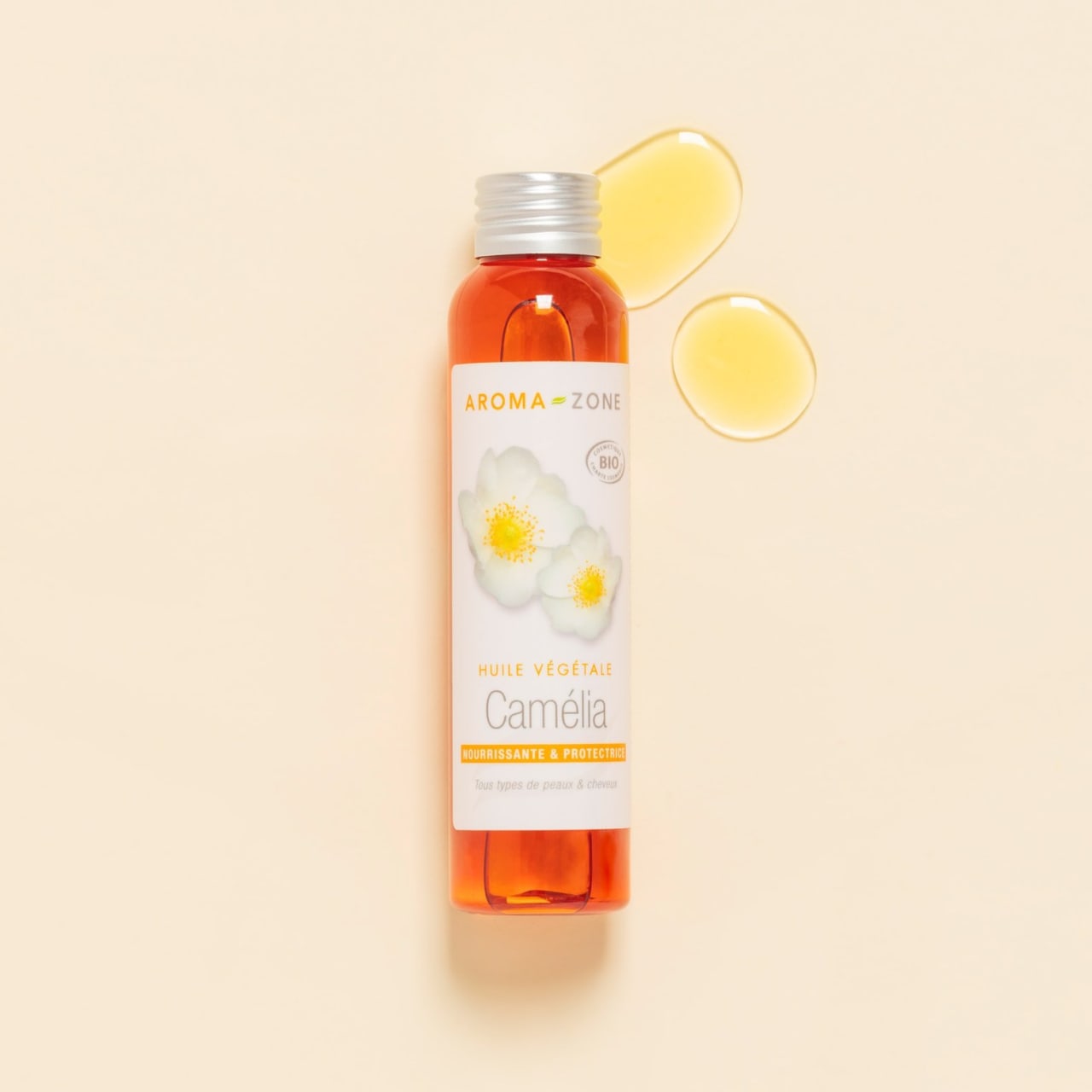
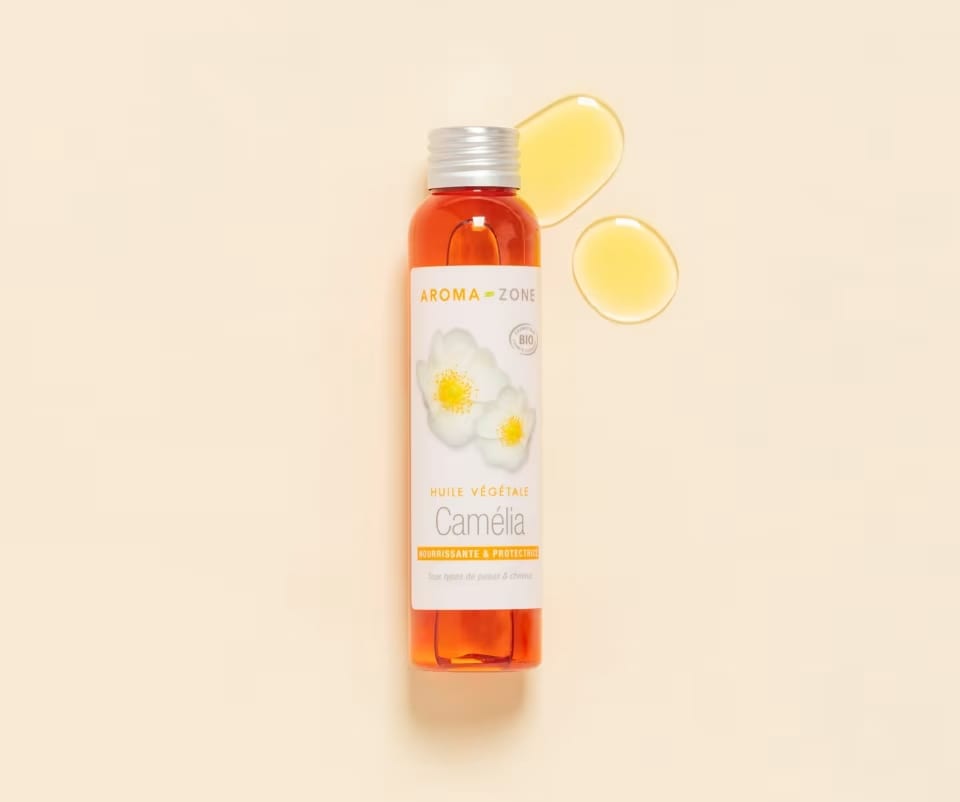
Aroma-Zone Camellia Vegetable Oil

NOURISHING ANTI-AGEING PROTECTOR


Asia’s treasure that preserves the skin’s youthfulness and elasticity


A true “oriental olive oil”, this plant extract acts as a protective shield against dehydration, whilst also providing a restructuring treatment that promotes skin firmness.


Reading time: 0 min.

Camellia Vegetable Oil Aroma-Zone Profile

INCI Name: Camellia Oleifera Seed Oil

VEGAN

METHOD OF EXTRACTION

The oil is obtained by mechanical pressing of the seeds of Camellia oleifera.

BIOCHEMICAL COMPOSITION

It is characterised by a very high content of unsaturated fatty acids, predominantly oleic acid, followed by palmitic and linoleic acids.

ACTIVE COMPOUNDS

The oil contains valuable unsaponifiables, notably squalene, phytosterols (such as beta-sitosterol), tocopherols (vitamin E) and polyphenols (phenolic acids, flavonoids).

SUSTAINABILITY / TRACEABILITY

First cold-pressed, followed by filtration, decolourisation and deodorisation; organic, 100% pure and natural.

Camellia Vegetable Oil: What Effect Does It Have on the Skin?

Camellia oil has a multifaceted action on the skin’s integrity and beauty. Its high content of fatty acids and squalene enables it to form a protective film on the surface of the epidermis, which helps to maintain the function and to reduce insensible water loss (dehydration).

In the dermis, it promotes youthful skin by stimulating the synthesis of type I procollagen. Its phenolic compounds give it soothing properties, ideal for alleviating the signs of skin stress and the discomfort associated with sensitive or redness-prone skin. 

Finally, it helps to brighten the complexion by regulating the melanogenesis process, thereby helping to prevent pigmentation irregularities.

Camellia Vegetable Oil: Scientifically Proven Efficiency

Scientific studies* highlight quantified results on the efficacy of this oil. In terms of anti-ageing care, in vitro tests show that using a concentration of 1 mg/mL activates the collagen promoter by 125 per cent and doubles the level of type I procollagen, whilst reducing the secretion of the MMP-1 enzyme—which is responsible for its breakdown—by 50 per cent. With regard to hydration and barrier function, the application of a lotion containing 1 per cent of the oil helps to retain water in the tissues by reducing water loss by 20 per cent one hour after application, although this effect is no longer significant after two hours. By contrast, a cream containing camellia oil has been shown in in vitro tests to have a water-retention capacity of +40 per cent over a 12-hour period, thus demonstrating performance equivalent to that of glycerine. Its soothing properties are also documented in in vitro tests: a concentration of 10 mg/L of its glycosylated polyphenol fraction reduces the secretion of skin stress markers, such as NO and TNF-alpha, by more than 80 per cent. Finally, to promote a radiant complexion, in vitro tests show that a 5 per cent concentration of the oil helps to regulate pigmentation by reducing melanin levels by 20 per cent and moderating the activity of the tyrosinase and TRP-2 enzymes involved in this process.

*Please refer to the Scientific Bibliography for further information.

Skin Tolerance

A Note from Adeline Nalin, Head Pharmacist and Toxicologist at Aroma-Zone

“Camellias have been cultivated in China for millennia, particularly for the production of tea from Camellia sinensis. Camellia oleifera oil is exceptionally well-tolerated by the skin and is one of the oldest edible oils in the Middle Kingdom. Cold-pressing preserves its antioxidant compounds, allowing it to offer the skin and hair its protective and regenerating properties. Known as the geishas’ beauty secret, it is distinguished by its fine, light texture, which penetrates deep into the skin to leave a silky, satiny finish.”

Adeline Nalin - Head Pharmacist and Toxicologist

A Plant Extract Safe for Your Health

A Note from Our Aroma-Zone Toxicologist

“This plant oil is considered safe for health. It has a very favourable safety profile, reinforced by its traditional use in food.”

Adeline Nalin - Head Pharmacist and Toxicologist

A Note from the Dermatologist


“Oleic and linoleic acids are the main components of camellia oil, making it particularly suitable for dry skin, with no risk of comedogenicity.


Its unsaponifiable fraction includes squalene, which strengthens the skin barrier, and numerous antioxidants such as alpha-tocopherol (vitamin E), which are beneficial in combating photoageing.”


Dr Dima Haidar – Dermatologist

For Which Skin Types?

Camellia Vegetable Oil is a valuable ally for dry and dehydrated skin thanks to its remarkable ability to strengthen the skin’s barrier function and limit insensible water loss. Its gentleness and soothing properties make it particularly suitable for sensitive skin or skin prone to discomfort such as redness or symptoms of dermatitis. Mature skin also benefits from its anti-ageing properties, as it helps to reduce the appearance of wrinkles and maintain the skin’s suppleness. Finally, its light texture and proven safety make it a reliable skincare product for all skin types seeking comfort and protection on a daily basis.

In which types of products?

Camellia oil blends harmoniously into a wide range of skincare routines thanks to its versatility. It is an ideal base for beauty creams and moisturising lotions, owing to its excellent affinity with the skin. It is also found in protective hair care products, where it is traditionally used to preserve the hair’s vitality and health. Its biochemical properties also make it suitable for use in hygiene products such as shampoos or soaps. Finally, it acts as a preferred emollient in various cosmetic formulations designed to nourish and soften the skin.

Which Concerns Does This Address?

This plant extract provides a targeted solution to several documented skin concerns.

For skin showing signs of ageing, it helps to reduce the appearance of wrinkles and promote facial firmness by stimulating collagen production. It is particularly recommended for relieving dry skin. Indeed, it forms a protective film on the skin’s surface, which limits water loss through the skin and helps to restore the skin barrier.

Sensitive skin prone to discomfort, tightness or redness, benefit from its soothing properties, which restore comfort to everyday life. Furthermore, it helps restore a more even complexion by addressing pigmentation irregularities and the appearance of dark spots.

What Camellia Vegetable Oil Does for the Skin

Camellia Vegetable Oil offers numerous benefits for the skin: 

  • Protective: It forms a protective lipid film on the skin’s surface that locks in moisture, with a water-retention efficiency comparable to that of glycerine for 12 hours

  • Restructuring: Deep within the skin, it acts as a genuine structural support by promoting the synthesis of type I procollagen. It also helps to preserve the skin’s youthful appearance by reducing the activity of the MMP-1 enzyme—which is responsible for collagen breakdown—by 50 per cent

  • Soothing: It provides a deep soothing effect by modulating skin stress signals

  • Skin-evening: It helps restore a more even and radiant complexion by regulating melanin production.

Camellia plant oil: An Essential Ingredient for the Skin

You can find camellia vegetable oil as an ingredient in your homemade preparations:

Organic Camellia Oil

Precautions

Camellia oil is recognised for its safety in use and its non-irritating properties on normal skin.

FAQ

What are the benefits of camellia oil?

Camellia oil is renowned for its powerful moisturising properties, capable of maintaining the skin’s moisture levels for 12 hours, with efficacy comparable to that of glycerine. It protects the skin against oxidative stress thanks to its high vitamin E and polyphenol content. Structurally, it promotes youthful skin by stimulating collagen synthesis.

Can camellia oil be applied to the face?

Yes, it is perfectly suitable for use on the face. Scientific tests* show that this oil is not cytotoxic and is completely safe for skin cells. Its composition, rich in oleic acid and squalene, allows it to nourish the skin whilst forming a natural barrier against dehydration without irritating the epidermis. It is, in fact, traditionally used as a protective treatment to maintain healthy skin. The Camellia oil in our catalogue is intended for use in your homemade skincare products and should not be used undiluted.

Does camellia oil reduce dark spots?

In vitro* studies have highlighted its beneficial effect on the radiance of the complexion. Camellia oil helps to regulate melanogenesis, the process by which skin pigment is produced. By reducing the activity of the enzymes responsible for pigmentation, a 5 per cent concentration can reduce melanin levels by around 20 per cent, thereby helping to fade dark spots and even out the complexion.

*Please refer to the scientific bibliography for further information.

Spotlight on our specialist editor, Delphine Duc.

Delphine DUC, a biological engineer specializing in cosmetology, has been passionate about the field of cosmetics for nearly 10 years. I started making my own homemade cosmetics using Aroma Zone products to address my skin concerns, then decided to train as a cosmetologist, and finally to create a custom-made cosmetics brand to address everyone’s unique skin concerns.

Bibliography

1

Chaikul P. et al. (2017). Melanogenesis Inhibitory and Antioxidant Effects of Camellia oleifera Seed Oil.

Adv Pharm Bull. doi: 10.15171/apb.2017.057

2

Hao P.M. et al. (2025). Evaluation of the physical, chemical, antioxidant, and antibacterial properties of Camellia oleifera Abel. seed oil.

BioTechnologia. doi: 10.5114/bta/195496

3

Jin C. et al. (2025). Phenolic-rich Camellia oleifera Abel oil exhibited potential benefits for alleviating atopic dermatitis.

Food Bioscience. doi: 10.1016/j.fbio.2025.107754

4

Jung E. et al. (2007). Effect of Camellia japonica oil on human type I procollagen production and skin barrier function.

Journal of Ethnopharmacology. doi: 10.1016/j.jep.2007.02.012

5

Li G. et al. (2022). Extraction of Oils and Phytochemicals from Camellia oleifera Seeds: Trends, Challenges, and Innovations.

Processes. doi: 10.3390/pr10081489

6

Ma J. et al. (2010). Fatty acid composition of Camellia oleifera oil.

Journal of Consumer Protection and Food Safety. doi: 10.1007/s00003-010-0581-3

7

Zhang T. et al. (2021). Identification and in vitro anti-inflammatory activity of different forms of phenolic compounds in Camellia oleifera oil.

Food Chemistry. doi: 10.1016/j.foodchem.2020.128660

8

Zhou L. et al. (2024). The Antioxidant, Anti-Inflammatory and Moisturising Effects of Camellia oleifera Oil and Its Potential Applications.

Molecules. doi: 10.3390/molecules29081864