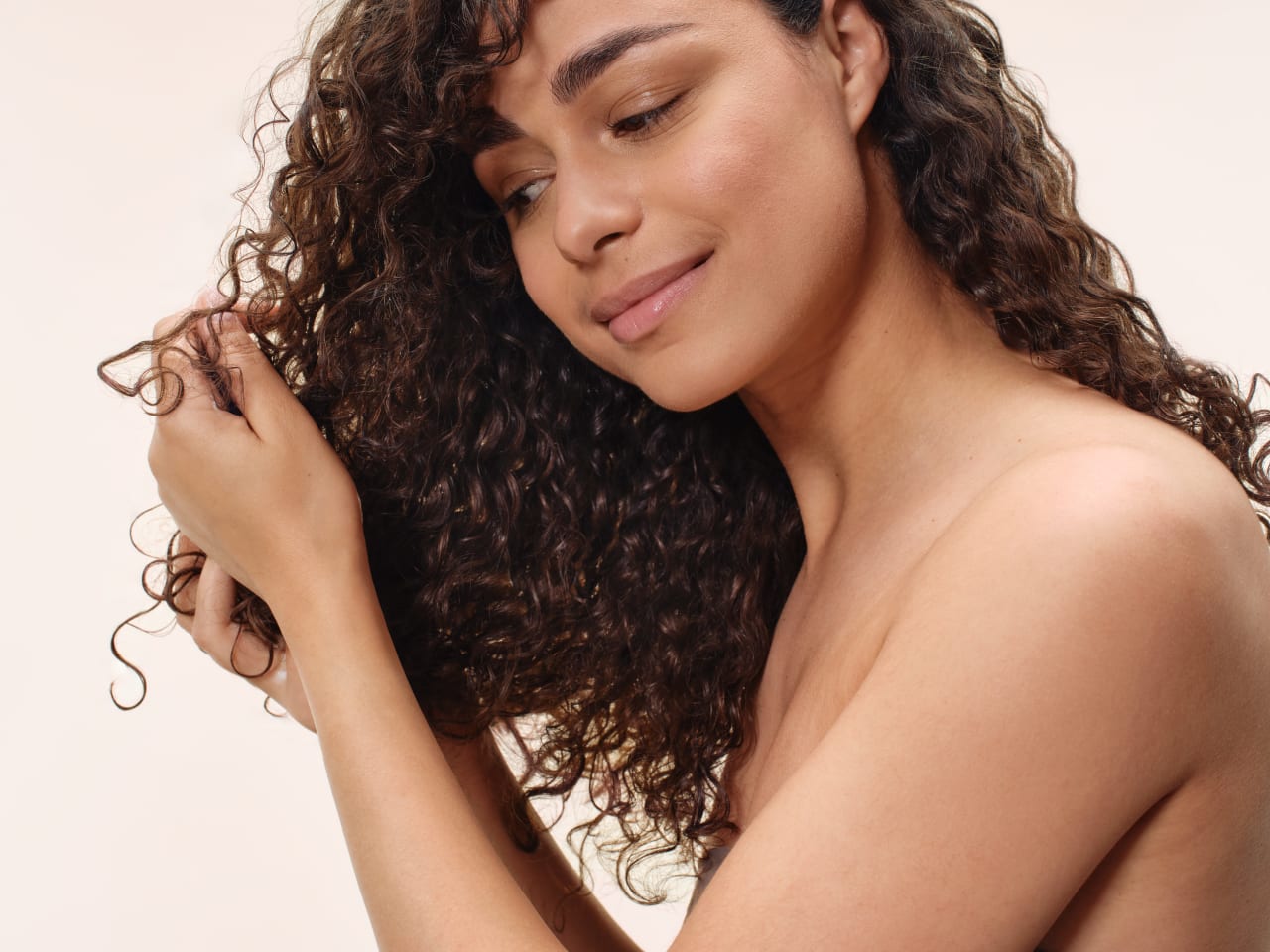
Can you have well-defined curls without a stiff, cardboard-like look – myth or reality?
Published on: Tuesday, November 03, 2026, Updated on: Tuesday, November 17, 2026
How frustrating it is when that stiff, cardboard-like texture sometimes appears in curly hair after blow-drying. However, this is a perfectly normal phenomenon that stems directly from the way the setting agents in your styling products work. That said, we have some good news: it is entirely possible to achieve softer curls without sacrificing their definition. To help you achieve this, we’ve put together a brief overview of the mechanics behind this infamous ‘cardboard effect’. Understanding the cause of this stiffness will give you the keys to minimising it without compromising your curls.
Contents
Related products
£4.00
10 ml
Repairing
Detangling
£9.00
200 ml
Curl care
Hair conditioner
£10.00
200 ml
Hair conditioner
Curl care
£10.50
200 ml
2 options
In brief
The ‘cardboard effect’ on curly hair depends on several factors: the nature of the setting polymers, the overall formula of the product and how it is used.
The stiffness of curls is temporary: one of the simplest ways to break it is to use the ‘scrunch out the crunch’ (SOTC) technique.
It isn’t necessarily a good idea to try to eliminate the stiff, cardboard-like texture completely: it’s wiser to aim for a satisfactory balance between suppleness and hold.
Why do my curls look stiff after styling?
Key takeaways
The ‘cardboard effect’ on curly hair results from the formation of a film that makes the hair more or less stiff, which helps to maintain the shape of the curls.
Styling products very often contain fixing ingredients known as ‘polymers’. These are agents capable of forming a film around the hair and between the fibres. Although this invisible film helps to maintain the shape of the strands, it can, on the other hand, make them stiff. It is this mechanical stiffening that causes the ‘cardboard effect’ on curly hair.
Contrary to popular belief, this ‘cardboard-like’ effect is not enough to label a styling product as ‘bad’. On the contrary, the presence of a polymer deposit rigid enough for you to notice tends to prove that your styling product is working. The long-lasting hold of your curls depends precisely on this dual property of polymers: their ability to adhere to the hair and form a cohesive film (1).
Nevertheless, this does not mean that all styling products must make the hair very stiff in order for your curls to resist distortion and/or humidity. The right product is also one that offers a suitable balance between hold and flexibility, which is entirely achievable in terms of formulation (1). Within the broad family of polymers, for example, some are capable of forming a more supple and elastic film, whilst still providing hold and resistance to humidity (2).
Read also: Why does hair frizz?
Is simply avoiding using too much styling product enough to prevent that stiff, cardboard-like look?
Key takeaways
No, there is no evidence that using too much product causes a more pronounced stiff, cardboard-like effect; conversely, there is also no evidence that using less product prevents curls from becoming stiff.
If you notice a stiff, cardboard-like texture in your curly hair after styling, it might be worth starting by reducing the amount of styling product you use. However, there is no evidence to suggest that applying ‘too much’ gel or styling product automatically exacerbates this stiff texture that you’re trying to avoid. A recent study from 2023 supports this view, establishing that the concentration of polysaccharides (= polymers) does not alter the stiffness of hair strands, although it does increase their resistance to deformation (3).
In reality, the amount of styling product you apply to your hair is not the only factor to consider if you want to avoid making your curls ‘stiff’. There are many different polymers, each of which alters the mechanical behaviour of the hair strands in its own specific way (4). The research also reminds us that there is no point in trying to identify which polymers in your styling products are more likely to make your hair ‘stiff’, as it is the entire formula that influences the stiffness of the film (1). Within your styling products, polymers interact with other agents which can, for example, harden or soften the film formed on your hair. The same polymer can therefore behave differently from one product to another.
You should also take into account the conditions under which you apply your styling product: humidity, for example, is enough to alter the way your products hold your curls in place. Denise Wade Rafferty et al. suggest that water may act as a plasticiser in high-humidity conditions, notably by reducing the cohesion of the film formed by the polymers (5).
Read also: mistakes to avoid when looking after your curls.
How can you get rid of the stiff, cardboard-like texture in your curls without losing their definition?
Key takeaways
Gently scrunching your curls with your hands is enough to get rid of the stiff, cardboard-like look whilst retaining lovely definition.
If this stiff, cardboard-like texture in your curly hair bothers you, we recommend that you first try to prevent it. To do this, the first step is to choose a flexible-hold gel, whilst adjusting the amount used to suit your desired level of hold and definition. You can also try applying your gel to wet hair and compare the result on dry hair or hair that’s just slightly damp. In any case, make sure you distribute the product evenly throughout your hair to avoid localised build-up.
And if it’s too late and your hair is already stiff, here are a few techniques that can help you soften this effect after drying. The key thing to remember when using these tips is that your hair must be completely dry.
Technique | The right techniques |
Achieving a ‘scrunch out the crunch’ (SOTC). | Manually working through the curls with a gentle scrunching motion helps to restore suppleness to the lengths whilst maintaining the definition of the curls. |
Use the diffuser cup. | This is a variation on the previous technique. Some professionals recommend placing the curls in the diffuser cup, set to a low airflow and a low temperature, then working them up towards the roots. Other hairdressing experts prefer to gently heat the hair with the diffuser set to a medium temperature before continuing with manual scrunching. |
Apply a few drops of oil. | Rub the oil between your palms first to avoid overloading the hair, which would weigh down the curls. A small amount of oil can be enough to improve the texture of coarse hair. |
Brush your curls with your fingers. | Gently run your fingers through the densest sections to restore a more natural movement. The key here is to keep it minimal to avoid losing too much definition. |
Our conclusion, based on the scientific literature
Myth or reality?
Reality. It is indeed possible to maintain well-defined curls over the long term without sacrificing their suppleness, provided you follow a few tips when styling and drying your hair. It is sometimes easier to accept a little temporary stiffness, which you can then soften later on.
What’s true
Some gels or styling products can make curly hair feel ‘stiff’ due to their polymer composition – but this effect is usually temporary and easy to correct.
The mechanical properties of the final hold depend on many factors: choice of polymers, the formulation as a whole, and application conditions.
It is possible to find relatively flexible styling formulas that minimise stiffness whilst remaining effective at preserving the shape of the curls.
What is false
The occurrence of a stiffening effect is not in itself sufficient to classify a product as ‘poor’.
A cardboard-like effect is not a necessary consequence of having curls that hold their shape.
Eliminating the cardboard-like effect does not necessarily alter the definition of the curls.
Food for thought
Whilst breaking the ‘cardboard effect’ restores a soft, pleasant feel, it is also likely to compromise the longevity of your curls. When you handle your hair after applying polymers, you risk breaking some of the bonds that hold the styling film together. There is therefore a risk that this manipulation may alter your curls’ resistance to subsequent deformation (4). The most sensible approach therefore seems to be not to try to completely eliminate the stiffness, but rather to aim for a gradual and gentle softening, until you find the right balance between flexibility and hold for your curls.
The trichologist’s view
‘To avoid a stiff, cardboard-like effect, the amount used must be tailored to the density, thickness and porosity of your hair. Start by applying a small amount of product, then see how your hair reacts. If the curls remain well-defined, supple and light, stick to that amount. If necessary, gradually increase the amount until you find the right balance, without weighing down the hair or creating a stiff, cardboard-like effect. Apply the products in the following order: start with the Belles Boucles care cream with AA keratin and leave-in linseed gel to add suppleness and make styling easier, then apply the Belles Boucles gel with hyaluronic acid and linseed to revitalise and set the definition of the curls. Finish, if necessary, with a small amount of oil (Organic Broccoli, Pracaxi or Organic Piqui) to add shine and prevent moisture loss. An excess of conditioning agents or oils can weigh down the curls. A simple tip is, at the end of washing, to dip the lengths several times into a mixture of water and a small amount of conditioner, to enhance curl definition and make it last longer.”
Dalila Belmokhtar, Doctor of Pharmacy and trichologist @dalilahairscience
What products should you use for soft, defined curls?
Optimising definition right from the shampooing stage
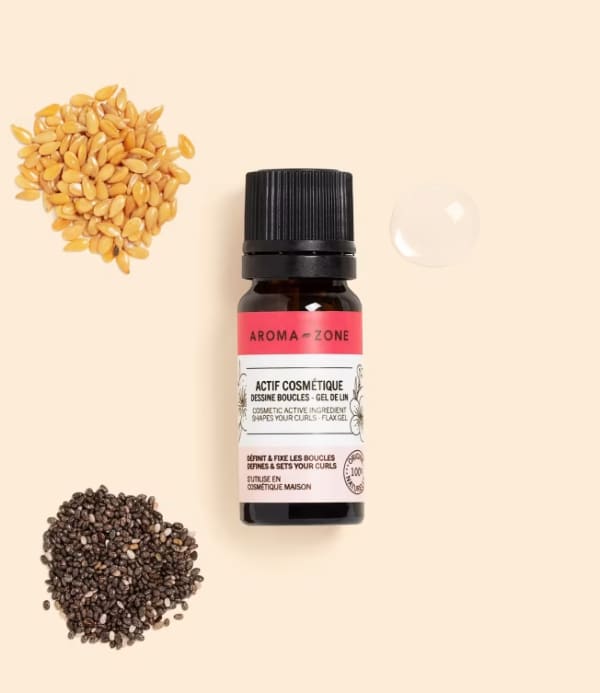
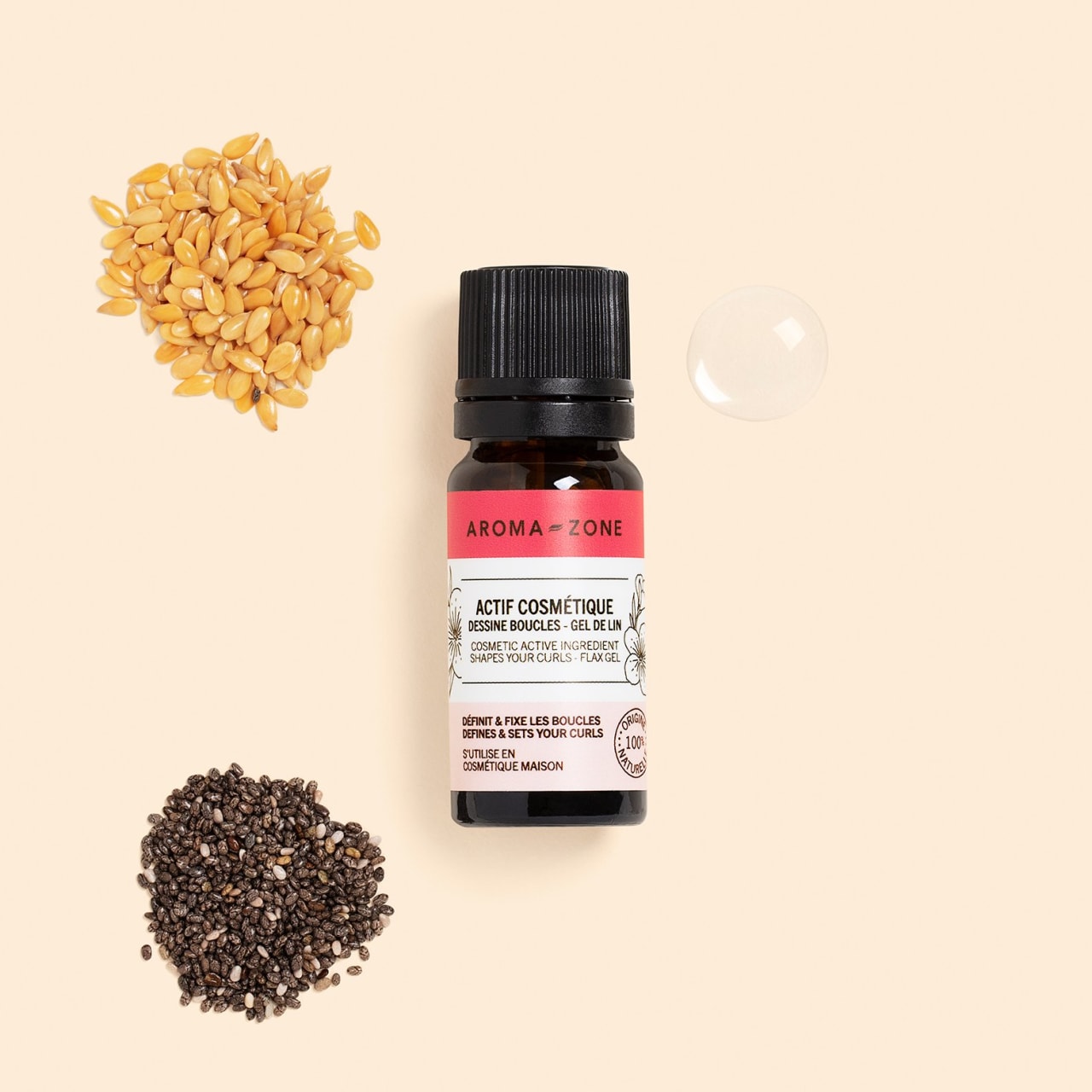
Cosmetic active ingredient: Curl-defining (linseed gel)
Made from linseed and chia gels, this ingredient can be used in your homemade hair care products to shape, set and define curls without a stiff, cardboard-like effect, whilst preventing frizz. Incorporate it, for example, into our Palm-free neutral shampoo base. Recommended dosage: 1–5 per cent of the total weight of your preparation.
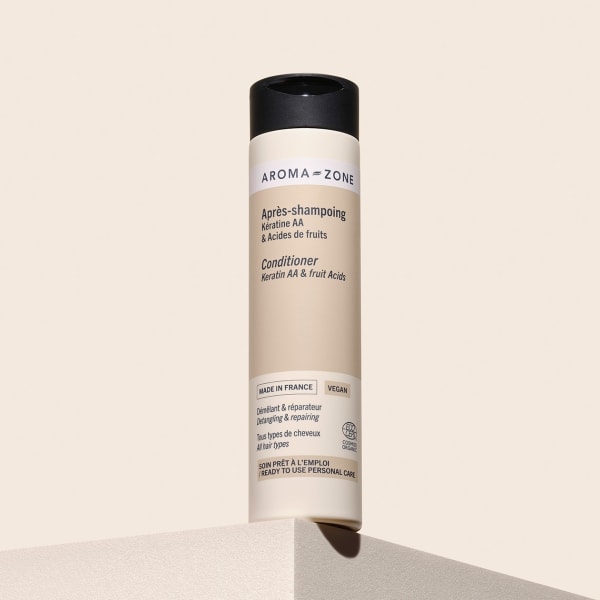
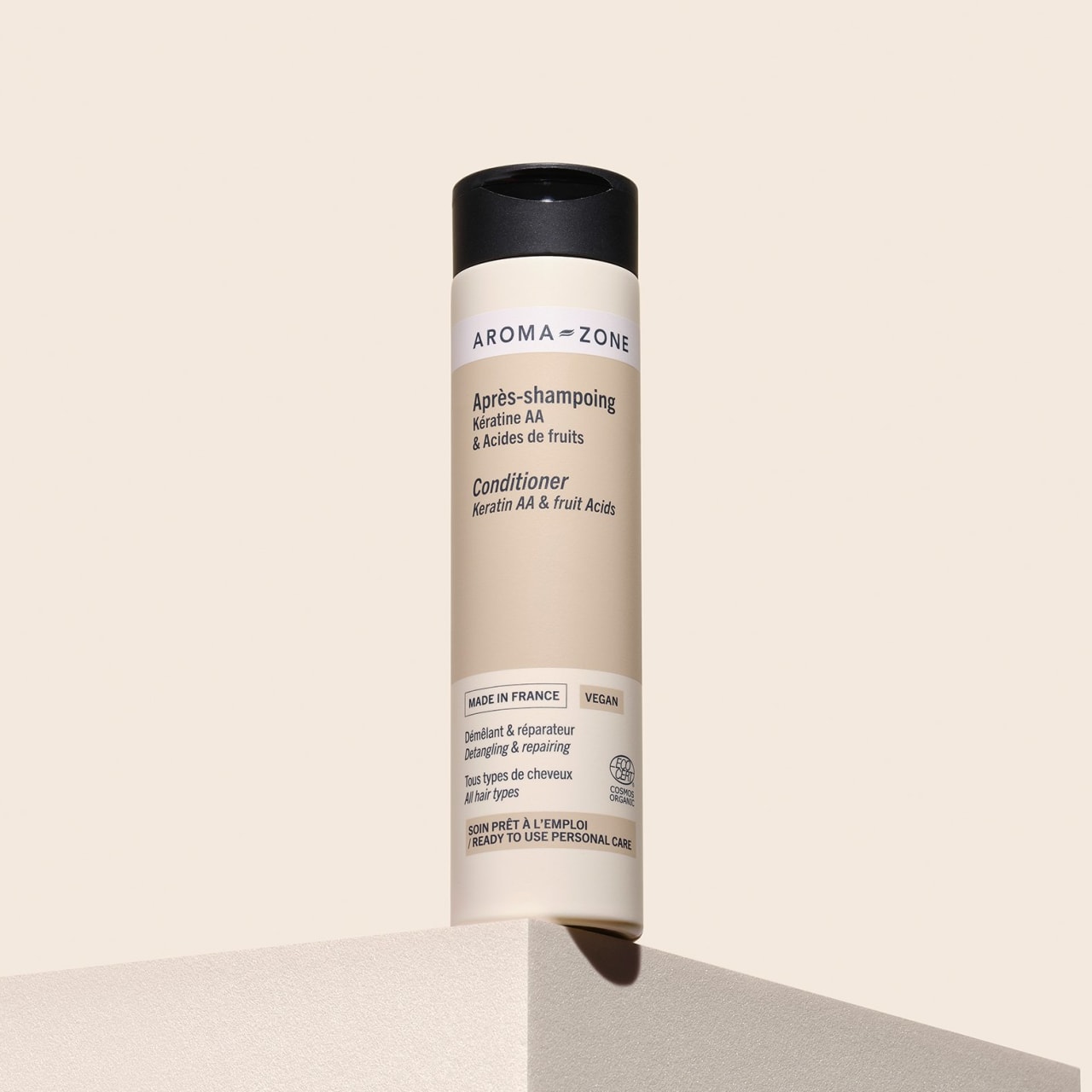
AA Keratin & Fruit Acids Detangling and Repairing Conditioner
Designed for brittle hair, its formula makes styling easier and adds shine without weighing the hair down. Its effectiveness in reducing frizz and improving suppleness has been clinically proven.
Discover the Keratin AA & Fruit Acids Detangling and Repairing Conditioner
Keeping curls in shape whilst maintaining suppleness
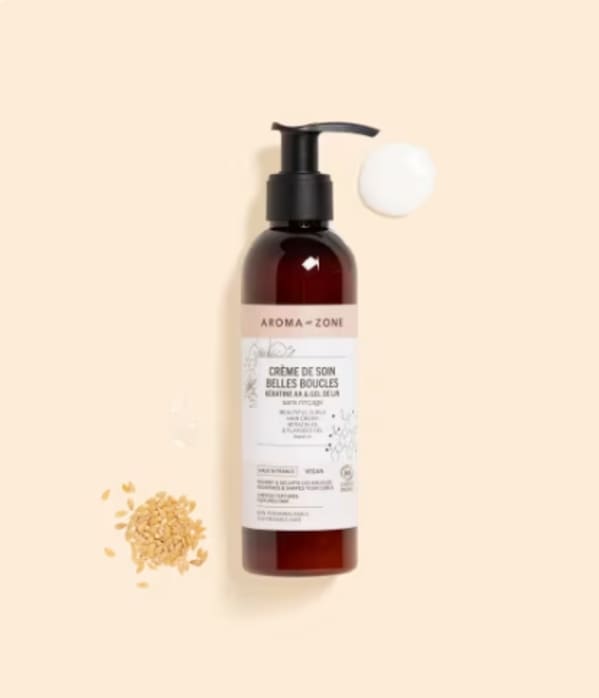
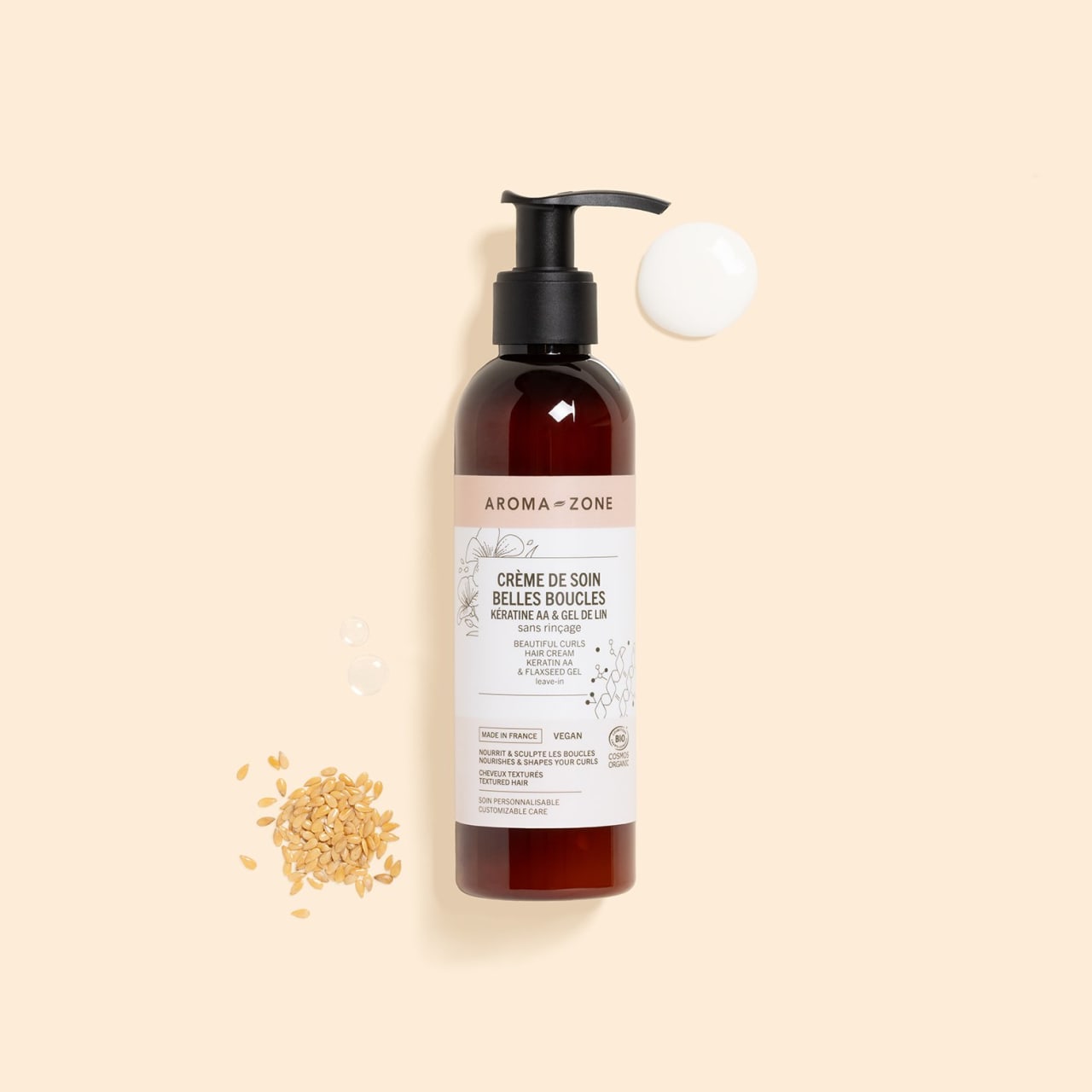
AA Keratin Beautiful Curls Care Cream & Leave-in Flaxseed Gel
Acting as both a styling and repairing treatment, it defines and enhances curls whilst boosting the shine of textured hair. Its lightweight formula, which doesn’t leave hair stiff, can be used on wet or damp hair, every day if needed.
Discover the Belles Boucles Keratin AA Care Cream & Leave-in Flax Gel
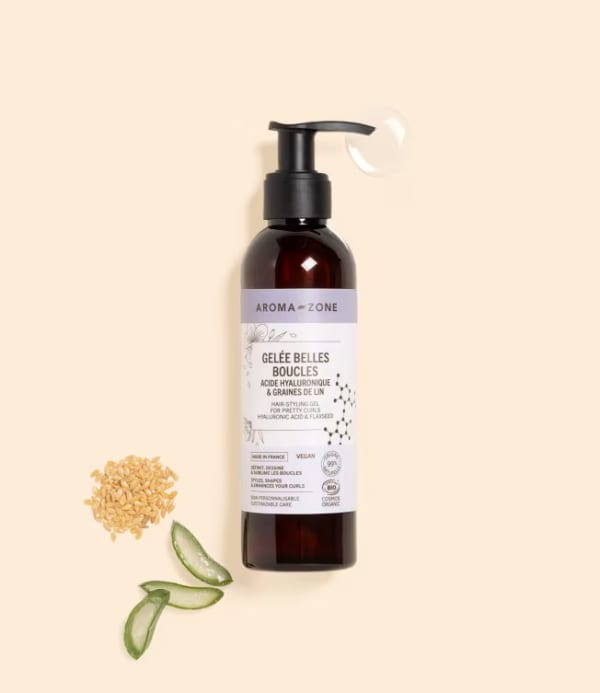
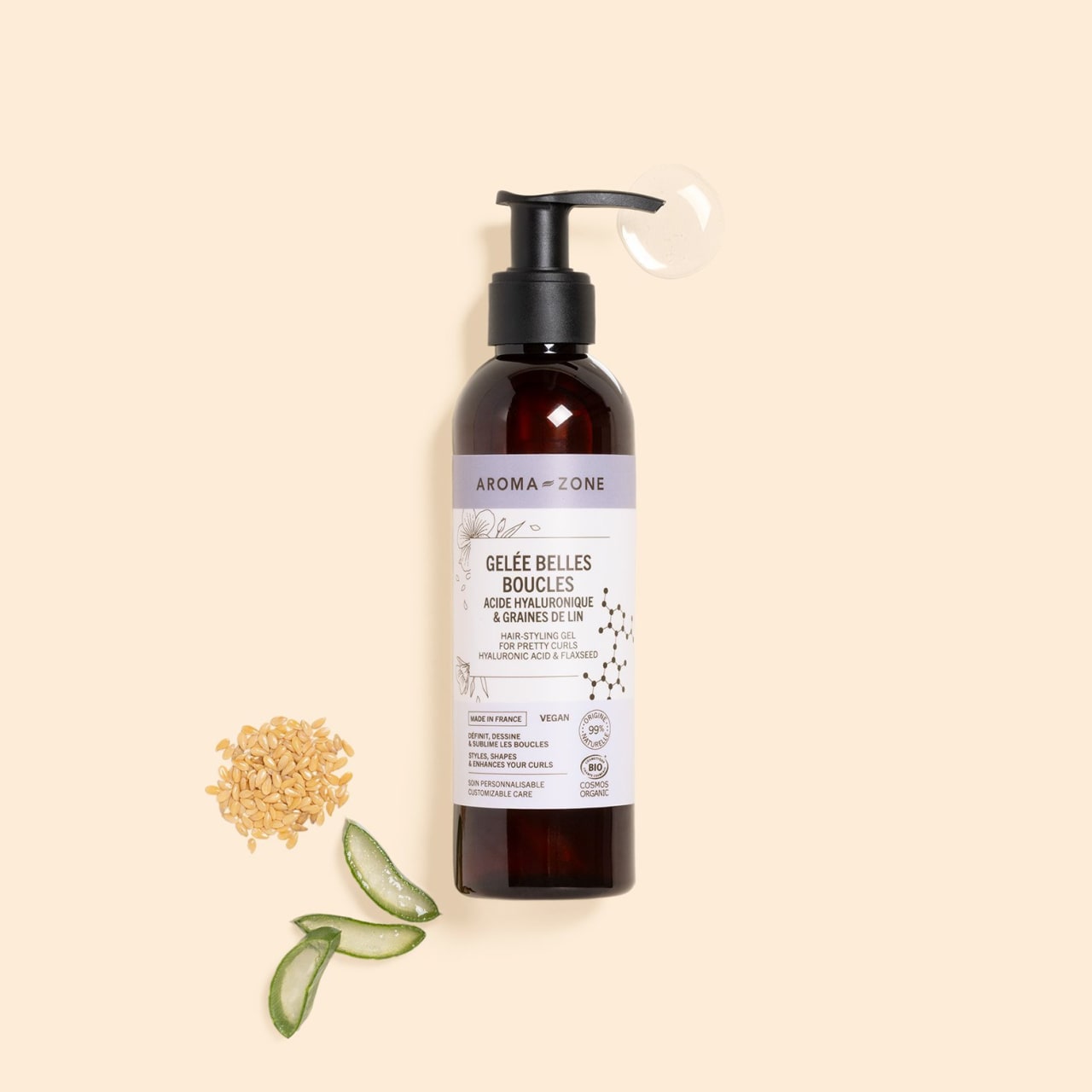
Beautiful Curls Gel with Hyaluronic Acid & Linseeds
Thanks to its light, non-greasy texture, it tames frizz and defines curls whilst moisturising the hair fibre. Enhanced with a humidity-resistant barrier, its long-lasting formula is also ideal for creating sleek, smooth styles.
Discover the Beautiful Curls Gel with Hyaluronic Acid & Linseeds
Pay attention to the finish right down to the ends
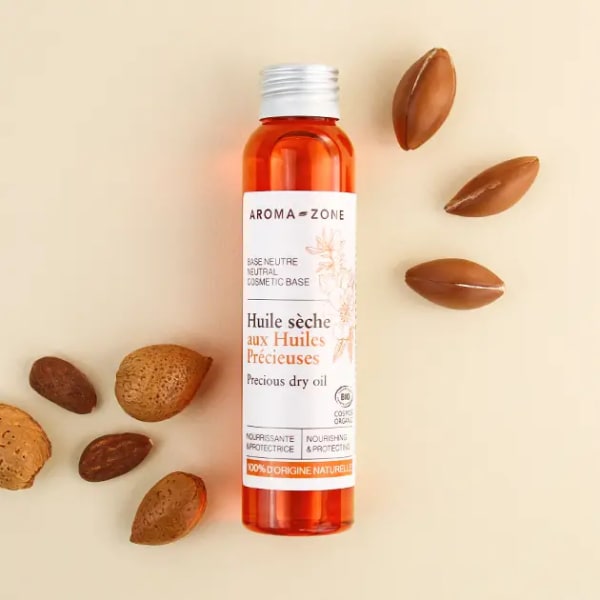
Dry oil with precious organic oils
Suitable for use on its own or customised, it has a light, quickly-absorbing texture that leaves hair feeling dry and velvety to the touch. Versatile, it can be used on hair, as well as on the face and body, thanks to its nourishing, softening and protective properties.
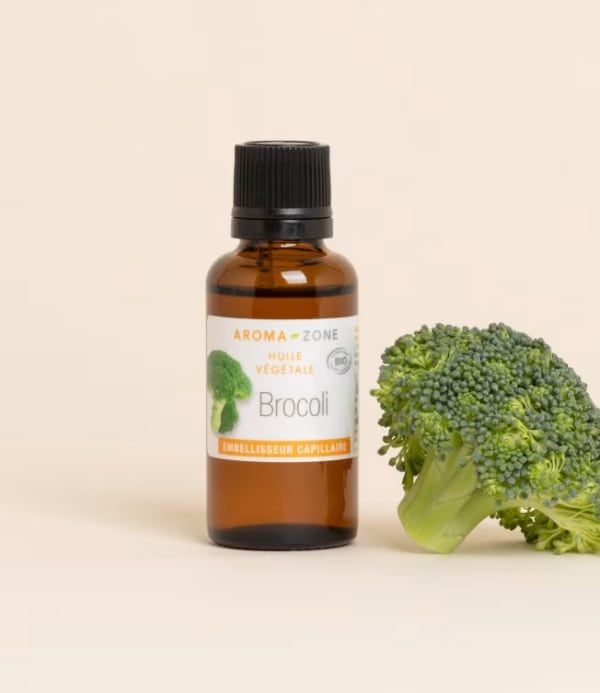
Organic Broccoli Oil
When incorporated into your finishing oil recipes, it provides a coating effect comparable to that of silicones, whilst remaining lightweight on the hair. It is traditionally recommended for taming small flyaways and adding shine to the hair.
Precautions
Remember to carry out a sensitivity test on any new haircare product you introduce into your skincare routine. Apply a small amount to an inconspicuous area of skin and check for any adverse reactions after 48 hours.
Spotlight on our writer, Hélène Betoux

Hélène Betoux is a French beauty journalist specialising in online media. She writes daily advice, recommendations and guides to help consumers choose the beauty products best suited to their needs. A firm advocate of natural, organic and ‘clean’ cosmetics, she closely follows trends and innovations in the sector, which she enjoys analysing and sharing.
Bibliography
Wade Rafferty, D., Zellia, J., Hasman, D., & Mullay, J. (2008). Polymer composite principles applied to hair styling gels.
Journal of Cosmetic Science, 59(6), 497–508.
Omura, T., Shida, T., Saito, A., & Nakane, T. (2003). Application of urethane polymer as a hair styling agent. Journal of the Society of Cosmetic Chemists of Japan, 37(4), 293–300.
https://doi.org/10.5107/sccj.37.4_293
McMullen, R. L., & Gillece, T. (2023). Development of a three-point cantilever bending technique to study the mechanical properties of hair styling ingredients. Skin Research and Technology: Official Journal of the International Society for Bioengineering and the Skin (ISBS) [and] the International Society for Digital Imaging of Skin (ISDIS) [and] the International Society for Skin Imaging (ISSI), 29(1), e13256.
https://doi.org/10.1111/srt.13256
Jachowicz, J., & McMullen, R. (2002). Mechanical analysis of the elasticity and flexibility of virgin and polymer-treated hair fibre assemblies.
Journal of Cosmetic Science, 53(6), 345–361.
Rafferty, D. W., Zellia, J., Hasman, D., & Mullay, J. (2009). The mechanics of fixatives as explained by polymer composite principles. Journal of Cosmetic Science, 60(2), 251–259.
https://doi.org/10.1111/j.1468-2494.2010.00534_14.x