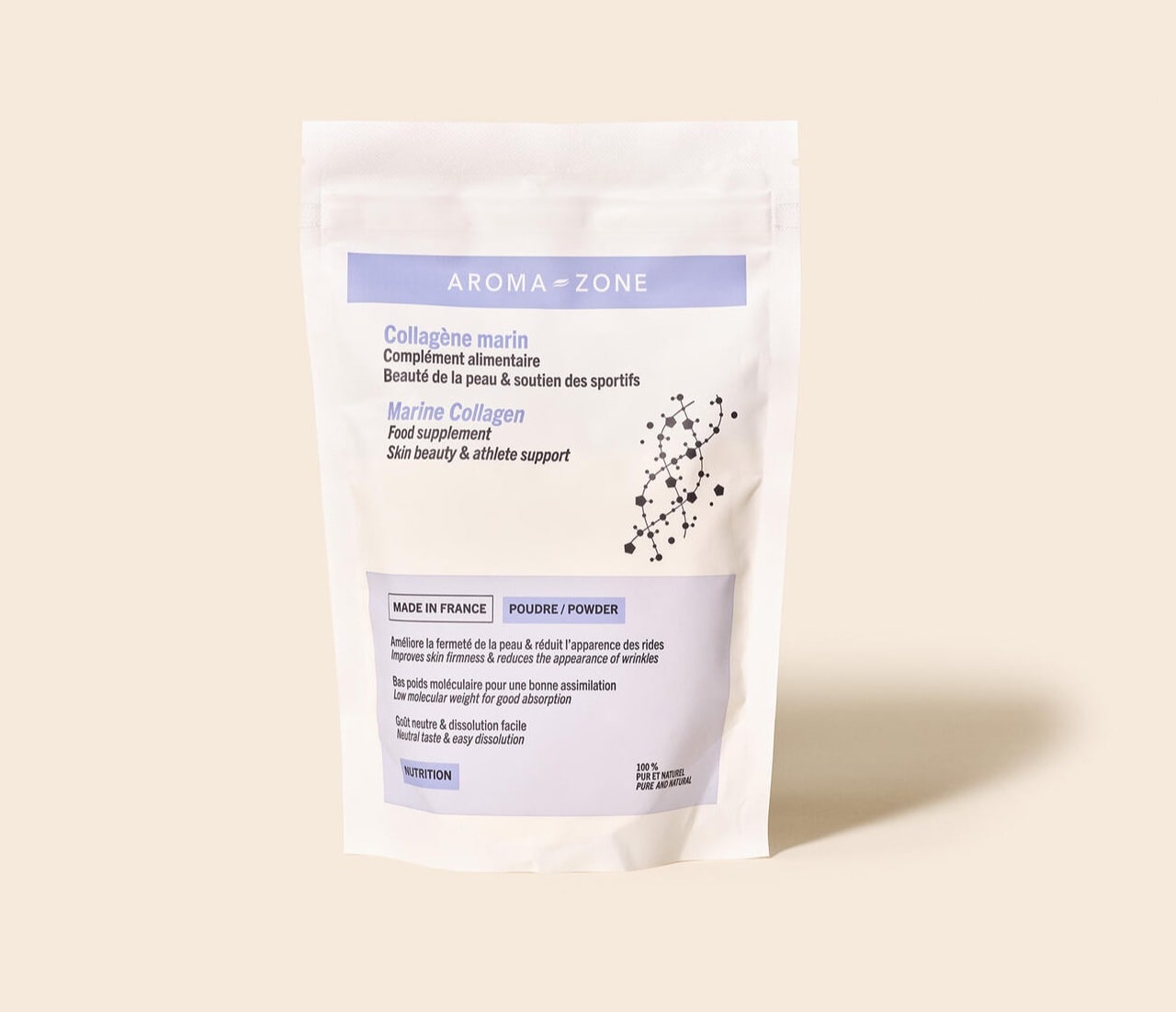
Bovine collagen vs. marine collagen: what are the differences?

Bovine and marine collagens have similar properties for skincare. In the field of food supplements, both are renowned for their anti-ageing effects on mature, dry, sagging and wrinkled skin. They're also a welcome boost to the daily routine of sports enthusiasts. Today, the main difference between bovine and marine collagen is price. Added to this, product traceability, ethical convictions and individual dietary restrictions can also guide your final choice. But don't forget that there are many other criteria to take into account when choosing your Collagen!

Reading time: 0 min.

What is collagen?

Collagen is one of the most common proteins in the human body, accounting for around a third of all proteins in the body. It is a fibrous protein belonging to the glycosaminoglycan family, a type of natural carbohydrate. Collagen forms the basic structure of many connective tissues such as bone, skin, tendons and cartilage. It is also found in the cornea of the eye, internal organs and blood vessels. This macromolecule comes in several forms in the body, as there are different types of collagen, each with specific functions.

  • Type I collagen: the main interstitial collagen, found in the dermis, tendons, bones and vascular walls.

  • Type II collagen: present in cartilage and the vitreous body of the eye

  • Type III collagen: found in the dermis and vascular walls

  • Type IV collagen: present in the basal lamina

  • Type V collagen: present in muscles and placenta

As we age, our production of collagen tends to decline. It may therefore be worth opting for Collagen supplementation from the age of 25. There are two main families to choose from: bovine collagen and marine collagen.

What is marine collagen?

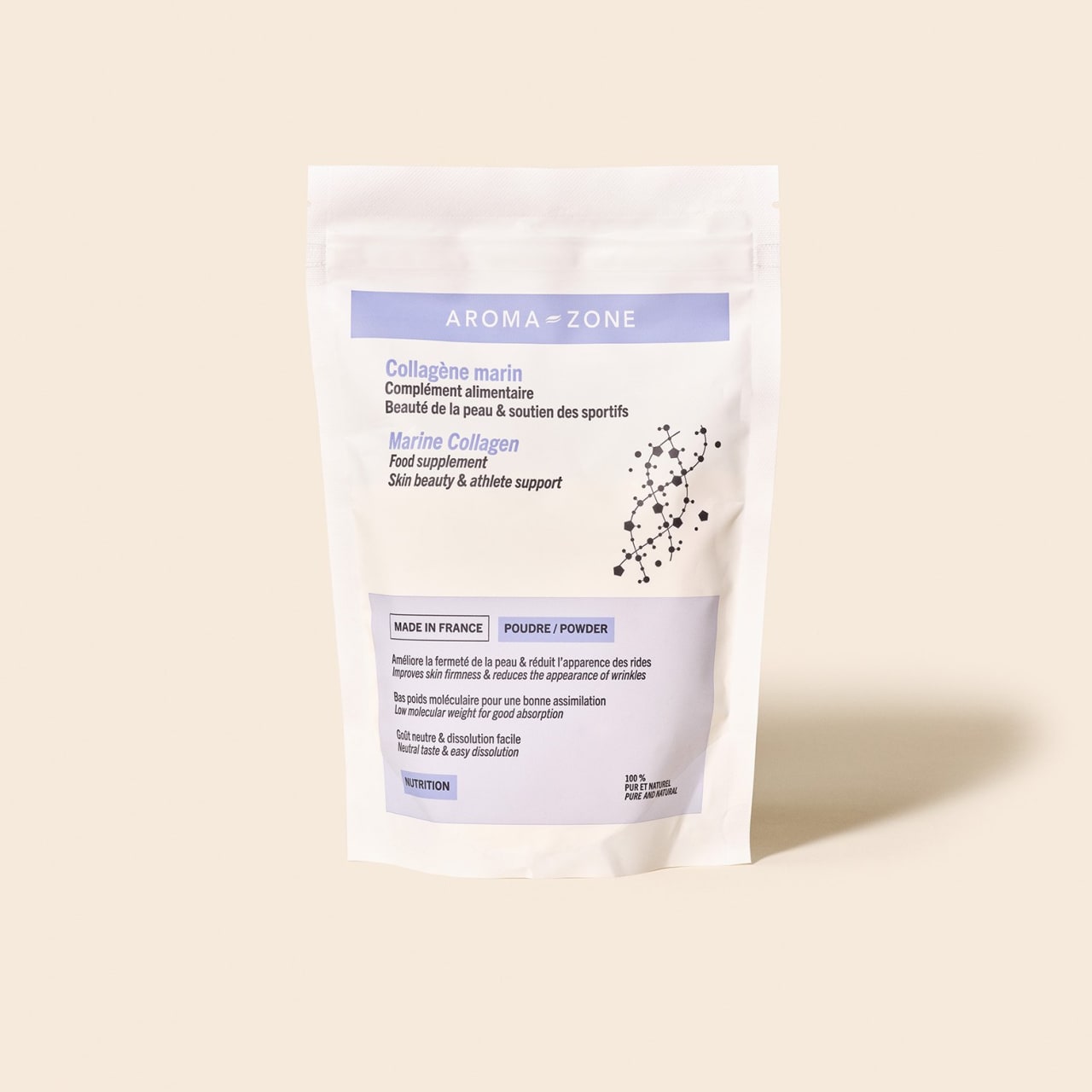
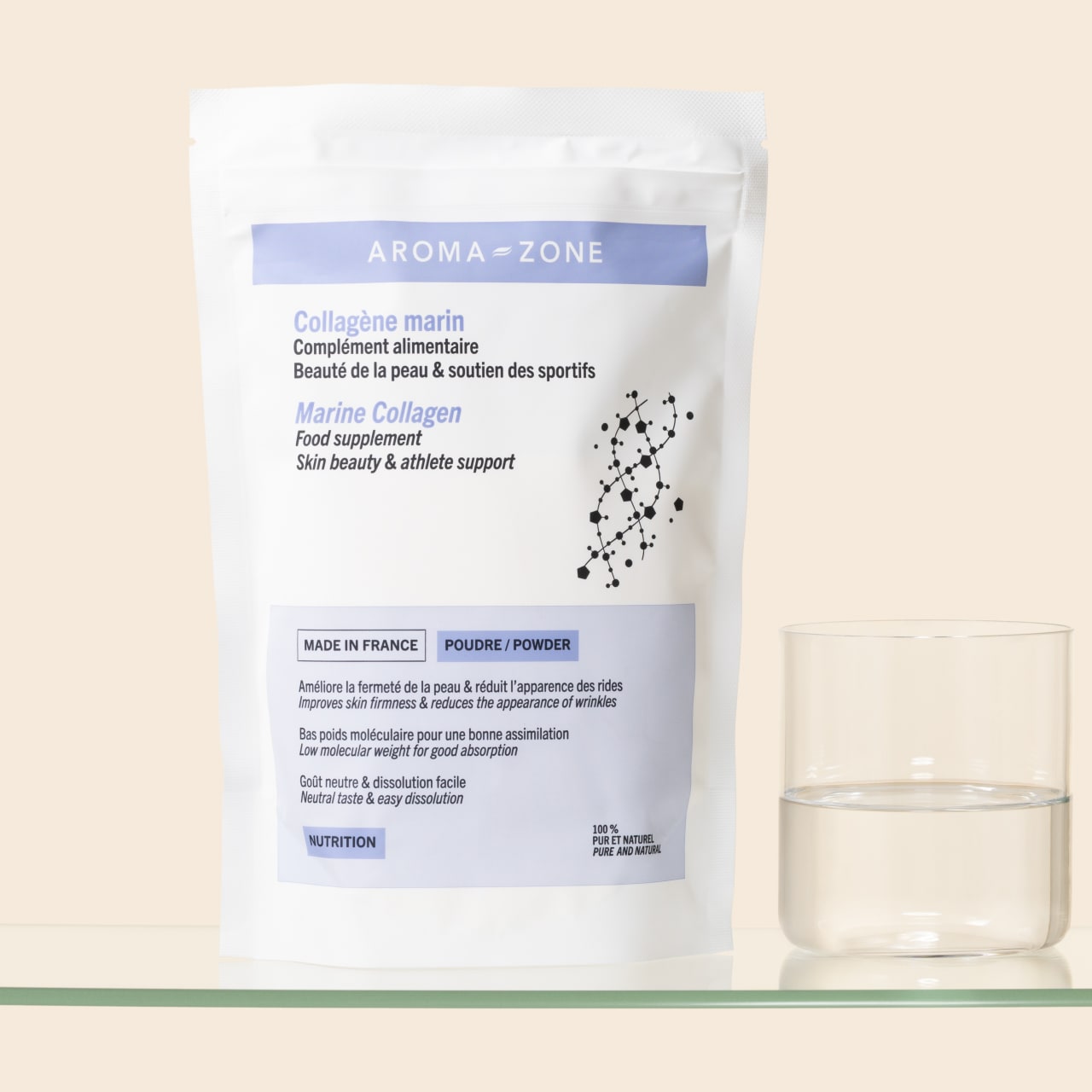
Marine collagen is derived from the cartilage of fish and shellfish, as part of the recycling of seafood products. Contrary to popular belief, it is not a 'vegetarian' alternative to bovine collagen. It is, however, a suitable option for pesco-vegetarians.

Composition

Marine collagen is mainly composed of type I collagen, which is the most important in vertebrates (around 90% of collagen). It is found in connective tissue, bone, skin, tendons, cornea and internal organs.

Main sources of marine collagen

Marine collagen, extracted from fish such as cod, comes mainly from by-products of the fishing industry, such as skins and scales that are not used for human consumption. This waste is recycled for its high collagen content.

Benefits

  • Skin health: Type I collagen is predominant in the dermis. It helps to strengthen the skin's natural elasticity and firmness, in all skin types and particularly in skin with a tendency to mature.

  • Improves skin hydration and texture: notably by smoothing fine lines and signs of ageing.

Our collagen products

What is bovine collagen?

Bovine collagen is a by-product of the meat industry. It is made from the skin, bones and tendons of bovine carcasses. In essence, it is not suitable for people whose diet excludes beef.

Composition

It contains mainly type I and III collagen. Type I is predominant in the skin, while type III is more present in internal organs. Bovine collagen peptides generally have a larger molecular size than those of marine collagen.

Benefits

  • Helps to regenerate muscle tissue

  • Skin health: Type III collagen in particular helps to improve skin elasticity and suppleness, in synergy with type I collagen.

  • Healing: Promotes tissue healing and encourages tissue repair.

What are the differences between marine and bovine collagen?

In terms of pure efficacy, it now seems that bovine collagen is slightly less interesting than marine collagen. These variations in performance mainly depend on their respective bioavailability. The smaller size of fish collagen peptides means that they are better absorbed by the human body. This phenomenon is supported by several scientific studies. A 2015 publication suggests that the absorption of Collagen from fish is 1.5 times greater than that of bovine and porcine forms.

Similarly, bovine collagen is obtained from by-products of the meat industry, and is made from the skin, bones and tendons of cattle. It is therefore not suitable for people who exclude meat from their diet. For other people, it's important to find out about the conditions in which the animals are reared. Choose high-quality food supplements from controlled sources to ensure greater purity and limit the risks associated with the presence of potential residues.

Bovine collagen: less risk of allergies?

Collagen of bovine origin does present a risk of allergy, but only for people sensitive to beef-based or beef-derived products. It can also cause reactions in people allergic to animal proteins. Similarly, fish collagen should not be consumed if you are allergic to iodine, fish, prawns, shellfish or seafood.

You will also find more and more Collagen supplements on the market made from egg membranes. Once again, do not take these if you are sensitive to eggs. Always ask about the origin of the product you wish to buy.

Remember: as a general rule, if you have allergies, seek your doctor's advice before considering taking any supplements.

Bovine collagen: better for joints?

Not in an obvious way, in fact it is type II collagen that is involved in our joint well-being. It is part of the structural composition of our cartilage, a tissue that acts as a shock absorber between the bony surfaces of our joints. This cartilage is sometimes damaged. It wears down naturally with age (known as primary osteoarthritis) and can even be prematurely degraded in the event of trauma (sprain-type injury, for example) or disease (secondary osteoarthritis).

Collagen extracted from cattle is often marketed as type I or II Collagen. But type I or II can also be found in marine collagen supplements. The same goes for type III, which is also common to both origins.

Good to know: To date, no claims have been authorised regarding the possible benefits of a Collagen food supplement on joint discomfort - regardless of its origin.

Bovine collagen: more neutral in taste?

With the success of collagen food supplements, manufacturers have adapted to consumer expectations. It's now fairly easy to find neutral-tasting powders that won't spoil the flavour of your smoothies, coffees or fruit juices. And the same applies to marine products, which are traditionally considered to be 'stronger' in taste and smell.

Even so, if your taste buds are the sensitive type, you can always opt for capsules.

How do you choose your collagen?

  1. Its size: First of all, there is native collagen, i.e. collagen in its entirety. It comes in the form of large molecules that can be difficult for our bodies to assimilate. Hydrolysed collagen (peptides), on the other hand, has a smaller molecular size, which improves its bioavailability and assimilation by the intestinal mucosa.

  2. Its type: It is estimated that there are 28 types of Collagen, each playing a specific role in our bodies. Bovine and marine collagen supplements generally contain type I, II and III collagen (in varying proportions).

  3. Dosage form: You can opt for food supplements in the form of capsules to be swallowed or powder to be dissolved in your drinks. The choice of presentation also determines whether it has a characteristic taste when taken.

  4. Purity: This varies according to the purity of the product, its composition, its certification (sustainable aquaculture, organic farming, etc.) and any innovations. As well as pure Collagen, there are Collagen-based products enriched with active ingredients with complementary properties. These are most often vitamin C or hyaluronic acid (see our anti-ageing beauty treatments).

Contraindications

Take care not to exceed the recommended daily intake. This supplement is strictly reserved for adults and is not recommended in cases of kidney failure without medical advice.

Expert advice

It is advisable to take collagen on an empty stomach. This optimises absorption and allows the collagen peptides to be assimilated more effectively. It may also be useful to combine it with other active ingredients such as hyaluronic acid, which helps maintain skin hydration, or vitamin C, which is essential for collagen synthesis, to maximise its effects.

Storage

To preserve the effectiveness of your product, store it in a cool, dry place away from light.

To find out more

At what age should I start taking marine collagen supplements?

There is no specific age to start taking marine collagen, but many specialists recommend starting around the age of 25-30, as this is when the body's natural production of collagen begins to decline.

How long does a course of Marine Collagen last?

We recommend collagen cures lasting at least 2 months, ideally a minimum of 3 months.

Can collagen be heated?

Yes, marine collagen does not lose its properties on contact with heat and can easily be incorporated into hot drinks or recipes that require cooking.

Spotlight on our specialist editor, Hélène Betoux

Hélène Betoux is a French beauty journalist specialising in web media. Every day she writes tips, advice and guides to help consumers choose the right beauty products. With a strong interest in natural, organic and clean cosmetics, she analyses and shares trends and innovations in the sector.

Bibliography

1

Gunawan, I., Widayati, R. I., Riyanto, P., Budiastuti, A., Malik, D. A., Muslimin, Widyawati, & Suhartono (2023).

The Effectiveness of Oral Fish Collagen Supplementation on Skin Aging: A Systematic Review and Meta-analysis of Skin Hydration, Skin Elasticity, and Skin Wrinkles. American Journal of Dermatological Research and Reviews, 2023, 6:57

2

Sibilla, S., Godfrey, M., Brewer, S., Budh-Raja, A., & Genovese, L. (2015).

An Overview of the Beneficial Effects of Hydrolysed Collagen as a Nutraceutical on Skin Properties: Scientific Background and Clinical Studies, The Open Nutraceuticals Journal, 2015, 8, 29-42.

3

Fligiel, S. E., Varani, J., Datta, S. C., Kang, S., Fisher, G. J., & Voorhees, J. J. (2003).

Collagen degradation in aged/photodamaged skin in vivo and after exposure to matrix metalloproteinase-1 in vitro. Journal of Investigative Dermatology, 120(5), 842-848. DOI: 10.1046/j.1523-1747.2003.12148.x.

4

DePhillipo, N. N., Aman, Z. S., Kennedy, M. I., Begley, J. P., Moatshe, G., & LaPrade, R. F. (n.d.).

Efficacy of Vitamin C Supplementation on Collagen Synthesis and Oxidative Stress After Musculoskeletal Injuries: A Systematic Review.

5

Frantz, C., Stewart, K. M., & Weaver, V. M. (2010).

The Extracellular Matrix at a Glance. Journal of Cell Science, vol. 123, no. 24, 4195-4200.