
Guide to essential oils

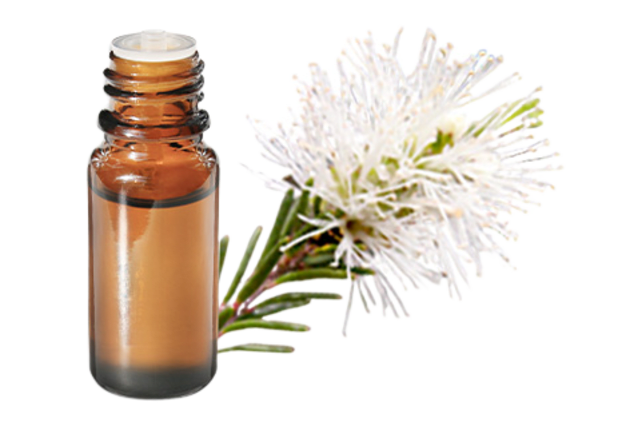
Essential oil of Rosalina

Rosalina essential oil develops a subtle, fresh aroma reminiscent of roses when diffused. Calming, Rosalina essential oil helps you fall asleep and relieve stress. It can also be used to care for skin with blemishes, and adds a pleasant fragrance to your mixtures.

How to use

  • Skin application and massage

    Skin application and massage

    Suitable

  • Diffusion

    Diffusion

    Suitable

  • Cosmetic active ingredient

    Cosmetic active ingredient

    Suitable

  • Aromatherapy bath

    Aromatherapy bath

    Suitable

Features

Properties and uses

Precautions

Find out more

Features

Production process

Complete steam distillation

Part of the plant used

Leaves

Botanical name

Melaleuca ericifolia

Warning

The properties, information and methods of use below are quotes from reference books or websites on aromatherapy, hydrolatherapy and phytotherapy. This general information is provided for informative purposes only and in no way constitutes medical guidance. Under no circumstances can this information be used as a substitute for a medical diagnosis, consultation or follow-up, nor can it incur our liability. We recommend that you consult the guide to essential oils before using them, so that you are aware of any precautions that need to be taken. If in doubt, consult a doctor before using essential oils.

Properties and uses

Rosalina essential oil is traditionally used for: Fungal infection

Health

Beauty

Wellness

Find out more

Properties

Rosalina essential oil is renowned for the following health benefits:

  • Sanitising and purifying

  • Mild expectorant

  • Anti-spasmodic and anti-convulsant

Uses

In addition to treatments, it is traditionally used in the following cases: Respiratory and skin disorders

Synergies

  • Respiratory comfort: Eucalyptus radiata and Rosemary cineole essential oils

  • Sanitising and purifying: Ravintsara and Thyme essential oils

In practice

Respiratory comfort: blend into your oil blend. Massage or rub your blend into the chest and upper back.

Air purification: for air diffusion.

Respiratory comfort: Mix in your dispersible bath preparation. Pour your blend into the warm bath water. Breathe and relax.

Precautions

  • For external use only; no known internal use for this essential oil.

  • Not recommended during the first three months of pregnancy.

  • Keep out of reach of children.

  • Avoid contact with eyes.

  • Certain natural compounds in this essential oil may present an allergy risk for sensitive individuals when the oil is incorporated into a cosmetic formulation (according to the 7th Amendment to the European Cosmetics Directive (2003/15/EC)): limonene, linalool.

  • As a general rule, always perform a patch test on the inside of the elbow at least 48 hours before use.

  • Dangerous. Follow safety precautions.

  • Flammable liquid and vapours. May cause skin allergy. Causes skin irritation (risk associated with the pure product). May be fatal if swallowed and enters the respiratory tract (if swallowed accidentally, do not induce vomiting). Very toxic to aquatic life, with long-lasting effects (in case of large spillage into water bodies).

Find out more

Rosalina is a very interesting tea tree hybrid found by Australian researchers.

Rosalina essential oil is a unique oil, particularly interesting because it combines the mildness and activity of linalool, present in large proportions, with the activity of cineole.

It is very mild and therefore be useful in a wide range of situations; a versatile oil par excellence!

Its delicate, pleasant fragrance makes it easy to use.

Equivalents

Essential Oils

1 ml = approximately 35 drops (with our Aroma-Zone dropper caps)

Carrier oils

1 pump (Aroma-Zone aluminium pump) = approx. 0.15 ml

Mass / Volume conversion (for a liquid)

Mass (g) = Density x Volume (ml) at 20°C

Further information

1 full teaspoon = between 3 and 4.5 ml

1 full tablespoon = between 7.5 and 10 ml


However, these spoon ratios depend on a number of factors (e.g. viscosity of the liquid, temperature, depth and size of the spoon, rheological behaviour of the liquid), and we strongly advise you to use precise measuring equipment, such as graduated test tubes, graduated pipettes, and precision scales.

Bibliography

1

2

3