
Guide to essential oils

Essential oil of Silver fir

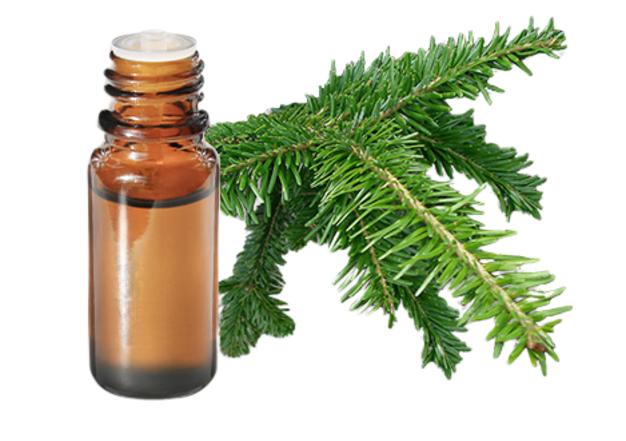
Obtained by distilling the needles, Silver Fir essential oil is used as a vapour to purify the atmosphere. With its invigorating fragrance, this essential oil makes breathing easier. Highly energetic, Silver Fir essential oil is popular for restoring energy at both physical and psycho-emotional levels. A tonic for fatigue or low spirits, Silver Fir essential oil is also thought to raise the vibrational level of a home.

How to use

  • Skin application and massage

    Skin application and massage

    Appropriate

  • Cosmetic active ingredient

    Cosmetic active ingredient

  • Aromatherapy bath

    Aromatherapy bath

    Appropriate

  • Diffusion

    Diffusion

    Suitable

  • Food grade

    Food grade

    Possible but not recommended

Features

Properties and uses

Precautions

Find out more

Features

Production process

Complete steam distillation

Part of the plant used

Leaves (needles)

Botanical name

Abies alba

Warning

The properties, information and methods of use below are quotes from reference books or websites on aromatherapy, hydrolatherapy and phytotherapy. This general information is provided for informative purposes only and in no way constitutes medical guidance. Under no circumstances can this information be used as a substitute for a medical diagnosis, consultation or follow-up, nor can it incur our liability. We recommend that you consult the guide to essential oils before using them, so that you are aware of any precautions that need to be taken. If in doubt, consult a doctor before using essential oils.

Properties and uses

Health

Wellness

Find out more

Properties

For health, Silver Fir essential oil is recognised for the following properties:

  • Air antiseptic, helps to purify the atmosphere when diffused.

  • Respiratory and anti-catarrhal, improving breathing

  • Antibacterial, antiviral and immune stimulant.

  • Rich in terpenes, anti-inflammatory and analgesic compounds, reputed to soothe joint and muscle pain

  • Lightly warming

Uses

It is traditionally used to improve the following:

  • Prevention of ENT infections and winter viruses

  • Respiratory problems

  • Colds and chills

  • Immune weakness

  • Arthritis, rheumatism, muscular pain

Synergies

  • Atmospheric disinfection: essential oils of Lemon, Saro, Scots Pine, tea tree, Ravintsare, etc.

  • Respiratory effect: Eucalyptus Radiata, Eucalyptus Smithii, Eucalyptus Globulus, Green Myrtle essential oils, etc.

  • To help the immune system function properly: Frankincense, Ravintsare, Lemon essential oils, etc.

  • Joint health: American or Sweet Wintergreen, Katafray, Lemon Eucalyptus essential oils, etc.

In practice

Air purification: Air diffusion, possibly in synergy with other oils.

Respiratory comfort: blend into your oil blend. Massage or rub your mixture into the chest and upper back.

Soothe painful areas: Mix with your oil blend. Apply your mixture locally, massaging lightly into the area concerned.

Precautions

  • This essential oil is not suitable for internal use, only on medical prescription and in limited doses and for limited periods, as it may naturally contain traces of acetone.

  • Do not use during pregnancy or while breastfeeding, or on children under the age of 6.

  • Avoid contact with eyes and mucous membranes.

  • Keep out of reach of children.

  • Certain natural compounds contained in this essential oil may present a risk of allergy for some sensitive individuals when the essential oil is incorporated into a cosmetic composition (in accordance with the 7th Amendment to the European Cosmetics Directive (2003/15/EC)): limonene, linalool.

  • As a general rule, always carry out a test application of your mixture in the crease of the elbow at least 48 hours before using it.

Find out more

A majestic tree with a conical shape reminiscent of the famous "Christmas tree" , the silver fir, also known as the white fir or common fir, is found in many forests in southern, western and central Europe, particularly in mountainous regions, generally at altitudes of between 400 and 1,800 m, from montane to lower subalpine, but not exclusively, since it is also abundant in Normandy, under the name "Normandy fir" in French, at lower altitudes. It appreciates a certain amount of humidity, and therefore thrives best on the ubacs, the slopes that benefit from less sun exposure in the mountains.

Equivalents

Essential Oils

1 ml = approximately 35 drops (with our Aroma-Zone dropper caps)

Carrier oils

1 pump (Aroma-Zone aluminium pump) = approx. 0.15 ml

Mass / Volume conversion (for a liquid)

Mass (g) = Density x Volume (ml) at 20°C

Further information

1 full teaspoon = between 3 and 4.5 ml

1 full tablespoon = between 7.5 and 10 ml


However, these spoon ratios depend on a number of factors (e.g. viscosity of the liquid, temperature, depth and size of the spoon, rheological behaviour of the liquid), and we strongly advise you to use precise measuring equipment, such as graduated test tubes, graduated pipettes, and precision scales.

Bibliography

1

"Aromatherapy exactly"

P. Franchomme and Dr D. Pénoël

2

'L'ABC des huiles essentielles'

Dr Telphon

3

"Aromatherapy"

Monica Werner and Ruth Von Braunschweig

4

'Grandir avec les huiles essentielles'

Lydia Bosson

5

"L'aromathérapie énergétique, Guérir avec l'âme des plantes"

L. Bosson and G. Dietz

6

7