
Guide to essential oils

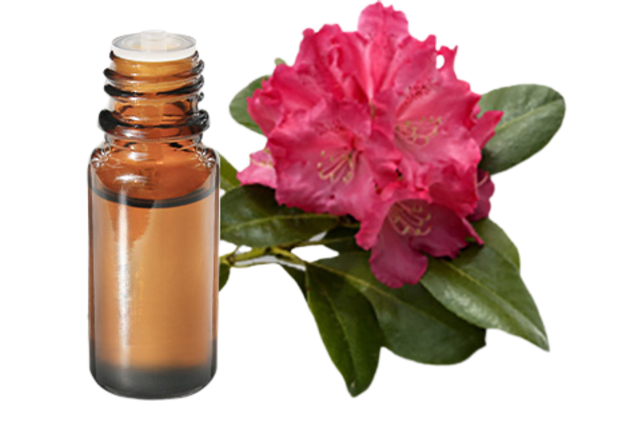
Essential oil of Rhododendron

With its sweet, botanical, balsamic and subtle aroma, Rhododendron essential oil is highly prized in perfumery. Rhododendron essential oil blends harmoniously with citrus oils to perfume your home and your cosmetics.

How to use

  • Skin application and massage

    Skin application and massage

    Appropriate

  • Diffusion

    Diffusion

    Suitable

  • Cosmetic active ingredient

    Cosmetic active ingredient

    Suitable

  • Aromatherapy bath

    Aromatherapy bath

    Suitable

Features

Properties and uses

Precautions

Find out more

Features

Production process

Complete steam distillation

Part of the plant used

Flowering tops

Botanical name

Rhododendron anthopogon

Warning

The properties, information and methods of use below are quotes from reference books or websites on aromatherapy, hydrolatherapy and phytotherapy. This general information is provided for informative purposes only and in no way constitutes medical guidance. Under no circumstances can this information be used as a substitute for a medical diagnosis, consultation or follow-up, nor can it incur our liability. We recommend that you consult the guide to essential oils before using them, so that you are aware of any precautions that need to be taken. If in doubt, consult a doctor before using essential oils.

Properties and uses

Rhododendron essential oil is traditionally used for: Arthritis, Osteoarthritis, Rheumatism

Health

Fragrance

Wellness

Find out more

Properties

Rhododendron essential oil is recognised for its health properties:

  • Antifungal (against most strains of Candida) and antibacterial (particularly against M. tuberculosis).

  • Soothes rheumatic pain (particularly for people sensitive to damp or windy weather)

Uses

In addition to treatments, it is traditionally used in the following cases:

  • Air diffusion to purify the air

  • Skin application for antimicrobial synergies

Synergies

Purifying, cleansing: essential oils of tea tree, Manuka, Oregano compactum, Palmarosa, Bay laurel and more

In practice

Air purification: for air diffusion.

Joint health: Mix into your dispersible bath preparation. Pour your blend into the warm bath water. Breathe and relax.

Precautions

  • For external use only. This essential oil has no known internal use.

  • Not recommended for pregnant women during the first three months.

  • Keep out of reach of children.

  • Avoid contact with eyes.

  • Certain natural compounds in this essential oil may pose an allergy risk for sensitive individuals when the oil is used in cosmetic formulations (according to the 7th Amendment to the European Cosmetics Directive (2003/15/EC)): limonene, linalool.

  • As a general rule, always carry out a patch test on the inside of the elbow at least 48 hours before use.

  • Dangerous. Observe safety precautions.

  • Flammable liquid and vapours. May cause skin allergy. Causes skin irritation (risk related to the pure product). May be fatal if swallowed and if it enters the respiratory tract (if accidentally swallowed, do not induce vomiting). Very toxic to aquatic life, may cause long-term adverse effects (in the case of a large spillage into watercourses).

Find out more

Nepal's national flower, the Rhododendron is an evergreen shrub with an abundance of majestic flowers , found mainly in mountainous regions, particularly theHimalayas. In Nepal, the leaves and flowers are widely used for their fragrance and as incense, but also in herbal teas to stimulate digestive fire, stimulate appetite and relieve liver problems, colds and sore throats. Also known as 'Sunpati', Rhododendron anthopogon produces an essential oil used by Himalayan healers to stimulate the nervous system and treat rheumatism and muscle pain.

Aromatherapy recipes from the bibliography

EO = Essential Oil VO = Carrier Oil or Macerated Oil

A voluptuous fragrance of Mediterranean flowers (S. Macheteau)

FragranceFragrance

  • 9 g organic shea butter
  • 6 g Camellia oil
  • 3 g Mimosa Wax
  • 1 teaspoon vegetable glycerine
  • 10 drops Jasmine absolute
  • 10 drops Geranium bourbon EO
  • 10 drops Rhododendron EO

Directions: Melt the Shea butter and Mimosa wax with the Camellia carrier oil in a bain-marie over a low heat.

Remove the pan from the heat when the wax has melted and wait for the preparation to cool. Add the vegetable glycerine, the absolute and the two essential oils, then mix with a mini whisk.

Immediately pour the preparation into a 15 ml jar before it hardens.

Equivalents

Essential Oils

1 ml = approximately 35 drops (with our Aroma-Zone dropper caps)

Carrier oils

1 pump (Aroma-Zone aluminium pump) = approx. 0.15 ml

Mass / Volume conversion (for a liquid)

Mass (g) = Density x Volume (ml) at 20°C

Further information

1 full teaspoon = between 3 and 4.5 ml

1 full tablespoon = between 7.5 and 10 ml


However, these spoon ratios depend on a number of factors (e.g. viscosity of the liquid, temperature, depth and size of the spoon, rheological behaviour of the liquid), and we strongly advise you to use precise measuring equipment, such as graduated test tubes, graduated pipettes, and precision scales.

Bibliography

1

'L'ABC des huiles essentielles'

Dr Telphon, Editions Grancher

2

3

'Chemical composition and biological properties of Rhododendron anthopogon essential oil'.

G. Innocenti et al.