
Guide to essential oils

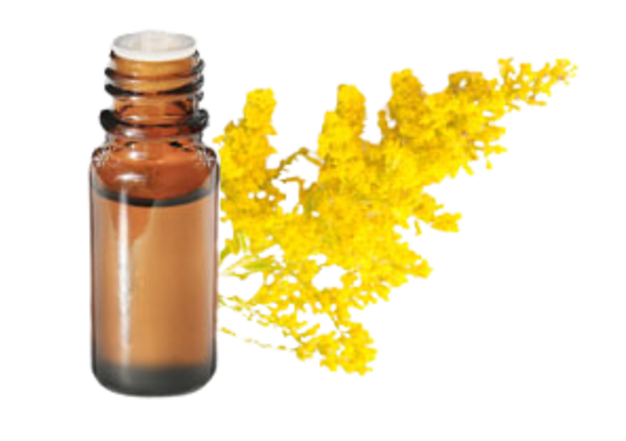
Essential oil of Organic goldenrod

Rich in germacrene-D, known for its anti-inflammatory properties, this essential oil is traditionally recommended as an aid for rheumatism and joint or muscle discomfort. Soothing, it alleviates tension and nervousness.

How to use

  • Skin application and massage

    Suitable

  • Diffusion

    Suitable

  • Cosmetic active ingredient

    Possible but not recommended

  • Aromatherapy bath

    Suitable

  • Food grade

    Food grade

    Appropriate

Features

Properties

Storage and precautions

Find out more

Features

Production process

Complete steam distillation

Part of the plant used

Flowering tops

Botanical name

Solidago canadensis

Warning

The properties, information and methods of use below are quotes from reference books or websites on aromatherapy, hydrolatherapy and phytotherapy. This general information is provided for informative purposes only and in no way constitutes medical guidance. Under no circumstances can this information be used as a substitute for a medical diagnosis, consultation or follow-up, nor can it incur our liability. We recommend that you consult the guide to essential oils before using them, so that you are aware of any precautions that need to be taken. If in doubt, consult a doctor before using essential oils.

Bibliographic references

Franchomme P., Jollois R. et Pénoël D. (2001) L'Aromathérapie exactement. Editions Roger Jollois.

Telphon T. (2003) ABC des Huiles Essentielles. Editions Grancher.

Properties

Goldenrod essential oil is traditionally used for: arthritis, osteoarthritis, rheumatism, liver health.

Health

Wellness

Find out more

Properties

  • Rich in anti-inflammatory active ingredients

  • Stimulates liver function

  • Diuretic, promotes elimination of water

  • Hypotensive, helping to lower blood pressure

Uses

It is traditionally used to improve the following conditions:

  • Protection of blood vessel walls, pericarditis, endocarditis, arteritis, hypertension (under medical supervision).

  • Joint and muscle discomfort

  • Mild liver insufficiencies (under medical supervision)

Storage and precautions

Storage

Essential oils are sensitive to UV radiation and to the gradual evaporation of their volatile constituents. It is therefore essential to store your essential oils in a dark glass or aluminium bottle with a tightly fitting cap, at a temperature between 5°C and 40°C (41°F and 104°F).

Precautions

  • Do not use in pregnant or breastfeeding women or in children under 6 years old.

  • Keep out of reach of children. Avoid contact with eyes and mucous membranes.

  • Some natural compounds contained in this essential oil may present a risk of allergy for certain sensitive individuals when the essential oil is incorporated into a cosmetic preparation.

  • Old or oxidised essential oils should be avoided.

  • Store protected from light and air. As a general rule, always perform an application test of your preparation in the crease of the elbow at least 48 hours before use.

  • For use as a cosmetic ingredient, please refer to the specific precautions.

  • Always use diluted

Maximum dosage to be observed

Can be incorporated up to 2% in your cosmetic preparations.

Compound that may present an allergic risk

According to Regulation (EU) 2023/1545

Alpha-Terpinene, Alpha-Terpineol, Beta-Caryophyllene, Eugenol, L-Alpha Pinene, L-Beta Pinene, Limonene, Linalool, Terpinolene

Classification and labeling according to CLP regulations

Danger. Flammable liquid and vapour. Causes skin irritation. May cause an allergic skin reaction. May be fatal if swallowed and enters airways. Very toxic to aquatic life with long lasting effects. Wear protective gloves and eye protection. IF ON SKIN: Wash thoroughly with soap and water. If skin irritation or rash occurs: seek medical advice. IF SWALLOWED: Immediately call a POISON CENTER or doctor. Do NOT induce vomiting. Dispose of contents/container at a waste collection facility in accordance with local regulations.

Find out more

Goldenrod is a perennial plant in the Asteraceae family. Also known as solidago, it is said that Linnaeus, the Swedish naturalist who established the classification of plants, gave it the scientific name solidago, meaning "strength maker", because this plant helps to heal wounds. Originally from North America, there are now over 120 species introduced into Europe.

When it flowers from July to September, it fills the valleys of the St Lawrence with a lovely golden hue.

Its flowers, which absorb the sun's energy and store up the summer's heat, are traditionally consumed as a herbal tea for a peaceful way to acclimatise yourself to seasonal changes so you adapt easily to the climatic changes between summer and winter. A honey-bearing plant, it produces a honey that tastes like a mixture of clover honey and buckwheat honey. Extracted from its flowering tops, the essential oil is known for its diuretic properties and for stimulating liver function. It is also renowned for strengthening the renal system and helping eliminate waste from the blood. It is hypotensive and helps with heart issues.

Superb and excellent

P
P

Not yet tested

A
A

Terrible smell.

A
A

I have often used this oil, but I could not find it in the pharmacy. I have very good results on pain, alternating with Wintergreen EO.

A
A

Already used this oil, I could not get it in a pharmacy. I alternate with wintergreen and I have very good results. I have always preferred essential oils to medications.

A
A

Aromatherapy recipes from the bibliography

EO = Essential Oil VO = Carrier Oil or Macerated Oil

Liver weakness (T. Telphon)

Health & wellbeingDigestive problems

  • Goldenrod essential oil: 2 ml

  • Helichrysum italicum essential oil: 2 ml

  • Vetiver essential oil: 2 ml

  • St John's wort macerated oil: 30 ml

  • Virgin olive oil: 30 ml

Use: Gently massage the solar plexus and the area around the liver 1 to 2 times a day with a few drops of the blend. Take 1 drop of each essential oil with a meal, either in a piece of bread or in a teaspoon of olive oil.

Aroma-Zone note: St John's wort macerated oil can increase photosensitivity. Do not expose yourself to the sun after applying this blend.

Equivalents

Essential Oils

1 ml = approximately 35 drops (with our Aroma-Zone dropper caps)

Carrier Oils

1 pump (Aroma-Zone aluminium pump) = approx. 0.15 ml

Mass / Volume conversion (for a liquid)

Mass (g) = Density x Volume (ml) at 20°C

Further information

1 full teaspoon = between 3 and 4.5 ml

1 full tablespoon = between 7.5 and 10 ml


However, these spoon ratios depend on a number of factors (e.g. viscosity of the liquid, temperature, depth and size of the spoon, rheological behaviour of the liquid), and we strongly advise you to use precise measuring equipment, such as graduated test tubes, graduated pipettes, and precision scales.