
Anti-ageing from a very young age: a practice to avoid
Not a single wrinkle in sight, yet already a fan of retinol: today, more and more teenagers – and even pre-teens – are using anti-ageing skincare products, even though these are specifically formulated for the needs of mature skin. Fuelled by social media, particularly TikTok, this trend is causing concern amongst dermatologists. Dr Dima Haidar, Dermatologist shares her views on this phenomenon with us. Together with her, let’s explore the risks of using anti-ageing skincare too early, debunk some common misconceptions and discover the real needs of young skin. With one key lesson: less is more.
Does young skin need anti-ageing skincare?
“The answer is obviously NO!” confirms Dr Dima Haidar. It serves absolutely no purpose. The skin begins to age between the ages of 20 and 25. Apart from sun protection, the skin does not need anti-ageing skincare before that age.
Is teenage skin ‘mature’?
Contrary to popular belief, many scientific studies show that even children’s skin is not statistically thinner than that of adults. The skin of a full-term baby is fully functional in terms of its barrier function. And its structure is identical to that of an adult (with roughly the same number of cellular layers).
The main (and virtually only) difference lies in sweat gland function, with apocrine sweat glands remaining non-functional until puberty. Eccrine sweat glands, on the other hand, are not very active at birth but become fully functional thereafter. Sebaceous glands, meanwhile, become functional from the age of 6 months.
After the age of 12, puberty begins and the skin enters a transitional phase due to hormonal changes. In most cases, this is accompanied by increased sebum production and the onset of acne, with enlarged pores, a shiny complexion, and so on...
Note: Around the age of 20 to 22, the skin reaches full functional maturity.
What are the dangers of using anti-ageing skincare products too early?
According to Dr Dima Haidar, two major concerns are emerging: overexposure to potentially toxic substances and harmful impacts on young people’s mental health. A risk of increased exposure to controversial chemicals.
By adopting lengthy beauty routines involving conventional cosmetics from adolescence onwards, we increase our exposure to certain substances with controversial effects on human health, particularly endocrine disruptors. We also expose ourselves to a ‘cocktail effect’ – that is, the risk associated with the combination of several chemicals which, when mixed, can have a cumulative effect on health or the skin. Even if each ingredient, when used separately, is considered safe at low doses, their combination in various products (creams, serums, make-up, shampoos, etc.) can: significantly increase exposure to certain substances, as mentioned above (parabens, endocrine disruptors, allergenic fragrances, chemical UV filters, etc.). This can also cause unexpected reactions, including irritation, sensitisation or skin imbalances.
Finally, these substances can interfere with the body’s functions; in particular, for substances suspected of having hormonal effects, the ‘cocktail effect’ highlights the importance of prioritising simple skincare routines, using only a few products with formulations that are safe for health. According to Dr Dima Haidar, there is also a risk of developing skin conditions that teenagers did not have before.
A word from Adeline Nalin, toxicologist at Aroma-Zone
Anti-ageing from adolescence onwards: underestimated psychological risks
Teenagers are going through a period of great emotional fragility: their brains are still developing, and their self-image is constantly evolving. Social media promotes unrealistic beauty standards – smooth skin, free from pores and blemishes – which can cause anxiety, a loss of confidence, or even shame. “We must look after the mental health of teenagers and pre-teens,” warns Dr Dima Haidar, “and not make them feel even more insecure by promoting false anti-ageing needs.” For those suffering from acne, this pressure can exacerbate psychological distress and sometimes lead to bullying.
What are the real needs of teenage skin?
“It’s the lifestyle that makes the difference,” insists Dr Haidar.
As she often tells her young patients, there’s no point in using lots of products and following multiple routines if you neglect your lifestyle. “The first question I often ask my teenage patients during appointments is about their lifestyle.” When it comes to looking after your skin in the long term and preventing premature ageing, lifestyle is the most important factor: a healthy, varied diet rich in vegetables, good sleep and regular physical activity. Not to mention using sun protection from a very young age, as soon as the UV index is 3 or higher.
A simple routine with safe formulas
I recommend sticking to a very simple routine:
Cleanse your skin in the evening with a gentle, non-irritating cleanser
Moisturise your skin with a light cream suited to your skin type
Apply sun protection if you’re going to be out in the sun
Please note: If you have acne or a skin condition, it is essential to consult a healthcare professional rather than using a multitude of products.
The routine recommended by the Aroma-Zone Research & Development teams
Cleanse your skin with: the gentle, prebiotic cleansing gel with zinc and cucumber
Moisturise her skin with: An organic purifying and moisturising fluid, if you have oily or blemish-prone skin. The thirst-quenching cream or a all-purpose cream for combination to dry skin.
Maximise hydration with the hydrating cream or a all-purpose cream for combination to dry skin.
If you’re looking for targeted treatment for blemishes or irritation, you can add a serum to your routine, before applying your moisturiser.
From the age of 12, you can choose:
Cleanse your skin every evening

Gentle Prebiotic, Zinc & Cucumber Cleansing Gel
This purifying cleansing gel gently removes make-up and impurities whilst respecting the skin’s pH balance. Its 100% naturally derived formula, based on organic cucumber, organic inulin and zinc PCA, softens, rebalances and helps reduce blackheads and blemishes.
Discover the Gentle Prebiotic, Zinc & Cucumber Cleansing Gel
Moisturise with a cream suited to your skin type

Lightweight Cream with Zinc Hyaluronate & Plant-Based Salicylic Acid
Oily skin, acne-prone skin
This purifying fluid acts as a skin-perfecting treatment, rebalancing, mattifying and moisturising all at once. Enriched with zinc hyaluronate: an innovative active ingredient with proven efficacy in reducing blemishes, preventing their appearance, repairing, moisturising, mattifying and soothing inflammation.
Discover the Zinc Hyaluronate & Plant-Based Salicylic Acid Fluid Cream
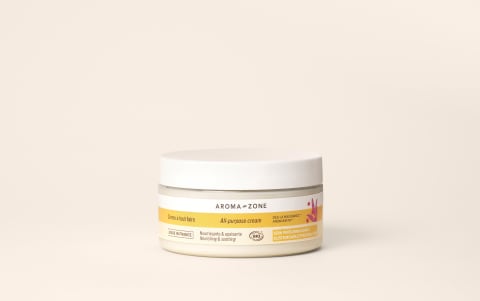
All-purpose cream
Normal, dry or sensitive skin
This certified organic and 100 per cent natural skincare product, enriched with aloe vera, jojoba and calendula oils, and cocoa butter, intensely nourishes dry and dehydrated skin for the whole family. Light and non-greasy, this multi-purpose cream can be used on the face, body, hands and feet, as a face mask or as a hair treatment.
Targeting a specific concern
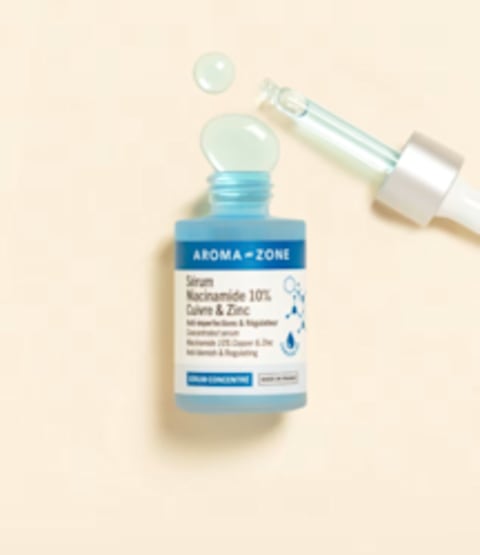
Concentrated Niacinamide 10%, Copper & Zinc Serum
Blemishes
A safe, clinically proven formula to restore clear skin: tightens enlarged pores, regulates sebum production and prevents blemishes.
Discover the 10% Niacinamide, Copper & Zinc Concentrated Serum
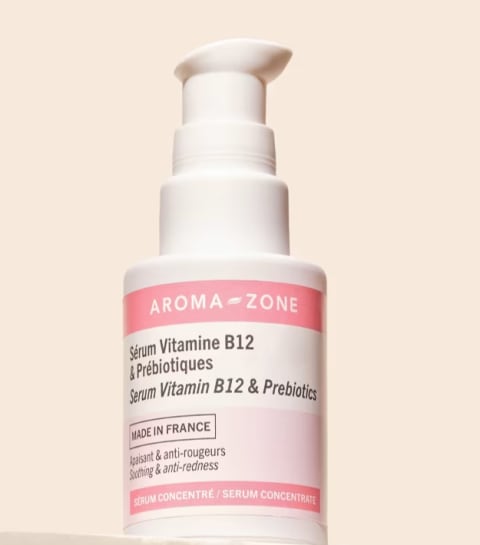
Concentrated Vitamin B12 & Prebiotics Serum
Redness and Sensitivity
To soothe sensitive and reactive skin. Immediately reduces all signs of discomfort – such as redness, tightness and itching – and restores the skin barrier.
Protect your skin from the sun
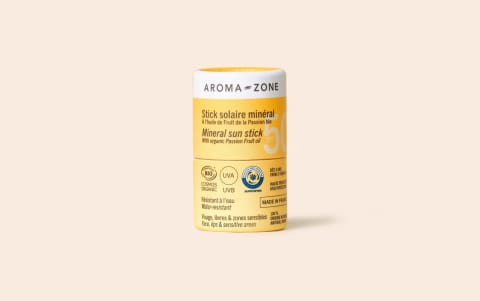
Mineral Sun Stick SPF 50
A certified organic, high-protection formula with a 100% naturally derived mineral filter, suitable for all skin tones and skin types from the age of 3. Non-comedogenic.
Focus on our Naturopathic editor, Lucie Granjon
Passionate about plants and their properties, she has been working in the world of natural beauty and aromatherapy for over 10 years, after starting her career with a perfumer. Lucie supports ethical and committed brands in their development strategy, product formulation and the expert advice they give their customers. She has worked with our Aroma-Zone teams on several books, including "Le grand guide de l'Aromathérapie et des cosmétiques naturels". At the same time, she has been training for years in aromatherapy, herbalism and the distillation of essential oils, while supporting the work of French plant growers.


