
Sweet coconut surfactant
free delivery up to £25 in United Kingdom
100% secure payment CB, Visa, Mastercard, Paypal, Apple Pay, Google Pay
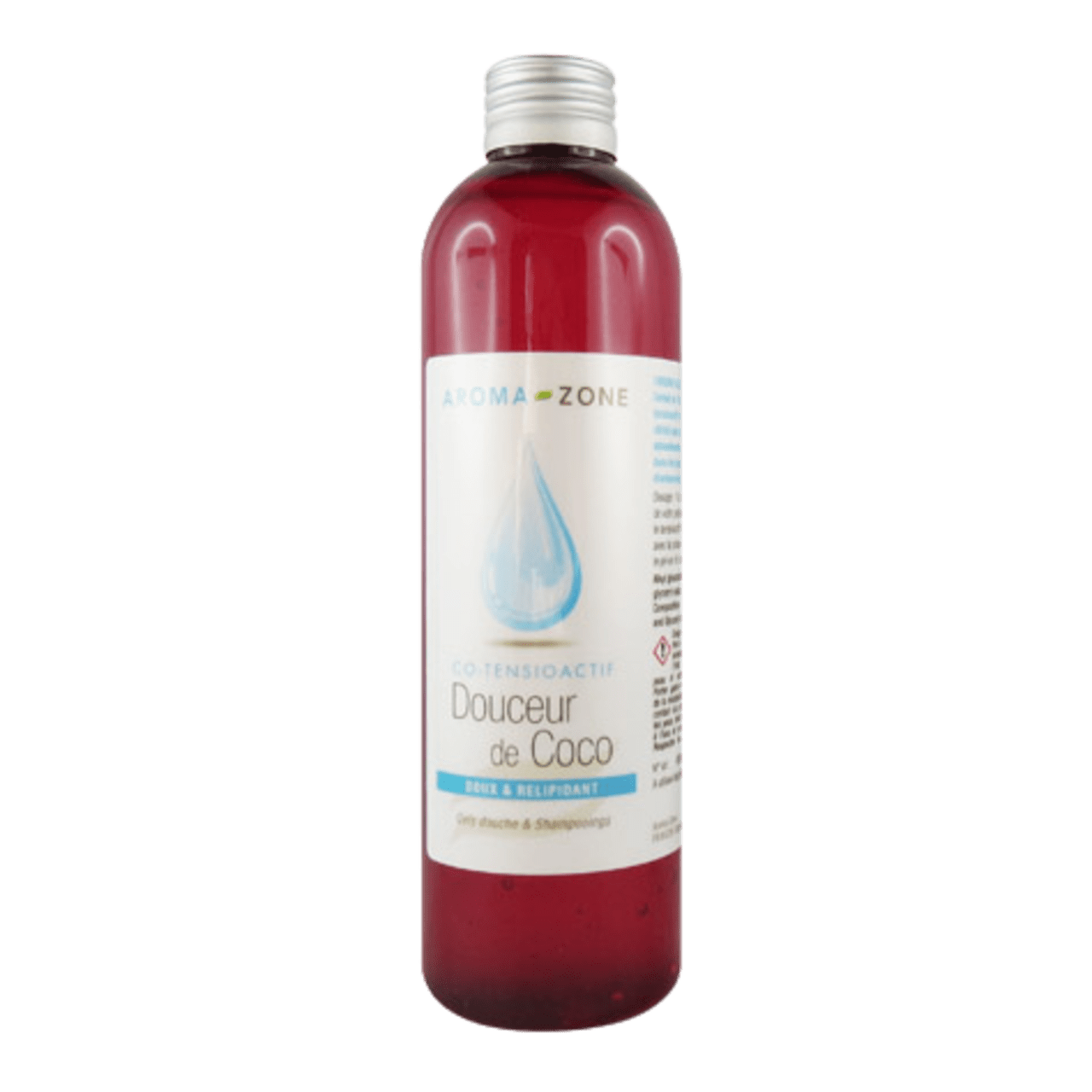
Surfactant allowing the creation of mild cleansing products, well tolerated and suitable for sensitive skin and fragile children’s skin
Relipidizing: restores the skin’s hydrolipidic film
Increases the viscosity of foaming blends
Cleansing agent that softens and improves skin tolerance of shower gel and shampoo formulas containing it
Very good synergy with Gentle Foaming Base: thickens formulas and makes them even milder
Formulation of shower gels, liquid soaps, shampoos, bubble baths, cleansing gels for the face, hands, intimate hygiene, etc.
Formulation of cleansing gels for children and babies
Used to thicken formulas based on Gentle Foaming Base and soften them by adding additional properties.
General characteristics
Dosage
1 to 5% (of the total weight of your preparation)
Product pH
3.0-4.0
Insoluble in oil
Density
1.05-1.1
Water soluble
Use in homemade cosmetics
Shower, Shampoo
Further information
Coconut Gentle is a co-surfactant; it is not used on its own and has little cleansing and foaming power.
We recommend using Douceur de Coco surfactant in combination with other surfactants, particularly Base Douceur surfactant, to which it will add viscosity.
Face, body, and hair wash gel for adults (250 ml)
Gentle Coconut Surfactant
15 ml
Gentle Base Surfactant
120 ml
Essential oil or fragrance
40 drops
Mineral water
120 ml
Cosgard Preservative
50 drops
Method
Mix the surfactants in a bowl.
Add any essential oils or fragrance and shake vigorously for 30 seconds.
Add the water (or hydrosol), then any active ingredients and the preservative.
Gentle cleansing gel for children (100 ml)
Method
Mix the surfactants in a bowl.
Add the water (or hydrosol), then any active ingredients and the preservative.
Solid makeup remover (70 g)
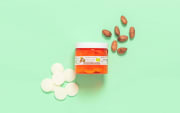
Method
Place the Coconut Gentle Surfactant, cocoa butter, and soy wax in a bowl.
Melt the mixture in a double boiler, then remove from heat.
Add any active ingredients.
Mix the preparation until it thickens slightly.
Pour the mixture into a mold and place the mold in the freezer for 20 minutes before unmolding.
Caution
Certain active ingredients and essential oils can alter the viscosity of your product.
Preparation
Precautions
Precautions and allergens
Precautions for use
Allergens
Allergen-free
Incorporating a surfactant into an aqueous phase
Utensil: Spatula
Mix the Gentle Coconut Surfactant with the aqueous phase of your preparation.
At the end of preparation, adjust the pH using lactic acid or citric acid (check the pH using pH test strips).
Note
It is recommended to always check (and if necessary adjust between 4.5 and 7.5) the pH of surfactant mixtures, especially if you are using Base Consistance or Sugar Foam surfactants. Use pH paper strips for this purpose. To lower a pH that is too high, use lactic acid or citric acid. To increase a pH that is too low, use sodium bicarbonate.
Quality
Plant-based (coconut, palm kernel, and sunflower oils, glucose)
Method of production
Coco glucoside: obtained from fatty alcohols derived from coconut and palm kernel oils and glucose.
Glyceryl oleate: produced by the condensation of a fatty alcohol derived from sunflower oil and vegetable glycerin.
Function
Co-surfactant detergent and viscosity enhancer with lipid-replenishing properties.
INCI designation
Coco glucoside and Glyceryl oleate
Composition
Water: 32 to 35%
Coco glucoside: 20 to 40%
Glyceryl oleate: 20 to 40%
Presentation
Gel-like liquid, slightly cloudy yellow in color, packaged in a PET bottle.
Type
Coco glucoside: non-ionic surfactant
Glyceryl oleate: emollient and lipid-replenishing agent
Learn more
PH
The pH (potential hydrogen) determines whether an aqueous mixture is acidic, neutral, or basic. The pH is measured on a scale of 1 to 14:
1 < pH < 7 acidic pH
pH = 7 Neutral pH
7 < pH < 14 basic (or alkaline) pH
Recommended pH:
For shampoo: 5 to 7
For shower gel: 5 to 7.5
For a detangling hair care product: 4.5 to 5
For intimate hygiene products: 4.5 to 5.5 for women of childbearing age, 6.5 to 7 for young girls and menopausal women
Surfactants
Definition: A surfactant is a compound that modifies the surface tension between two surfaces (i.e., the tension that exists at the interface between two media). Surfactant compounds are amphiphilic molecules, meaning they have two parts with different polarities: one lipophilic part that has a strong affinity for fats, and one hydrophilic part that has a strong affinity for water.
Functions of surfactants: depending on their structure, surfactants can have different functions:
Detergent (or cleaning) agent: capable of removing impurities or dirt
Foaming agent: acting on the water-air interface, this type of agent allows a large volume of gas to be dispersed in a small volume of liquid, thus forming foam
Wetting agent: this type of agent allows a liquid to spread more easily over a solid
Emulsifier: an emulsifier allows two immiscible liquids, such as water and oil, to be mixed together to form an "emulsion."
Conditioning agent: this type of surfactant combines with keratin or skin to make them smooth and silky
Types of surfactants: there are four types of surfactant compounds, which are grouped according to the nature of the hydrophilic part:
Anionic surfactants: the hydrophilic part is negatively charged (anion). These surfactants are particularly effective as detergents.
Cationic surfactants: the hydrophilic part is positively charged (cation).
Amphoteric surfactants: these have two charges, one positive and one negative.
Nonionic surfactants: the molecule has no charge. These are our preferred surfactants because they enable us to manufacture skincare products that are well tolerated by the skin.
Storage
Store at room temperature away from moisture and light. Close the bottle tightly after use.
Precautions
Keep out of reach of children.
Do not swallow
Avoid contact with eyes. If product comes into contact with eyes, rinse thoroughly with clean water.
This product should be used diluted, in accordance with the recommended dosages.
Dangerous. Follow the precautions for use.
Causes serious eye damage (risk associated with the product in its pure form).
Environmental qualities and characteristics product sheet
Reference
01262 - coconut softness 250 mL
Main packaging material
RPET (recycled PET) bottle
Recyclability
Most packaging can be recycled
Recycled material
Packaging contains at least 85% recycled material
Rewards and penalties
Aroma-Zone gets a bonus for managing packaging made from recycled plastic.

Supplier documentation
Loading...
As a supplement
I mix it with my mask and shampoo from Aromazone too, and it makes my hair extremely soft!
It makes hair softer.
Good, I have used this product in various preparations and it works very well.
I only order the natural, soft base. Personally, I find that the coconut completely negates the lightness of the product.


