
Organic Beetroot Juice Natural Colorant
free delivery up to £25 in United Kingdom
100% secure payment CB, Visa, Mastercard, Paypal, Apple Pay, Google Pay

100% Pure And Natural

Organic Farming

From France
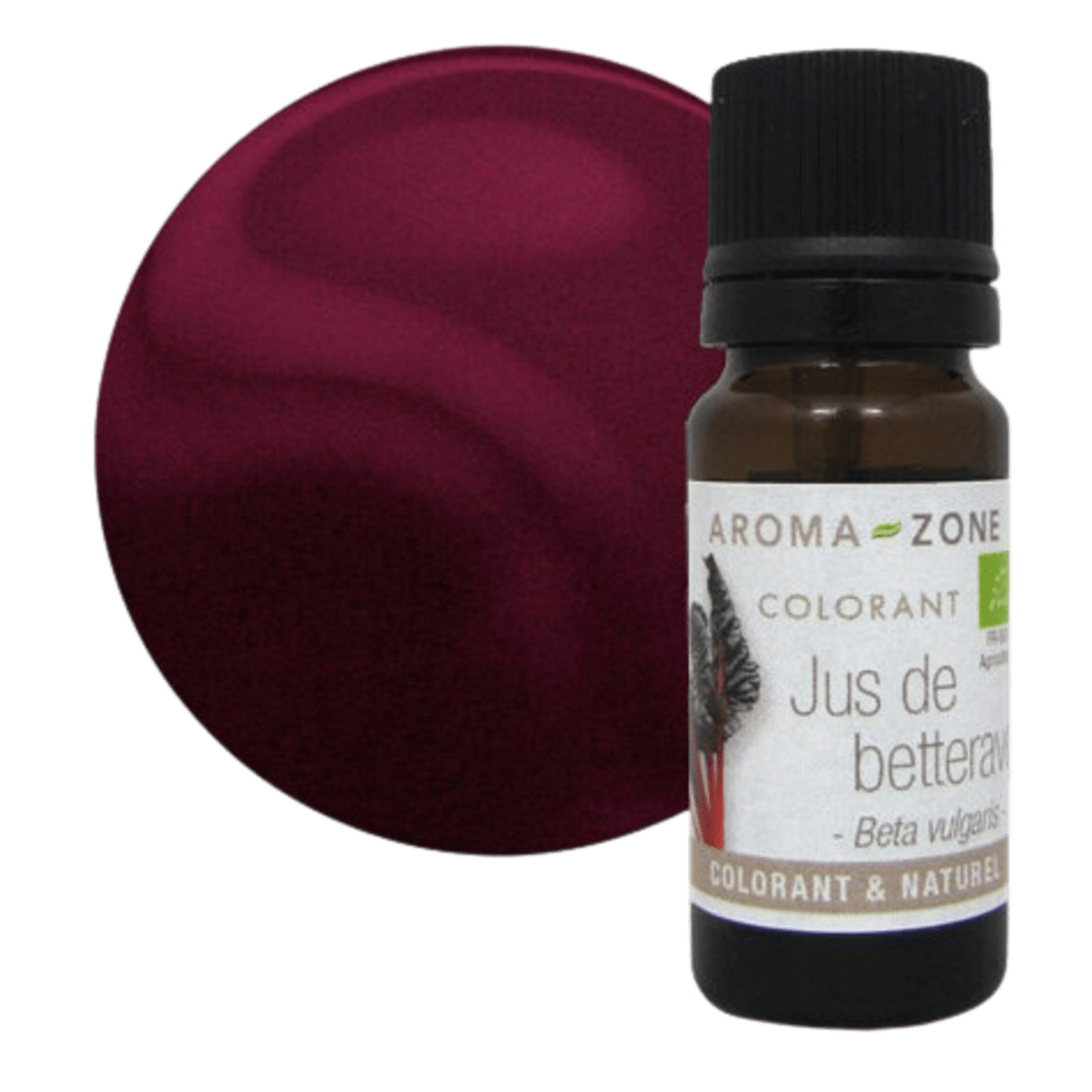
Colouring in shades of pink to purple for makeup and other cosmetic products
Water-soluble dye (soluble in water), ideal for colouring gels, shower gels, shampoos, creams, lotions, etc.
Can also be used in dispersion to colour semi-solid oily products (balms)
Use as an ingredient in your homemade makeup products:
Lip gloss
Lip balms and lipsticks
Cream eyeshadows
Use as an ingredient in your homemade cosmetics:
Colouring water-based products: creams, gels, shower gels, bubble baths, lotions, etc.
Colouring balms (in dispersion)
Bath salts, bath bombs
For good stability and a beautiful pink colour, this dye must be used in a slightly acidic environment. It is therefore not suitable for naturally alkaline formulations, such as soaps, where the colour tends to change.
This dye is not suitable for cold saponification colouring, where the very alkaline pH at the time of preparation will alter the pigments.
Store away from moisture and light. For optimal preservation, we recommend keeping your bottle in the refrigerator.
General characteristics
Dosage
1 to 10% (of the total weight of your preparation)
10% in water
4.5-5.5
Insoluble in oil
Density
1.3
Water soluble
Matte mineral pigments: brown oxide, red oxide, yellow oxide, blue oxide, green oxide, pink oxide, black oxide
Satin mineral pigments: silver mica, gold mica, bronze mica, copper mica, deep blue mica, ocean green mica
Glossy mineral pigments: sparkling hazelnut mica, intense glitter effect glossy mica
Natural ochres: yellow ochre, red ochre, pink ochre, Indian black earth
Natural clays: purple clay, red clay, yellow clay, pink clay
Plant dyes (in emulsions or butters): caramel, chlorophyll, grape powder, chestnut powder, indigo powder
Carriers: coated talc (powder, the coating facilitates dye dispersion), corn starch (powder), white or black paste (dispersing paste for coloured emulsions), micronised rice flour
Makeup actives: Sugar or glycerin mirror to add shine, Vegetable substitute for lanolin
Make a recipe from start to finish.
Gloss made from sugar mirror or vegetable lanolin substitute: disperse the beetroot juice into the gloss base.
Lip gloss: Add the Rouge Baiser dye to the mixture while cold.
Shower gels, gels, and lotions: dissolve the beet juice into the product at the end of preparation.
Emulsions (creams, milks): dissolve the beet juice into the product at the end of preparation
Semi-solid oil mixtures (balms, butters): disperse the beetroot juice in the product by incorporating it at the end of preparation, when the product begins to cool, and stirring regularly while the balm sets.
Aroma-Zone Tip
The natural purplish-pink to burgundy colour of beetroot juice, due to the presence of anthocyanins, inevitably changes over time (to brown or grey), especially when exposed to light.
This is because anthocyanins are fragile pigments that are sensitive to air, light, and heat. Concentration and pH also affect the intensity and durability of the colour. To improve colour stability, store products away from light and heat. We have observed that products stored in the refrigerator retain the colour of beet juice better.
A slightly acidic pH also improves colour stability.
Cultivation
Product from Organic Agriculture, certified by Ecocert FR-BIO-01
Organic, certified by Ecocert FR-BIO-01
Quality
100% pure and natural.
Method of production
Concentrated organic beetroot juice. Acidified with concentrated organic lemon juice (preserves the colour from oxidation).
Botanical name
Beta vulgaris
Function
Natural cosmetic colourant and antioxidant active ingredient.
Composition
Beetroot Juice*
*Ingredient from organic farming
Country of origin
France
INCI designation
Beta vulgaris root juice (>99%), Citrus limonum fruit juice
Presentation
A viscous liquid with an intense magenta red colour and the sweet, characteristic smell of beetroot, packaged in an amber glass bottle without a dropper.
Store away from moisture and light. For optimal preservation, we recommend keeping your bottle in the refrigerator.
Environmental qualities and characteristics product sheet
Reference
0200401 - Organic beetroot 10 mL
Main Packaging Material
Glass bottle
Recyclability
Most packaging can be recycled

EO = Essential Oil VO = Vegetable Oil or Oil Macerate
Neutral cleansing base: 100 ml
Beetroot juice: 1 g (30 drops)
Method: Add the beetroot juice to the neutral cleansing base and mix gently until the color is even.
Sweet almond oil: 2 tablespoons
Beeswax: 1 tablespoon
Beetroot juice: 1/8 to 1 teaspoon
Method: Mix the oil and wax and heat gently in a double boiler to melt the wax. Allow to cool slightly and add the beet juice until the desired color is achieved. Place in a clean container and allow to cool completely.
Use: Apply to the lips with your finger or a lip brush.
Aroma-Zone tip: We recommend waiting until the balm begins to set before adding the beetroot juice, stirring vigorously to ensure an even distribution.
Container: 12 ml gloss tube
15 g sugar mirror
1 to 3 drops of organic beetroot juice, depending on the desired intensity
1 pinch of shiny white mica (to achieve a pearlescent effect)
5 drops of organic blueberry aromatic extract
Method: Pour the sugar mirror into the bowl, then add the drops of beetroot juice and mix everything together. Next, add the shiny white mica and mix again. Then add the organic blueberry aromatic extract and mix. Pour into the lip gloss tube.
Sugar Mirror: 20 g
Copper Mica: 1 pinch
Gold powder mica: 1 pinch
Blueberry aromatic extract: 10 drops
Organic beet juice: 6 to 8 drops (depending on the desired color intensity)
Coconut aromatic extract: 5 drops
Natural vitamin E: 1 drop
Method: Pour the Sugar Mirror into a bowl, then add the beetroot juice and mix thoroughly with a mini whisk. Add the copper mica and gold mica and mix again. Add the aromatic extracts and vitamin E. Mix and then pour into a lip gloss tube using a small spoon.
Carnauba wax: 1 g
Rice wax: 1.5 g
Beeswax: 1.5 g
Macadamia oil: 8 g (approx. 8 ml)
Vegetable lanolin substitute: 1 g
Shea butter: 4 g (approx. 4 ml)
Beet juice: 1 g (30 to 35 drops)
Raspberry aromatic extract: 6 drops
Method: Melt the waxes with the oil, shea butter, and lanolin substitute in a double boiler, stirring constantly. Once the mixture has melted, add the beet juice and essential oil. Pour quickly.
Sea salts: 100 g
Yellow ochre: 0.2 g (2 knife tips)
Beetroot juice: 0.2 g (5 drops)
Method: Pour the colorants onto the salt and mix well with a spoon or by shaking the tightly closed jar.
Bath salts: 100 g
Beetroot juice or pink ochre: 1 g
White mica: 1 g
Method: Pour the colorants onto the salt and mix well with a spoon or by shaking the tightly closed jar.
Bath salts: 100 g
Beetroot juice: 1 g (30 drops)
Method: Pour the beetroot juice over the salt and mix well with a spoon or by shaking the tightly closed jar.
Supplier documentation
"Natural makeup"
Sophie Macheteau
Natural beauty at home
Janice Cox
Loading...
Inexpensive but not good quality, very strong smell upon opening
It lacks a dropper or something to dose the product
Not yet tested
Great for tinting balms. And lips
The color fades very quickly on the lips.
Associated products
£5.50
250 g
£6.50
250 g


