Rosemary Rosemary (Salvia rosmarinus) is an aromatic plant of the Lamiaceae family that grows in the Mediterranean region, particularly on limestone soils and in scrubland. It can be recognized by its characteristic scent, small green leaves, and bluish flowers. Rosemary leaves are generally used in cooking and herbal medicine for their concentration of certain active ingredients such as rosmarinic acid, camphor, and flavonoids. Already used in ancient times for its various properties, particularly on digestion and the nervous system, rosemary is now the subject of several studies confirming its therapeutic benefits.
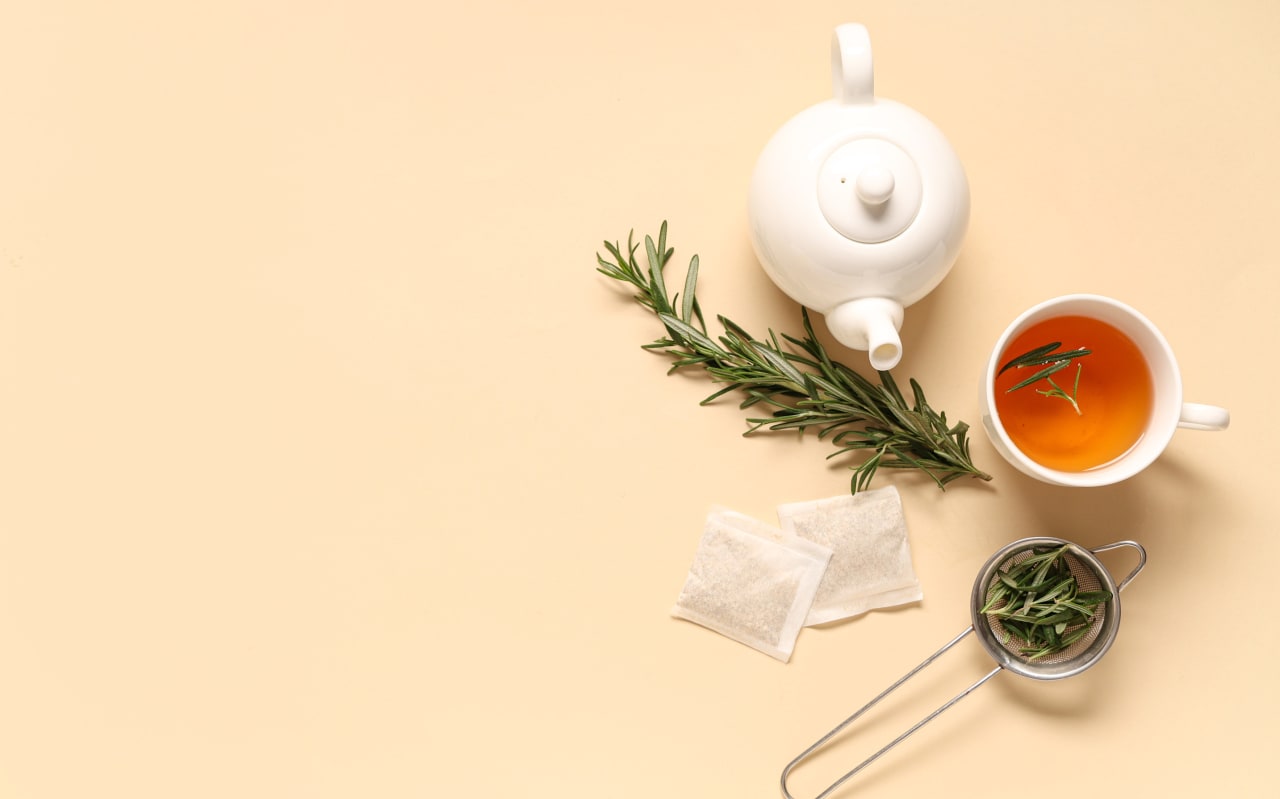
What are the real benefits of rosemary tea?
Published on: Thursday, November 28, 2024, Updated on: Wednesday, September 30, 2026
Rosemary tea (infusion) is a comforting hot drink with a wide range of health benefits. Enjoyed on its own or with a touch of honey, it can be sipped throughout the day for a wellness break that is both gentle and restorative. In this article, we take a look at the recognised virtues of rosemary and the different ways to prepare it as a herbal tea.
Contents
Related products

Sports Massage Oil
Soothing
£11.00
100 ml
What is rosemary?
Good to know: The Latin botanical name for rosemary has recently been changed from Rosmarinus officinalis to Salvia rosmarinus, reflecting its integration into the Salvia genus following extensive botanical research.
What are the benefits of rosemary?
Over the years, rosemary has been the subject of numerous scientific studies exploring the wide range of benefits it offers for overall wellbeing:
Improved digestion: Consuming rosemary may help relieve the symptoms of difficult digestion. It stimulates bile production and supports better nutrient absorption.
Antioxidant action: Rosemary contains active compounds with powerful antioxidant properties, such as rosmarinic acid and carnosol. These help protect cells against oxidative stress.
Memory and concentration support: Rosemary is known to stimulate blood circulation and support concentration and memory, notably through its influence on neurotransmitters.
Immune support: Thanks to its antibacterial and antifungal properties, rosemary is a valuable natural ally in helping to protect the body. It is particularly useful in the prevention of infections, especially those affecting the ENT sphere.
Hair strengthening: Rosemary helps stimulate hair growth and improve hair density, notably by boosting blood circulation in the scalp.
Supports natural elimination: This plant promotes gentle drainage, particularly supporting the liver and intestinal system.
How is rosemary consumed?
Rosemary can be enjoyed in a variety of forms, making it easy to use according to your needs and preferences:
As herbal tea: osemary infusion is ideal for supporting digestion or enjoying a moment of wellbeing. Prepare it by infusing 1 teaspoon of dried rosemary or 2 teaspoons of fresh rosemary in 200 ml of hot water for 5 to 10 minutes. It is particularly recommended after meals to promote light, comfortable digestion.
As a mother tincture: Rosemary mother tincture, obtained by maceration in alcohol, is a concentrated form taken in drops. It is often used for its detoxifying properties and to support liver function. Consult a healthcare professional for appropriate dosage advice.
In capsule form: Rosemary is also available as capsules containing concentrated extracts, making them convenient for daily use. They are generally taken for their antioxidant, digestive or liver-supporting benefits.
As an essential oil: Rosemary essential oil—depending on its chemotype (cineole, camphor or verbenone)—is used in diffusion to help clear the respiratory passages, or diluted in a vegetable oil for massage to soothe muscle pain.
In cooking: Rosemary is a staple aromatic herb, used to flavour meats, vegetables and marinades. Its fresh or dried leaves add a Mediterranean touch to dishes while offering subtle digestive benefits.
As an oily macerate: Rosemary oil macerate is obtained by infusing the leaves in a vegetable oil. This gentle preparation can be used for stimulating or soothing massages, particularly for tired muscles, or as a hair treatment to strengthen hair and encourage growth.
How to prepare a rosemary infusion while preserving its properties
Here's how to prepare rosemary tea to fully enjoy its benefits.
Choose your rosemary: You can use either fresh or dried rosemary, depending on your preference. Dried rosemary is often favoured for its milder taste. Use 1 to 2 teaspoons of dried leaves or 2 to 3 sprigs of fresh rosemary per cup of water
Heat the water: Bring about 250 ml of water to a boil.
Steep the rosemary: Once the water is boiling, pour it over the rosemary in a cup or teapot. Steep for 5 to 10 minutes, depending on the desired strength. The longer the infusion, the more intense the flavour.
Enjoy: strain the rosemary leaves, then savour your infusion. You can personalise it by adding a touch of honey or a little lemon zest for a more rounded, pleasant taste.
Rosemary herbal tea: how many cups per day?
It is generally recommended to drink 1 to 3 cups of rosemary herbal tea per day, depending on your needs and individual tolerance. You can adjust this amount gradually, taking care not to exceed usual doses to avoid potential digestive irritation. For personalised advice, consider consulting a naturopath or herbalist, who can guide you on the most suitable use for your specific situation.
Precautions for use
Always consult your doctor before consuming herbal teas if you are pregnant, breastfeeding, or if you suffer from conditions such as heart problems, gallbladder issues or hormonal imbalances.
Expert advice
Rosemary infusion can be enjoyed both cold in summer for its refreshing qualities and hot in winter for its comforting effects. Adapt your consumption to your preferences and vary the pleasure according to the season.
Spotlight on Our Naturopathic Writer: Marine Leleux

Marine is a naturopath specialising in children's well-being and a parenting coach. With 10 years' experience in supporting families, she draws on her experience to help her community by sharing natural, caring advice.
Bibliography
Herbal teas and infusions: Recipes and benefits of medicinal plants
Aude Maillard, Éditions Larousse, 2019.
Rosemary: Health and wellness benefits and recipes
Christophe Bernard, Éditions Amyris, 2017.
Herbal teas and infusions: Natural remedies for everyday use
Claude Aubert, Terre Vivante edition, 2019.
Aromatic and Medicinal Plants: Their Benefits and Uses, Jean-Michel Groult, Delachaux et Niestlé, 2017.
Effects of Rosmarinus officinalis L. on memory and brain functions
Source: National Center for Biotechnology Information (NCBI)


Frequently Asked Questions
Associated tips
Digestion, detox & gut microbiota

Hair care tips

Respiratory and ENT comfort tips