Guide to essential oils

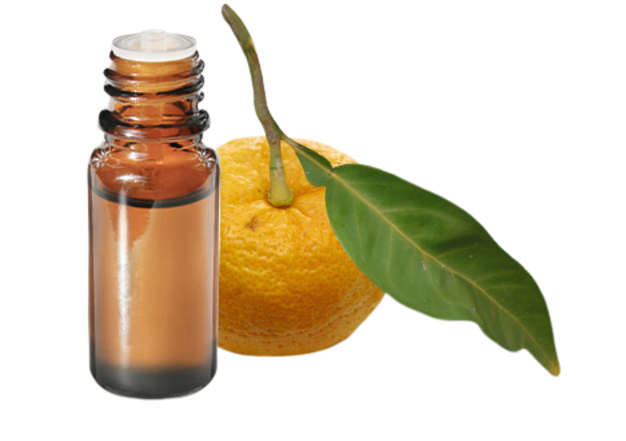
Essential oil of Yuzu

Rare, yuzu essential oil is non-photosensitising. Interesting in perfumery, yuzu essential oil brings subtle, fresh citrus notes. Relaxing, it is useful in cases of stress, fatigue and difficulty falling asleep.

How to use

  • Skin application and massage

    Skin application and massage

    Suitable

  • Cosmetic active ingredient

    Cosmetic active ingredient

    Suitable

  • Aromatherapy bath

    Aromatherapy bath

    Suitable

  • Diffusion

    Diffusion

    Suitable

  • Food grade

    Food grade

    Suitable

Features

Properties and uses

Precautions

Find out more

Features

Production process

Complete steam distillation

Part of the plant used

Zest

Botanical name

Citrus ichangensis x C. reticulata var. austera

Warning

The properties, information and methods of use below are quotes from reference books or websites on aromatherapy, hydrolatherapy and phytotherapy. This general information is provided for informative purposes only and in no way constitutes medical guidance. Under no circumstances can this information be used as a substitute for a medical diagnosis, consultation or follow-up, nor can it incur our liability. We recommend that you consult the guide to essential oils before using them, so that you are aware of any precautions that need to be taken. If in doubt, consult a doctor before using essential oils.

Properties and uses

Yuzu essential oil is traditionally used for : Stress

Beauty

Fragrance

Wellness

Find out more

Properties

Yuzu essential oil is renowned for its skincare properties:

  • Yuzu essential oil combined with lipolytic essential oils helps to reduce the appearance of cellulite.

  • Adds a fresh, fine, fruity fragrance, both sweet and lemony, to all types of cosmetic products**(for men and women) and can be used to make home perfumes**.

  • Astringent, it helps to purify the skin.

  • Distilled, this citrus essential oil is not photosensitising, so it can be easily incorporated into your cosmetics.

Uses

  • All skin types, especially oily skin

  • Cellulite, orange peel skin

  • Scented products

Synergies

  • Cellulite : essential oils of Sea fennel Fennel, Cypress, etc.

  • Oily skin : essential oils of Tea-tree, Manuka, Rosemary verbenone, Cedar, grapefruit, Patchouli, etc.

In practice

Slimming treatment: Mix up to 2% in your skin cosmetic preparation such as cream, gel or lotion.

Precautions

  • May cause irritation, always dilute well for skin use.

  • Do not use during the first three months of pregnancy.

  • Keep out of reach of children.

  • Avoid contact with eyes.

  • Certain natural compounds contained in this essential oil may present a risk of allergy in certain sensitive individuals when the essential oil is incorporated into a cosmetic composition (in accordance with the 7th Amendment of the European Directive on cosmetic products (2003/15/EC)): limonene and, to a lesser extent, linalool.

  • As a general rule, always test-apply your mixture in the crease of the elbow at least 48 hours before use.

Find out more

Yuzu is a citrus fruit that originated in China and is highly resistant to the cold. It was later introduced to Japan, where it is now the most widely grown. It is a hydride between a wild mandarin tree and Citrus ichangensis. The fruit resembles a small grapefruit, with an irregular surface and a colour that can vary from green to yellow depending on ripeness. Containing little flesh and many seeds, the flavour is reminiscent of both sour grapefruit and mandarin orange. Traditionally used in Japanese cooking (notably in sauces, cakes, wines and traditional dishes), it crossed borders to grace Western cuisine in the 2000s.

Equivalents

Essential Oils

1 ml = approximately 35 drops (with our Aroma-Zone dropper caps)

Carrier oils

1 pump (Aroma-Zone aluminium pump) = approx. 0.15 ml

Mass / Volume conversion (for a liquid)

Mass (g) = Density x Volume (ml) at 20°C

Further information

1 full teaspoon = between 3 and 4.5 ml

1 full tablespoon = between 7.5 and 10 ml


However, these spoon ratios depend on a number of factors (e.g. viscosity of the liquid, temperature, depth and size of the spoon, rheological behaviour of the liquid), and we strongly advise you to use precise measuring equipment, such as graduated test tubes, graduated pipettes, and precision scales.

Bibliography

1

Quantitative determination and characteristic flavour of Citrus junos (yuzu) peel oil.

SONG H. S. (1) ; SAWAMURA M. (1) ; ITO T. (1) ; KAWASHIMO K. (1) ; UKEDA H. (1).

2

Changes in the Volatile Composition of yuzu (Citrus junos Tanaka) Cold-Pressed Oil during Storage. J. Agric. Food Chem.

Simon M. Njoroge , H. Ukeda , and M. Sawamura.

3

www.osmoz.fr

4

www.auparfum.com

5

"L'aromathérapie - Santé et bien-être par les huiles essentielles"

N. Grosjean

6

"Aromathérapie - traitement des maladies par les essences des plantes"

J. Valnet

7

"Aromatherapy"

M. Werner and R. Von Braunschweig

8

"L'aromathérapie énergétique - Guérir avec l'âme des plantes"

L. Bosson and G. Dietz

9

"Les huiles essentielles pour votre santé"

G. Roulier