
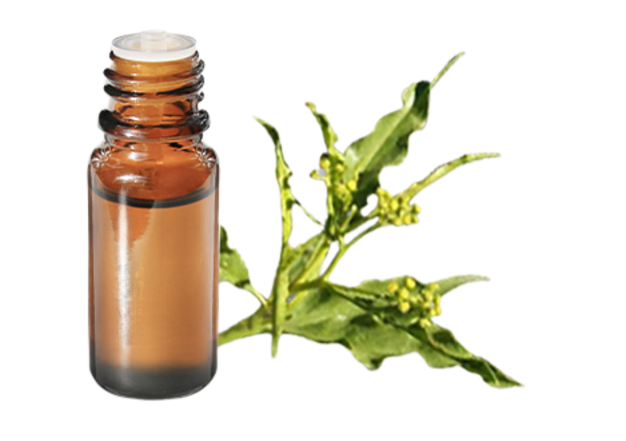
Guide to essential oils

Essential oil of Psiadia

Iary essential oil is renowned for its excellent respiratory properties. With its soothing properties, Iary essential oil is popular for preparing massage oils. Uplifting, Iary essential oil promotes vitality of body and mind.

How to use

  • Skin application and massage

    Skin application and massage

    Suitable

  • Cosmetic active ingredient

    Cosmetic active ingredient

    Appropriate

  • Aromatherapy bath

    Aromatherapy bath

    Suitable

  • Diffusion

    Diffusion

    Suitable

Features

Properties and uses

Precautions

Find out more

Features

Production process

Complete steam distillation

Part of the plant used

Leaves

Botanical name

Psiadia altissima

Warning

The properties, information and methods of use below are quotes from reference books or websites on aromatherapy, hydrolatherapy and phytotherapy. This general information is provided for informative purposes only and in no way constitutes medical guidance. Under no circumstances can this information be used as a substitute for a medical diagnosis, consultation or follow-up, nor can it incur our liability. We recommend that you consult the guide to essential oils before using them, so that you are aware of any precautions that need to be taken. If in doubt, consult a doctor before using essential oils.

Properties and uses

Iary essential oil is traditionally used for: Bronchitis

Health

Wellness

Find out more

Properties

For health, Iary essential oil is recognised for the following properties:

  • Due to its high beta-pinene content, it has a decongestant and mild expectorant action (helps eliminate bronchial secretions). Its gentle composition means it can be used on fragile individuals.

  • Air antiseptic, air purifier

  • Rich in monoterpenes, which have interesting tonic effects on venous and lymphatic circulation and help combat oedema

  • Contains sesquiterpenes, which have been shown to have anti-inflammatory effects, making it useful in cases of pain or irritation.

  • It slightly warms the skin.

Uses

In addition to medical treatment and monitoring, it is traditionally used in the following cases:

  • ENT disorders: 'flu, bronchitis, nasopharyngitis, sinusitis

  • Muscle or joint pain (local external use): cramps, muscle strains, arthritis, arthrosis, rheumatism, etc.

  • Preparing muscles for exercise

  • Circulatory problems: varicose veins, heavy legs

  • Local disinfection

Synergies

  • Respiratory comfort: Saro, Pine and Ravintsara essential oils.

  • Joint comfort: Kunzea, Fragonia, Wintergreen, Lemon Eucalyptus essential oils.

  • Sports preparations: Rosemary Camphor essential oil.

  • Toning, light legs: Mastic Tree and Provençal Cypress essential oils.

In practice

Air purification, respiratory comfort: Air diffusion in living areas.

Respiratory comfort: Mix in your oil blend. Massage or rub your blend into the chest and upper back.

Tonic: Mix into your oil blend, in synergy with other essential oils. Apply your mixture locally by massaging from the bottom of the limb towards the heart.

Precautions

  • Not recommended during the first 3 months of pregnancy.

  • For external use only.

  • Keep out of reach of children.

  • Avoid contact with eyes.

  • Certain natural compounds contained in this essential oil may present a risk of allergy for some sensitive individuals when the essential oil is incorporated into a cosmetic composition (in accordance with the 7th Amendment to the European Cosmetics Directive (2003/15/EC)): limonene and linalool.

  • As a general rule, always carry out a test application of your mixture in the crease of the elbow at least 48 hours before using it.

  • Dangerous. Observe safety precautions.

  • Flammable liquid and vapour. May cause skin allergies. Causes skin irritation (risk associated with the product in pure form). May be fatal if swallowed or if it enters the respiratory tract (if accidentally swallowed, do not induce vomiting). Very toxic to aquatic organisms, causing long-term adverse effects (in the event of massive spillage of the product into a watercourse).

Find out more

A shrub endemic to Madagascar, Iary is frequently found on the high plateaux of the Great Red island. Traditionally used to scare away insects, it is also used in the traditional treatment of menstrual pain. Due to its composition, Iary essential oil is an excellent ally for the respiratory system. When used in combination with Pine or Saro essential oils, it is very pleasant to diffuse into the atmosphere to purify the environment.

Equivalents

Essential Oils

1 ml = approximately 35 drops (with our Aroma-Zone dropper caps)

Carrier oils

1 pump (Aroma-Zone aluminium pump) = approx. 0.15 ml

Mass / Volume conversion (for a liquid)

Mass (g) = Density x Volume (ml) at 20°C

Further information

1 full teaspoon = between 3 and 4.5 ml

1 full tablespoon = between 7.5 and 10 ml


However, these spoon ratios depend on a number of factors (e.g. viscosity of the liquid, temperature, depth and size of the spoon, rheological behaviour of the liquid), and we strongly advise you to use precise measuring equipment, such as graduated test tubes, graduated pipettes, and precision scales.

Bibliography

1

"Analyse des huiles essentielles provenant des endémiques de Madagascar et leur thérapeutique envisagée, Phytothérapie, 2008, vol 6 N°1.

2

Chemical composition of the leaf oil of Psiadia altissima (Compositae, Journal of essential oil research, 1994, 6(6)565-570.).

Ramanoelina, PAR, Rasoarahona JRE, Masotti V, Viano J, Gaydou E.M, Bianchini J.P.